
Benny No More
Reformed Gambino associate says Brooklyn prosecutors railroaded him — and Lindsay Gerdes’ record demands answers.


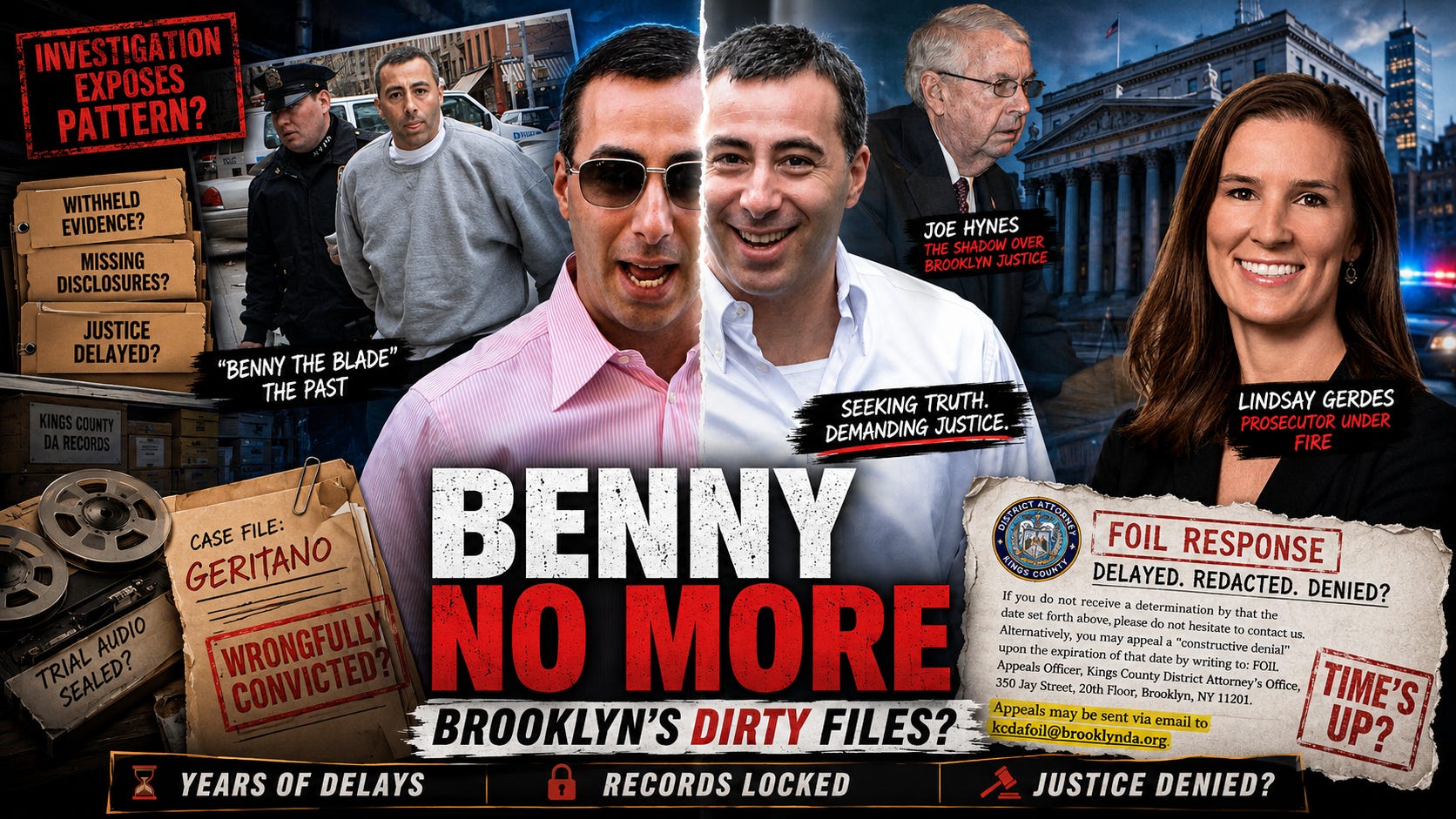
LUTHMANN NOTE: This is how the machine works. First, they turn a man into a monster. Then they turn the monster into a conviction. Then, years later, when the records are requested and the questions about the missing evidence come due, the bureaucracy suddenly develops asthma. Old files. Scattered records. Backlogs. Delays. I know because it happened to me. Brooklyn knows this script all too well—the Joe Hynes era wrote it in ruined lives. Battista Geritano was once “Benny the Blade.” Fine. But he is now a reformed former Gambino associate demanding receipts. If Kings County has nothing to hide, open the file and prove it. This piece is “Benny No More.”

By M. Thomas Nast and Richard Luthmann
The Man They Wanted the Jury to See
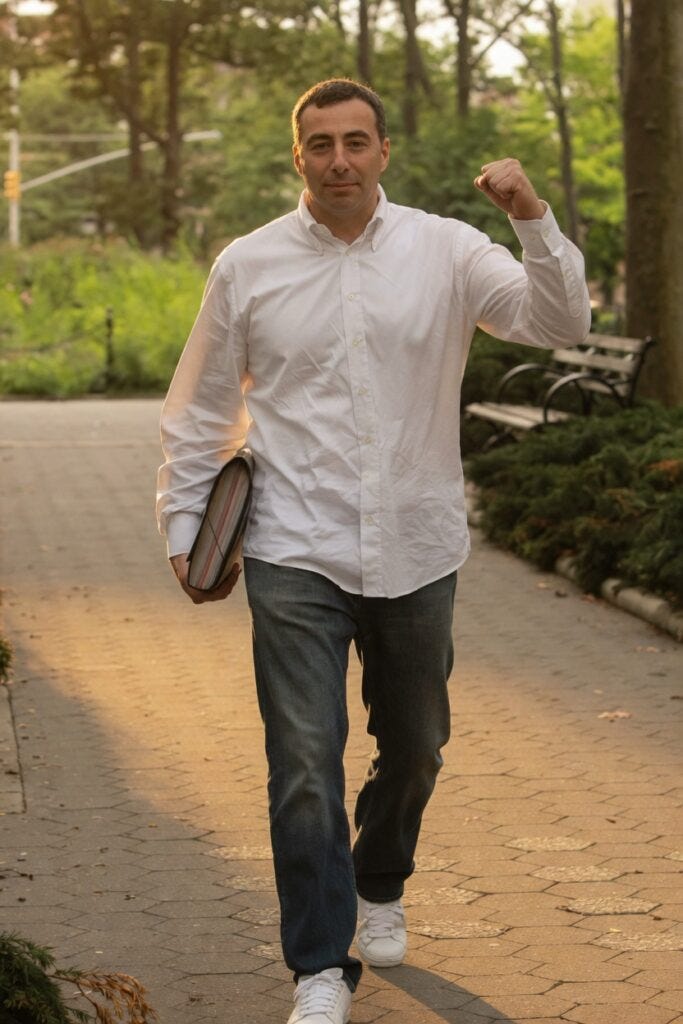
(BROOKLYN, NEW YORK) – Battista Geritano was once known in the streets and tabloids as “Benny the Blade,” a reputed Gambino associate with the kind of nickname prosecutors dream about and defense lawyers dread. But that is not the whole man, and it is not the whole story.
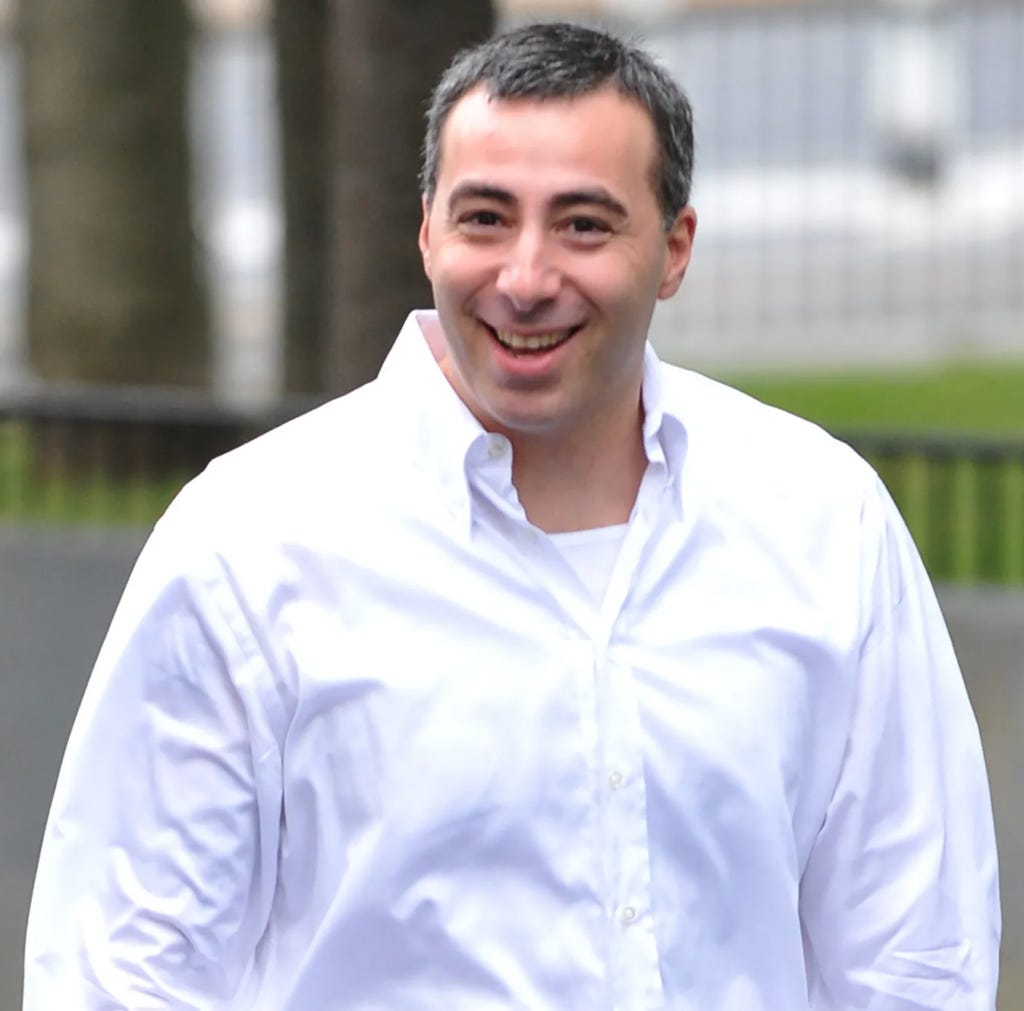
Today, Geritano presents himself as a reformed former Gambino associate, a man who says he has left that life behind and is fighting not to glorify his past, but to expose what he believes was a rigged prosecution built on reputation, missing evidence, and a Brooklyn courtroom culture where winning mattered more than justice.
His central accusation is simple and explosive: former Kings County Assistant District Attorney Lindsay Gerdes railroaded him.
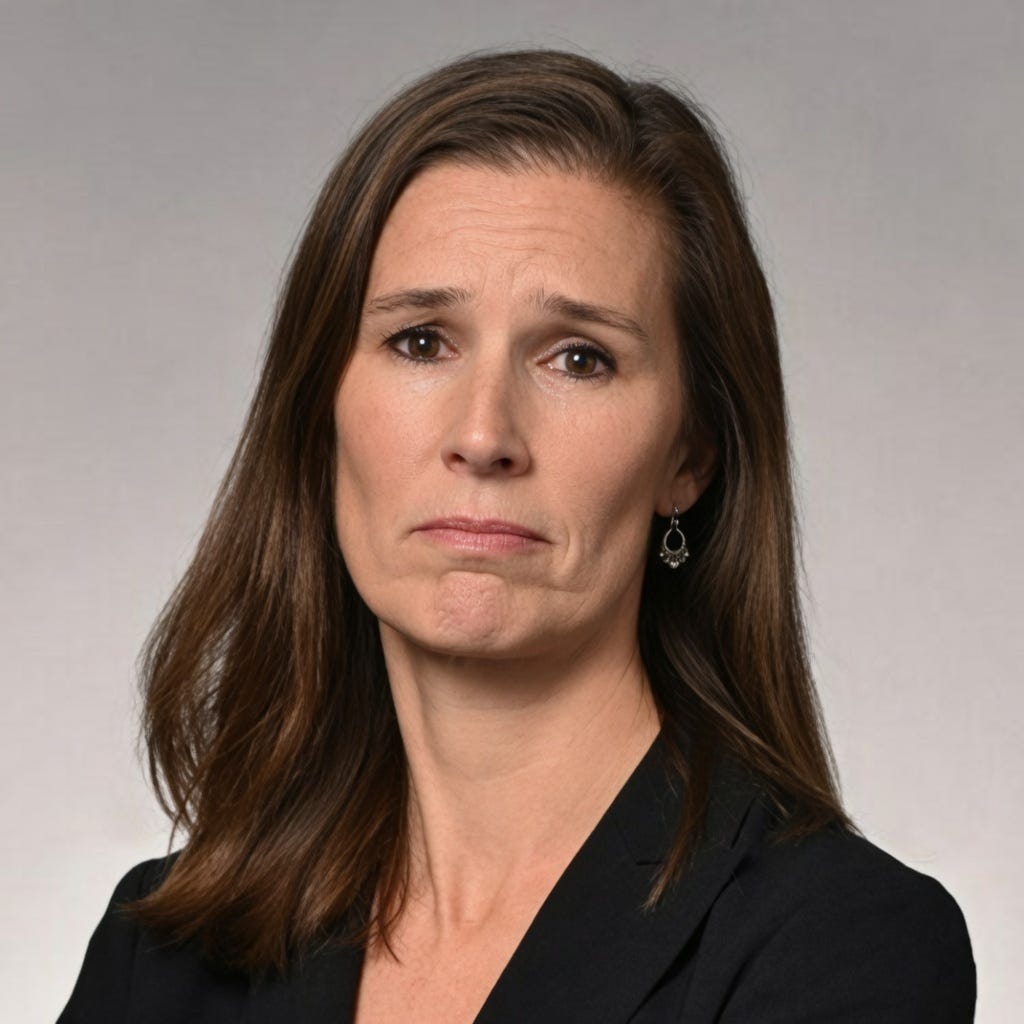
Geritano was convicted in connection with a Brooklyn bar stabbing, and Gerdes was the prosecutor who helped put him away. The system treated the case like an easy morality play: mob guy, knife case, conviction. But Geritano has long maintained that the prosecution narrative was false, that key video evidence was not produced, and that the case was shaped around his old underworld image rather than the actual proof.
The appellate courts later rejected his claims of prosecutorial misconduct, which matters as part of the record. But appellate rejection does not erase the deeper question: what happens when the defendant is so easy to hate that courts, prosecutors, and the press stop asking whether the case was clean?
That is the danger in the Geritano prosecution. The government did not merely prosecute a man; it prosecuted a nickname. “Benny the Blade” sounded like guilt before the jury ever reached the evidence. Once the mob label entered the room, every ambiguity became sinister, every missing item became harmless, and every disputed fact became just another detail in the state’s preferred story.
Geritano says he was not judged as a defendant with constitutional rights. He says he was processed as a mob trophy.
The public should not shrug at that, because constitutional rights only matter when they protect people the government has already taught us to dislike.
Benny No More: Lindsay Gerdes’ Brooklyn Record Was Not Clean
The reason Geritano’s accusation deserves serious attention is not just his own insistence. It is Lindsay Gerdes’ documented record in other Brooklyn prosecutions.
A 2022 ethics grievance filed by law professors against Gerdes accused her of misconduct in two Kings County cases, People v. Rowley and People v. Soto. The grievance says the Appellate Division reversed Marc Rowley’s conviction after finding that Gerdes’ misconduct during cross-examination and summation deprived him of a fair trial.
The cited misconduct included improper questioning, summation misconduct, inflammatory argument, and suggestions of facts not in evidence. That is not a harmless style complaint. That is a court saying the prosecutor’s conduct helped poison the trial.
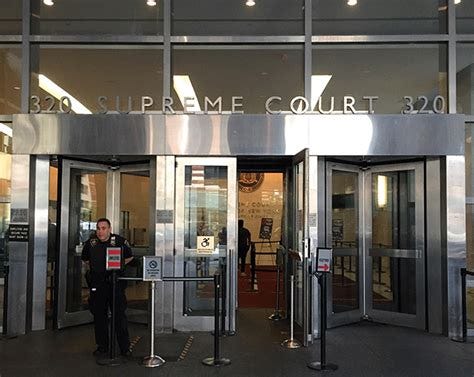
The Soto matter is even more disturbing because it involved the grand jury, the secret room where prosecutors already hold enormous power. According to the grievance materials, after grand jurors deadlocked and asked questions, Gerdes engaged in a colloquy that the court found “impaired” the proceeding and created prejudice. The complaint says her responses amounted to extensive marshaling of evidence “to the point of deliberation,” after which the grand jury returned an indictment.
The Kings County Supreme Court dismissed the indictment because of that interference.
That history matters because Geritano’s case sits in the same prosecutorial ecosystem. If a prosecutor has already been found in other cases to have acted as an unsworn witness, inflamed jurors, or pushed a grand jury beyond its proper role, it becomes reckless to assume every other conviction she touched is pristine.
It does not automatically prove Geritano innocent or validate the misconduct in his case. But it absolutely destroys the lazy institutional answer that defendants like Geritano are merely complaining because they lost.
The pattern is what matters. Rowley and Soto show a prosecutor willing, according to court findings and ethics allegations, to stretch the rules when the case demanded a win. Geritano says the same machinery ran over him.
That claim deserves more than an appellate shrug.
Benny No More: Missing Records, Delayed FOIL, and the Smell of Institutional Protection
The cover-up question now moves from the courtroom to the records room. Geritano’s side has pursued records through the Kings County District Attorney’s Office under New York’s Freedom of Information Law. The DA’s own November 14, 2025, response acknowledges receipt of a FOIL request concerning Battista Geritano, Indictment No. 260-13.
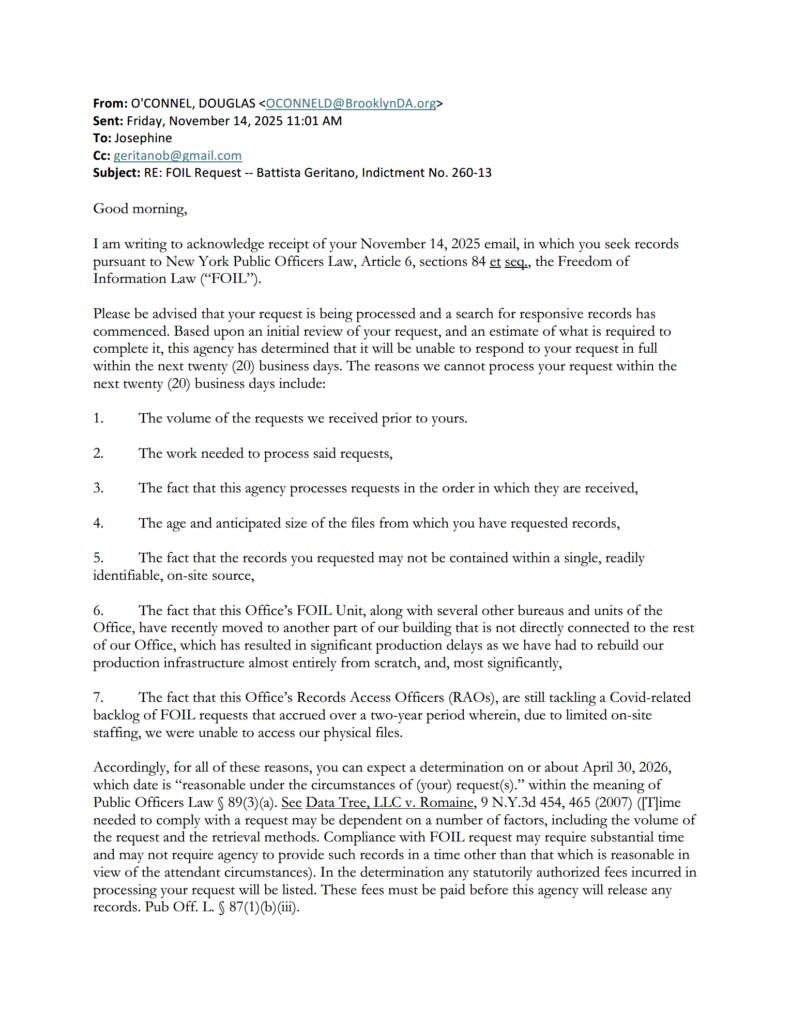
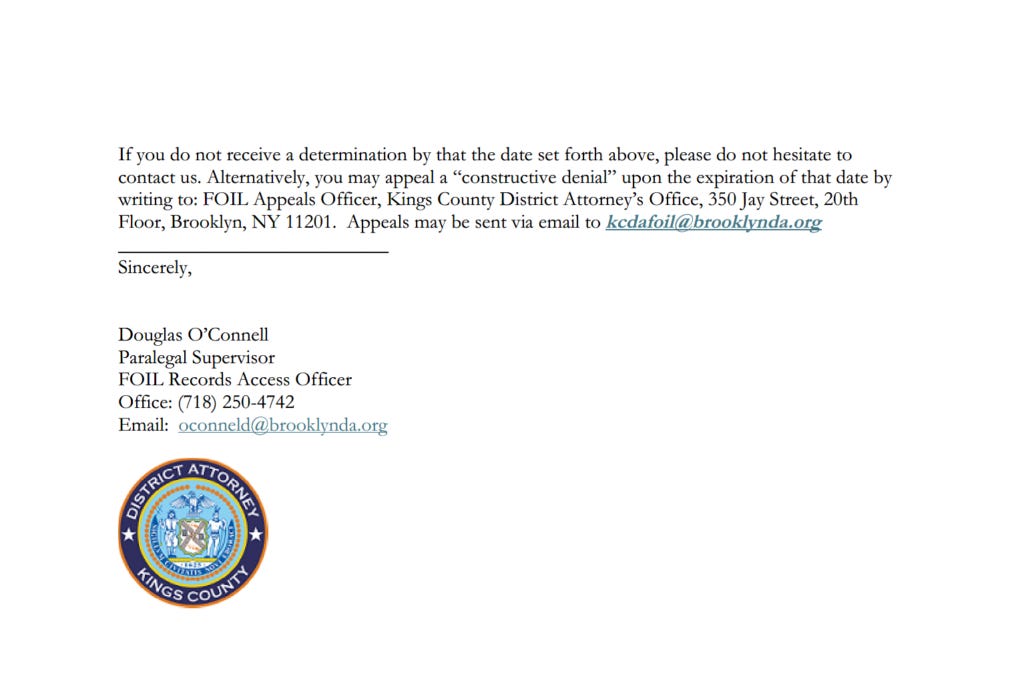
The important part is that the Brooklyn DA admits that the office cannot respond within 20 business days. The reasons offered include the volume of earlier requests, the age and anticipated size of the files, the possibility that records are not contained in one readily identifiable source, a move of the FOIL unit, and a Covid-related backlog involving physical files. The office pushed its expected determination date all the way to April 30, 2026.
That may be a bureaucratic reality. It may also be exactly how institutional accountability dies: not with a flat denial, but with delay, dispersal, “old files,” “physical records,” “backlog,” and “come back months from now.”
It is now a month past their stated due date, and the records still have not been produced. Geritano does not believe they ever will be.
The Brooklyn DA’s Office is not merely holding old paper. It is holding the documentary history of a prosecution that a reformed former Gambino associate says was crooked. If there were missing videos, witness problems, grand jury issues, internal notes, discovery logs, Brady material, or communications about what was preserved and what disappeared, those records matter now.
This is where the phrase “crooked prosecutors covering up misconduct” stops being rhetoric and starts becoming a legitimate public-interest question. Prosecutors who inherit old files have a choice. They can open the drawers, produce the receipts, and let the public see whether the conviction was clean.
Or they can hide behind process until the trail gets colder, memories fade further, and the defendant’s reputation does the work the evidence should have done.
Brooklyn Knows the Script — The Joe Hynes Scandal Proved It
Brooklyn has seen enough wrongful convictions and prosecutorial scandals to know the script. This is not paranoia from defendants who lost. This is the hard institutional memory of Kings County criminal justice under longtime District Attorney Charles “Joe” Hynes, whose office became a national symbol of what happens when conviction culture hardens into self-protection culture.
The Hynes era produced a grim parade of collapsed murder cases, disgraced police work, suppressed evidence allegations, coerced witness claims, and post-conviction litigation that exposed how badly the system could fail once prosecutors decided the right man was already in the box. The name most associated with that wreckage is retired NYPD Detective Louis Scarcella, whose cases triggered sweeping reviews after allegations of fabricated or coerced confessions, recurring witnesses, tainted identifications, and investigative shortcuts.
Hynes’s own office announced a review of dozens of Scarcella cases in 2013, and the Innocence Project reported that the review involved cases Scarcella may have mishandled, potentially resulting in wrongful convictions.
But Scarcella was never the whole scandal. The deeper scandal was the prosecutorial architecture around him. Detectives do not convict people by themselves. They bring cases to prosecutors, and prosecutors decide what to charge, what to disclose, what to argue, what to ignore, and what to defend after the verdict.
The Jabbar Collins case became one of the clearest indictments of that culture. Collins was convicted of murdering a Brooklyn rabbi and spent years in prison before the case unraveled amid allegations that witnesses were threatened, benefits were hidden, and exculpatory information was withheld. ProPublica reported that Collins’s later civil suit accused Hynes and his office of failing to discipline troubled prosecutors and operating a coercive system in which witnesses were pressured into false testimony.
That is the shadow hanging over every old Brooklyn conviction where missing evidence, prosecutor overreach, and reputation-based prosecution appear in the same frame.
Under Hynes, the public learned the pattern: first, the office stands by the conviction; then it dismisses misconduct claims as sour grapes; then it resists disclosure; then years later, after outside lawyers, jailhouse litigants, journalists, and innocence advocates force the issue, the case starts to crack. The Appeal reported that Collins warned Brooklyn DA Eric Gonzalez that more wrongful convictions based on prosecutorial misconduct under Hynes’s watch could still surface, calling one prosecutor’s obstructive role in post-conviction cases “likely the tip of the proverbial iceberg.”
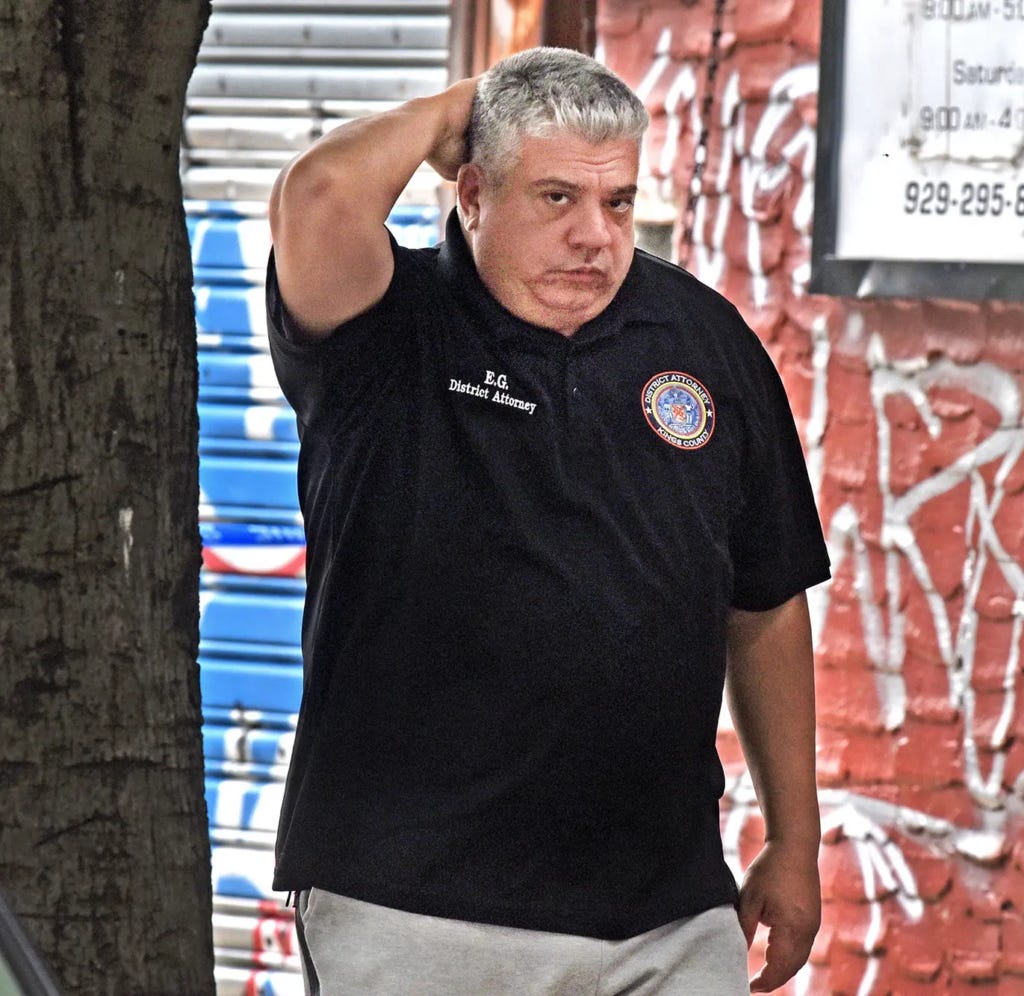
That history matters directly to reformed former Gambino associate Battista Geritano. His prosecution did not emerge from some sterile laboratory of perfect justice. It came from the same Brooklyn criminal courthouse culture that had already shown a dangerous habit of defending convictions first and discovering truth later.
When Geritano says evidence was missing or suppressed, when he says the prosecution used his former mob identity to bulldoze doubt, and when the Kings County DA’s Office now tells FOIL requesters that old files are difficult to locate, scattered, delayed by backlogs, and not available for months, the public is entitled to hear echoes of the Hynes scandal.
The DA’s November 2025 FOIL response admits the Geritano file is old, potentially large, possibly not in one readily identifiable source, and that a determination may not come until April 30, 2026.
That may be bureaucracy. Or it may be the same old Brooklyn fog machine: delay, diffuse, defend, and hope the public loses interest. The Hynes scandal taught New York that wrongful convictions survive because institutions protect themselves. Prosecutors inherit dirty files and call them final judgments. Offices bury embarrassment under procedure. The people who benefited from misconduct retire, get promoted, move to private practice, or wrap themselves in professional prestige.
Meanwhile, the defendant remains the only person with an incentive to keep digging. That is why Geritano’s claim cannot be brushed aside with the usual line that “the courts already ruled.” Courts also upheld plenty of convictions that later collapsed. Brooklyn’s own recent history proves it.
The question is not whether Geritano was once known as “Benny the Blade.” The question is whether the prosecution was clean, whether the evidence was complete, whether Lindsay Gerdes played fair, and whether today’s prosecutors are sitting on records that could expose yesterday’s misconduct.
The Hynes era showed exactly how conviction machines protect themselves. Geritano’s case now tests whether Brooklyn learned anything from that disgrace, or whether the same machine is still humming under a fresh coat of institutional paint.
Brooklyn has seen enough wrongful convictions and prosecutorial scandals to know the script.
Benny No More: The Mob Prosecution Playbook—Reputation as Evidence
After the Kings DA’s Office, Gerdes later went federal, joining the U.S. Attorney’s Office for the Eastern District of New York, where she handled organized crime and high-profile cases. Her Dinsmore biography describes her as a former federal and state prosecutor who tried more than 20 jury trials to verdict and now co-chairs the firm’s White Collar Defense & Government Investigations practice. It also emphasizes her current role representing companies and senior executives in government investigations and sensitive criminal matters.
That career arc is rich with irony. As a prosecutor, Gerdes built her reputation in part through aggressive organized-crime prosecutions. In the Vincent Asaro Lufthansa heist trial, for example, she told jurors Asaro was a gangster “through and through,” framing the defendant through identity, affiliation, and mythology.
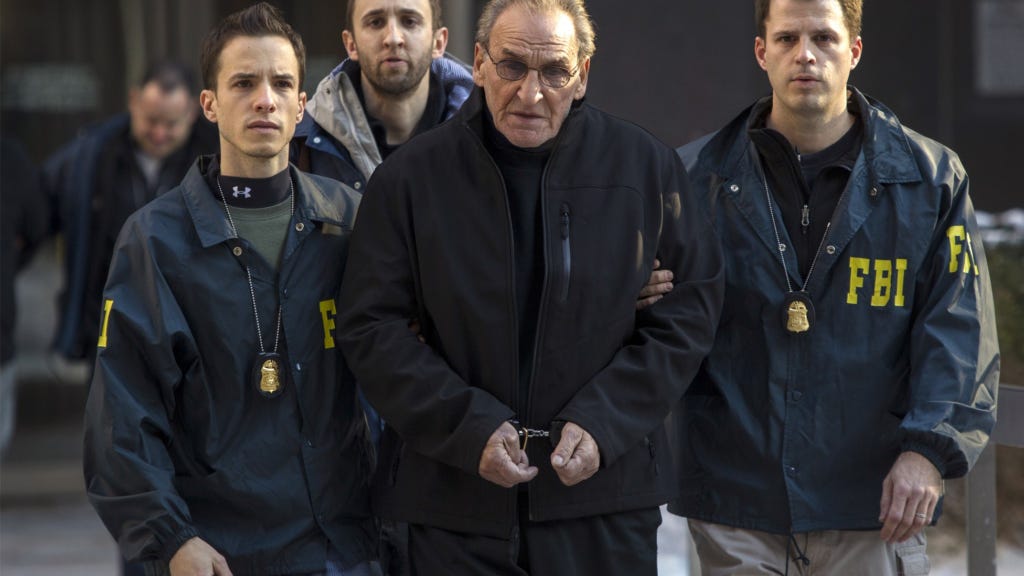
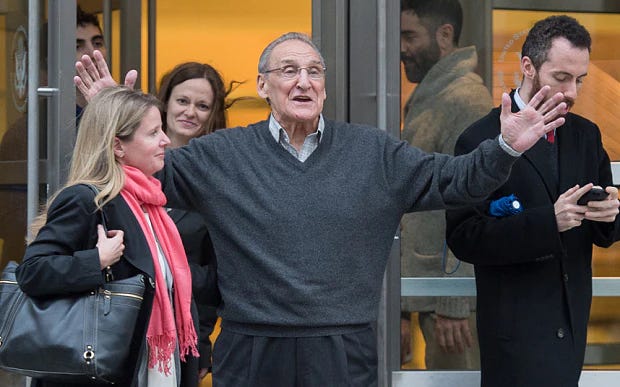
The jury acquitted Asaro, rejecting the government’s case after defense attacks on cooperating witnesses and the prosecution’s theory.
That style of prosecution is powerful because mob cases are story cases. Prosecutors do not just present evidence; they present a world. They invite jurors into a mythology of codes, nicknames, back rooms, knives, loyalty, and violence. Sometimes that mythology is true. Sometimes it is a shortcut around proof. In Geritano’s case, the shortcut was sitting right there in the nickname: “Benny the Blade.” For a prosecutor, that is not just a street name. It is a narrative weapon.
The problem is that a reformed defendant is still entitled to the truth about his prosecution. A former Gambino associate does not lose his right to Brady material. He does not lose his right to complete evidence. He does not lose his right to a fair grand jury. He does not lose his right to ask whether the prosecutor who handled his case had a broader pattern of bending rules in Brooklyn courtrooms.
Geritano’s old life made him vulnerable to the state’s worst instincts. His current reformed posture makes the old prosecution look even more urgent, because the man now challenging the case is not trying to sell gangster nostalgia. He is trying to expose what he says was a frame job hiding under the respectable language of law enforcement.
The Defense-Lawyer Conversion
Then came the transformation. Gerdes left prosecution and became a white-collar defense lawyer at Dinsmore. Her current professional world is built around protecting clients from the same government power she once wielded. Dinsmore’s white-collar practice describes government investigations as high-risk events where companies and individuals have “little margin for error,” and says clients need sophisticated, battle-tested counsel when the stakes are highest.
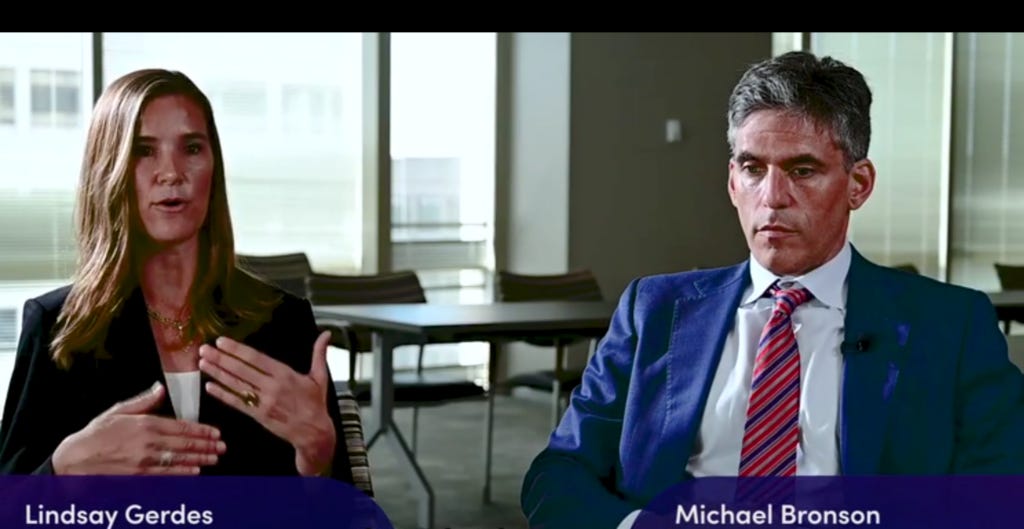
That is quite a conversion. When Gerdes was a prosecutor, defendants like Geritano were the targets. Now her clients are the people facing government scrutiny, reputational destruction, charging decisions, and prosecutorial leverage. In a JD Supra feature, Gerdes discusses why time matters when a person or company is contacted by a government agency. The point is unmistakable: move quickly, protect the client, shape the facts, and do not let the government define the case uncontested.
Exactly. That is what Geritano says he was denied: a fair fight before the government cemented its story.
This is the part that should infuriate ordinary citizens. Former prosecutors often become elite defense lawyers by selling insider knowledge of the system they helped build. They understand the pressure points because they once pressed them. They know how prosecutors think because they once thought that way. They know how dangerous early narratives can be because they once wrote them. Gerdes now markets herself as a shield against government overreach, while Geritano remains stuck fighting the consequences of what he says was government overreach from her Brooklyn days.
That does not make her unique. It makes her a symbol. The same justice system that buries defendants under prosecutorial power later rewards the prosecutors with prestigious defense practices. Meanwhile, the defendants must file FOIL requests, chase missing records, and beg institutions to examine misconduct that should have been confronted years earlier.
Questions for Lindsay Gerdes
Before publication, we sent detailed written questions to Lindsay Gerdes concerning her prosecution of Battista Geritano, formerly known as “Benny the Blade,” the missing-evidence allegations, the Kings County misconduct record, and her later transition into white-collar criminal defense. Gerdes did not respond before press time. Here is what we asked:
From: Modern Thomas Nast <mthomasnast@protonmail.com>
Date: On Wednesday, May 27th, 2026 at 6:52 AM
Subject: Press Inquiry: Battista Geritano Prosecution, Kings County Misconduct Issues, and Public Records
To: lindsay.gerdes@dinsmore.com
CC: RickLaRiviere@proton.me, ralafontaine@protonmail.com, frankiepressman@protonmail.com, richard.luthmann@protonmail.com, msully0916@gmail.com, mvolpe998@gmail.com, frankparlato@gmail.com
Dear Ms. Gerdes:
We are a group of journalists preparing a reported article concerning the prosecution of Battista Geritano, formerly known as “Benny the Blade,” now a reformed former Gambino associate who maintains that he was wrongfully convicted and railroaded in Kings County.
The article will examine your role as a former Kings County prosecutor, your later career as an EDNY AUSA handling organized-crime and high-profile prosecutions, and your current work as a white-collar criminal defense lawyer. It will also address broader questions about prosecutorial misconduct in Brooklyn, including the legacy of the Charles “Joe” Hynes era, wrongful convictions, delayed disclosures, and whether old convictions are being shielded by institutional inertia.
Before publication, we are giving you a fair opportunity to respond. Please provide any statement, correction, denial, explanation, or documentary support you believe should be included.
1. In the prosecution of Battista Geritano under Kings County Indictment No. 260-13, what was your role from investigation through trial, plea negotiations, discovery, grand jury presentation, trial strategy, sentencing, and post-conviction litigation?
2. Mr. Geritano has alleged that critical surveillance footage from the location of the incident was not preserved, produced, or fully disclosed to the defense. Did such footage exist? Was it requested? Was it reviewed by your office? Was it produced to the defense? If any footage was lost, unavailable, overwritten, or deemed immaterial, who made that determination and when?
3. Did the prosecution possess, review, or become aware of any video evidence that could have shown the interior of the premises, the location of other individuals involved, the alleged weapon, or any conduct inconsistent with the prosecution’s theory of the case? If so, why was that evidence not central to the prosecution file and defense disclosure record?
4. Mr. Geritano contends that his former reputation and “Benny the Blade” moniker were effectively used as a substitute for proof. Did the prosecution make any strategic decision to emphasize his alleged organized-crime association, nickname, prior reputation, or perceived street identity? Did you consider whether that framing risked unfair prejudice?
5. Were there any Brady, Rosario, Giglio, or other disclosure issues raised internally or by the defense in the Geritano case? Were any notes, witness statements, police communications, impeachment material, inconsistent witness accounts, benefits, promises, cooperation agreements, or prior statements withheld, delayed, disputed, or later discovered?
6. In light of later misconduct allegations and judicial findings involving your conduct in other Kings County prosecutions, including People v. Rowley and People v. Soto, do you stand by the methods you used as a Brooklyn prosecutor? Do you deny that those cases reflect any broader pattern of overaggressive advocacy, improper argument, or pushing evidence beyond proper legal limits?
7. In People v. Rowley, an appellate court reversed a conviction based on prosecutorial misconduct. In People v. Soto, court-described problems in the grand jury led to dismissal of an indictment. Do you believe those rulings were wrong, overstated, misunderstood, or limited to isolated circumstances? What did you learn from those cases?
8. Did anyone at the Kings County District Attorney’s Office ever review your prosecutions, including the Geritano matter, after the Rowley and Soto rulings or after the later ethics grievance concerning your conduct? If so, what was reviewed, who conducted the review, and were any conclusions reached?
9. The Kings County DA’s Office has responded to a 2025 FOIL request concerning the Geritano case by citing old files, anticipated file size, scattered records, office relocation delays, and a Covid-related backlog, with a projected determination date months later. Do you believe the public is entitled to full transparency in the Geritano prosecution file, including discovery logs, video evidence records, grand jury materials to the extent legally releasable, witness materials, and internal communications concerning evidence preservation?
10. Brooklyn’s criminal justice system has already been shaken by the Joe Hynes-era wrongful conviction scandals, including cases involving alleged witness coercion, suppressed evidence, tainted investigations, and institutional resistance to post-conviction review. Given that history, why should the public simply trust that the Geritano conviction was clean without full file disclosure?
11. After leaving government, you became a white-collar criminal defense lawyer representing individuals and companies facing government investigations. Your current professional role involves protecting clients from prosecutorial overreach, early government narratives, charging pressure, and reputational harm. How do you reconcile that defense-side philosophy with the tactics you used as a prosecutor in Brooklyn and EDNY?
12. Did your time as a prosecutor give you a different view of the power imbalance between the government and defendants once you began representing defense clients? Looking back, do you believe any of your prior prosecutions, including Geritano, Rowley, or Soto, should be reexamined in the interest of transparency?
13. We are also examining your time at the EDNY and your professional overlap with Moira Kim Penza. Did you and Ms. Penza work together, socialize, consult on cases, share strategic approaches, or otherwise have a close professional relationship while serving as AUSAs? Were organized-crime, RICO, or high-profile prosecution tactics discussed among your cohort in ways relevant to your later work?
14. Were any concerns ever raised inside Kings County or EDNY about your trial conduct, disclosure practices, grand jury presentations, witness handling, summation style, or use of inflammatory organized-crime framing? If yes, please describe those concerns and how they were resolved.
15. Do you categorically deny that Battista Geritano was railroaded? Do you deny that any evidence favorable to him was lost, suppressed, ignored, minimized, or mischaracterized? Do you deny that his former Gambino association and nickname were used to overcome weaknesses in the proof?
We intend to report fairly and will include your response in substance. Please provide any response as soon as possible, as we intend to publish shortly. If we receive your responses after press time, we will incorporate them into a follow-up.
Regards,
Modern Thomas Nast
Boss Tweed was just the beginning. Operating in the shadows to expose the shady.
We will update readers if Ms. Gerdes provides a statement, denial, correction, or any documents addressing the issues raised.
Benny No More: Geritano’s Case Demands Sunlight
The Geritano case should be reopened in the court of public scrutiny, if not yet in a court of law. The issue is not whether the public likes Battista Geritano. The issue is whether Brooklyn prosecutors, including Lindsay Gerdes, played fair when his liberty was on the line. The issue is whether missing or undisclosed evidence was treated with the seriousness it deserved. The issue is whether the mob label allowed the government to lower its burden in practice while pretending to honor it in theory. The issue is whether the Kings County DA’s Office is now slow-walking the paper trail because the truth is inconvenient.
Geritano was formerly “Benny the Blade.” That past is part of the story. But today he is a reformed former Gambino associate saying that crooked prosecution tactics destroyed his life and that the government still has not come clean. Given Gerdes’ documented misconduct issues in Rowley and Soto, his claims cannot be dismissed as fantasy.
Given the DA’s delayed FOIL response, the public has every reason to demand transparency. Given Brooklyn’s long history of wrongful convictions and prosecutorial protection rackets dressed up as institutional procedure, skepticism is not only reasonable. It is mandatory.
The clean solution is simple: release the records. Produce the discovery logs. Identify the videos. Explain what existed, what was preserved, what was lost, who knew it, and when. If the prosecution was clean, the documents should prove it. If the documents are missing, delayed, contradictory, or damaging, then the public will know why the system stalled.
Benny Geritano’s old nickname made him easy to convict in the public imagination. But the law is supposed to be stronger than imagination.
If Brooklyn prosecutors used reputation as evidence, buried doubt under mob mythology, and now hide behind FOIL delay while a reformed man fights to clear his name, then this is no longer just a story about “Benny the Blade.” It is a story about a justice system that may have needed a villain so badly it forgot to prove the truth.
