
Death Two Ways: Boyne Sentenced to 20 Years in Connecticut Prison
BREAKING: Connecticut Judiciary gives Paul Boyne 20 years and turns political speech into prison time

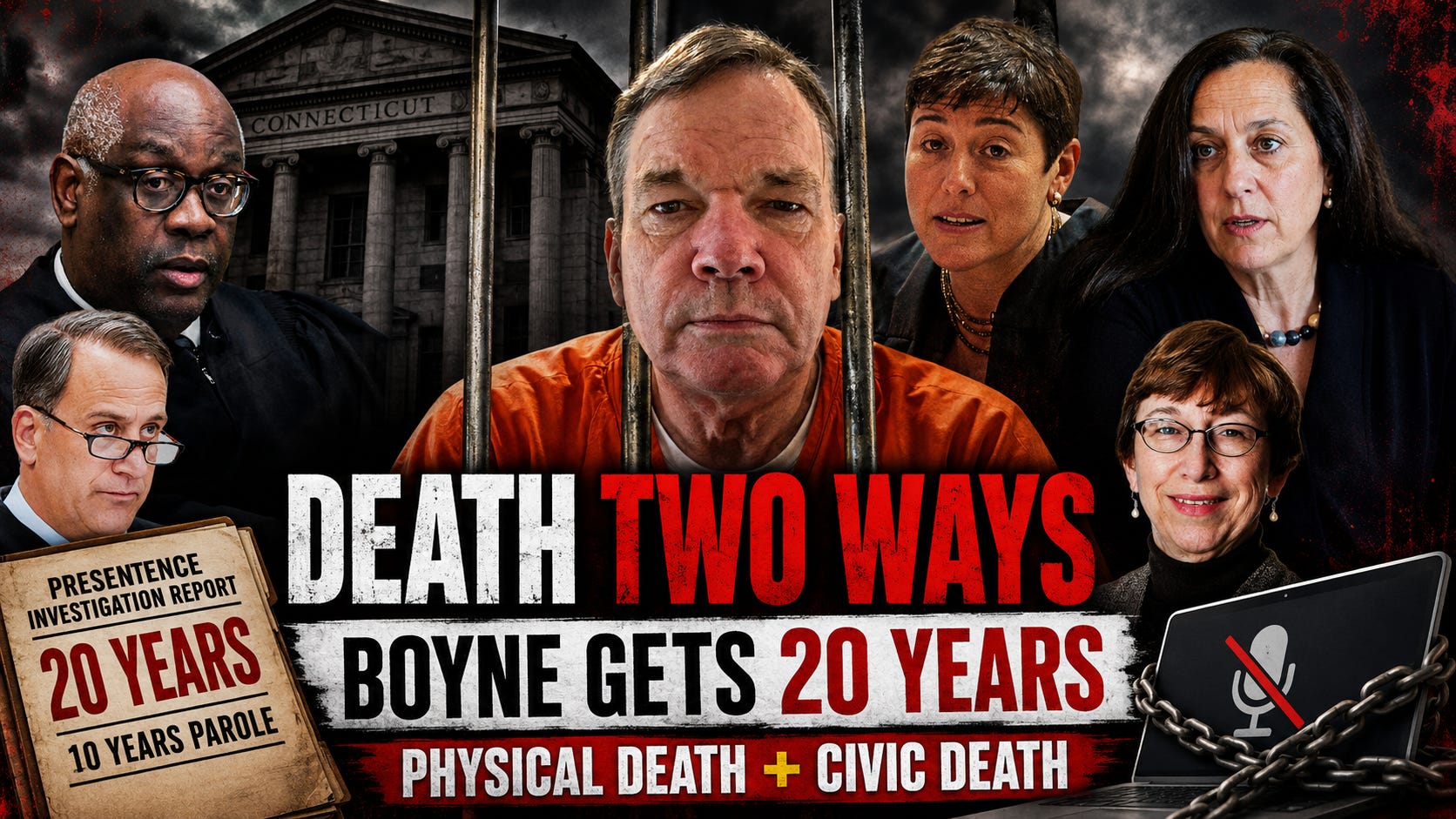
LUTHMANN NOTE: Paul Boyne’s sentence is the mask slipping. Connecticut did not merely punish a defendant. It used a medically fragile 64-year-old writer as the human scaffold for a new anti-speech regime. Twenty years in prison is physical death by calendar. Ten years of parole with monitored internet is civic death by supervision. The judiciary calls it safety. The State calls it stalking. But the pattern is obvious: speech became conduct, conduct became punishment, and punishment became silence. If Connecticut can do this to Boyne, it can do it to any citizen whose words offend the robed caste. This piece is “Death Two Ways,” first available on TheFamilyCourtCircus.com.

By Richard Luthmann
(NEW HAVEN, CONNECTICUT) – On Tuesday, May 26, Connecticut Judge Peter Brown sentenced the 64-year-old Paul Boyne to 20 years in Connecticut prison followed by 10 years of parole with stringent conditions, including monitored use of the internet. It is effectively a death sentence for the outspoken journalist.
In March, a jury returned guilty verdicts on eighteen Class D felonies—first-degree stalking and electronic stalking counts spread across three dockets. The victims were Connecticut Judges Jane Grossman and Elizabeth Stewart, and former Judge Thomas Moukawsher.

Boyne never left his computer screen and keyboard in Virginia, and now the State of Connectict will warehouse the Annapolis graduate and former nuclear engineer, likely for the remainder of his natural life based on actuarial tables given his age and serious health conditions.
Boyne is not expected to live through his prison term. According to the Social Security Administration’s 2022 actuarial life table, a 64-year-old male has an average remaining life expectancy of 18.18 years, and a 65-year-old male has 17.48 years; only about 45% of 64-year-old males and 42% of 65-year-old males are expected to survive twenty more years. On those numbers alone, before accounting for Boyne’s diabetes and prison medical classification, a 20-year sentence is actuarially more likely than not to outlive him.
The State and the Judiciary concede that Boyne is diabetic, takes multiple medications, and had declined medically during prior detention. Judge Tracy Dayton has previously ordered “immediate treatment for diabetes.” That is the State’s own record, not internet theater.
“This is judicial murder. That evil bitch Joette Katz is behind the whole thing. She should rot in hell,” a Boyne supporter said, who did not want to be identified for obvious reasons, including the fear of Connecticut judicial targeting.
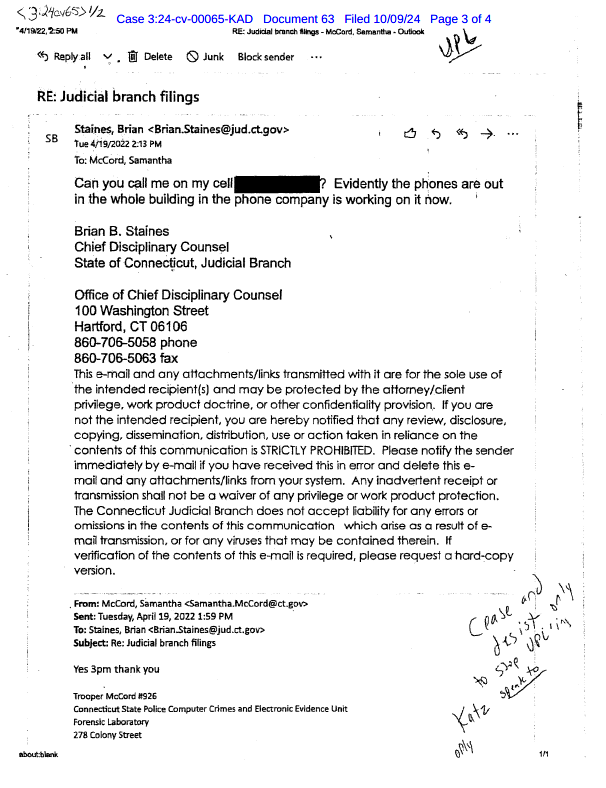
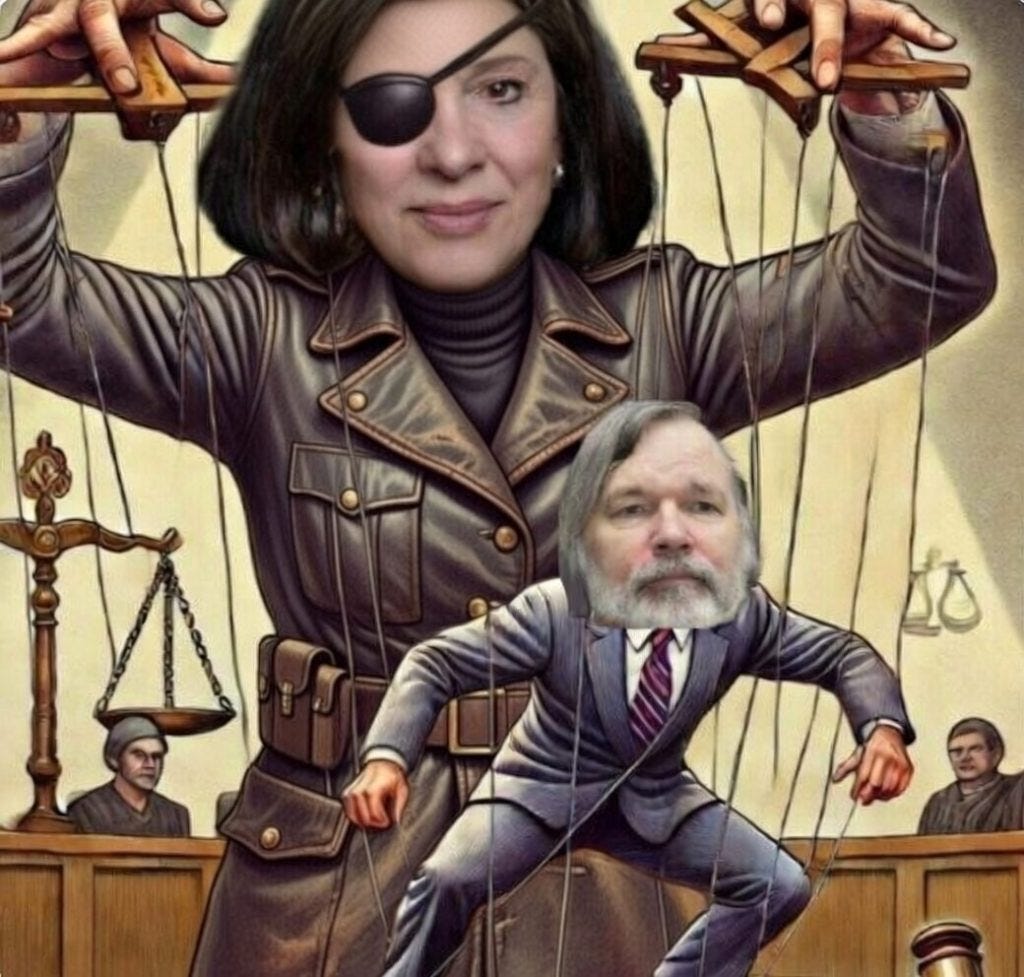
The Connecticut State Probation Department’s prepared Presentence Investigation Report (PSI) recommended 10 years of incarceration, a number that Judge Brown doubled, writing Boyne’s personal and political obituary in bureaucratic clothing.
The sentencing culminates a years-long war over The Family Court Circus blog as a case about menace, terror, and civic threat, and then buries Paul Boyne, physically and civically.
For Boyne, it is a sentence of death two ways. On the way out of the courtroom, Boyne railed that the unconstitutional ruling “chilled the marketplace of ideas.”
Death Two Ways: Viewpoint Punishment
The Connecticut State Police first targeted Boyne on June 25, 2020, over online harassment of Superior Court judges. The claims were that thefamilycourtcircus.com blog posted addresses and images, threatened firearms, caused individualized fear, and targeted judges because of perceived religion or sexual orientation.
That is the state’s preferred frame: not ugly political speech, not vicious commentary, not obsessional blogging, but a totalizing package of intimidation.
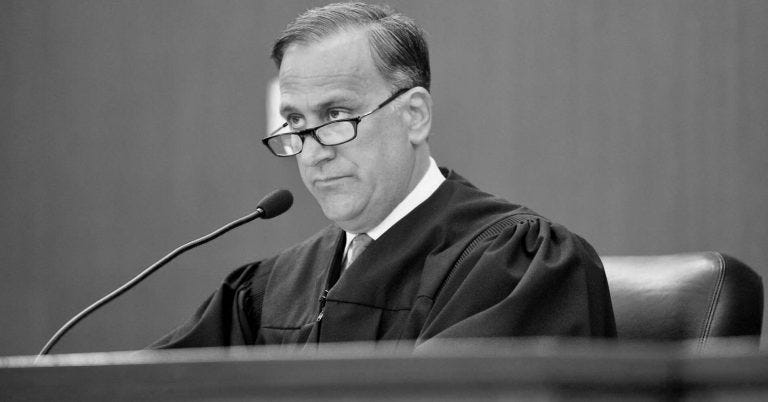
The PSI layered on victim statements that do not merely describe fear; they put forward a national crisis narrative. Retired Judge Moukawsher’s statement drifted from Sandy Hook to the murder of Judge Joan Lefkow’s family, to the killing of Judge Esther Salas’ son, and then to January 6. Notably, Moukawsher did not appear at the sentencing hearing. His statement was read aloud by a probation officer.
Another statement by Judge Jane Grossman, who also testified at the sentencing hearing, said the system of justice itself was under attack and demanded a sentence strong enough to deter “others.”
That is no longer narrow sentencing. That is a political morality play with Boyne cast as the vessel of democratic decay.
That framing matters because Connecticut’s own appellate law has already warned against laundering protected speech into criminal “conduct” merely by relabeling it. In State v. Billings, the Connecticut Appellate Court reversed speech-based stalking and harassment convictions because Facebook posts on the defendant’s own page could not be treated as unprotected speech just because they were upsetting or posted online; only the restraining-order count remained.
Boyne maintains that Connecticut did in his case what Billings refused to let the state do in another: turn expression into “conduct” by verbal sleight of hand, then use sentencing to finish the job.
Whether every word on the blog was protected is a legal battlefield for the Appellate Division. But by Boyne’s account, the PSI, Probation, and the Connecticut Judiciary are not writing a neutral social history. They are writing their own chosen ideology into punishment.
Death Two Ways: An Ideology-Driven PSI
On May 26, 2026, Paul Boyne is a dead man, killed by judicial and institutional homicide in death two ways. The first death is the body. Before accounting for Boyne’s diabetes and prison medical classification, Boyne is not expected actuarially to outlive his term. The PSI medical section describes him as requiring significant nursing access and catalogs the pills, diagnoses, and accumulated physical damage that come with age and incarceration.
The March 10 hearing independently confirmed the medical core of that story: former Boyne counsel Todd Bussert told the court Boyne is diabetic, on a host of medications, and had worsened during prior confinement. The court responded by ordering “immediate diabetes treatment.” Boyne says he was in prison for weeks and never received the treatment.

For a younger, healthy defendant, 20 years is a number. For a sixty-four-year-old man with documented medical concerns, Judge Brown’s ruling read like a state-managed waiting room for death. That is not an unintended side effect. It is the point. The process vindicates the state first. Whether the man survives long enough to enjoy the legal and constitutional vindication is a secondary question.
Boyne’s second death is civic. All three judicial complainants jointly asked for probation conditions forbidding him from “searching, sharing, or writing about” them or their families, enforced by monitoring any electronic devices he uses, with probation potentially transferred to Virginia under the interstate compact.
Read that slowly. This is not just no-contact. This is not merely stay away from the house, don’t call chambers, don’t email the judge. The state will bury his post-prison voice (if he survives) under a regime that reaches searching, sharing, writing, and device monitoring—the architecture of post-release speech control.
Connecticut wants to kill Paul Boyne twice: once through years and medicine, and once by stripping him of a public future. If the state can supervise his words the way it supervises a sex offender’s laptop, then probation has become political air control.
Death Two Ways: Moukawsher’s Wilkinson Act
Former Judge Thomas Moukawsher gave away the Connecticut Judiciary’s crooked game in one sentence: “A serious sentence is needed in this case to send a message of deterrence to others who might be tempted to follow the path of the blogger in this case.”
That is not ordinary victim impact. That is legislative advocacy smuggled into a PSI. Moukawsher is not merely asking the court to sentence Boyne for Boyne. He is asking the court to turn Boyne into an example — a warning flare to future bloggers, family-court critics, judicial watchdogs, and anyone else tempted to drag Connecticut’s robed class into public view.
The backup line is worse: “So there is another thing to be gained from a substantial prison sentence: time and old age.”
There it is. Prison as attrition. Sentencing as slow disposal. Let the years grind down the critic, then use the fear narrative to build the next protection regime.
That is why this reads like Connecticut’s shadow version of the Wilkinson Act.
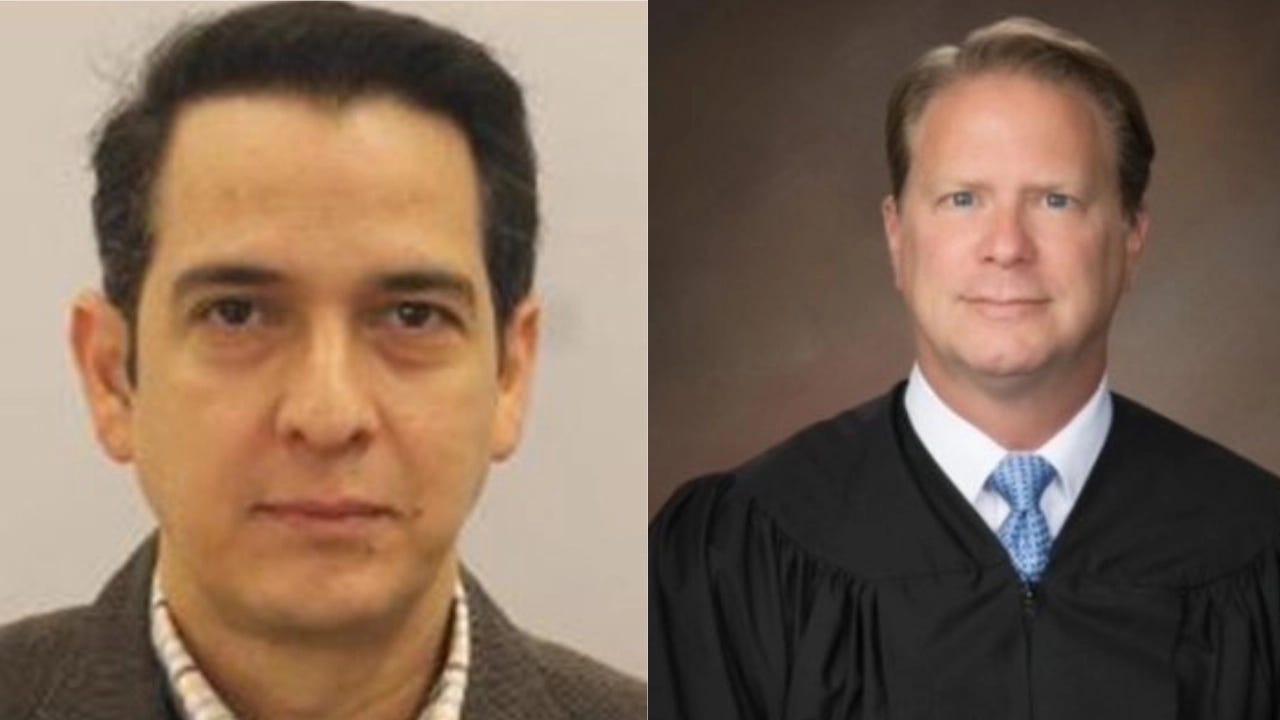
No one can argue that the 2023 murder of Maryland Judge Andrew Wilkinson wasn’t a disgusting horror: a disturbed custody litigant, Pedro Argote, turned a family-court loss into a driveway assassination.
But Paul Boyne is not Pedro Argote. Boyne did not kill anyone. He did not shoot anyone. He did not wait outside a judge’s home with a Glock. The record against Boyne is speech, blog posts, satire, political fury, family-court muckraking, and contempt for a judiciary he believed had forfeited public trust by defending pedophiles.
That distinction is everything. Moukawsher blurs it anyway. He stacks Wilkinson, Sandy Hook, January 6, murdered judges, family-court unrest, and online criticism into one panic architecture, then asks the sentencing court to make Boyne the example.
The result is a stealth policy demand: Connecticut judges want Maryland-style judicial privacy protections, but instead of going to Hartford and fighting the First Amendment in public, they are trying to build the case through Boyne’s body.
That is why the “time and old age” language is so grotesque. It suggests prison is not merely punishment but attrition — a way to neutralize a dissident by letting age and sickness do what censorship cannot openly do. Moukawsher’s Wilkinson Act is not about safety alone. It is about converting judicial discomfort into state power, public criticism into regulated conduct, and one medically fragile critic into the human sacrifice for a broader anti-speech regime.
If Connecticut wants a judicial security law, debate it openly. Do not bury Paul Boyne to manufacture it. But that is precisely what the Connecticut Judiciary has done today.
The greater danger is the creation of a judicial caste — a protected class of government officials who may rule on citizens, control families, seize children, destroy reputations, and then demand special insulation from the very scrutiny their power requires. In a republic, judges are not priests, nobles, or untouchables. They are public servants with robes, salaries, pensions, and extraordinary authority granted by the people.
The Constitution says so: “No Title of Nobility shall be granted by the United States: And no Person holding any Office of Profit or Trust under them, shall, without the Consent of the Congress, accept of any present, Emolument, Office, or Title, of any kind whatever, from any King, Prince, or foreign State.”
A Wilkinson-style regime becomes toxic when it stops protecting judges from true threats and starts protecting them from public accountability. If ordinary citizens may be investigated, exposed, mocked, criticized, and ruined by state power, but judges receive a special speech shield against embarrassment, residency questions, conflict reporting, and family-court criticism, then Connecticut has not created judicial security. It has created a judicial aristocracy.
That is the caste system Boyne is being used to build: one law for the robed class, another for the peasants who dare speak about them.
Death Two Ways: The State AND Federal Courts Ignore the First Amendment
The official federal record tells its own brutal story. Boyne filed a federal habeas case in January 2024, Boyne v. Guadarama, challenging his detention and raising First Amendment arguments about Connecticut’s stalking framework. Judge Kari Dooley dismissed the case on June 14, 2024, on Younger-abstention and exhaustion grounds, and the docket shows a long trail of later filings and denials after the case was already closed.
By May 2026, Boyne was still trying to use the closed federal case as an emergency brake. The State’s May 21, 2026, objection to his latest injunction motion said the federal petition was no longer pending, the Anti-Injunction Act and 28 U.S.C. § 2251 blocked the requested relief, the state judge was not even a party to the case, Younger still controlled, and Boyne had already filed a May 5 motion for acquittal in state court pressing the same constitutional arguments.

The State also told the federal court that sentencing was scheduled for May 26. That is the machinery in plain English: the federal forum is closed, the state forum is where your remedy supposedly lives, and the sentencing train keeps moving.
So when Boyne says Connecticut is playing a constitutional shell game, he is not inventing the architecture. He is describing it in rougher language. State court says the case is criminal conduct, not speech. The federal court says Younger and exhaustion mean it should not step in. The prosecutor’s federal brief says Boyne can raise his arguments in state court.
Then the Connecticut State Court gives two decades in prison and speech-focused controls on the back end.
That is why U.S. District Court Judge Kari Dooley’s May 22 order landed less like a surprise than like the final click of the hallway lock. The constitutional question never disappears. It just never seems to arrive anywhere in time to stop the next injury.
By the time the courts finish deciding where the First Amendment belongs, the two-fold death sentence may already have done the work that Boyne claims “The Jewdiciary” had intended all along.
Death Two Ways: Connecticut Turns Speech Into Conduct and Marches Boyne and the Constitution to the Grave
The legal fight at the center of this case is both technical and primitive. Technical, because the state insists the convictions are for stalking and electronic stalking, not for opinion, rhetoric, or political messaging. Primitive, because the punishment looks exactly like what governments do when they fear a writer more than they fear a burglar: remove the body, monitor the tools, and make an example out of the mouth.
Connecticut’s own sentencing statute says probation turns on whether “present or extended institutional confinement” is actually necessary to protect the public and whether supervision can provide guidance or assistance. That is supposed to be a public-safety inquiry, not a referendum on whether the bench despises the defendant’s worldview.
The question is not whether the state has imprisoned someone who is dangerous in the ordinary criminal sense. The Connecticut Judiciary has incapacitated a dissident pamphleteer whose language it believes could inspire future contempt or chaos. That is a different species of punishment altogether.
And that is where the case stops being just about Paul Boyne. In Billings, Connecticut’s Appellate Court rejected the theory that protected speech becomes punishable conduct by label alone. Boyne’s own May 2026 acquittal motion, attached by the State in federal court, makes the same essential accusation in his own voice: that Connecticut has taken essays and posts and alchemized them into “conduct” to evade the First Amendment.
Maybe appellate courts will someday agree with him. Maybe they will not. But the point is ideologically-driven punishment by process.
Connecticut is not merely sentencing a man. It is testing whether a state can take offensive political speech, pound it flat on the judicial anvil, rename it “conduct,” and then use the resulting conviction to fasten a lifelong throttle around whatever speech survives.
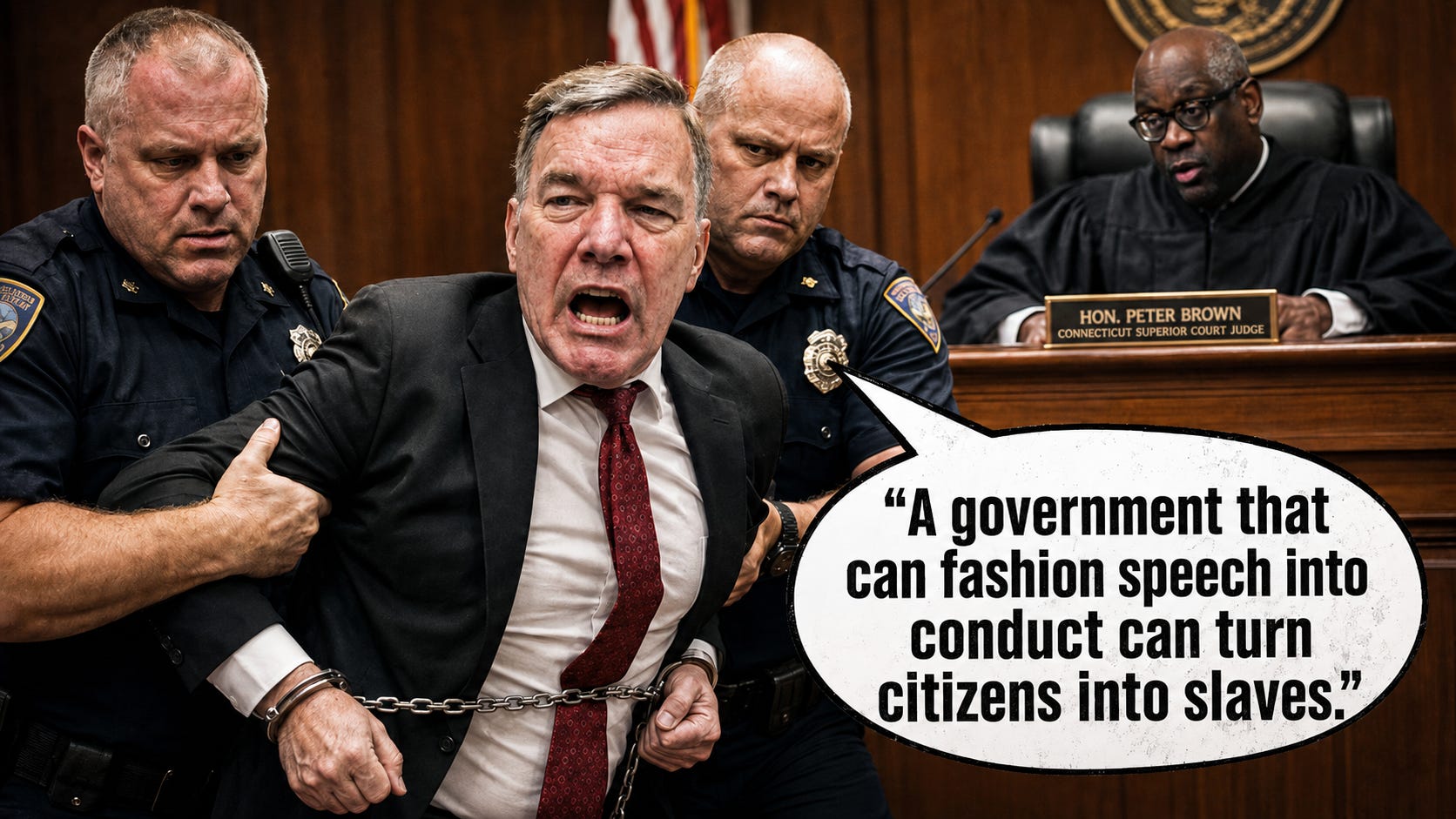
That is the Boyne line in its purest form: A government that can fashion speech into conduct can turn citizens into slaves.
Once the State wins that power, liberty becomes conditional. The citizen no longer speaks as a free man. He speaks as a licensee of the court, under watch, under threat, under the permanent suspicion that the wrong sentence, the wrong post, the wrong criticism of the wrong judge may be reclassified as criminal behavior.
That is why free speech exists in the first place. It is not there to protect birthday cards, weather reports, and judicial fan mail. It exists because when words fly, bullets usually do not. The First Amendment is the pressure valve of the Republic. It lets rage become argument, corruption become accusation, satire become ridicule, and public grievance become political movement.
Crush that valve, and the pressure does not disappear. It goes underground. It becomes darker, uglier, and more dangerous. Connecticut’s theory does not make judges safer. It makes Connecticut more authoritarian, less safe, and less free.
This is tyranny dressed in procedural robes. The Nutmeg State’s great “laboratory of law,” to borrow Justice Brandeis’s famous phrase, has not produced a model for ordered liberty. It has exploded on the bench. Connecticut tried to experiment with converting speech into stalking, dissent into danger, and post-sentencing supervision into a permanent censorship harness. The result is not innovation. It is a constitutional laboratory failure, complete and total.
Without free speech, there is no liberty. There is only permission. Even the old Jeffersonians would recoil at this courthouse alchemy. Jefferson’s warning that “the tree of liberty must be refreshed from time to time with the blood of patriots and tyrants” was not a call for courtroom chaos; it was a brutal reminder that governments that suffocate liberty eventually invite consequences far worse than speech.
Connecticut should want more speech, not less. More sunlight, not more gag orders. More argument, not more prison cells. A state that fears words has already confessed its own weakness.
That is the march forward for Boyne: speech into conduct, conduct into punishment, punishment into silence, and silence into a slow death.
We will have a detailed play-by-play and analysis of the sentencing hearing in a follow-up piece.
