
Alleged Psycho Pedo Ambrose Continues His Lies
Ambrose Sues Everyone. Says He Sent the Rule 4(d) Packet. Parlato Asked for Proof. Crickets (So Far).

NOTE: This guest piece was first published at FrankReport.com. For background on Christopher Ambrose, CLICK HERE.

By Frank Parlato
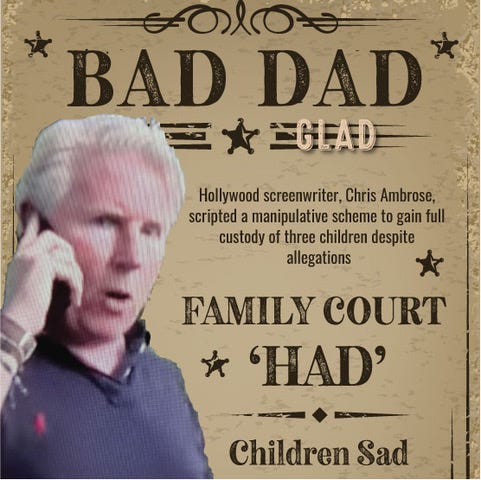
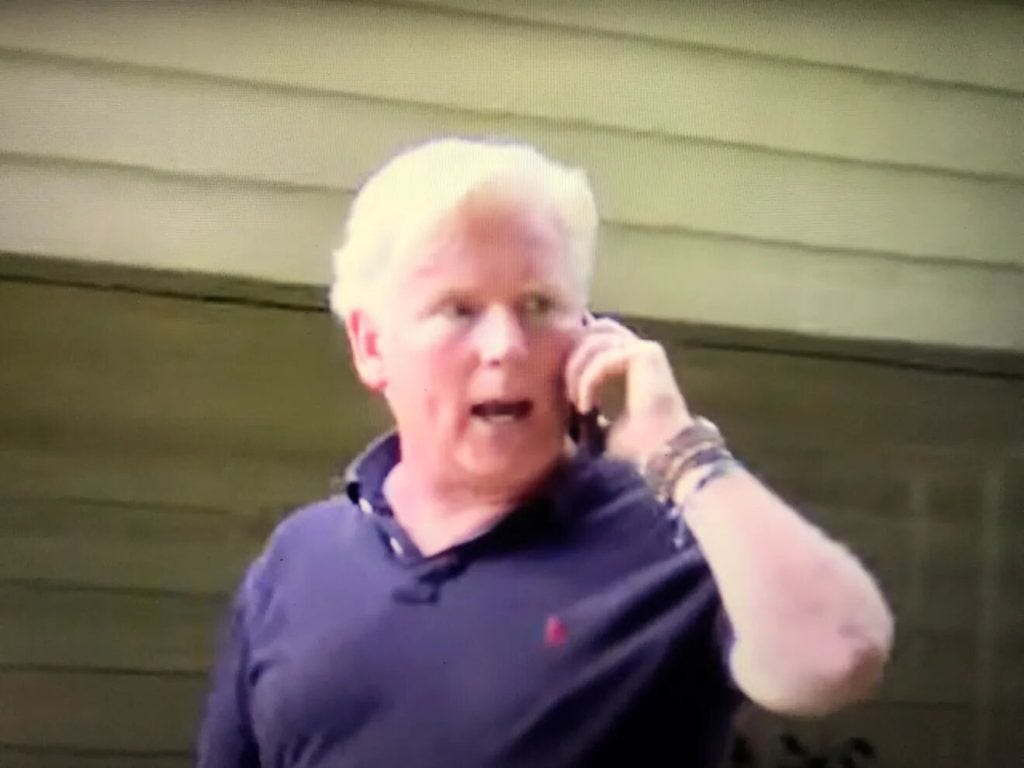
Christopher Ambrose is suing me. Again. In federal court for defamation. I have written a number of stories about him. He has sued a number of others.
And now he wants to sue me. First, he has to serve me. That seems to be a problem for him.
Emails Over Service
On Sept. 2, plaintiff Christopher Ambrose emailed me at 6:00 a.m. with a friendly request: skip the process server, take the First Amended Complaint by email, and give yourself 60 days to respond.
“I am writing to ask if you will accept service of the First Amended Complaint by email instead of requiring formal service,” Ambrose wrote, adding the familiar carrot-and-stick: 60 days to answer if I agree; 21 days and possible cost-shifting if I don’t.
Fair enough. In federal court, defendants can waive service under Rule 4(d). It’s optional. If the plaintiff sends a proper waiver packet, a defendant can sign it and get extra time. If the defendant refuses without good cause, the judge can shift service costs back to the defendant. Those are the rules.

So at 2:00 p.m. on Sept. 3, I answered:
“I will consider it. But first, properly send a Rule 4(d) packet.”
Why? Because Rule 4(d) isn’t a vibe; it’s paperwork. A compliant packet usually includes:
the file-stamped complaint (here, the First Amended Complaint),
the AO 398 notice (request to waive),
the AO 399 waiver form,
the Rule 4(d)(1)(C) notice explaining consequences,
and a reasonable return method with 30 days to sign.
Two and a half hours later, Ambrose wrote back:
“I sent you a Rule 4(d) waiver packet more than 30 days ago, but did not receive a response. That fulfilled my obligation under Rule 4(d)…”
That’s a factual claim. And litigation runs on facts.
I checked my inboxes, spam, archives. Nothing. If he sent it, there should be proof of transmission—an email with headers, a certified mail receipt, a courier tracking slip. Something.
So I sent him a second email—on the record—to memorialize the timeline and ask for proof. Here is the meat of it:
“To clarify the record:
• Sept. 2: You asked me to waive formal service and accept the First Amended Complaint by email.
• Sept. 3: I requested a proper Rule 4(d) waiver packet.
• You then stated you had sent such a packet ‘more than 30 days ago.’
• I have not received any Rule 4(d) packet or a file-stamped First Amended Complaint.”
Then I set a deadline and spelled out what proof looks like:
“If your statement is accurate, please produce proof within 48 hours:
(1) Proof of transmission/delivery (email with full headers or mail/courier receipt and tracking),
(2) the file-stamped First Amended Complaint,
(3) AO 398/399 (Notice to Waive / Waiver), and
(4) the Rule 4(d)(1)(C) notice.”
And because accuracy matters—especially for a plaintiff—this:
“If you cannot substantiate that a compliant packet was sent, please withdraw or correct that assertion so the record is accurate. Continued reliance on an unsubstantiated claim risks issues under Rule 11(b)(3).”
I also made two points crystal clear:
No waiver without a packet.
“Absent a compliant packet and proof, I do not consent to email service and do not waive service under Rule 4(d). Please proceed, if you choose, with service in accordance with Fed. R. Civ. P. 4(e) and any other applicable law.”
I’m traveling; I won’t stage a sidewalk service.
“I am on multi-state business travel for an extended period and will not coordinate in-person service appointments. This is not evasion; I expect service to be effected by the methods the Rules provide.”
The On-the-Record Questions
Because I’m a journalist and I report on my own cases, I told Ambrose I would publish this exchange and invited him to comment on the record (verbatim if he wishes):
Do you maintain that you sent a Rule 4(d) waiver packet “more than 30 days ago”?
If yes, please provide the proof above.
If no, do you retract or correct that statement?
If you maintain it was sent, when, how, and to what address was it transmitted, and why was nothing received?
If you cannot substantiate the prior statement, will you correct the record with the Court?
Why This Matters
This is not a debate about whether I should be served. I will be—properly—or I will waive upon receipt of a proper packet. The issue is the truthfulness of a representation that a Rule 4(d) packet was already sent 30+ days ago. If it was sent, there will be receipts. If it wasn’t, say so and fix the record. It’s that simple.
[caption id="attachment_20880" align="alignnone" width="400"]
Ambrose has also suggested that if I don’t waive, he’ll seek service costs. Without a compliant Rule 4(d) request, that motion has a hole in the bottom. The rule’s cost-shifting presumes a proper request was made and ignored without good cause. My “good cause” is straightforward: no packet received; no proof provided.
Where We Are Now
As of publication, no proof of any Rule 4(d) packet has arrived in my inbox. If Ambrose sends it, I will publish it. If he corrects the record, I’ll publish that, too. If he proceeds with formal service under Rule 4(e), I’ll accept it—as the Rules prescribe—and respond on the timeline the law sets.
I don’t hide from lawsuits. I don’t hide from service. I do insist on accuracy, especially from those who walk into federal court and speak in the voice of a plaintiff. That’s not combat; that’s housekeeping.
In the meantime, here are the emails, in their own words:
Ambrose (Sept. 2, 6:00 a.m.)
“I am writing to ask if you will accept service of the First Amended Complaint by email… You will have 60 days… If you do not agree… I will arrange for formal service… and I will seek to recover the costs of service.”
Parlato (Sept. 3, 2:00 p.m.)
“I will consider it. But first properly send a Rule 4(d) packet.”
Ambrose (Sept. 3, 4:30 p.m.)
“I sent you a Rule 4(d) waiver packet more than 30 days ago… Please confirm by 5:00 PM tomorrow whether you will accept service… If not… I will seek to recover the costs of service.”
Parlato (follow-up, excerpt)
“I have not received any Rule 4(d) packet or a file-stamped First Amended Complaint… Produce proof within 48 hours (headers/receipts + AO 398/399 + file-stamped FAC + Rule 4(d)(1)(C) notice) or correct the record… I am on multi-state travel and will not coordinate in-person service. This is not evasion; use the methods the Rules provide… All defenses preserved.”
That’s the story for now: Say it. Show it. Or fix it.
Either way, we are off to a good start.