
Federal Prosecutors Feast on Sham Civil Suit
How Miami lawsuits with zero hard evidence snowballed into a trafficking indictment

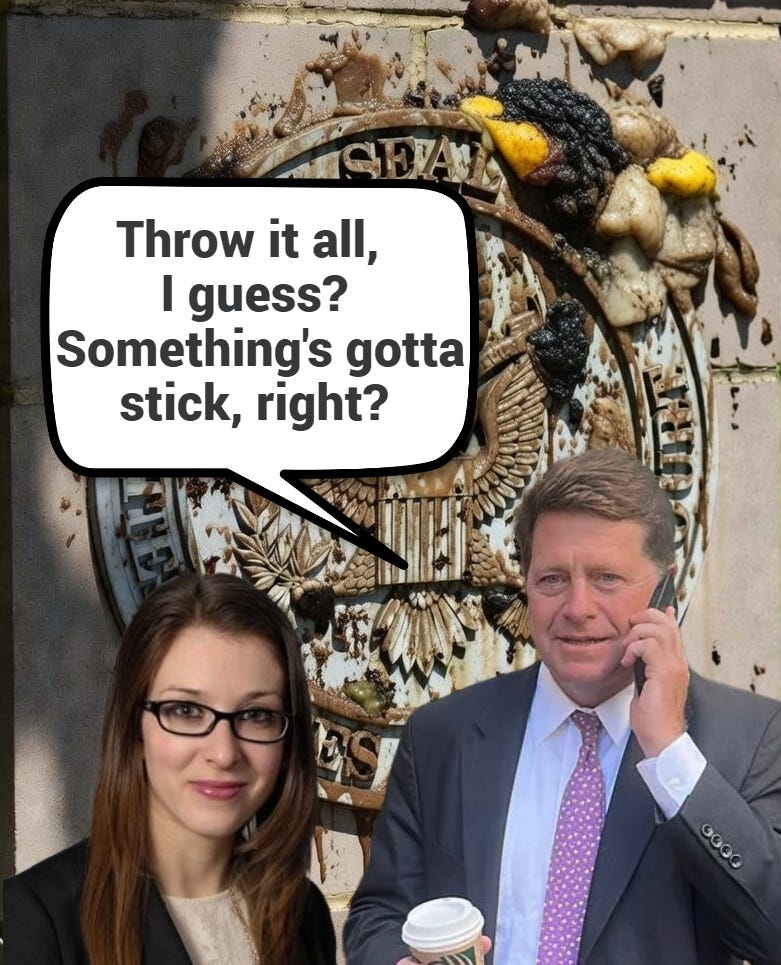
NOTE: This case should terrify anyone who still believes evidence matters. A quiet Florida civil dispute, unsupported by police reports or medical proof, metastasized into a federal prosecution because narrative beat facts. Plaintiff lawyers aggregated memories. Rivals whispered optics. Prosecutors reached for the broadest statute available. Suddenly, decade-old social encounters became “trafficking.” That is not justice. That is escalation by inertia. Federal power is supposed to be precise, restrained, and evidence-driven. Here, it looks opportunistic. If this model holds, any civil allegation can be inflated into a criminal case with enough pressure. That should alarm everyone—regardless of guilt, politics, or personalities. This piece is Federal Prosecutors Feast on Sham Civil Suit, first published on FLGulf.News.

By Richard Luthmann
(MIAMI, FLORIDA) – The federal case now pending against the Miami-based Alexander brothers – Oren Alexander, Alon Alexander, and Tal Alexander – did not begin as a criminal investigation. It began in Florida, years after the alleged encounters, through civil litigation, private communications, and referrals that ultimately led federal prosecutors to bring controversial charges under the Trafficking Victims Protection Act (TVPA).

Understanding how that escalation occurred requires tracing the sequence of events in Florida; who raised concerns, how they were communicated, and how civil allegations were ultimately reframed as a federal criminal case.
Florida as the Starting Point
Brothers Oren, Alon, and Tal Alexander – once known as flashy real-estate dealmakers in Miami – now find themselves indicted under a federal sex-trafficking law for encounters that allegedly happened more than a decade ago. In fact, here’s the jaw-dropper: at the time of those supposed South Beach shenanigans, not a single accuser went to the cops. There were no police reports, no medical exams, no toxicology tests – not one contemporaneous piece of evidence.
Instead, years later, the accusations surfaced in civil lawsuits seeking big payouts. What started as a whispered he-said, she-said in a Florida courtroom escalated into a multi-accuser, media-fueled showdown. Those initial civil claims lit the fuse – they opened the floodgates for what came next.
Attorney Advertising and Claim Aggregation
Enter attorney Evan Torgan. This plaintiffs’ lawyer drummed up clients with advertising that urged women to re-evaluate their wild nights from years past. One by one, multiple women – many dredging up decade-old memories – signed on and handed Torgan their stories. All of them chose him as their lawyer, a detail the federal judge has bizarrely forbidden the jury from learning.
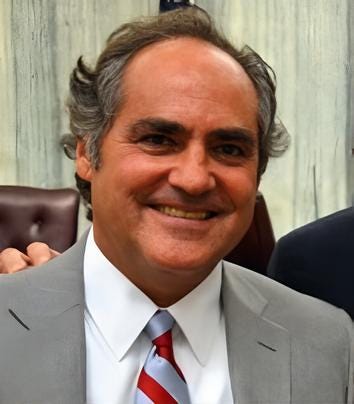
Those civil lawsuits became the springboard for something much bigger. As more accusers lined up, the pressure mounted. Soon enough, as these claims multiplied, someone tipped off the feds.
Meanwhile, a rival Miami real-estate broker named Cynthia Golub smelled blood in the water. Golub – a competitor of the Alexander brothers – took it upon herself to get prosecutors interested. She had an inside connection: her sister, Suzanne Von Paulus, is a Florida state attorney.
Golub bombarded her sibling with emails painting the Alexanders as predators in need of stopping.


In these back-channel emails, Golub didn’t present hard evidence – she peddled optics. A noted Trump-hater, Golub invoked the brothers’ ties to Trump’s circle (the Alexanders once sold Ivanka Trump and Jared Kushner a Florida mansion) and sniped that the brothers were “birds of a feather,” lumping them in with a Trump-era culture of sexual misconduct and impunity.
In other words, she framed the accusations as part of a bigger political narrative rather than a straightforward crime report. The emails focused on image and influence rather than any actual proof.
Those civil claims became the foundation for what followed
These behind-the-scenes maneuvers worked. Without a single police complaint being filed in Florida, the allegations against the Alexanders gained traction through informal channels and political pressure. What started as local whispers soon had federal prosecutors on the hunt.
One early accuser added even more intrigue: she happens to be individual who is also the wife of a former U.S. Congressman. Her involvement put an extra media spotlight on the case. But her own testimony would later hand the defense some ammunition.
In a bombshell deposition, that politically connected accuser’s story started to wobble. She claimed she was devastated after her encounter with Oren Alexander – saying she spent the night crying at home – but under oath she admitted she also went out partying at Miami’s LIV nightclub shortly afterward. She essentially painted two conflicting pictures: one of tears on the couch, and another of enjoying a night out at a club not long after the alleged incident.
Even more shocking, she stayed friendly with Oren in the aftermath. She kept texting him flirty messages and even sent along suggestive photos in the weeks that followed – without a hint that anything was wrong. And though she later said she felt “drugged” that night, she eventually admitted no one actually drugged her – “drugged” was just how she felt emotionally afterward, not that any substance had been slipped in her drink.
The defense pounced on these revelations. They argue that the accuser’s own texts and behavior completely undercut her story. They openly ask how a true victim could go clubbing with her alleged attacker and later send him sexy selfies. Prosecutors, however, insist that trauma can make victims act in inconsistent, even baffling ways.
That dispute – genuine assault or rewritten regret – remains central to this case.
The former Congressman’s public profile added visibility to the Florida allegations. As background, he had a brief interaction with the Miami-Dade State Attorney’s Office in 2003, when, while a college freshman, he was arrested on misdemeanor charges that were later dismissed. His father was acquainted with the Miami-Dade State Attorney Katherine Fernandez Rundle, and modest political donations were made around that period. Subsequent reporting found no evidence that those donations influenced the dismissal of the charges. There is no allegation that Fernandez Rundle or her office played any role in the later civil claims or federal prosecution.
From Civil Claims to Federal Charges: Federal Prosecutors Feast on Sham
With mounting accusations and growing buzz, the feds finally stepped in for real. Rather than pursue standard state sexual-assault charges, federal prosecutors went for the jugular. They dusted off the Trafficking Victims Protection Act – a statute typically reserved for pimps, human traffickers, and Diddy – to indict the Alexander brothers.


That move stunned legal observers. The TVPA was initially meant to target forced labor and trafficking rings, but the prosecutors rely on broad wording. Under this law, they allege the brothers psychologically coerced these women, without needing any proof of physical force or a prompt report to police.
Applying such a heavy-duty trafficking statute to adult party hookups has, unsurprisingly, proven highly controversial. Sean “Diddy” Combs was acquitted of the TVPA charges in his trial last year in Manhattan federal court.
In the blink of an eye, a once-local squabble became a coast-to-coast cause célèbre. The Alexander brothers went from selling luxury condos to facing a federal indictment that brands them as predatory “traffickers.”
Federal Prosecutors Feast on Sham: Defense Position and Family Response
Through it all, they have vehemently insisted they’re innocent.
“If you want to know what the heart of our defense is in this case, it’s this: they didn’t drug anybody — not one time, not ever — and there’s not going to be compelling evidence that they ever did,” their attorney Marc Agnifilo thundered in court.
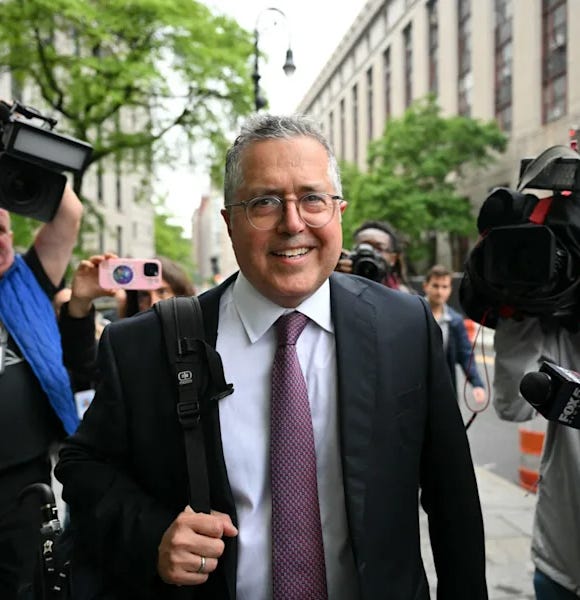
The brothers’ parents have also spoken out, blasting what they see as a runaway prosecution years in the making.
“We have been living with this ordeal since allegations first surfaced in civil lawsuits and were widely amplified long before any criminal charges were brought. The impact on our family has been profound and deeply painful,” parents Shlomi and Orly Alexander lamented in a statement.
They believe their sons will be vindicated if the trial stays focused on facts.
“We believe our sons are innocent… the truth will prevail,” the distraught parents added, pleading for “a fair process, grounded in facts, where their voices can finally be heard.”
Why Florida Still Matters
Despite the venue now being a federal court, this saga is still a Florida story at its core. The alleged misdeeds all happened in the Sunshine State. The civil claims first surfaced there.
Even the backroom prosecutor outreach that lit the fuse happened in Florida.
It’s the place where the whole factual record was born – and where the contrast between what was said back then and what’s alleged now stands in sharp relief.
The entire ordeal leaves us with an uneasy question: is this belated crackdown a righteous quest for justice, or a sensational overreach? The path from a quiet civil claim to a headline-grabbing federal indictment blurs the line between genuine accountability and an opportunistic pile-on.
As this case grinds forward, the government’s strategy is coming into focus: throw everything at the wall and pray something sticks. So far, it hasn’t.
Narratives multiply. Theories balloon. Headlines scream. But evidence remains thin.
Federal prosecutors do not win by noise or volume. They win by proof. And if this case ends the way it is currently unfolding, the lasting image won’t be justice served—it will be a powerful prosecution exposed as overreaching, unfocused, and embarrassingly empty once tested in open court.

"The malocchio (evil eye) is real. If "legal professionals" have an extra moment to look at you, your life will be mangled beyond recognition. After the dust settles and you're wondering what happened to all of our family's money, visit BillingAssetRecovery.com and email Isabella@barinvestigation.com with names, numbers, and any details you feel like sharing (do NOT share confidential information like (but not limited to): social security numbers, credit or bank account numbers, children's names, birth dates, etc)."