

Grossman Tiberi Time Bomb
Boyne Trial Testimony Puts Family Court Rulings Back On Trial


LUTHMANN NOTE: This is the first part of a series where we will tear through the testimony and evidence from the Paul Boyne trial, which took place in New Haven in March. The lineup of family court judges is pretty awesome, and Judge Jane Grossman’s testimony is no footnote. It is the match tossed into the Tiberi file. When a judge admits under oath that the world-famous blog was in the case, that she was terrified, that the mother was supposedly “under the thrall” of Boyne, and that access to the child was tied to a mental-health diagnosis and medication pathway, the courthouse floor starts shaking. No judge can do that. This is how family court operates in the dark: diagnosis, isolation, coercion, and control. Now the light is on. The first move is the state court. The second move may be a federal civil rights claim. The testimony and trial evidence are the weapons, and the New Haven State’s Attorney handed them to the people on a silver platter. This piece is “Grossman Tiberi Time Bomb,” first available on TheFamilyCourtCircus.com.

By Richard Luthmann
The Judge Took The Stand — And Tiberi Became Exhibit A
(NEW HAVEN, CONNECTICUT) – The Paul Boyne criminal trial has opened a new front in the Connecticut family court wars, and the first case now being hauled back under the lights is Tiberi v. Tiberi. Judge Jane Grossman, the same judge who issued the Tiberi divorce and custody ruling, took the witness stand in March 2026 and gave testimony that now lands like a live grenade inside the old family court file:
This was not a minor procedural aside. Grossman testified under oath about The Family Court Circus, Paul Boyne, the Tiberi case, her own fear, her own decision-making, and the role the blog played in the courtroom atmosphere surrounding Joriz Tiberi.
The timeline is brutal. Grossman admitted that in 2022, she was still presiding over family cases while also living under what she described as intense fear from blog posts she believed were threatening her. She testified that she had contacted judicial security channels, that police were checking on her home, and that she had changed her routines because of what she believed was a threatening environment.

Then the Tiberi case enters the record. Asked whether one of the family cases she was handling was “the Tiberi family case,” Judge Grossman answered: “Yes.”
Asked whether it involved “a husband and a wife and children,” she corrected the record: “Husband, wife, one child; they have one son in common.”
She then admitted that Tiberi was not a routine divorce but a contested full trial: “Yeah, by contested they had a full divorce trial, a judge had to make a decision, and I was the trial judge on that case, so I heard the whole case.”
That is the doorway. Grossman was not an outsider looking back. She was the trial judge. She made the final call.
And now her own testimony supplies the roadmap for attacking that ruling.
Grossman Tiberi Time Bomb: Grossman Admitted The Blog Was In The Case
The most important testimony is not simply that Grossman disliked the blog or feared Boyne. It is that she admitted the blog became part of the Tiberi case itself. Grossman testified that after she issued the Tiberi judgment,
The Family Court Circus post “Grossman Does It Again” appeared, and she acknowledged that the post referenced the Tiberi case and her decision. Asked whether she had “just made some decisions regarding the Tiberi case,” Grossman answered: “Yeah, the — I think the day before.”
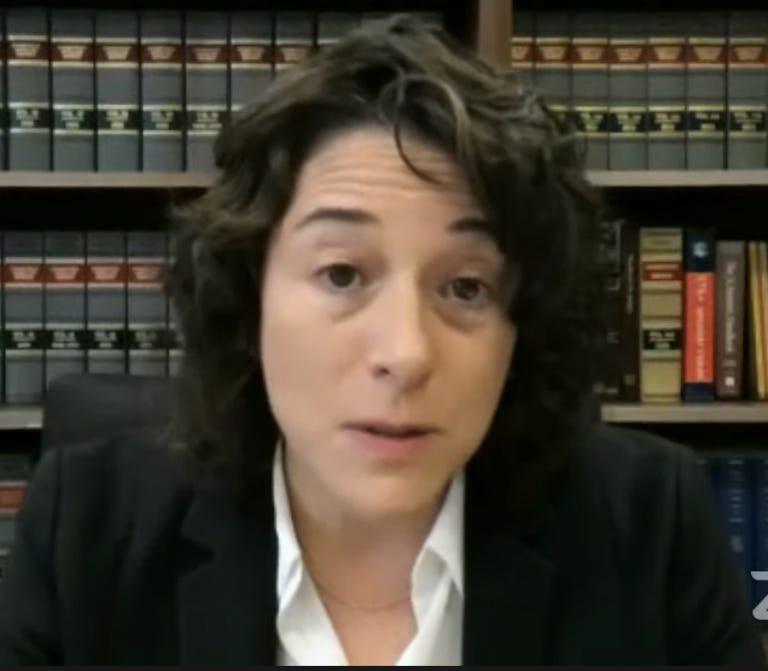
She confirmed that she issued a “final decision” dissolving the marriage and making final orders on “alimony, custody, child support, stuff like that.”
Then came the damaging admission: “During the course of that matter, the individuals up there, Dr. Caverly and others, were — I mean, pardon me, Jessica Caverly and others were they — were they part of that case?”
Grossman answered: “Yes.”
Asked whether The Family Court Circus came up in the case after she rendered the decision, she again answered: “Yes.”
Then she explained how: “the lawyers were being contacted by Paul Boyne,” and “things that were happening in the trial were showing up on the website like almost the next day.”
She identified the sealed custody evaluation, trial evidence, and testimony as material that appeared online, adding that lawyers were reporting contacts and that someone identifying as Boyne was calling the courthouse.
That testimony turns the Tiberi ruling into a due-process problem. The judge was not simply deciding custody in a closed evidentiary vacuum. She was deciding custody while the case, its sealed materials, its lawyers, its evaluator, and its mother were tangled up in a media-and-courtroom war that Grossman personally experienced as threatening.
A litigant now has a powerful argument that the ruling was infected by the judge’s personal fear environment, whether consciously or not.
Grossman Tiberi Time Bomb: The “Thrall” Testimony Is The Smoking Gun
The most damning phrase Grossman used was not “threat.” It was “under the thrall.”
On redirect, Grossman explained why she mentioned the blog in the Tiberi decision. She said she did not want to talk about it because she was frightened.
“I did not want to; I’m terrified of this guy; I was scared of him then, I’m scared of him now; I didn’t want to talk about the blog,” Judge Grossman testified.
But she said she felt compelled to include it because Joriz Tiberi’s testimony involved Boyne, the blog, the sealed psychological evaluation, and what Grossman called “bad language.” Then she gave the line that now belongs in every motion to vacate, open, modify, or reassign: she wanted to distinguish behavior that occurred when Joriz was “under the thrall of this guy.”

That is judicial diagnosis by narrative. Joriz Tiberi was not adjudicated incompetent. Grossman admitted on cross that Joriz had not been deemed incompetent by the court. She was an adult, a litigant, a mother, and the party whose access to her son was being restricted.
Yet Grossman’s explanation reframed her as psychologically captured by an outside actor, a judicial finding akin to “Stockholm Syndrome.”
Grossman testified that Joriz was “extremely easily influenced,” saying: “I think anybody could’ve gotten her to say anything,” and that she did not want Joriz’s future custody case tied to “this one month where she was kind of under Paul Boyne’s thrall and doing what he told her to do.”
That may have been offered as a softening explanation. Legally, it detonates. If the court’s custody architecture was built on the idea that the mother was mentally unstable, easily influenced, and subject to someone else’s “thrall,” then Tiberi has a fresh argument that the order was not merely a best-interests ruling.
It was a psychiatric control order dressed as family law.
Grossman Tiberi Time Bomb: Medication, ADA, And The Road Forward
The next legal problem is even bigger: Grossman’s own testimony ties Joriz’s future access to her son to mental-health diagnosis, treatment, evaluation, and medication compliance. Asked whether she restricted Joriz’s access to her son, Grossman answered.
“Yes, after this decision, I restricted her access to her son,” Judge Grossman testified.
She then explained that final orders must spell out a path back to access, but that her path was focused on “what I found to be her mental health situation and the diagnosis that I found was accurate for her.”
Then, on March 5, the medication issue came into focus. When asked whether she ordered Joriz to take medication, Grossman denied a direct medication order, but then described the functional equivalent.
“I think the end result of this case was that in order for Miss Tiberi’s access with her child to be increased, she was going — I ordered that she have a proper evaluation and take any medically recommended medication,” Judge Grossman testified.
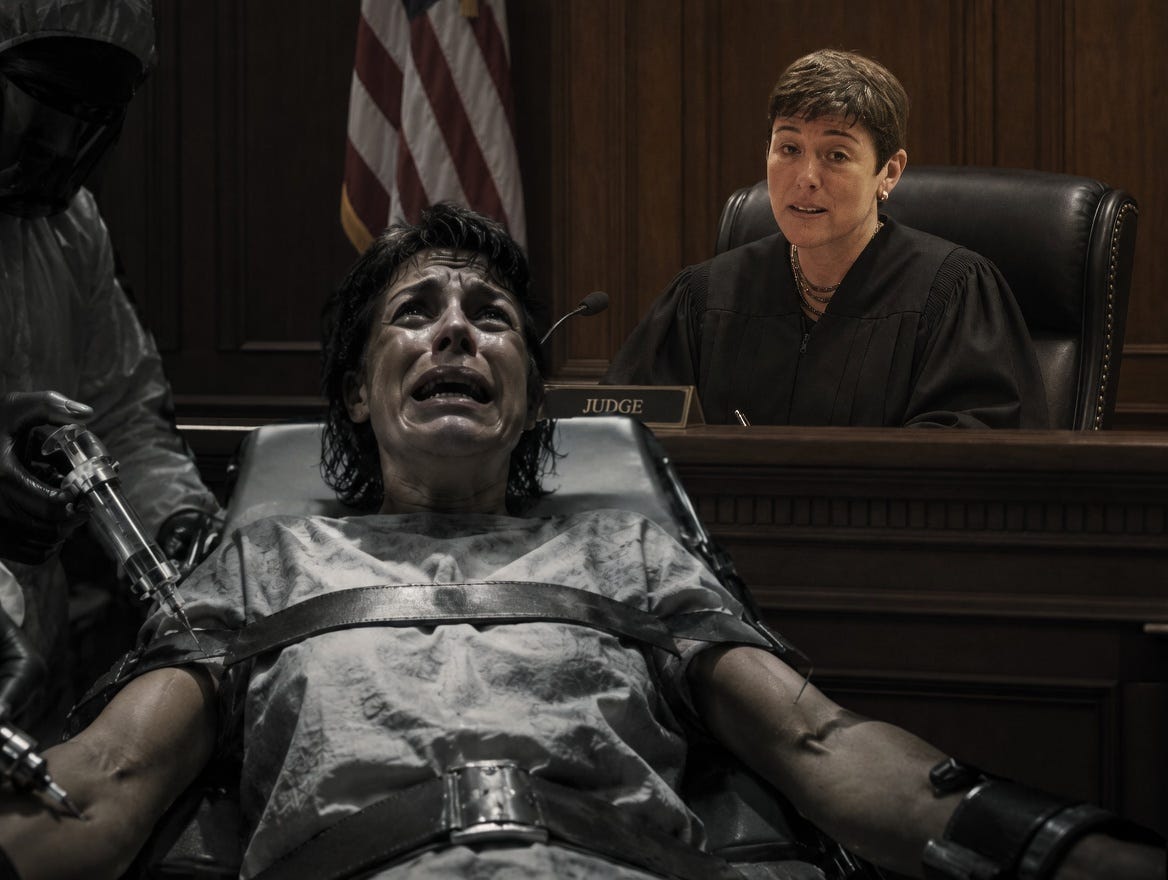
That is the ADA and civil rights hook. A state court may consider parental fitness. It may be considered mental health. But when a court makes a perceived mental disorder and medication pathway the gate through which a mother must pass to regain meaningful access to her child, the case moves into federal territory.
Mental-health disabilities can qualify under the Americans with Disabilities Act. Grossman admitted that. Asked whether mental health disabilities qualify under the ADA, she answered: “Well, they can, I mean, it depends on — they can, yes.”
Tiberi’s strongest path now is a state-court motion to modify, open, or vacate the custody and access provisions, paired with a demand for reassignment. The lead arguments are improper delegation to Frank Tiberi, disability-based gatekeeping, denial of meaningful parental access, and appearance of bias after Grossman’s Boyne testimony.
A federal case under § 1983 and the ADA is viable, with the obvious hurdles of judicial immunity and Rooker-Feldman. But a narrow ADA/Title II and prospective-relief theory may be viable if framed around ongoing disability discrimination and access-to-court restrictions.
Grossman’s testimony did not close the Tiberi file. It reopened it. And this time, the judge’s own words are the first exhibit.
