
Idaho Wellness Check Weekends
The Bill Died. The Body Cams Live. Idaho’s Senate Judiciary Committee buried HB 668. Protective parents may have found the workaround.


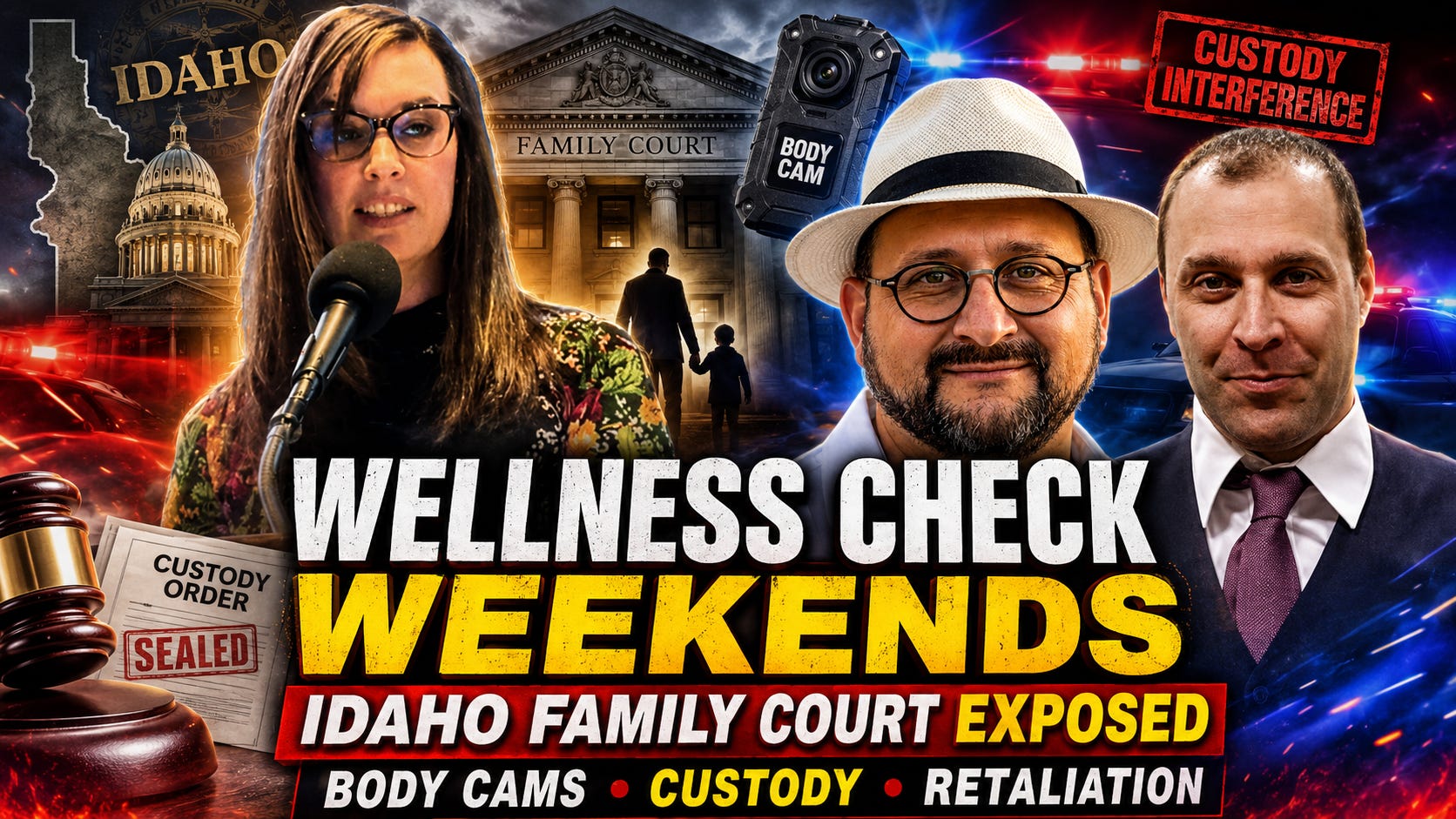
LUTHMANN NOTE: Idaho HB 668 died because it would have created a record. That is the whole story. The family court machine can survive tears, speeches, hearings, and complaints. It cannot survive receipts. Police reports, body cams, dispatch logs, CAD records, and public filings turn the darkness into evidence. Idaho’s Senate Judiciary Committee thought it had killed the solution. It only changed the battlefield. Protective parents now know what to do: call the wellness check, record lawfully, request the body cams, and build the record. The bill died. The body cams live. And the machine should be very nervous. This piece is “Idaho Wellness Check Weekends,” first available on TheFamilyCourtCircus.com.

By Richard Luthmann with Michael Volpe
The 68–1 Bill Idaho’s System Couldn’t Tolerate
(IDAHO, USA) – Idaho’s House passed HB 668 by a staggering 68–1 vote because the bill was not radical, complicated, or hard to understand. It was common sense dressed up in statutory language. When a parent reports custody interference, police should verify the child’s location, conduct a welfare check, investigate the complaint, and write a report.
That is it. Not a constitutional convention, a family court revolution, or some exotic legal theory from a law school fever dream. Just a simple police record when a child is not returned under a custody order.
Then the bill reached the Senate Judiciary Committee, and the machine did what machines do. It protected itself.
On The Unknown Podcast, Idaho State Senator Tammy Nichols joined Michael Volpe and Richard Luthmann to break down what happened when the bill hit the wall. Nichols had led the family court reform effort after parents across Idaho came forward with the same nightmare: custody orders ignored, children withheld, police called, police shrugging “civil matter,” and judges later demanding paperwork that police never created.
It is a perfect closed loop of institutional failure. Law enforcement says go to court. The court says bring evidence. Police refuse to make the evidence. Parents are left standing in the wreckage with nothing but trauma, depleted bank accounts, and children trapped in a system that feeds on delay.
The Senate Judiciary Committee did not merely kill a custody bill. It killed a documentation bill. It killed a record-creation bill. It killed the one thing that would have helped judges see what actually happened before the lawyers, court appointees, and professional chaos merchants started turning basic facts into another $50,000 fog machine.
That is why HB 668 mattered. It created a paper trail. And in family court, the paper trail is the weapon the system fears most.
Idaho Wellness Check Weekends: Body Cams and The Workaround
Luthmann cut straight through the fog. This was always an evidence fight. No report means no record. No record means no accountability. No accountability means the family court money machine keeps grinding parents and children into dust while everyone cashes checks and pretends the problem is “complex.”
The workaround is simple: Wellness Checks + Body Cam Requests.
If the system refuses to create the police report, protective parents can create the evidentiary record themselves. When there is a legitimate custody violation or child welfare concern, call for a wellness check. Bring the custody order. Stand at a lawful distance. Record the encounter. Get the incident number. Identify the officers. Then file public records requests for body cam footage, dash cam footage, dispatch audio, CAD logs, incident notes, police reports, welfare check notes, and every scrap of documentation generated by the response.
The Senate Judiciary Committee killed the report requirement. It did not kill the record.
That is the strategic brilliance of the move. The committee thought it was protecting police from paperwork. Instead, it may have invited a tidal wave of public records requests. A one-page report would have been clean, simple, and efficient.
Now, protective parents can request hours of body cam footage, dispatch logs, radio traffic, and agency records. They can walk into court with their own video, police-certified video, audio logs, and timestamps. They can force the system to show, in real time, whether officers treated custody interference like a crime or dismissed it as a nuisance.
This is not about harassing police. It is about forcing a record where the system prefers silence. If a child is supposed to be returned at 4 p.m. and is still missing at 5 p.m., the issue is not merely a fight between parents. It is a child welfare issue. Police already conduct wellness checks. Police already use body cams. Public records laws already exist. Protective parents need to stop begging the same system that failed them and start using the tools already on the table.
Idaho Wellness Check Weekends: Wolfe, Niman, And The Courtroom Retaliation Machine
The episode also turned toward the darker Idaho story: protective mother Sarah Wolfe and attorney Bethany Star Niman, who came forward in the family court fight and were hammered by a corrupt judiciary and Magistrate Judge John Meienhofer. Their case is not a side issue. It is the warning label on the whole rotten machine.
Nichols explained that attorneys came to the task force saying they knew there were problems, but they feared retaliation if they testified. That is the whole game.
When lawyers are afraid to tell legislators what is happening in courtrooms, the judiciary has stopped functioning like a justice system and started operating like a protection racket. When protective mothers fear speaking publicly, when attorneys fear discipline, sanctions, contempt, or professional destruction for exposing family court abuse, the public is no longer looking at isolated bad rulings. It is looking at institutional intimidation.
Wolfe and Niman brought the problem into the open. The system responded the way guilty systems respond: it punished the messengers. That is why this fight must leave the shadows.
Idaho’s family court crisis is not merely about custody schedules, missed exchanges, or technical legal standards. It is about whether parents, lawyers, journalists, and legislators are allowed to expose government failure without being crushed by the same government actors they expose.
The solution starts with records. Reports. Video. Audio. Transcripts. Public filings. Body cams. Dispatch logs. Receipts. Not whispers. Not sealed-court mythology. Not “trust us” from the same people who built the disaster.
HB 668 died in committee, but the fight did not die with it. Senator Tammy Nichols has already dragged Idaho’s family court disaster into public view. Michael Volpe has documented the legislative betrayal. Luthmann has given protective parents the battlefield map.
The bill died.
The body cams live.
Now, protective parents know the workaround.

 | A guest post by
|