
Loans Ken Jowdy Couldn’t Erase
The government convicted Phillip Kenner of wire fraud, but the documentary record still points to millions of dollars received by Ken Jowdy and his companies.

LUTHMANN NOTE: This article is part of our continuing investigative series on Phillip Kenner, Ken Jowdy, and the competing financial narratives surrounding the Kenner prosecution and Jowdy’s Cabo empire. Federal prosecutors convicted Kenner after arguing that he diverted millions of dollars belonging to NHL-player investors from a Hawaii real-estate venture into Jowdy’s Mexican golf developments, where the money was allegedly lost. But governing documents, sworn investor testimony, lawsuits, and FBI notes indicate that Kenner had authority to make loans, that the transfers were discussed with investors, and that Jowdy promised repayment with interest once permanent Cabo financing arrived. The bridge loans went bad, Jowdy failed to repay millions, and Kenner went to federal prison. Years later, the documentary record forces the question the government never squarely answered: Who was the real criminal—the man who arranged the loans, or the man who took the money and never paid it back? The series will continue to examine the money, the witnesses, the changing stories, and the federal evidence record. This piece is “Loans Ken Jowdy Couldn’t Erase,” first available on NY News Press.
By Richard Luthmann
Loans Were Not Forbidden
(CENTRAL ISLIP, NEW YORK) – The federal prosecution of Phillip Kenner in the Eastern District of New York ultimately sold jurors a clean story: client money intended for Hawaii was diverted to Mexico, concealed and stolen. Whether that was the truth or fiction, Kenner was convicted under the government’s theory, sentenced to 17 years for wire fraud, lost his post-trial motions, and lost his appeal.
Those judgments stand as the legal facts our justice system produced.
But the surviving documents pose a problem for anyone who tries to turn that conviction into a certificate of innocence for high-profile golf-course developer Ken Jowdy. The money did not vanish into a theoretical Mexican fog.
Complaints, disclosures, grand jury testimony, multiple lawsuits to recover the loans, arbitration testimony, and FBI notes repeatedly identify Jowdy as the borrower or beneficiary of loans from Hawaii-related investment entities.
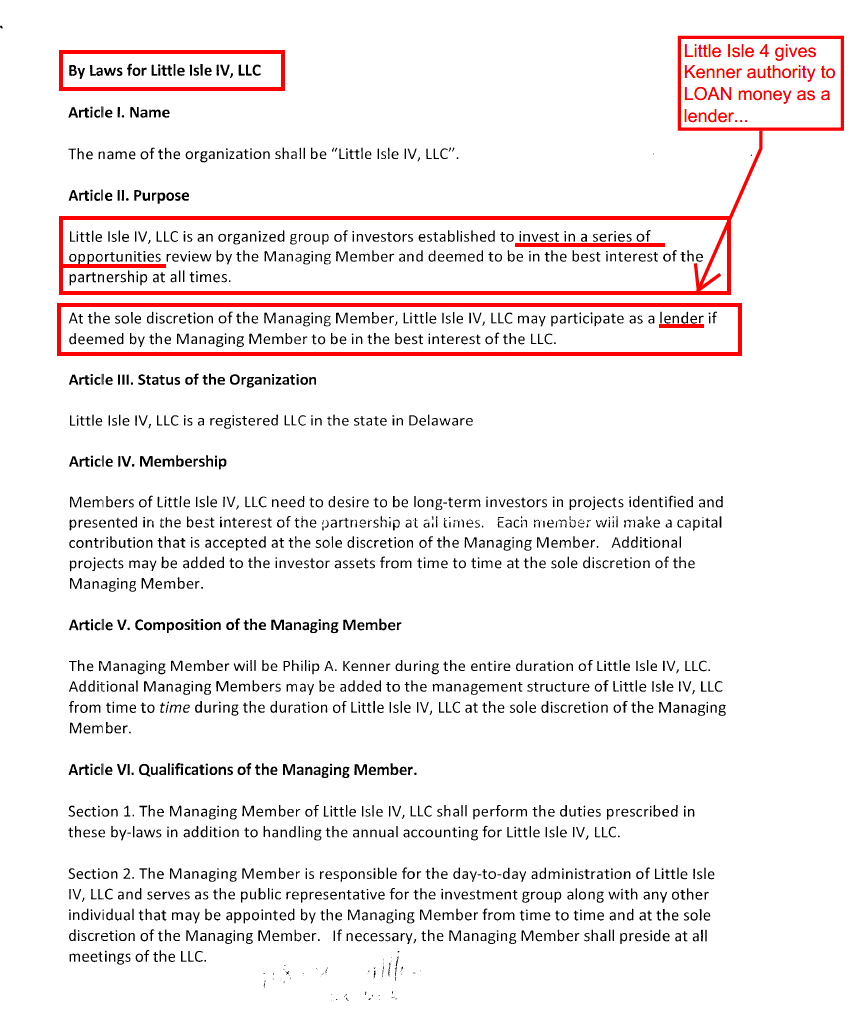
The governing document is the proper starting point. The 2004 bylaws for Little Isle IV described the company as an investor group established to pursue a series of opportunities selected by its managing member.
More importantly, the bylaws expressly stated that Little Isle IV could “participate as a lender” when the managing member believed lending was in the company’s best interest.
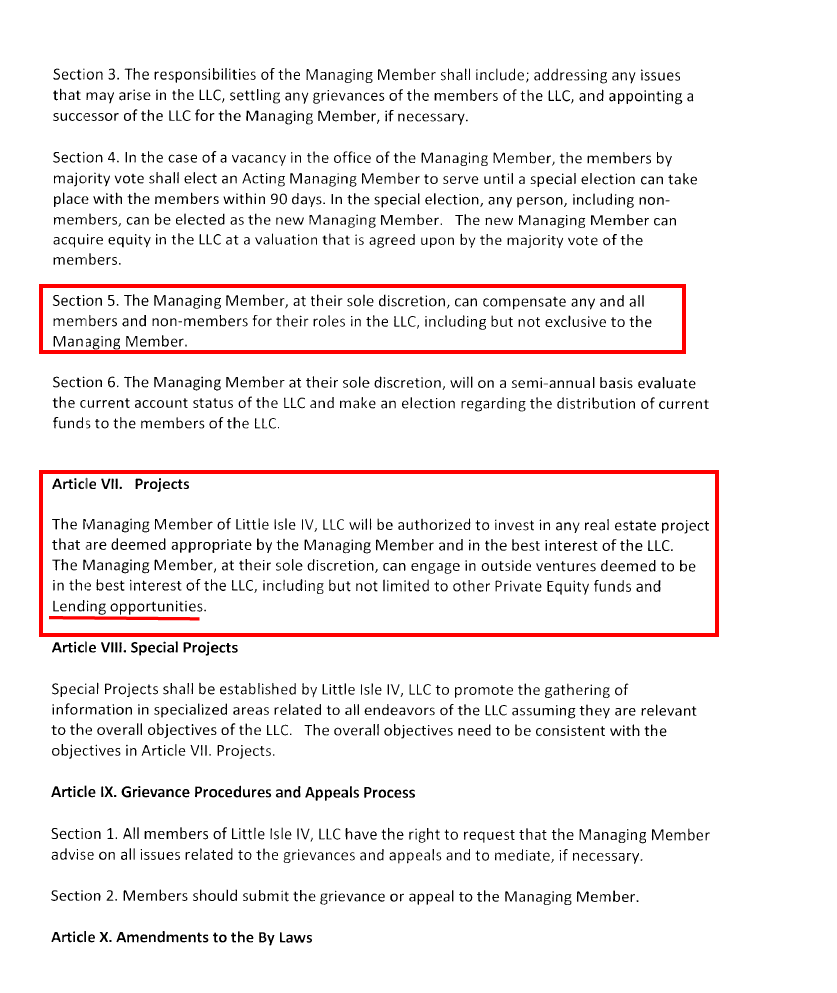
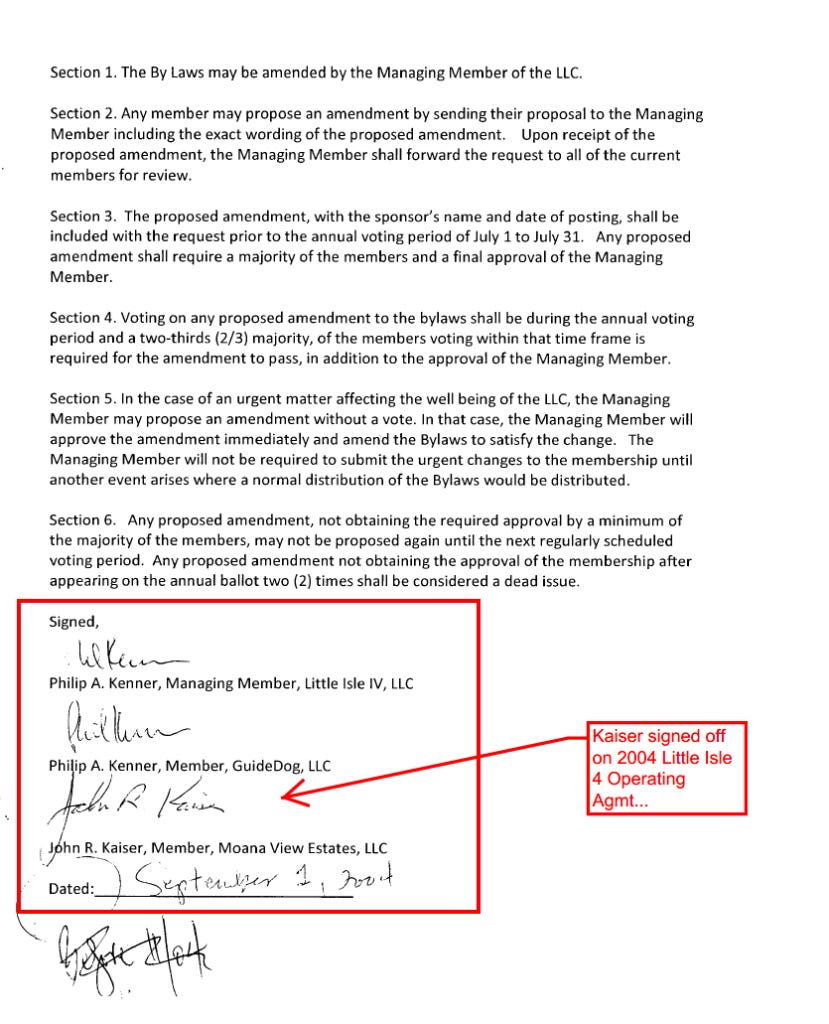
A separate projects provision authorized investment in real estate, outside ventures, private-equity funds and lending opportunities. Phillip Kenner was identified as managing member, while John Kaiser signed as a member through Moana View Estates LLC.
That does not resolve whether every loan was prudent, fully disclosed or legally authorized under every applicable agreement. It destroys the false simplicity that lending itself was alien to the company’s purpose. The entity was expressly empowered to lend.
The remaining questions are factual:
Who approved the Jowdy loans?
What security was promised?
What disclosures were made?
What interest was due?
What repayments occurred?
And why did Jowdy retain the benefit when the expected repayment allegedly failed?
The bylaws do not acquit Kenner. They place Jowdy’s debt where it belongs—at the center of the accounting.
Loans Ken Jowdy Couldn’t Erase: What the Investors Said Under Oath
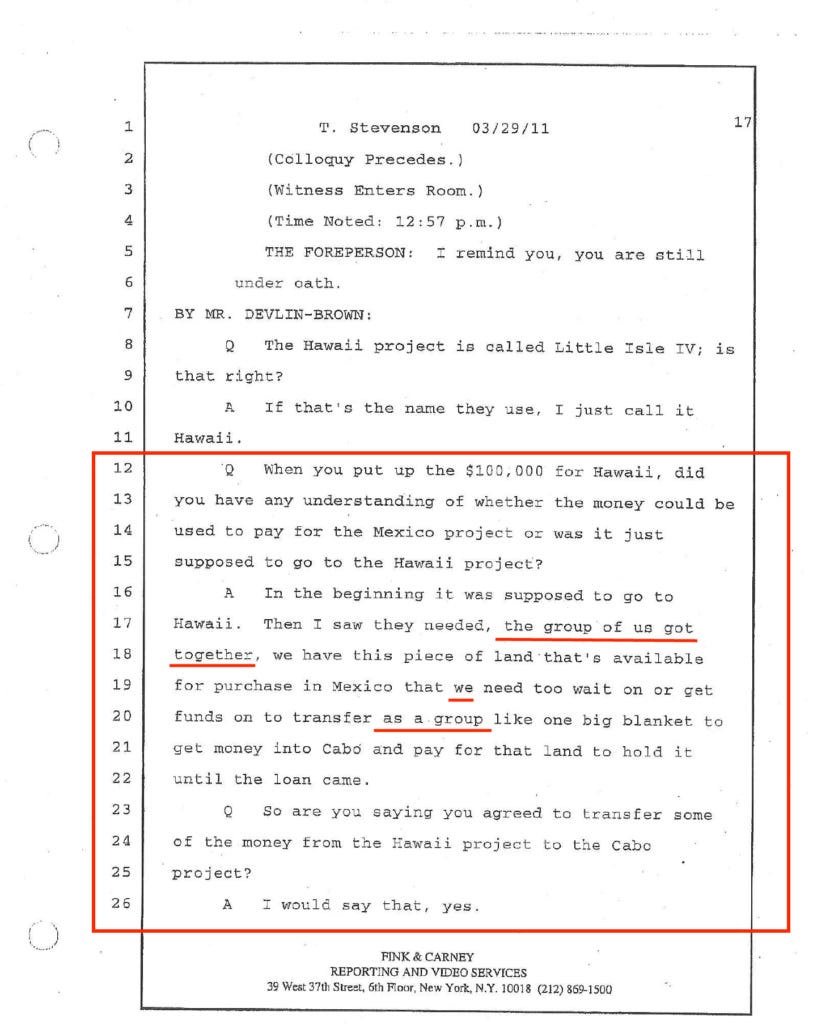
Former NHL Star Turner Stevenson gave the Southern District grand jury a blunt description of the Hawaii-to-Cabo decision.
Asked whether Hawaii money could be used for Mexico, Stevenson testified that the investor group got together because land in Mexico had to be secured while permanent financing was pending.
Asked whether he agreed to transfer money into Cabo, he answered yes.
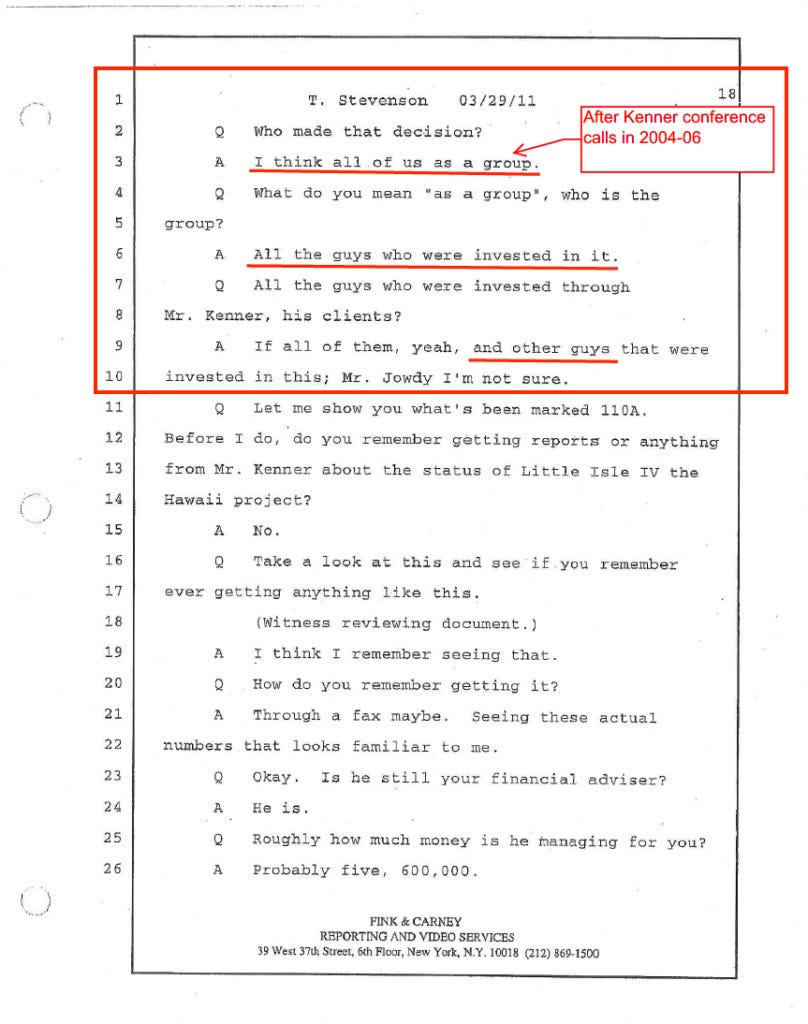
Asked who made the decision, he said, “I think all of us as a group.” Asked who belonged to that group, he replied, “All the guys who were invested in it,” including Kenner’s clients and other investors associated with Jowdy.
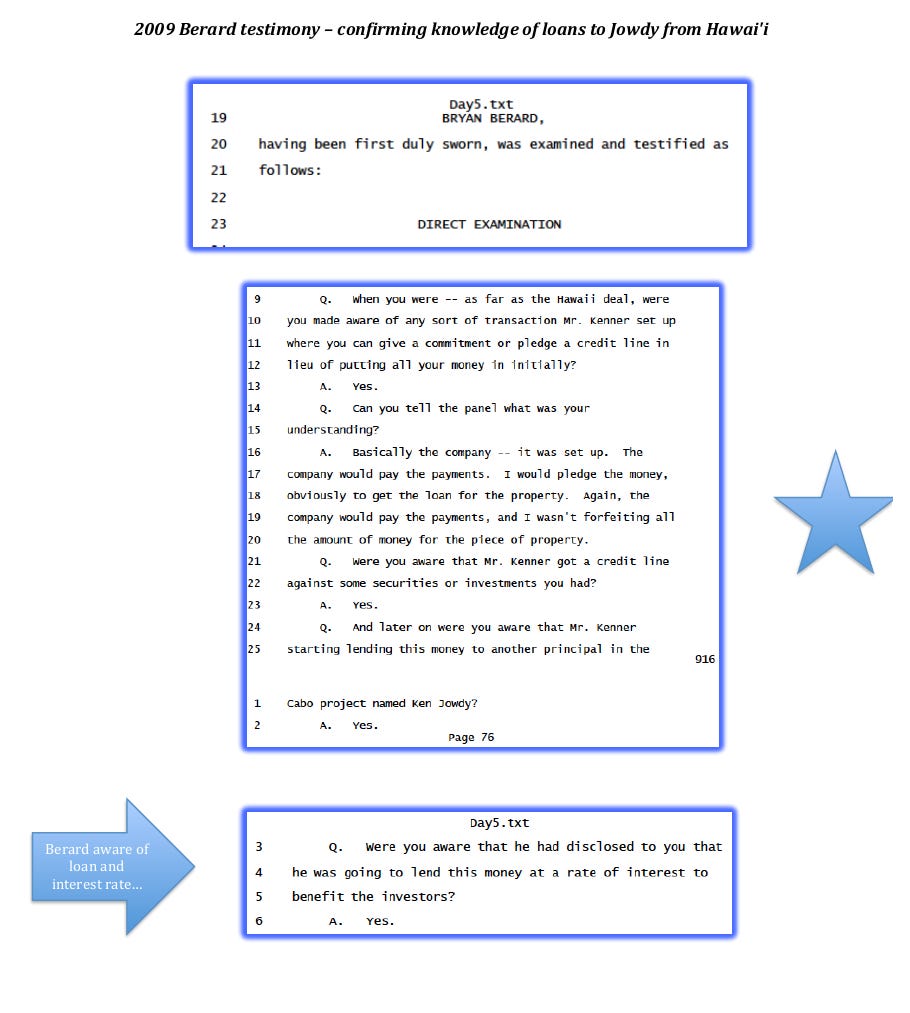
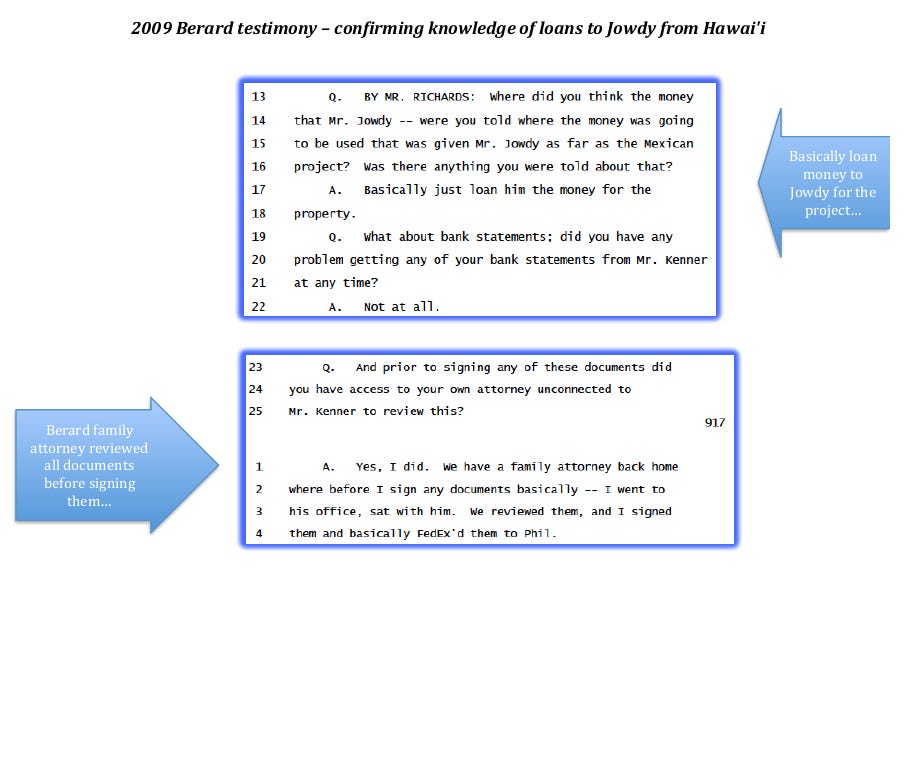
Bryan Berard’s 2009 arbitration testimony was similarly difficult to reconcile with a secret-theft narrative. Berard testified that he knew money was being lent to Jowdy, understood it would earn interest for investors, and described the transaction as lending Jowdy money for the Mexican property.
He also testified that his family lawyer reviewed documents before he signed them.
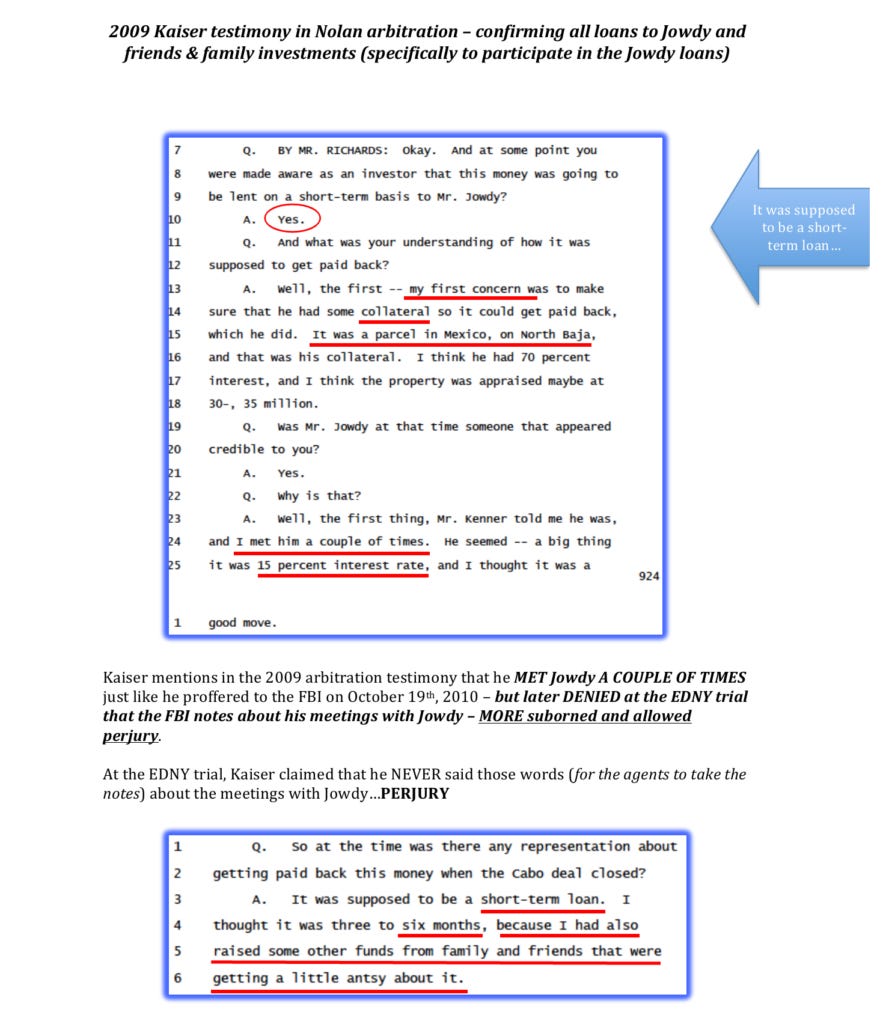
John Kaiser’s 2009 arbitration testimony went further. Kaiser said unused Hawaii funds could be loaned while land acquisitions were pending. He testified that the money going to Jowdy was supposed to be a short-term loan lasting approximately three to six months. He said he had raised additional money from friends and family who expected to participate.
Kaiser described the loan as backed by land and carrying a 15 percent interest rate. He testified that he would not have lent the money absent the expectation that Jowdy would repay it when the Cabo financing closed.
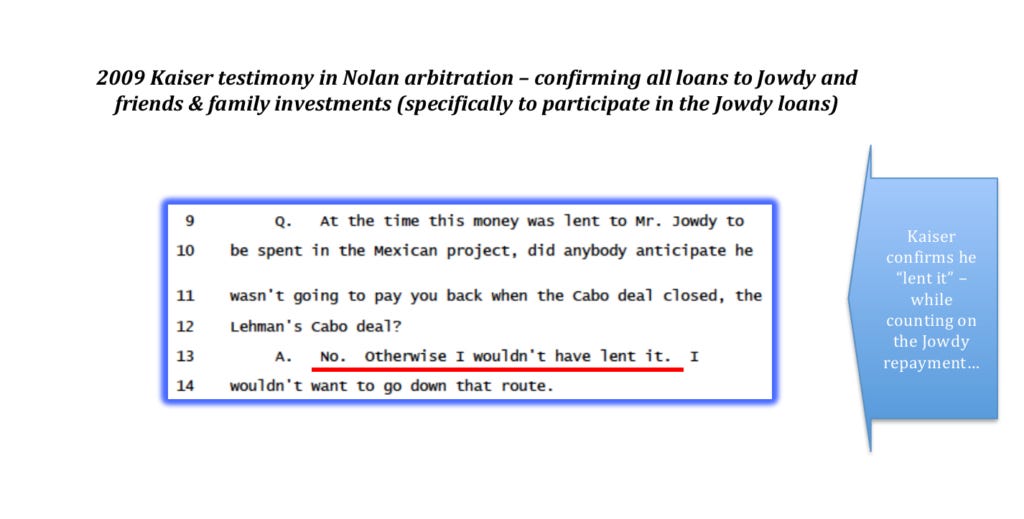
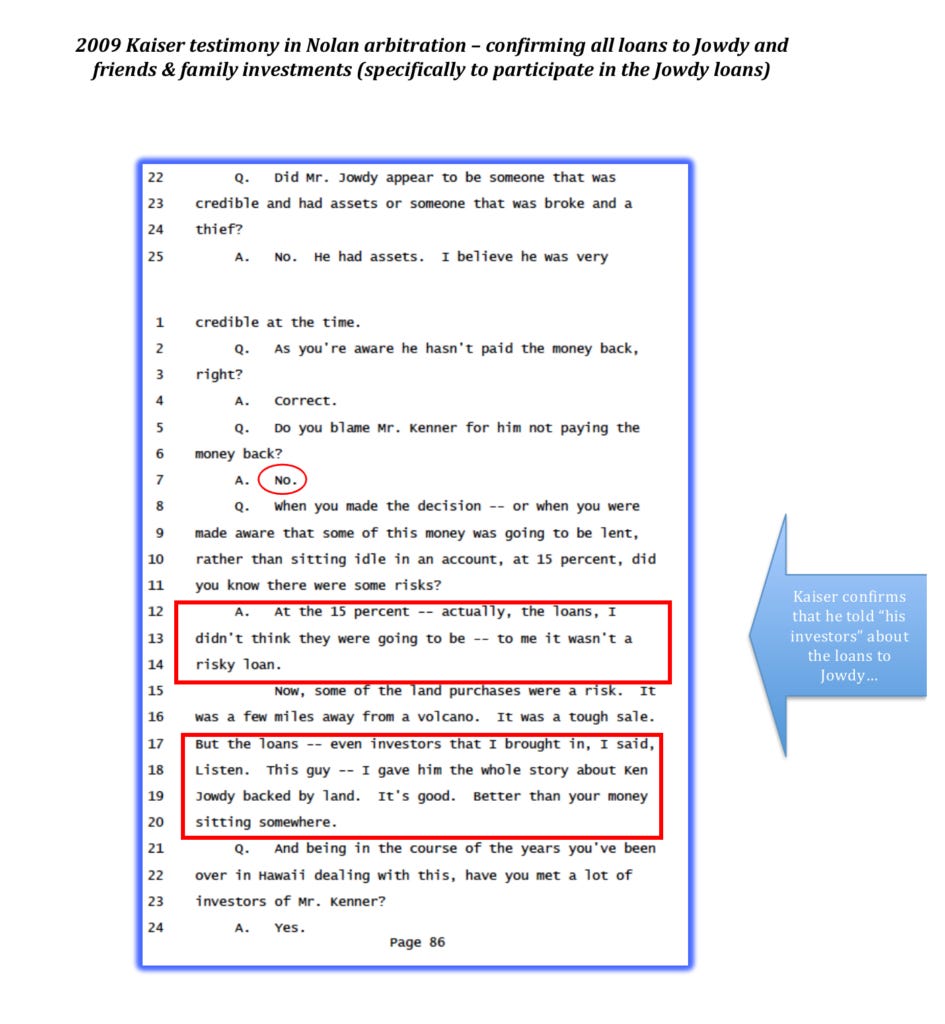
Asked whether he blamed Kenner for Jowdy’s nonpayment, Kaiser said no.
These witnesses could be mistaken. Their memories could be incomplete. But sworn testimony from multiple investors cannot be converted into nothing simply because it complicates the winning prosecution narrative.
Loans Ken Jowdy Couldn’t Erase: The FBI Notes Point Back to Jowdy
The FBI’s own interview notes add another layer. Notes attributed to John Kaiser’s October 2010 interview record meetings with Jowdy in New York, including at Jowdy’s restaurant, Trust, and at another bar. The notes state that Hawaii and funding from Hawaii to Mexico were discussed.
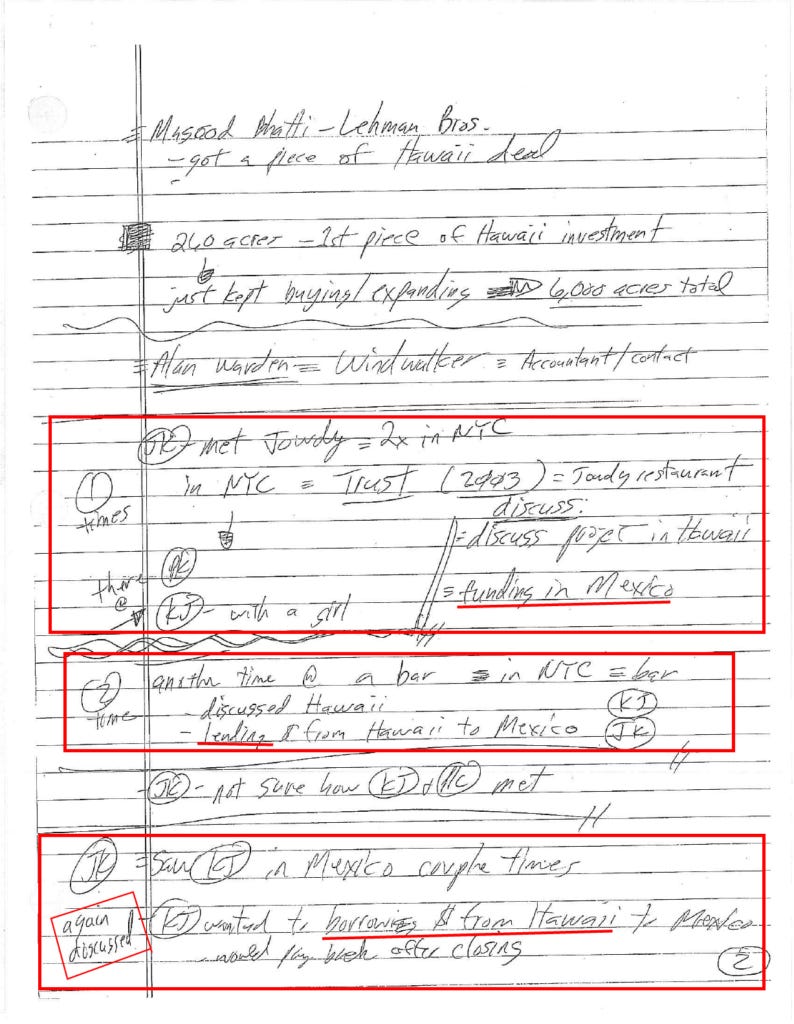
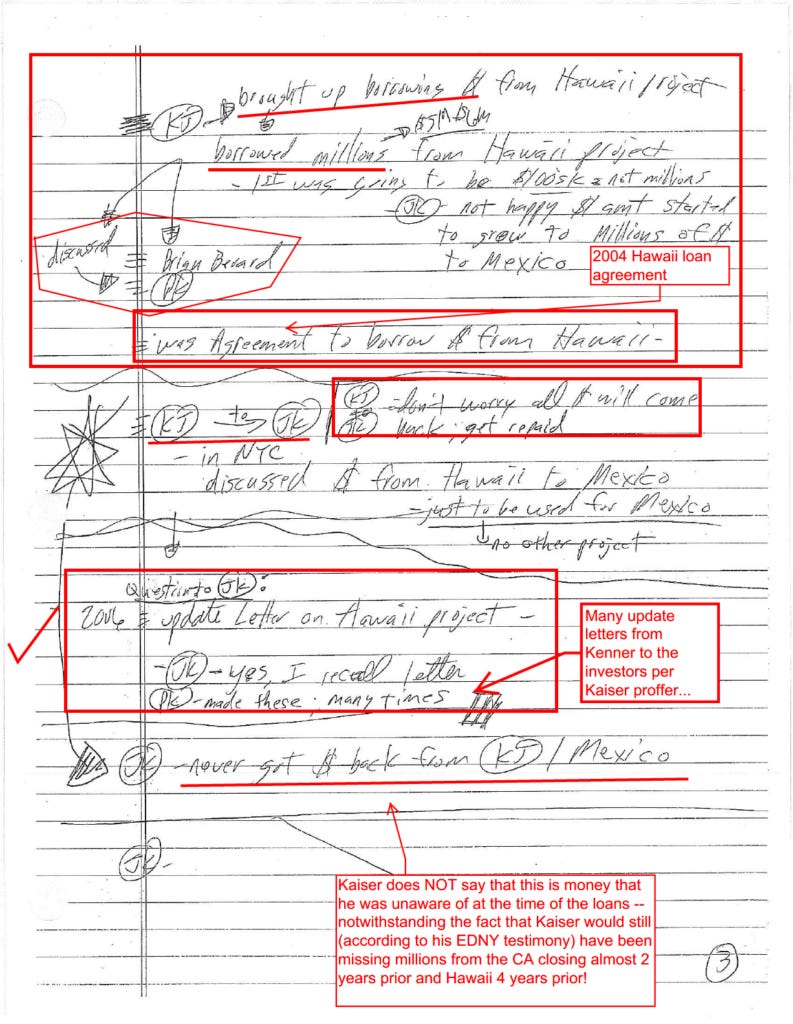
They further record that Kaiser saw Jowdy in Mexico and discussed Jowdy’s desire to borrow money from Hawaii, with repayment expected after a closing. Another page states there “was Agreement to borrow $ from Hawaii” and records assurances that the money would come back and be repaid.
The interview notes attributed to Jowdy are even more consequential. They are handwritten agent notes referencing Baja Development Corporation, owned by Jowdy; money coming from Kenner or his entities; Little Isle funds going to Diamante Del Mar; and amounts being treated as loans or converted to equity.
They also reference promissory notes, Baja Management, and investor funds.
The point is simple: the government possessed records in which Jowdy and Kaiser were questioned about loans from Hawaii-related entities into Jowdy’s Mexican projects.
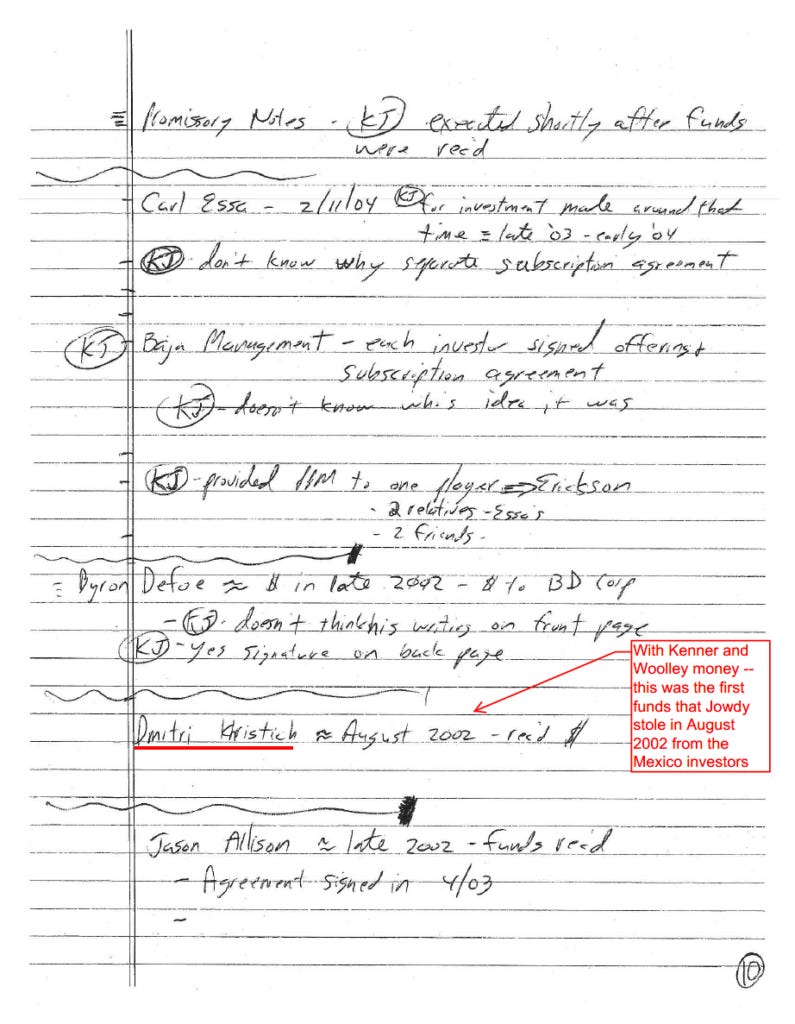
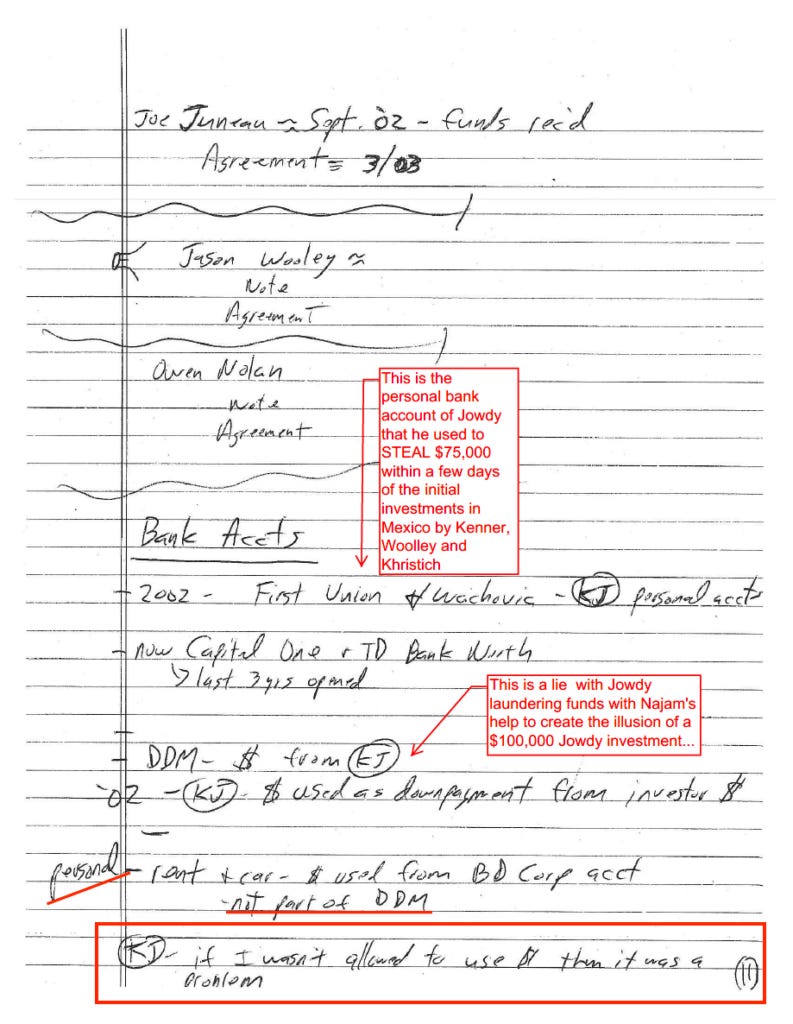
The loans were not invented in a prison cell after Kenner’s conviction. They appeared in lawsuits, investor disclosures, arbitration testimony, grand-jury testimony and FBI interview notes as many as six years earlier.
There’s still a conviction supported by facts the government learned through investigation from the people who knew of and authorized all of it; yet it was required to ignore witness testimony requiring amnesia.
But why? That won’t be solved now.
That leaves Jowdy with a debt problem and the government with a narrative problem:
If the loans were entirely fictitious, why did so many contemporaneous documents describe them?
If they were real, why was the public story allowed to collapse into the proposition that the money had only one possible criminal explanation?
How did every testimony for years discuss, acknowledge, sue for, and corroborate authorized and expected loans to Jowdy, and their repayment?
Empirical records tell the spine of truth; why Kenner and not the recipient of the loan?
Even with delayed amnesia, the money delivered nothing to Kenner, only Jowdy.
Loans Ken Jowdy Couldn’t Erase: The Lawsuits Supplied the Dollar Amounts
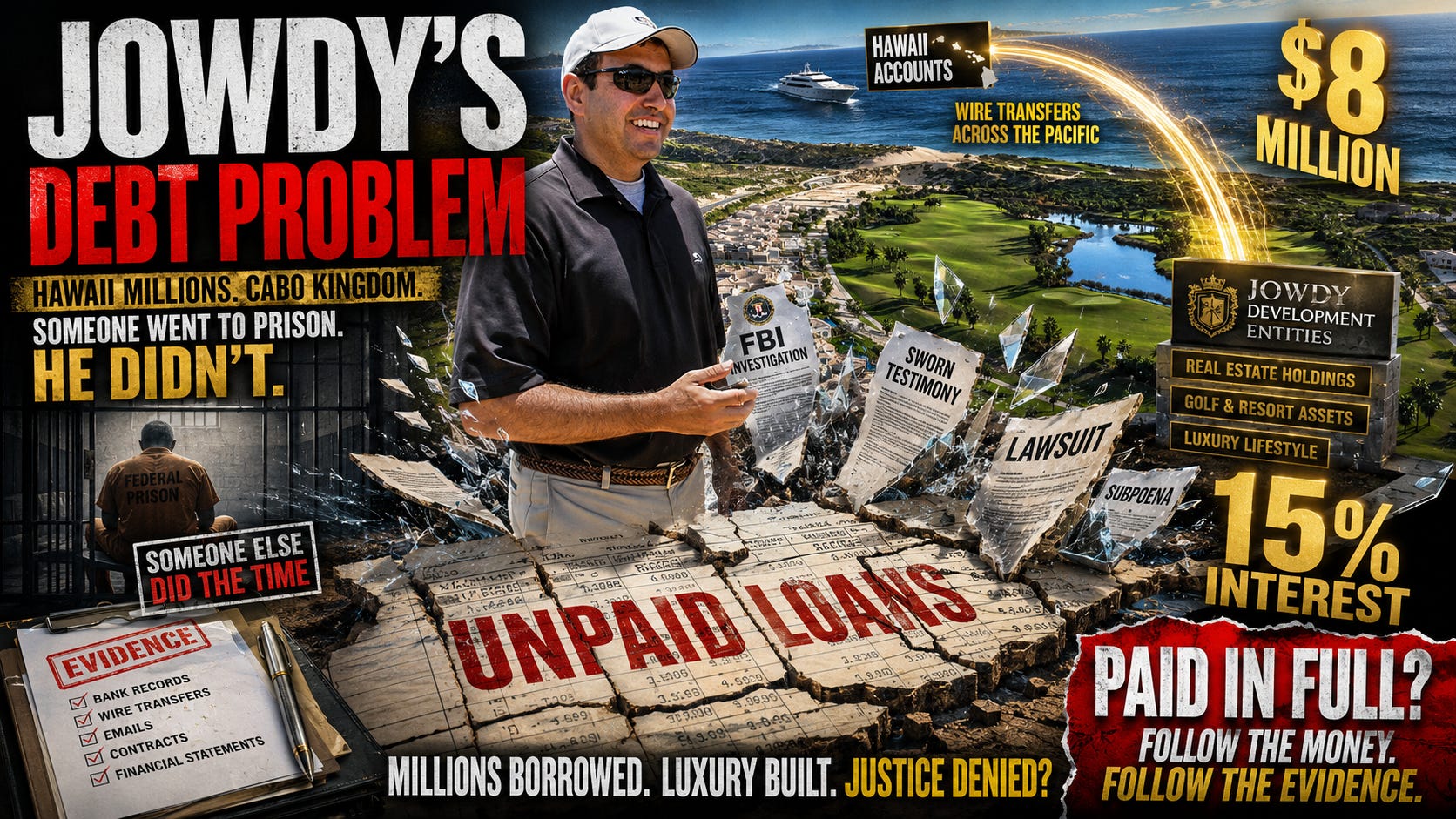
The Arizona complaint filed by Little Isle IV, Ula Makika and Kenner alleged that Jowdy repeatedly requested financing for his personal and business ventures, promised repayment within months and directed where the money should be wired. The complaint alleged that approximately $8 million was paid to Jowdy, his creditors or companies he controlled and that the money was not fully repaid.
It listed transaction after transaction involving Baja Development Corporation, Diamante Del Mar, aircraft-related entities, management companies and other recipients. For Little Isle IV alone, the complaint alleged payments totaling approximately $6.15 million and repayments of roughly $1.1 million.
For Ula Makika, it alleged $1.485 million in payments and approximately $1.123 million returned, all of it highly specific and tied to dates, amounts, and bank records.
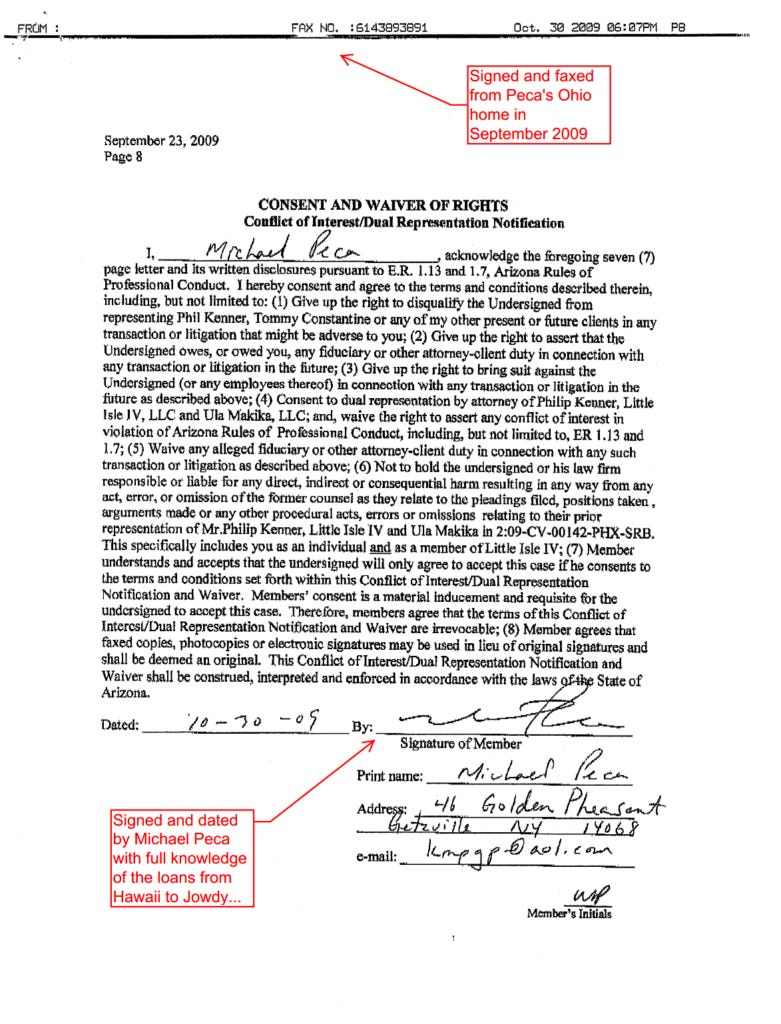
The 2009 Arizona conflict disclosures, signed independently by Darryl Sydor and Michael Peca, and by 19 Little Isle investors, advised them that the purpose of the litigation was to recover approximately $5 million allegedly loaned to Jowdy and not repaid. The disclosure stated that Jowdy denied the transfers were loans, characterized them as investments, asserted statute-of-frauds and limitations defenses, and disputed the signature on a promissory note.
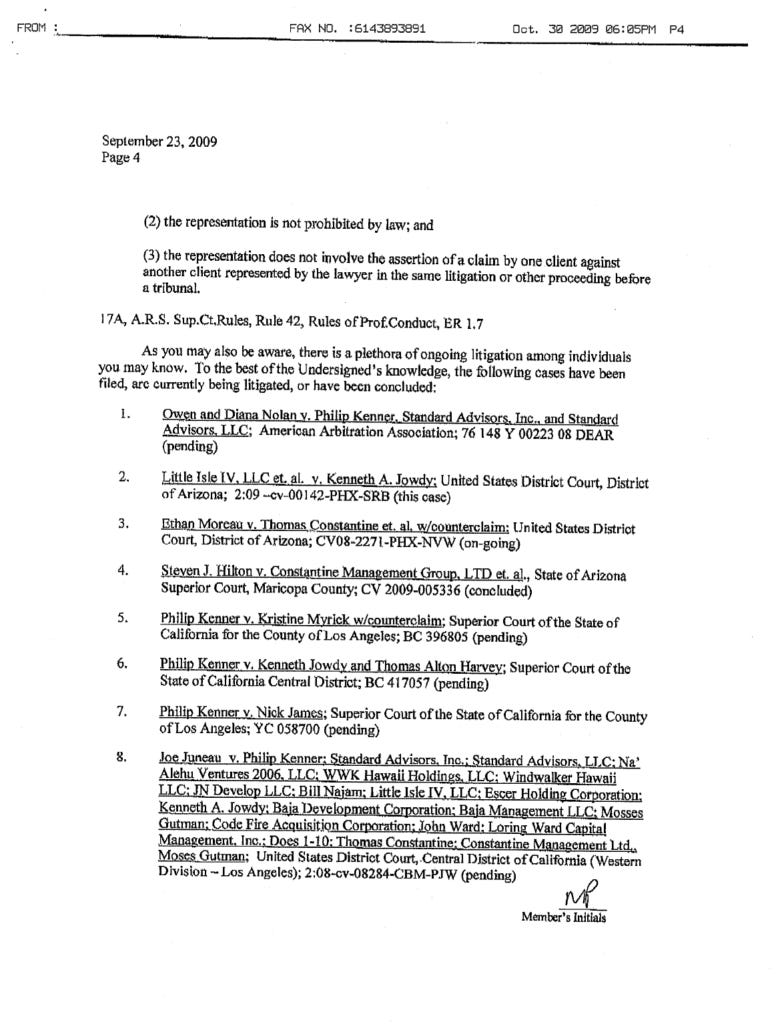
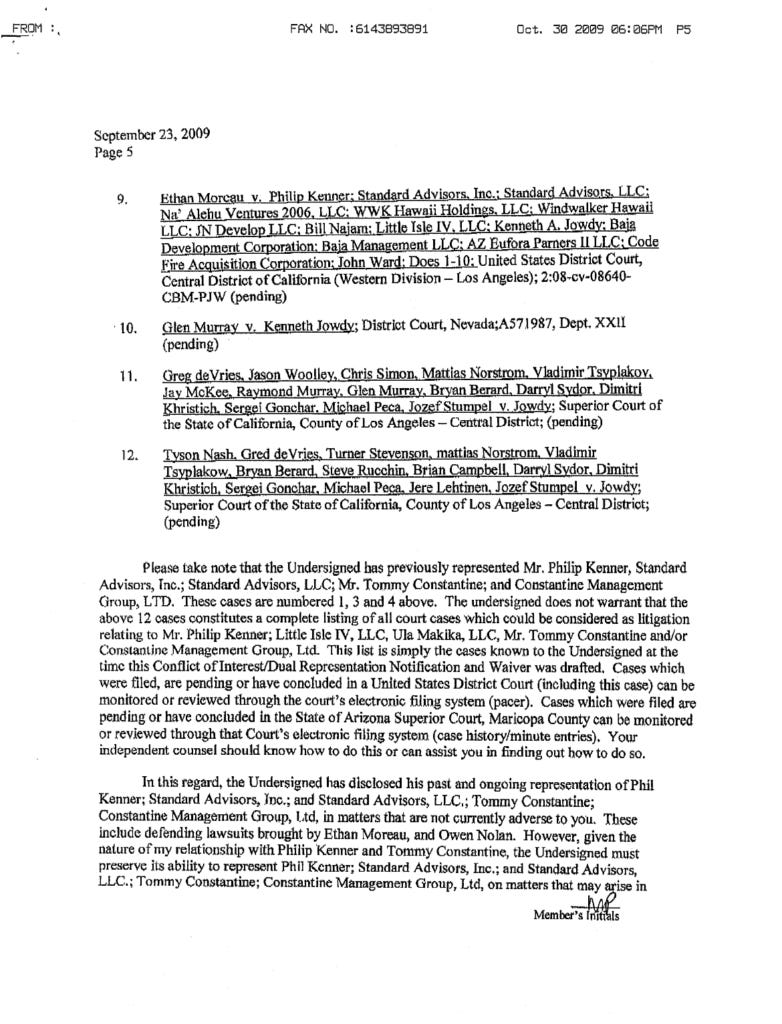
The same documents listed a remarkable network of concurrent litigation involving Jowdy and professional athletes. In Jowdy’s litigation defeat of nearly a million-dollar unpaid loan to Glenn Murray, Jowdy admitted the loan agreement as authentic. Months later, he verified it to the FBI.
Those disclosures are proof that the investors were told about litigation seeking recovery of alleged Jowdy loans six years before the Kenner trial. The fight was open, documented, and adversarial.
Kenner’s conviction settled Kenner’s criminal liability while still unable to pinpoint exactly what that concealment was. It did not answer the separate accounting questions surrounding Jowdy:
What did he receive?
What did he repay?
What collateral did he provide?
What became of the permanent financing expected to retire the bridge loans?
A guilty verdict against the lender does not stamp PAID IN FULL across the borrower’s ledger.
