

Mamdani’s Enemies-List Distraction
A sprawling property list ignites class warfare while questions surrounding 230,000 disputed voter records remain largely buried.


LUTHMANN NOTE: The pied-à-terre controversy deserves investigation, but New Yorkers should recognize political misdirection when they see it. A million-name property roll guarantees outrage, celebrities and easy headlines. Election auditing demands records, mathematics, subpoenas and institutional courage. Mamdani can absorb accusations that he is targeting millionaires. That fight energizes his base. What he cannot absorb is a documented showing that New York’s election system cannot validate enough voters to cover his margin. The press should stop chasing shiny objects and demand receipts from the Board of Elections. Tax lists may embarrass City Hall. A failed election audit could delegitimize it. This piece is “Mamdani’s Enemies-List Distraction,” first available on NY News Press.

By Richard Luthmann
The Million-Name Smoke Bomb
(NEW YORK, NEW YORK) – Zohran Mamdani’s administration has handed New York’s media exactly the kind of political spectacle it knows how to cover: wealthy property owners, identifiable addresses, class-war rhetoric and a government database critics quickly branded an “enemies list.”
The controversy erupted after the city published a supplemental property roll containing roughly 960,000 residences and owners who could potentially fall within the new pied-à-terre tax process—even though officials initially estimated that only about 10,000 to 13,000 properties would ultimately be taxed.

The city later sent approximately 17,000 notification letters, including some to longtime primary residents who say they were wrongly swept into the dragnet.
The Mamdani administration says the roll is legally required, preliminary and broader than the universe of properties that will actually owe the surcharge. City officials describe the law as an annual tax on certain high-value New York City properties not used as primary residences. The Department of Finance has created an exemption and appeal process, while Mamdani extended the deadline after confusion and public backlash.
That explanation does not erase the political effect. Names and addresses were dumped into public circulation. Newspapers hunted for celebrities, financiers and supposedly rich targets. Critics cried doxxing, witch hunt and socialist intimidation.

Mamdani’s defenders answered with lectures about public property records and taxing absentee millionaires.
The entire city began shouting about who might be taxed.
However, Mamdani’s strategy was not an accident. The property-list uproar functions as an enormous political smoke bomb, consuming headlines at precisely the moment a far more dangerous question is being raised: Can New York election officials prove that Mamdani legitimately won the election that placed him in City Hall?
Mamdani’s Enemies-List Distraction: The 230,000-Vote Question
Election-integrity activist Marly Hornik says her organization, RealAmerica.Vote and New York Citizens Audit, examined approximately one million voter records associated with the 2025 mayoral election. She claims the review found substantial categories of voters whose identities, Social Security information, or New York City residency could not be verified.
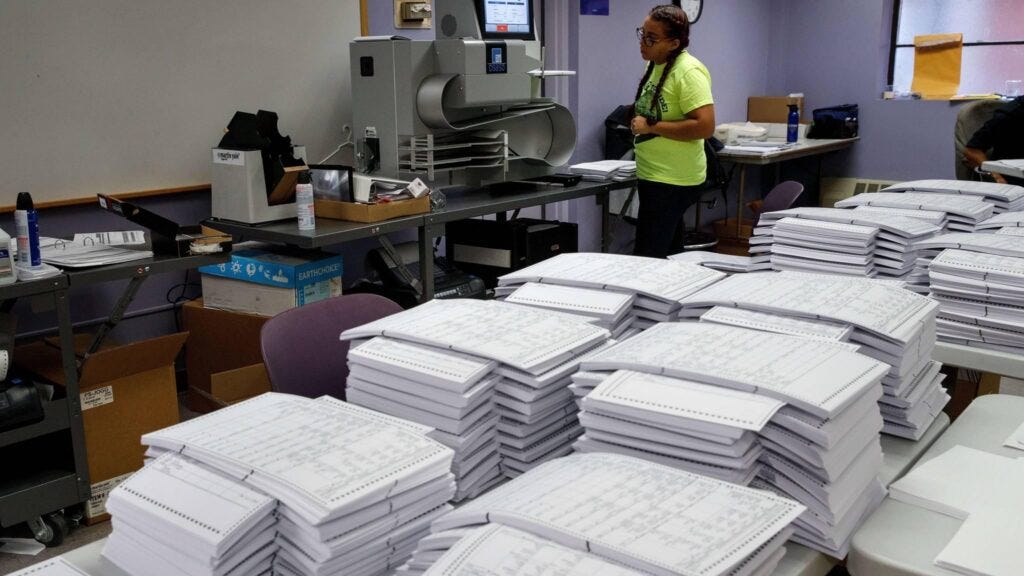
Hornik has publicly aggregated those disputed records into approximately 230,000 potentially unlawful or invalid votes—more than Mamdani’s certified margin over former Gov. Andrew Cuomo.
The official Board of Elections certification reports 2,218,647 applicable ballots. Mamdani received 944,950 votes on the Democratic line and 169,234 on the Working Families line, for a combined 1,114,184. Cuomo received 906,614, leaving Mamdani with a 207,570-vote advantage.
Hornik is not claiming she has proved that every challenged registration generated a fraudulent ballot, that every questionable vote went to Mamdani, or that Cuomo actually won. She has repeatedly framed the issue more carefully: New York’s election boards may be unable to prove that the certified electorate was composed entirely of qualified voters.
That is an allegation demanding investigation.
The distinction is essential. A faulty registration record is not automatically a fraudulent vote. Database mismatches can result from name changes, incomplete public records, stale addresses, or clerical mistakes.
But those possibilities do not excuse election officials from answering the audit. They are the reason officials must reconcile each challenged category against authoritative records.
How many questioned individuals actually cast ballots? How many were legal city residents? How many records were duplicates, errors, or genuinely fictitious identities? Until those questions receive documentary answers, the election result remains certified—but the public confidence beneath it remains exposed.
That is the real political bomb under City Hall.
Mamdani’s Enemies-List Distraction: Follow the Diversion, Audit the Election
The pied-à-terre controversy is genuine. Government should not casually publish sprawling lists of citizens and then force innocent homeowners to prove they do not belong on them. The rollout appears overbroad, confused and politically inflammatory.
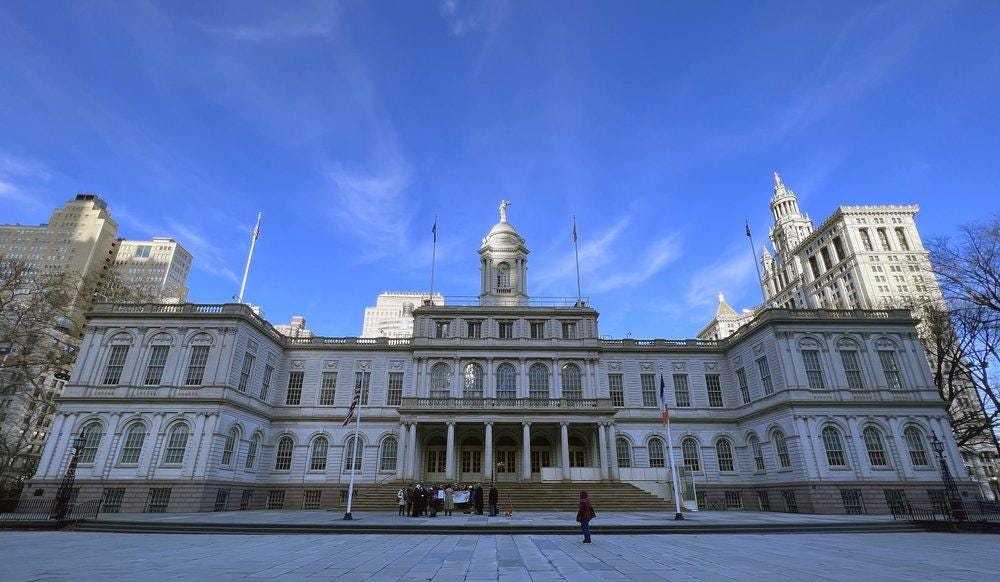
Even the city’s own response—new guidance, an appeal mechanism and a delayed deadline—suggests the execution was hardly the clean administrative triumph Mamdani’s allies initially advertised.
But the media imbalance is impossible to miss. The alleged “enemies list” generated immediate stories about billionaires, celebrities, property values, tax bills and class warfare.
The election challenge received nowhere near the same sustained institutional attention, even though Hornik’s headline number exceeds the official margin of victory.
The conclusion is that Mamdani benefits enormously from the imbalance—and may have calculated the rollout accordingly. No public evidence presently establishes that the property list was released for the purpose of suppressing election coverage. Yet political operatives do not need formal coordination when spectacle itself does the work.
A million-name tax roll is catnip to the press. A technical examination of voter eligibility requires documents, patience, statistics and the courage to offend the permanent political class.
The correct response is not to ignore the tax controversy. It is to refuse the false choice. Investigate both.
New York should publish a technical response to Hornik’s methodology, disclose how challenged voter records were verified and explain what post-election audits were performed. Federal investigators should state whether they received the underlying evidence and whether any inquiry is active.
Hornik should release enough anonymized methodology and documentation for independent experts to reproduce her results.
Mamdani can survive hostile headlines about rich homeowners. What he cannot politically survive is proof that the election system cannot validate the votes that installed him.
Forget the smoke. Audit the fire.
