
No Q In MLB
Baseball fans came for innings, hot dogs, and home runs — not another culture-war sermon from league headquarters.

LUTHMANN NOTE: There is no Q in MLB. There is no Q in North American sports. Fans do not buy tickets to be dragged into another corporate struggle session. They buy tickets to watch athletes compete. The ballpark is one of the last places Americans can sit next to people who vote differently, pray differently, live differently, and still cheer for the same team. That fragile common ground is worth protecting. Respect everybody. Harass nobody. But stop pretending every player, fan, and family must wear the same political costume to prove they belong. This piece is “No Q In MLB,” first available on FL Gulf News.

By Matt “Sully” Sullivan and Fernando Jiménez Burke
Major League Baseball became America’s pastime because it offered something larger than entertainment and simpler than politics. It gave generations of fans a common ritual: the anthem, the lineup card, the first pitch, the seventh-inning stretch, the hot dog, the box score, the long summer argument over whether the manager pulled the starter too soon. Baseball was a shared language before every shared institution in America got dragged into ideological trench warfare.
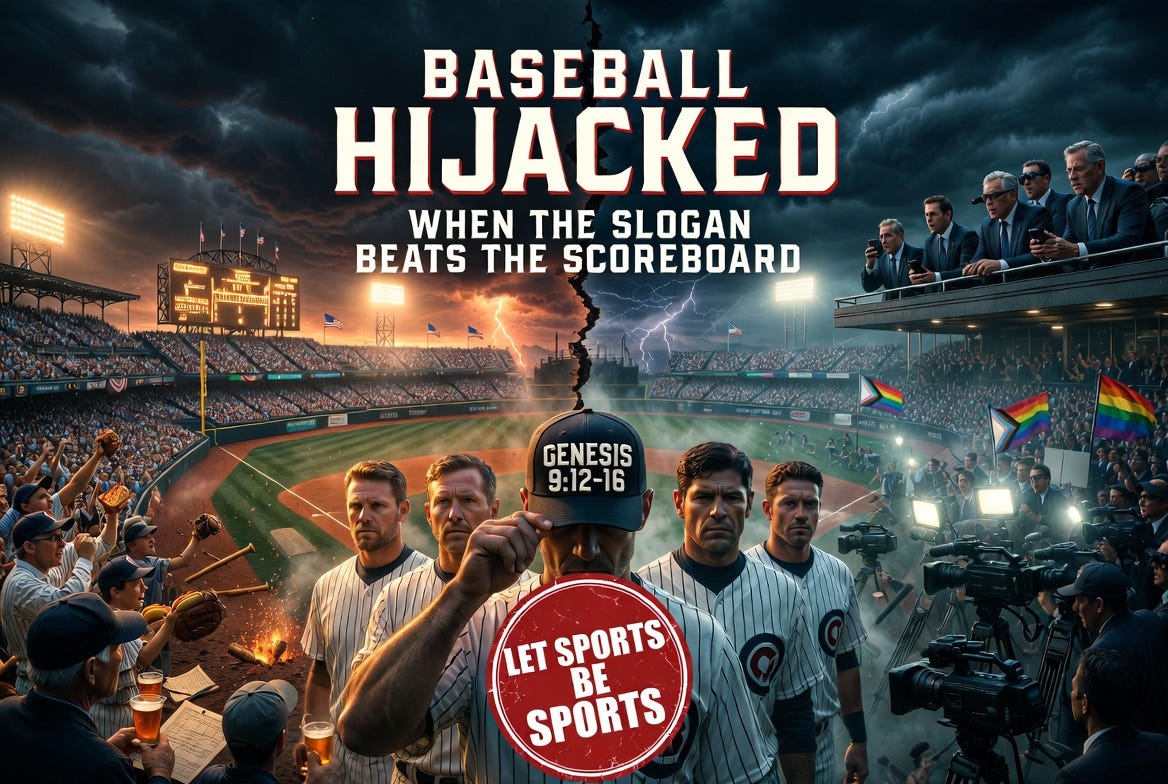
That is why the latest Pride Night controversy around the San Francisco Giants matters beyond one team, one city, or one set of caps. Several Giants pitchers reportedly responded to Pride-themed uniform elements by writing Bible verses on their hats, including Genesis 9:12-16, which identifies the rainbow as the sign of God’s covenant with all living creatures. Others objected or opted out. MLB then faced the predictable firestorm: activists furious, conservatives mobilized, media swarming, league officials explaining, and baseball itself shoved into the background.
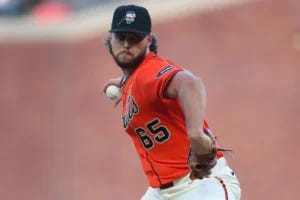
This is the problem. The issue is not whether LGBTQ fans deserve dignity and respect. They do. The issue is whether professional sports leagues should put athletes in a position where wearing the uniform becomes a public ideological statement. Reasonable people can support equal treatment under the law, oppose harassment, and still reject the idea that every social cause must be stitched onto the cap, jersey, warm-up sweater, scoreboard, or promotional calendar.
Baseball does not need to be a monastery. Teams can welcome everybody without turning the uniform into a referendum. The moment a league makes symbolic participation feel mandatory, it stops uniting fans and starts sorting them.
No Q In MLB: The NHL Already Saw This Movie
The NHL learned this lesson the hard way. Pride-themed warmup jerseys, once presented as harmless inclusion gestures, became controversy machines. Some players objected on religious grounds. Some teams backed away. Media outlets turned individual athletes into ideological defendants. Fans who came for hockey got a cable-news panel in skates.
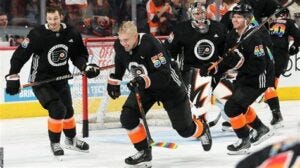
Eventually, the NHL moved away from specialty warmup jerseys because the spectacle was overtaking the sport. That was not cowardice. It was institutional survival. A league exists to run games, build stars, preserve competition, sell tickets, and grow the sport. It does not exist to force every employee into choreographed moral theater.
MLB should understand this before it wanders deeper into the same swamp. Baseball already has enough problems: pace, attention spans, regional sports network chaos, young fan engagement, gambling saturation, injuries, payroll imbalance, and the eternal struggle to make a 162-game season feel urgent before September. The league does not need another front in the culture war.
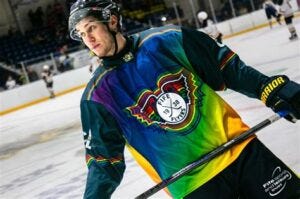
The average fan is not asking for less kindness. He is asking for less pressure. She is not demanding cruelty. She is asking for a night out where the game comes first. Families want to cheer, eat, argue, laugh, and escape. They do not want to decode whether a player’s hat, sleeve, patch, warmup jersey, or refusal to wear one will become tomorrow’s national scandal.
Sports should be one of the few remaining places where Americans can disagree about everything else and still agree that a 3-2 count with two outs matters.
No Q In MLB: Respect Is Not Compulsion
Every person deserves basic respect. That should not be controversial. No fan should be abused at a ballpark because of who he or she is. No player should be smeared, threatened, or degraded because of private life, religious belief, or conscience. A league can and should enforce rules against harassment, discrimination, and abuse.
But respect is not the same thing as compelled endorsement. That distinction matters. When a team or league creates a themed uniform or public display tied to a contested social issue, it places athletes in a bind. Participate, and some will see it as a political agreement. Decline, and others will accuse them of hatred. Modify the symbol, and the controversy explodes.
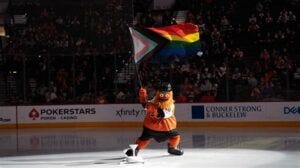
That is an unnecessary trap.
This is where league offices lose touch with the paying public. Executives and marketing teams often confuse activist approval with broad fan consensus. They listen to the loudest voices on social media and assume the stadium agrees. But the ballpark is bigger than the internet. It includes religious families, secular liberals, conservatives, immigrants, veterans, union workers, business owners, parents, kids, and old-timers who still keep score by hand. Many simply want sports to remain common ground.
There was a time when American public life understood the virtue of privacy. President Bill Clinton’s “don’t ask, don’t tell” formulation was imperfect and controversial in its own context, but the broader cultural instinct was clear: not every private matter needs a bullhorn, and not every institution needs a loyalty test. Today, too many organizations have replaced tolerance with performance.
Baseball should not follow that road.
No Q In MLB: Let The Score Matter More Than The Slogan
The solution is not complicated. Let sports be sports. Celebrate excellence. Celebrate teamwork. Celebrate community. Honor military families. Support youth baseball. Help sick kids. Feed the hungry. Build fields in poor neighborhoods. Promote sportsmanship. There are countless ways for leagues to do good without forcing athletes and fans into divisive symbolic battles.
The uniform should represent the team. The cap should represent the franchise. The field should represent competition. When every symbol becomes a social statement, the game shrinks. Instead of talking about pitching matchups, prospects, pennant races, and walk-off home runs, everyone argues over who wore what and what it meant.
That is not healthy for baseball. It is not healthy for hockey. It is not healthy for football. It is not healthy for fans.
Professional sports are strongest when they belong to everybody. That does not mean pretending cultural disagreements do not exist. It means understanding that the stadium is not the place to settle all of them. A father should be able to bring his son to a game without getting a political lecture. A mother should be able to take her daughter to a game without worrying that the night will become another ideological battlefield. A player should be able to wear his team’s uniform without being conscripted into a marketing department’s moral campaign.
There is no Q in MLB. There is no Q in North American sports. There is a scoreboard, a schedule, a standings race, and a fan base desperate for one place where the game still comes first.

Sully and FJB nailed it. Is it too much to ask that … if fans don’t speak at the turnstiles with their money now, they will be forced to wear pride uniforms while watching a sport They don’t choose while taking a knee and explain to their children, why there’s no more choice – – but only a belief that one must cowtow where alpha males, steroids, and methamphetamines used to lead the march for superheroes and superhumans to play sports we all dreamed of his kids. I want my superheroes hitting 700 foot home runs – – instead of acronyms like LBGTQ+ 3X10CIA that I get lost in the quagmire and not the nuance of the sport.
In North American sports, where the aggressive, alpha male, testosterone-laden individuals draw massive crowds and international revenues, the extreme fringe still appears energized to not give up the beta male syndrome they want to inject, consistent with DEI standards.
I was a big time nfl & nhl fan. Not anymore. I no longer attend games or watch any sports on tv.
Sports was supposed to be an escape of every day life. I don't need to pay good money to be lectured against my faith and belief system.