

Psychologist in the Crossfire: Congressional Divorce War
Congressman Max Miller is relying on Deborah Koricke’s testimony to answer brutal domestic-violence allegations. Now, the Family Court Circus wants to hear from the families who know her work.


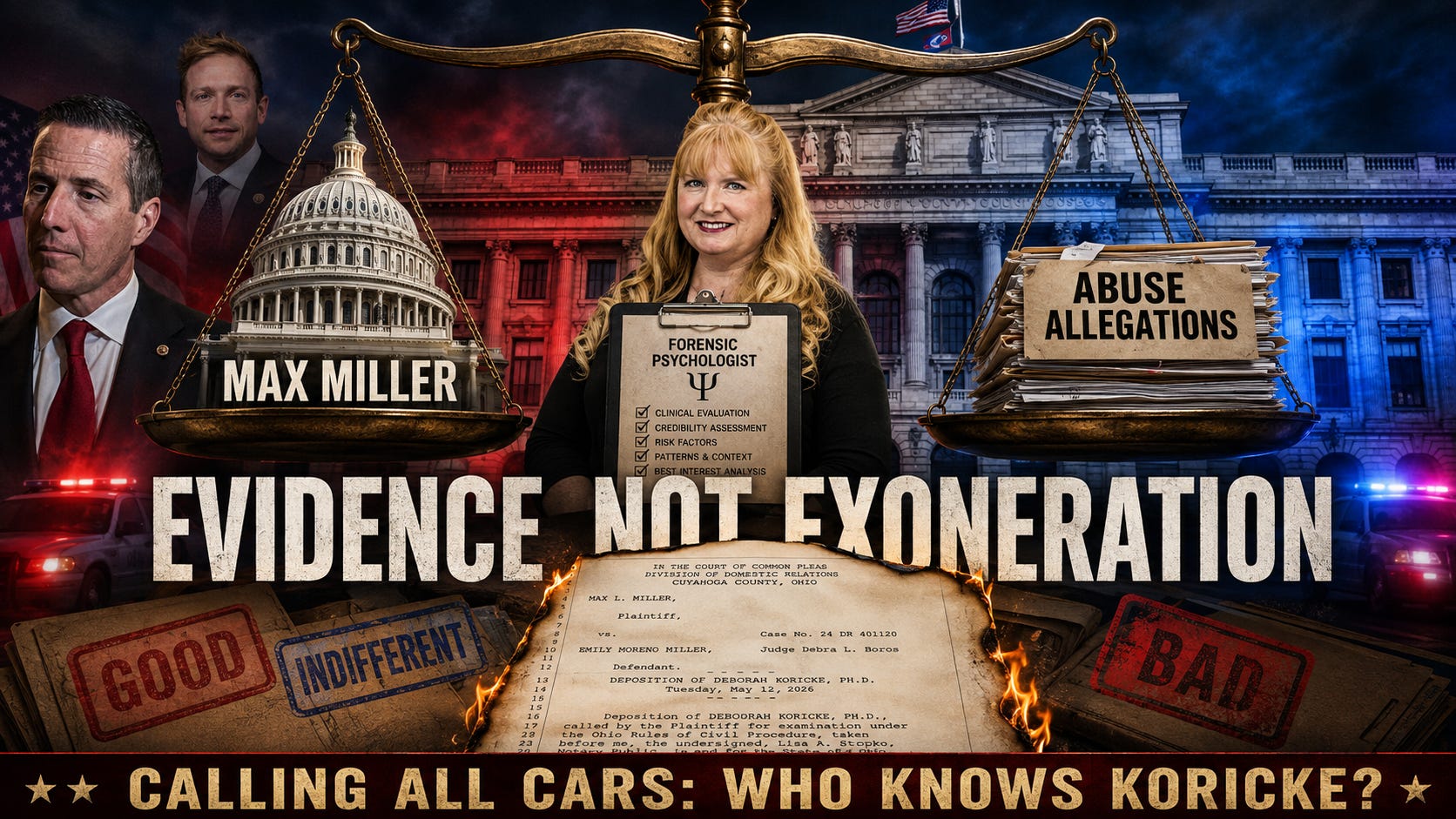
LUTHMANN NOTE: Family court gives extraordinary power to psychologists, evaluators, parenting coordinators and guardians whose conclusions can reshape custody, reputations and entire lives. Deborah Koricke’s testimony may help Max Miller politically, but one high-profile deposition cannot tell the public whether her broader professional record deserves confidence. That answer must come from documents, court records and firsthand experience—not partisan spin or internet rage. We are opening the files. If Koricke was fair, careful and effective, we want to know. If she missed evidence, favored one side or worsened conflict, we want that too. Good, bad or indifferent—bring receipts. This piece is “Psychologist in the Crossfire,” first available on The Family Court Circus.

By Richard Luthmann
A Congressional Divorce Detonates
(CLEVELAND, OHIO) – The divorce war between Ohio Republican Congressman Max Miller and Emily Moreno Miller has become more than a private domestic relations case. It is now a political blood feud conducted through court filings, press coverage, and competing claims of abuse, credibility, and parental fitness.
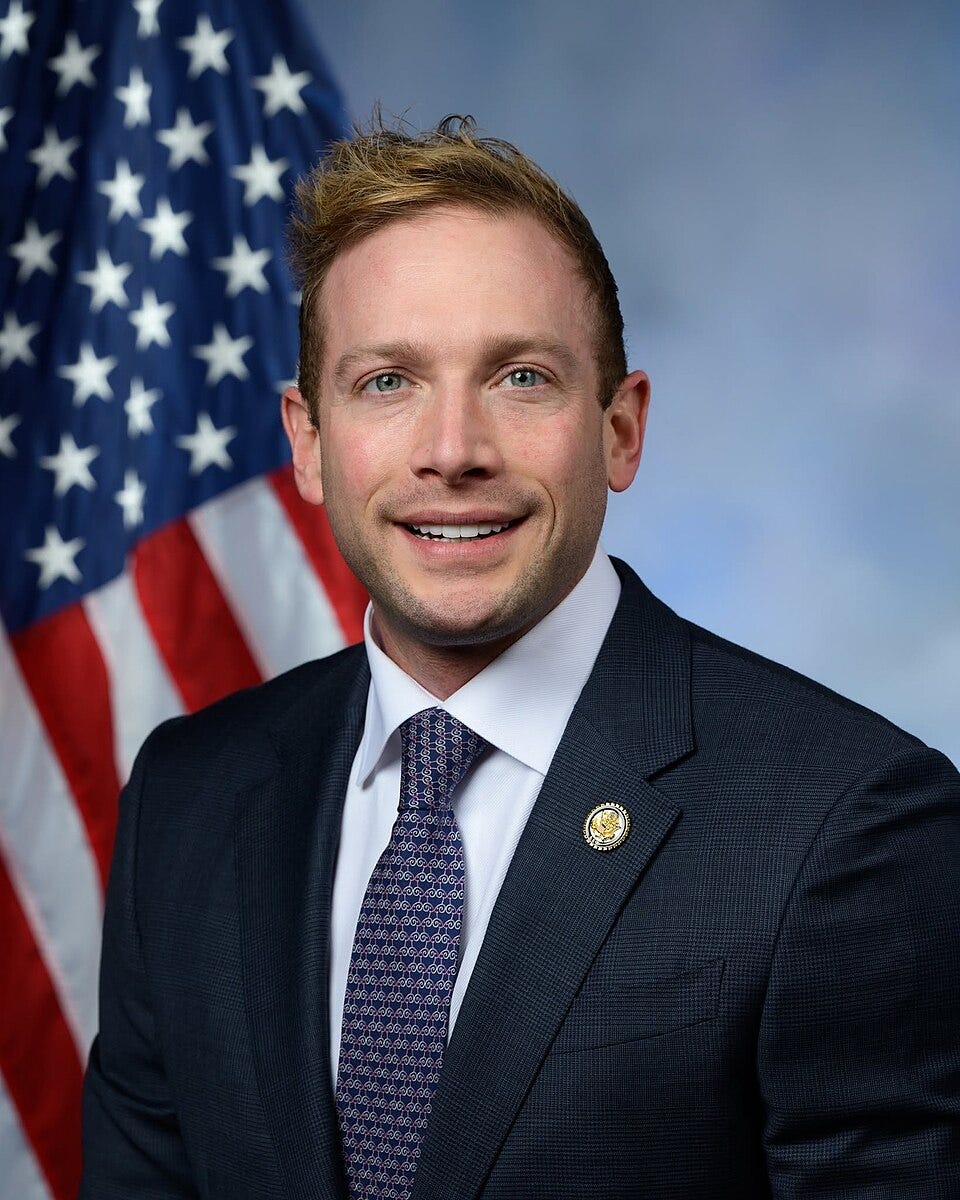
Emily Moreno Miller has accused her former husband of violent and frightening conduct, including allegations involving hot water and harm to their young daughter. Miller denies abusing his former wife or child and has pursued a defamation action built around the argument that the accusations are false, exaggerated and politically destructive.
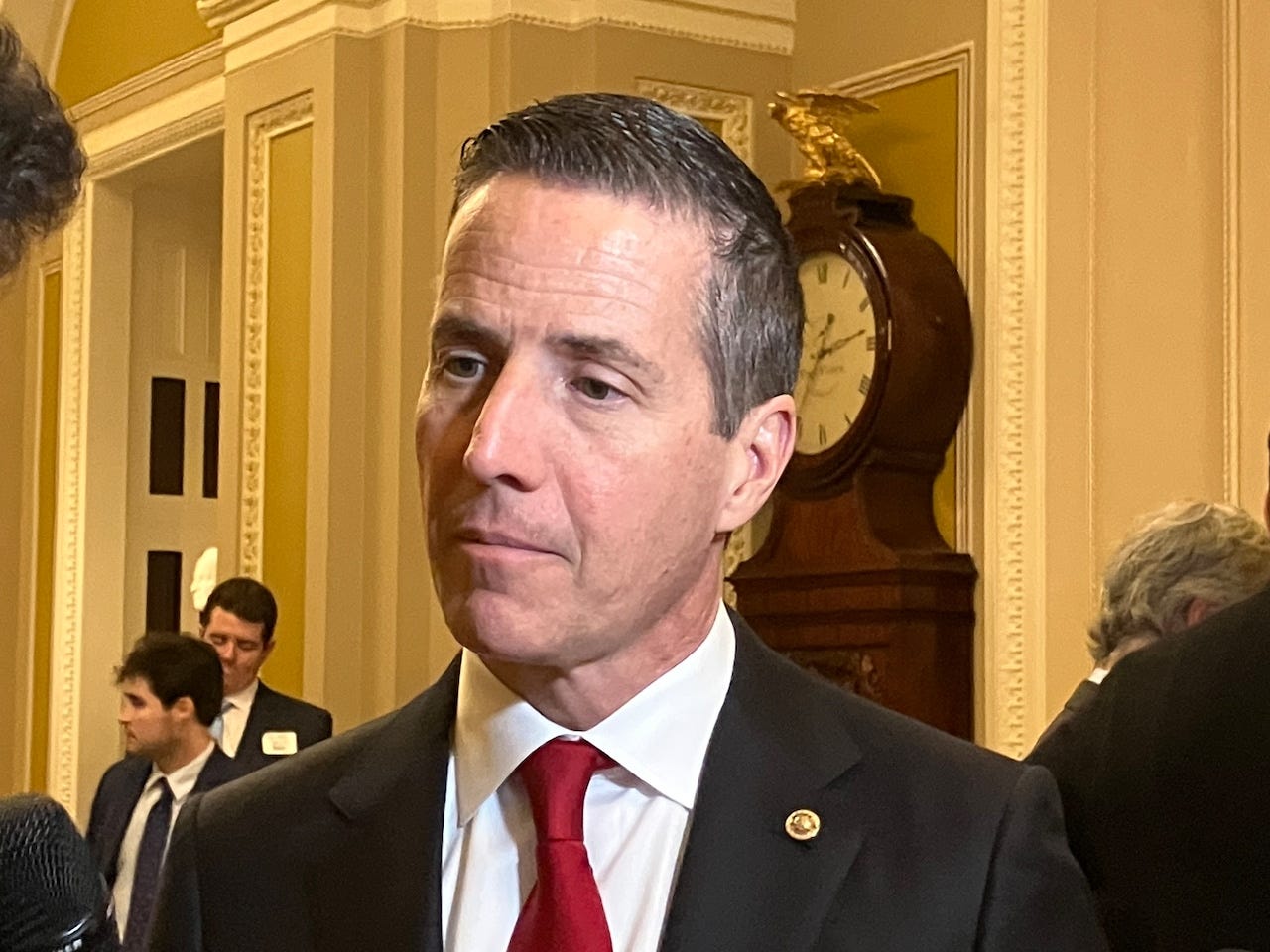
ABC News reported that U.S. Sen. Bernie Moreno, Emily’s father, called for Miller to leave the House after allegations concerning the couple’s daughter became public. The accusations remain disputed.
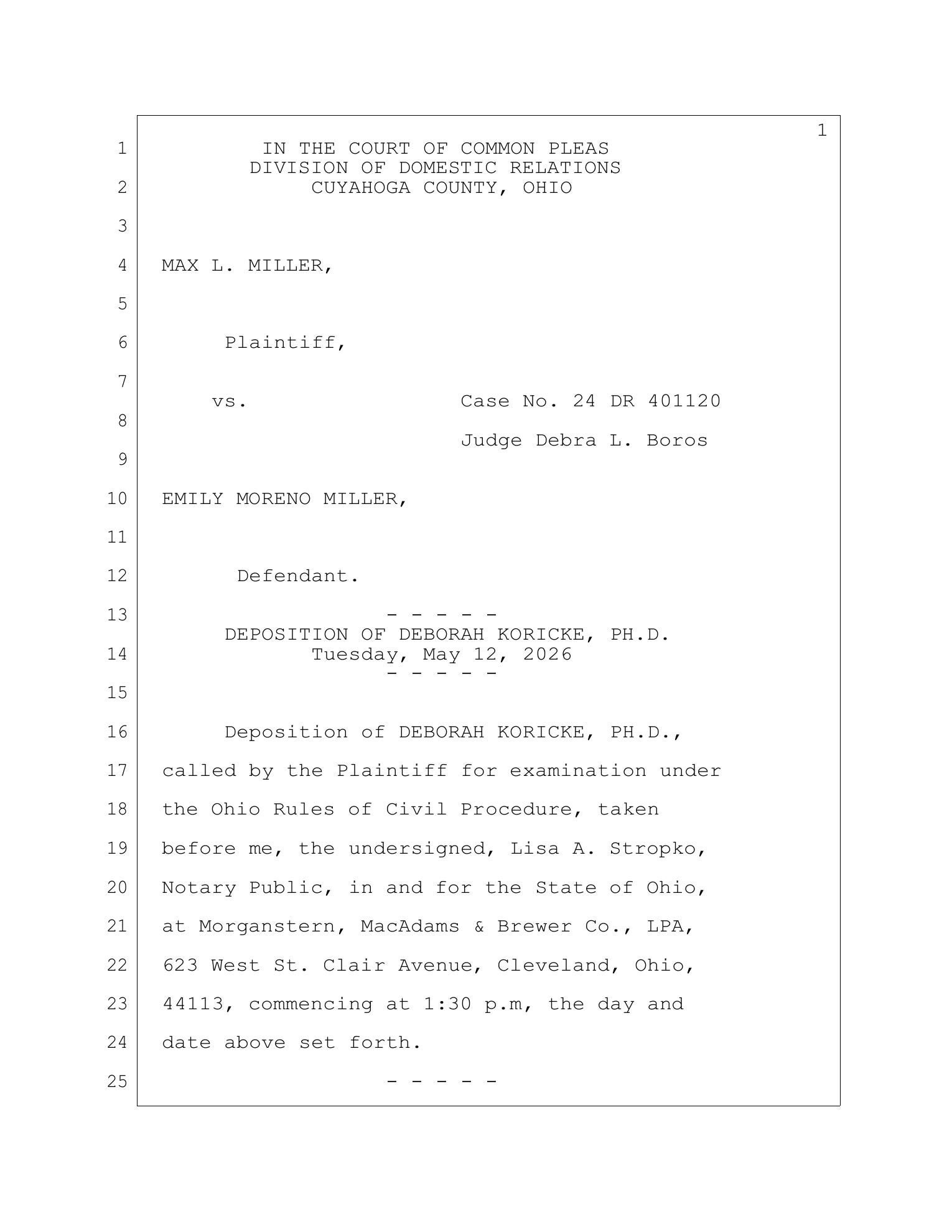
What makes the case especially revealing for The Family Court Circus is Miller’s reliance on Deborah A. Koricke, Ph.D., the psychologist serving as parenting coordinator. Her May 12, 2026 deposition in Cuyahoga County Domestic Relations Court gives Miller powerful material, but not a magic wand.

Koricke testified under oath in Max L. Miller v. Emily Moreno Miller, Case No. 24 DR 401120, before Judge Debra L. Boros. The transcript shows a bitter, high-maintenance co-parenting case with domestic-violence litigation, child-welfare investigations, disputed recordings, medical-access problems and constant warfare over parenting time.
It is the family-court machine in miniature: one child, two warring parents, armies of lawyers and a professional whose judgment may shape the public narrative as much as the courtroom record.
Psychologist in the Crossfire: Koricke Was Not Convinced
Koricke’s testimony gave Miller the central line his defenders wanted. Asked whether Emily had been given an opportunity to support accusations that Miller abused her or their daughter, Koricke said yes.
Asked whether the material presented convinced her that Miller committed that abuse, she answered no. She testified that she is a mandatory reporter regarding suspected child abuse and had never made a report accusing anyone of hurting the child. She also said two Children and Family Services investigations did not find Miller responsible for the incidents examined.
In one matter, she testified that a daycare worker was later believed responsible for the child’s injuries. In another, involving a broken collarbone, Koricke said she and another child psychologist did not suspect either parent or the nanny and discussed the possibility that the toddler fell from a crib.
The most politically combustible testimony concerned what Koricke called the “water incident.” She said Emily showed her a photograph of redness on her chest. Miller, according to Koricke, admitted spraying water from a kitchen sink sprayer but described the episode as fooling or goofing around. Emily viewed it differently and treated it as a serious event near the end of the marriage.
Koricke noted that Emily did not seek an in-person or virtual medical examination, and Koricke said she could not determine the origin of the redness because she is not a physician.
Later, when asked about press accounts accusing Miller of abuse, Koricke said she believed they were “greatly exaggerated.” She also suggested the timing might be connected to the escalating divorce conflict and Miller’s election year, while making clear that this was her guess rather than a proven fact.
Psychologist in the Crossfire: Evidence, Not Exoneration
That testimony is important, but it must not be inflated beyond what the transcript proves. Koricke did not complete the custody evaluation she began in 2024; she testified that the parties settled before it was finished. Her later role was parenting coordinator, focused on helping the parents resolve disputes affecting their daughter.

She did not issue a judicial finding that every allegation against Miller was false. She did not testify that the water event never happened. Her account was that both parties agreed water was sprayed in the kitchen but disputed the context, severity, and meaning.
Miller can fairly cite Koricke as a professional who was not persuaded by the abuse evidence shown to her. He cannot fairly convert that into a court verdict clearing every accusation.
The cross-examination also ran counter to a one-sided rescue narrative. Koricke acknowledged that Miller had described Emily as bipolar, but she had seen no evidence supporting that diagnosis. She also testified that Miller fired the child’s concierge pediatrician without consulting Emily.
Elsewhere, the deposition portrayed failures and questionable decisions on both sides: communication restricted by a domestic-violence civil protection order, disputes over medical information, fights about nannies and sleeping arrangements, and breakdowns over parenting schedules. Koricke called the assignment one of her most high-maintenance parenting-coordination cases.
Her credentials are substantial: the Center for Effective Living identifies her as a clinical and forensic psychologist who routinely works in local, state and federal courts. Psychology Today lists divorce, parenting, domestic abuse and domestic violence among her practice areas.
Credentials justify attention; however, they do not place her conclusions beyond scrutiny.
Psychologist in the Crossfire: Calling All Cars
That is why The Family Court Circus is issuing a calling-all-cars request to the Ohio family-court community. We want to hear from parents, lawyers, guardians ad litem, evaluators, therapists, domestic-violence advocates, former clients, and professionals with direct experience involving Deborah Koricke. The question is not whether she helped Max Miller. The question is whether her work across cases demonstrates a consistent method worthy of confidence:
Did she read the full record?
Did she distinguish bruising allegations from verified evidence?
Did she understand coercive control and post-separation abuse?
Did she identify strategic or exaggerated claims when they appeared?
Did she treat mothers and fathers with equal skepticism?
Did she revise conclusions when new evidence arrived?
Did her involvement calm conflict, or become another expensive gear inside the family-court machine?
We want the good, the bad, and the ugly. Praise matters. Criticism matters. Documentation matters most:
Send court orders, reports, recommendations, invoices, correspondence, deposition excerpts, hearing transcripts, and sworn statements.
Identify the case, court, dates, and your role.
Separate firsthand knowledge from hearsay.
Protect children’s identities and avoid disclosing private medical information unnecessary to the public-interest issue
Send information to:

This is not a summons for a digital mob, and it is not a verdict against Koricke. It is a reporting call triggered by the public weight now being placed on her judgment.
Miller is relying on Koricke’s testimony because it helps him answer allegations that could destroy a political career. Emily Moreno Miller and her supporters say the underlying conduct was far more serious. The courtroom will decide what the law permits it to decide.
The family-court community can help determine whether the professional standing between those stories has earned the trust now being placed in her.

 | A guest post by
|