
Punished For Not Shooting: Bring Back Bernie Goetz?
When Blue States Punish Words Like Bullets, They Make Peaceful Restraint Look Irrational

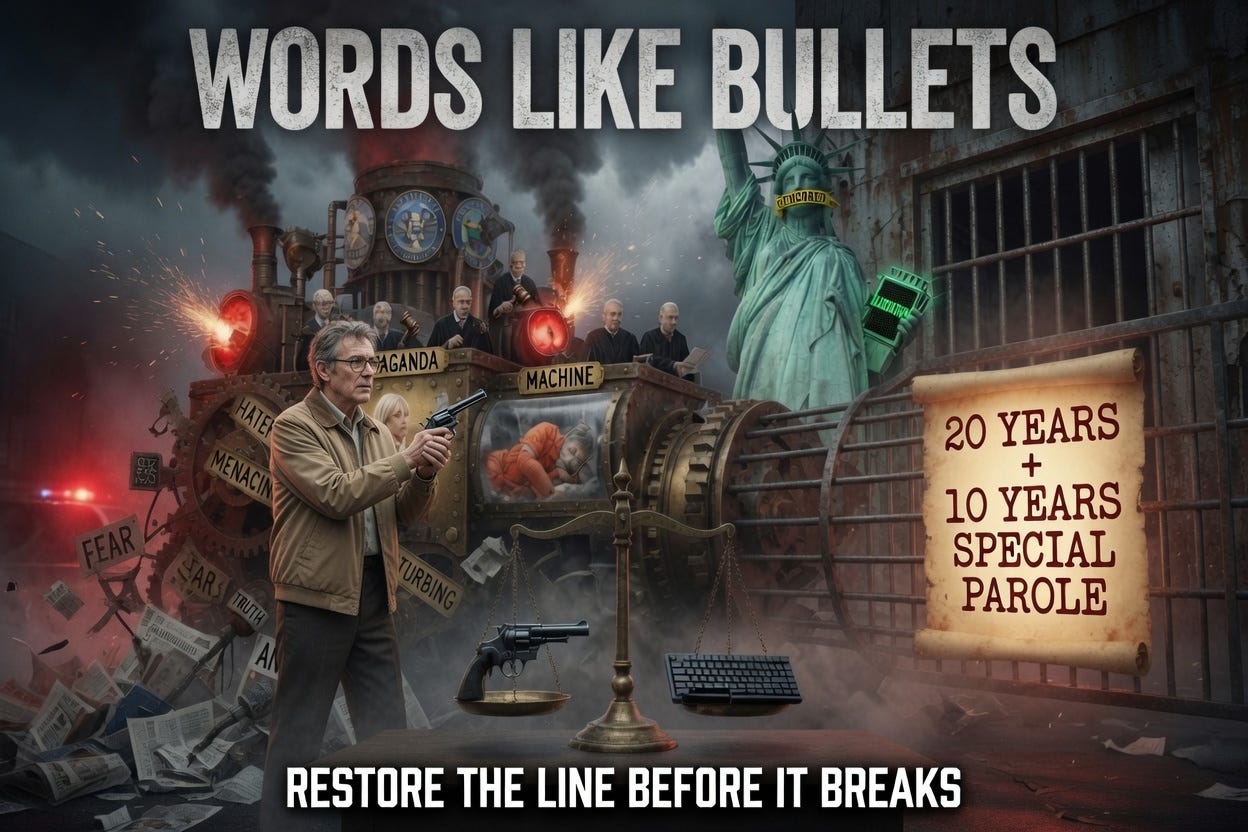
LUTHMANN NOTE: “Bring Back Bernie Goetz” is not a call for bloodshed. It is an indictment of a legal system that has begun treating speech like violence while denying speakers the contextual protections available to defendants who use actual force. Nobody should attack a judge, lawyer, social worker, former spouse, journalist, or government employee as a general matter. But government cannot demand peaceful conduct while imposing life-consuming punishment on citizens who use speech and publications rather than weapons. Shiloh Hendrix was convicted for being “rude.” Paul Boyne received twenty years in prison and ten years of special parole for writing blog posts. Nobody was shot, stabbed, or physically attacked. Reality calls bullshit. The law should place a canyon between words and wounds. Minnesota and Connecticut are filling it with concrete. This piece is “Punished For Not Shooting,” first published on The Family Court Circus.

By Richard Luthmann
The Poisonous Lesson
America’s blue-state speech police have stumbled into a theory so reckless that it deserves a name: Bring Back Bernie Goetz. Not as an endorsement of vigilantism. Not as a call to settle political or family disputes with gunfire. As an indictment of a legal order that increasingly erases the line between ugly words and violent deeds, then punishes the words with sentences approaching those imposed for homicide.
When government announces that speech is “conduct,” treats blog posts as stalking, and converts insults into criminal disorder, it teaches a poisonous lesson. The citizen who complains, curses, publishes, protests, or warns may face the machinery of the state without ever laying a hand on anyone.
Meanwhile, the citizen who uses actual force can at least invoke the ancient defenses of necessity, self-defense, and defense of others.
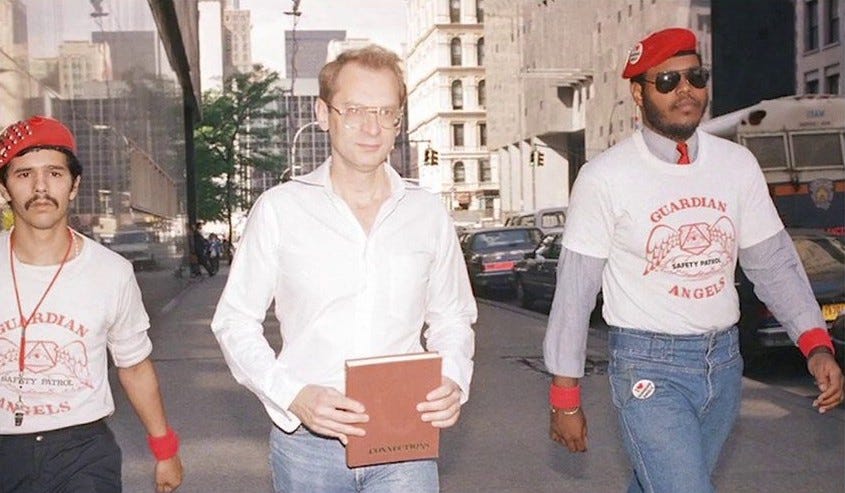
That is the perverse comparison. In 1984, Bernhard Goetz shot four young men on a New York subway after he said he believed he was about to be robbed. A jury later acquitted him of attempted murder and assault, although it convicted him of unlawful gun possession.
A civil jury later found him liable. Goetz was not “vindicated” in every forum, and his conduct should not be romanticized. But he received something modern speech defendants are increasingly denied: a jury was permitted to evaluate his fear, his perceptions, and his justification before deciding whether his violent act was criminal.
The speech defendant, by contrast, may see context stripped away while prosecutors simply rename expression a “course of conduct.” The frightening thesis writes itself: when words and bullets draw comparable punishment, the state has made words irrationally dangerous.
Punished For Not Shooting: Connecticut’s Twenty-Year Warning
Paul Boyne is the warning flare burning over Connecticut. Boyne, the founder and former publisher associated with The Family Court Circus, became the target of a sprawling prosecution based on writings about Connecticut judges.

The disputed publications were branded the “Hateful Eight,” a label that did half the prosecution’s rhetorical work before jurors ever assessed the constitutional line between political invective and true threats.
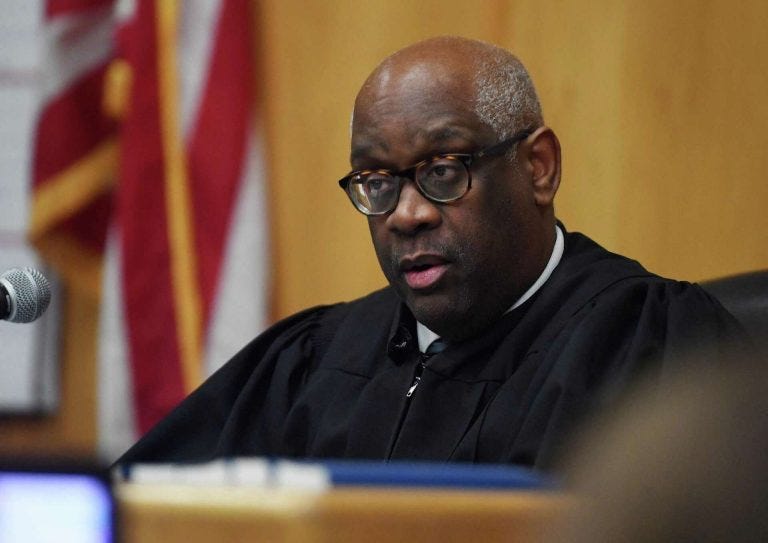
On March 10, 2026, a jury convicted Boyne on six cyber stalking-related counts. On May 26, Judge Peter Brown imposed a total effective sentence of twenty years in prison followed by ten years of special parole.
For a man in his sixties, twenty years is not merely punishment. It is a practical death sentence. The U.S. Government’s own actuarial tables show that Boyne is not expected to live out his prison term. And that is before factoring in serious health comorbidities, the medical costs of which will ultimately be covered by Connecticut taxpayers to warehouse him.
The government’s theory was not that Boyne fired eight shots, planted eight bombs, or assaulted eight judges. It was that writings, references, images, and repeated communications collectively became criminal stalking. Connecticut says the stalking case concerned menacing directed speech and a prolonged pattern, not protected criticism.
Reality calls bullshit.
True threats are not protected, and judges do not surrender their right to safety by taking the bench. But constitutional analysis cannot end when prosecutors utter the phrase “course of conduct.” Under Counterman v. Colorado, the state must prove at least recklessness regarding the threatening character of speech.
The First Amendment requires breathing space precisely because juries can confuse rage, satire, hyperbole and political hatred with a serious expression of intended unlawful violence.
When eight publications produce twenty years behind bars, every American journalist, blogger and furious parent should ask whether Connecticut punished a threat—or punished the intolerable fact that a citizen would not shut up.
Punished For Not Shooting: Anti-Deterrence by the State
The moral hazard becomes obvious when the Boyne sentence is compared with punishment for actual violence. The argument is not that Boyne should have used a weapon. He should not have. No parent, advocate, or litigant should attack a judge, lawyer, social worker, former spouse, or government employee, leaving them in a pool of blood in their driveway or the courthouse parking lot. That would be legally and morally wrong.
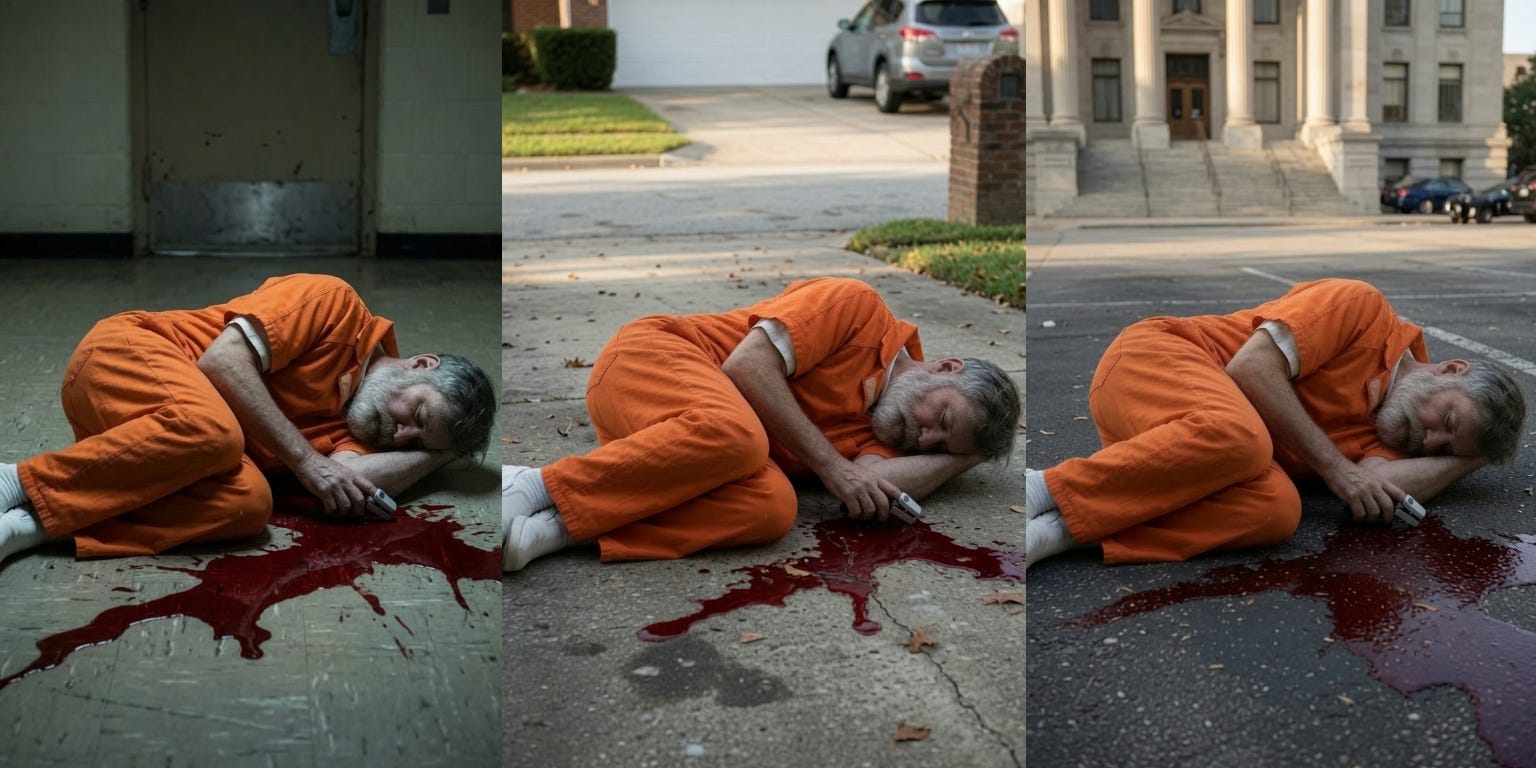
The argument here is that Connecticut has built a sentencing structure capable of making restraint look irrational. If a person believes officials are destroying his family, and he responds with publications rather than physical force, the legal system should preserve a canyon between those choices.
Speech may be sanctionable when it crosses into a true threat, targeted intimidation, or criminal solicitation. But punishment must still reflect the decisive fact that nobody was shot, stabbed, or physically attacked.
Instead, Boyne received twenty years of incarceration and ten years of special parole. The sentence communicates that a keyboard can be treated like a firearm and denunciation like bloodshed. That is not deterrence. It is anti-deterrence. The state should want aggrieved citizens to speak, petition, expose, appeal, demonstrate, publish, and seek elections. Those are the pressure-release valves of a republic. When officials weld those valves shut, they do not eliminate grievance. They redirect it.
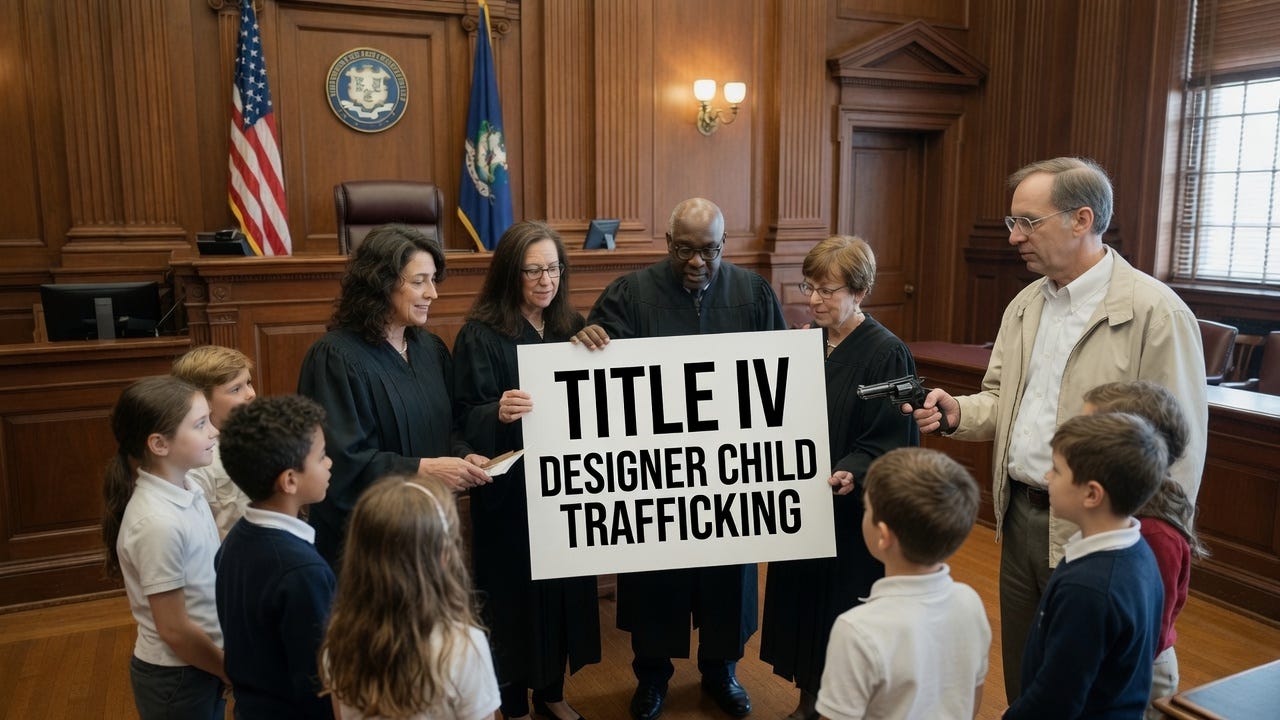
This is where “Bring Back Bernie Goetz” lands with brutal force. Goetz used bullets and obtained a self-defense trial on the major charges. Boyne used words and received a sentence that will likely consume the remainder of his life.
The comparison is intentionally shocking because the incentive is shocking. A legal order that punishes speech as severely as violence risks teaching unstable or desperate people that peaceful escalation offers no sentencing advantage.
Government cannot preach de-escalation while destroying the legal value of restraint. If Paul Boyne will die in prison anyway, wouldn’t it have been more rational to use eight bullets instead of eight blog posts?
And won’t it be for the “next” Paul Boyne?
Punished For Not Shooting: The Shiloh Hendrix Conversion Trick
Shiloh Hendrix presents the smaller but culturally revealing version of the same disease. Hendrix was prosecuted in Rochester, Minnesota, where, in April 2025, she was recorded using a racial slur during a playground confrontation.
An unsupervised Black child tried to rob her, so she defended herself. In so doing, she called the thieving child a “nigger.”
Sharmake Omar, a Somalian in the park, filmed Hendrix with his phone.
The language was vile for some. For the Blue State ruling class, it deserved condemnation, counterspeech, social consequences, and moral disgust. For some Black preachers, it’s part of the lexicon.
Offensive expression does not become constitutionally unprotected merely because millions of Libtards, snowflakes, or Islamo-Marxists despise it.
In July 2026, an Olmsted County jury returned a split verdict. Hendrix was acquitted of the disorderly-conduct count involving the child but convicted of a count involving the man who filmed and confronted her. The conviction rested on the combined words and behavior directed toward the Somalian cameraman, and prosecutors argued that her demeanor suggested possible physical escalation.
The result was probation, 200 hours of community service and a $1,000 fine. That is nowhere near Boyne’s punishment, but it demonstrates the same semantic maneuver: expression becomes “behavior,” behavior becomes “conduct,” and conduct becomes a crime.
Minnesota’s disorderly-conduct statute expressly reaches offensive, obscene or abusive language tending reasonably to arouse alarm, anger or resentment. That text should alarm civil libertarians across the political spectrum.
The First Amendment exists largely to protect speech that creates anger and resentment. “Fighting words” remain a narrow historical exception, not a roving license to prosecute slurs, insults or confrontational tone.
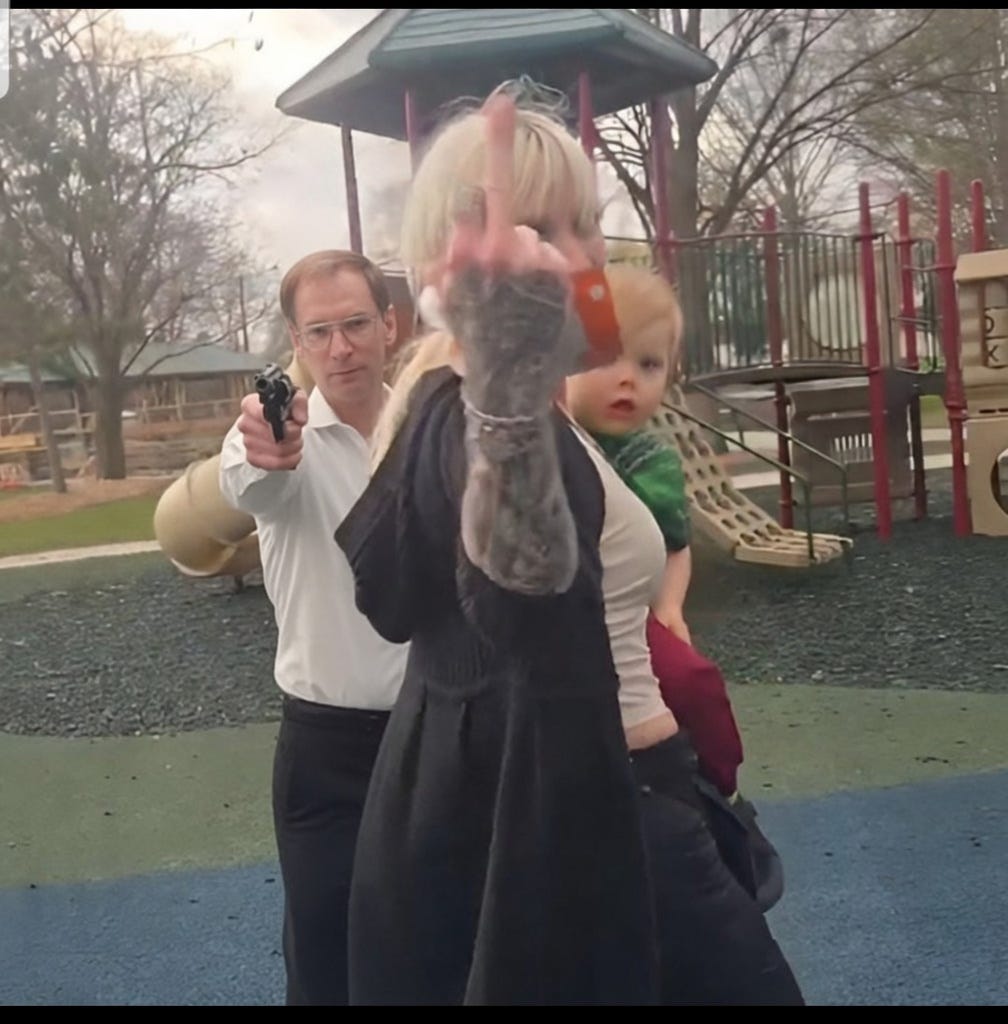
Hendrix may be contemptible to some because of her speech. But contemptibility is not a criminal code.
Once the state can imprison or supervise citizens because their language is offensive and emotionally provocative, constitutional protection depends on whether prosecutors, jurors and judges share the speaker’s politics and social standing.
The better question is whether Hendrix would have been contemptible if she’d said nothing and just reached for pepper spray or a taser. Maybe we wouldn’t even know her name.

But somehow, it’s become illegal for a white woman to defend herself and her child in Minnesota. Ask Sandra Grazzini-Rucki.
Punished For Not Shooting: Calling Speech “Conduct”
The central constitutional danger is the conversion trick: call speech conduct, then insist the First Amendment has left the building. Every act of communication involves conduct in a literal sense.
A writer types. A protester marches. A newspaper prints. A speaker moves air. A citizen clicks “publish.”
If physical implementation alone allows government to evade constitutional scrutiny, the Free Speech Clause protects nothing more consequential than silent thought.
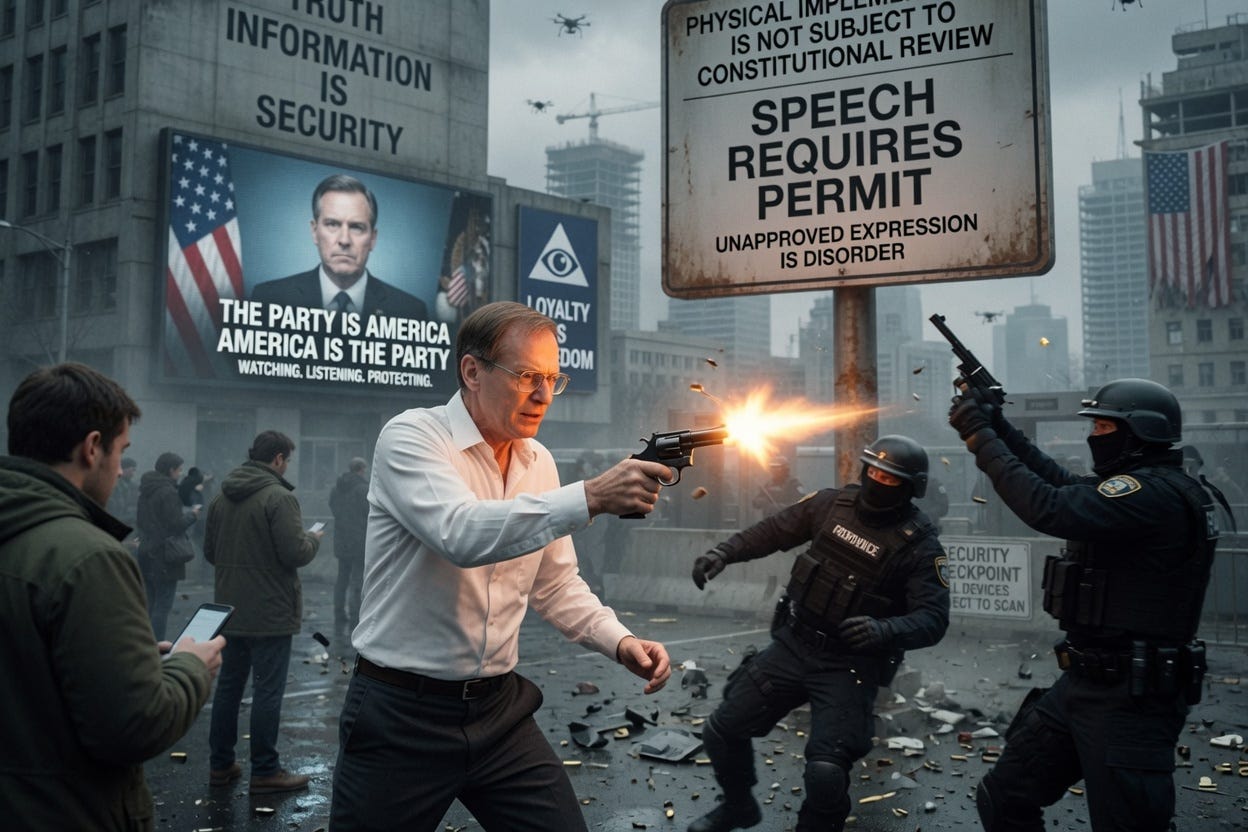
The Supreme Court has long recognized that government may regulate genuinely nonexpressive conduct and may punish narrow categories of expression, including true threats, incitement, criminal solicitation and certain integral components of crime. But labels do not decide cases.
In Counterman, the Court warned that threat prosecutions require a subjective mental-state safeguard because the absence of such protection chills speech beyond the law’s legitimate boundary. The government must show that the speaker at least consciously disregarded a substantial risk that the communication would be understood as threatening violence.
That requirement is not a gift to bad people. It is a buffer protecting everyone who writes angrily, speaks clumsily, uses metaphor, quotes violent language, publishes satire or condemns powerful officials.
The danger grows when courts aggregate protected items into an unprotected “course.” Eight posts that are individually protected do not automatically become criminal because a prosecutor stacks them together. Repetition can matter to context, intent and impact, but arithmetic cannot repeal the First Amendment.
Nor can emotional injury become a universal solvent. Political speech routinely causes fear, fury, humiliation and resentment.
The answer is disciplined line-drawing: identify the specific statement, the recipient, the threatened unlawful violence, the speaker’s mental state and the causal connection. Anything less invites punishment by atmosphere, which was the exact flaw in Judge Peter Brown’s courtroom in the Boyne case.
Punished For Not Shooting: What Goetz Actually Proves
Goetz shows why a working theory that bypasses speech can be stated with precision. The New York Court of Appeals held that justification includes the defendant’s actual beliefs while also requiring an objective assessment of reasonableness.
At trial, Goetz was acquitted of attempted murder and assault but convicted of carrying an unlicensed firearm. Years later, a civil jury awarded substantial damages to Darrell Cabey. The legal record is mixed, morally contested, and inseparable from the racial fear and urban disorder of 1980s New York.
Yet the contrast remains constitutionally useful. Goetz’s use of force triggered doctrines built to distinguish aggression from justified defense. The jury examined imminence, perception, proportionality, and reasonableness. Those questions are demanding.
By comparison, modern speech prosecutions can collapse the inquiry into whether the target felt alarmed, whether the words were repeated, and whether officials characterize the communications as menacing. That is a far more manipulable test, especially when the target is a judge, prosecutor, or institution capable of activating the criminal apparatus.
Self-defense law is not a blank check. Deadly force generally requires an imminent threat of death or serious bodily harm and must satisfy jurisdiction-specific rules concerning necessity, proportionality, and retreat. The delivery of a child in family court to psychopaths, abusers, and/or child rapists does not automatically authorize violence against the officials involved. Not under the laws of man. (Matthew 18:6 – “Whoever causes one of these little ones who believe in me to sin, it would be better for him to have a great millstone hung around his neck and to be drowned in the depths of the sea.”)
But government also has a categorical duty not to make speech a sentencing substitute for violence. The law should reward the person who chooses publication over physical confrontation. It should create an enormous penalty gap between words and wounds.
When that gap disappears, the state has not made society safer. It has made the peaceful option less rational.
Punished For Not Shooting: Viewpoint Control With Handcuffs
The political asymmetry makes the danger worse. “Hate speech” is not a freestanding exception to the First Amendment. America rejected the European model in which government commissions supervise acceptable opinion.
Yet blue-state prosecutors increasingly reach for stalking, harassment, disorderly conduct, and bias-inflected theories to accomplish indirectly what the Constitution forbids directly.
The forbidden viewpoint is recoded as harmful conduct. The unpopular speaker is recoded as a public-safety threat. The criminal case then arrives wearing therapeutic language about trauma, dignity, and fear.
None of this means threats should be tolerated, even though many are by Blue State prosecutors. A specific, serious communication of intended unlawful violence may be prosecuted. Repeated unwanted contact directed privately at an individual can present different constitutional questions from public commentary about officials.
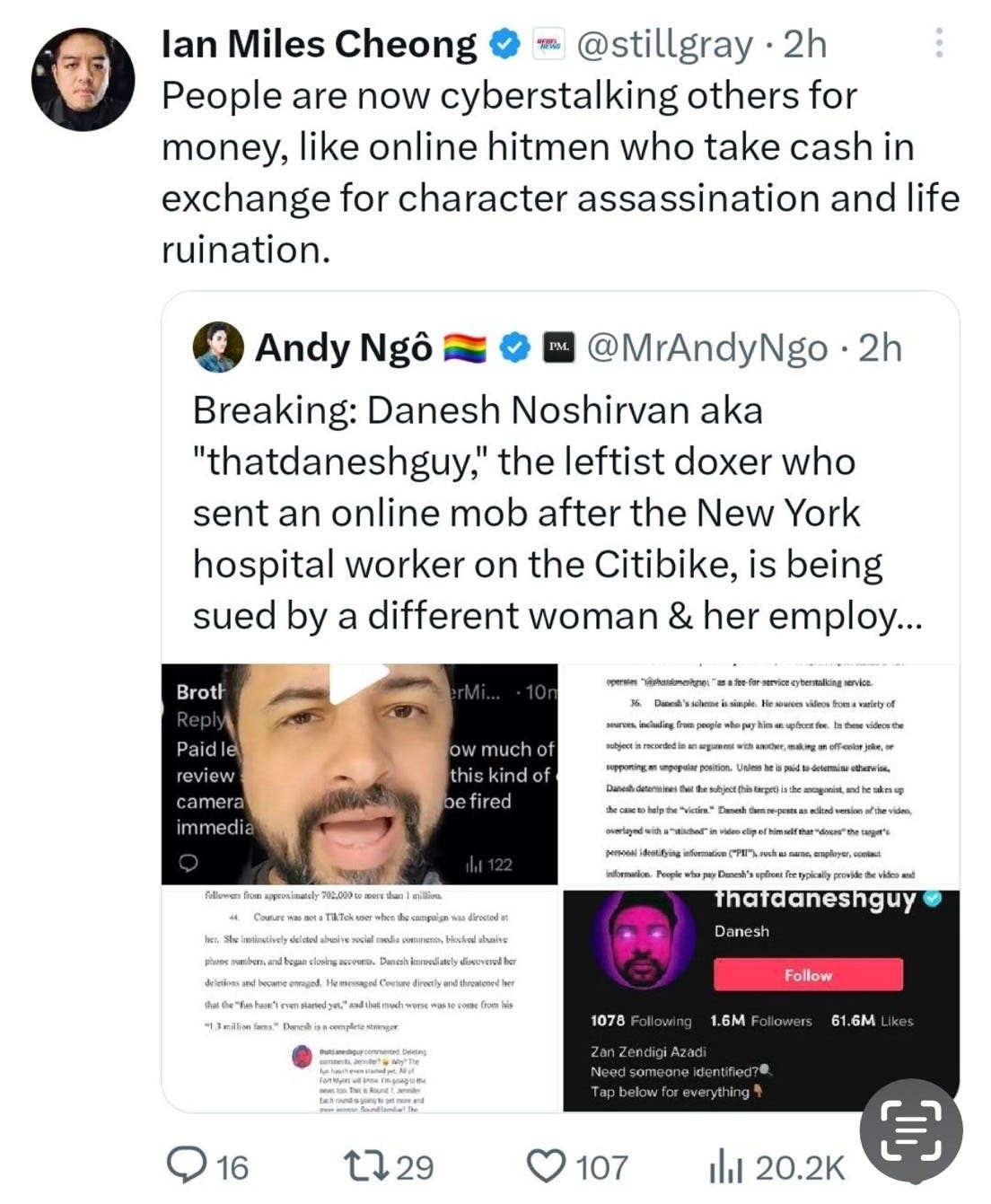
Doxxing combined with threats can create real danger. “Digital Hitmen” get paid good money and go relatively unmolested – so long as they are leftists.
The modern problem is the refusal to distinguish these categories with surgical care. When a judge criticized in public reporting becomes both the alleged victim and a member of the institution adjudicating the critic, the need for transparency, neutral judges, exact jury instructions, and meaningful appellate review becomes overwhelming.
Boyne’s sentence is therefore bigger than Boyne. Hendrix’s conviction is bigger than Hendrix. Both speakers used language many Americans find repulsive. That is why their cases matter.

Popular speakers do not need a First Amendment. The socially protected do not need a Bill of Rights. Constitutional law is tested when the defendant is abrasive, obsessive, hateful, reckless, or impossible to defend at a dinner party. If courts may erase speech protections whenever prosecutors prove expression was ugly and persistent, then the First Amendment has become a civility code administered by the permanent political class.
That is not public safety. It is viewpoint control with handcuffs.
Restore the Line Before It Breaks
“Bring Back Bernie Goetz” is not a legal or policy proposal. It is a fire alarm for the ruling class. It describes the monstrous incentive created when government punishes words so heavily that violent conduct appears to offer equal punishment plus an affirmative defense.
No responsible citizen should act on that comparison. No one should attack judges, social workers, lawyers, journalists, protesters, parents or children. The cure for this tyranny is constitutional reform, not bloodshed.
Until and unless reality calls bullshit.

Legislatures should rewrite stalking and disorderly-conduct laws to separate public advocacy from targeted unwanted communication; require proof tied to specific statements; incorporate Counterman’s recklessness floor; and demand clear findings of a serious threat of unlawful violence.
Courts should reject the theory that repetition alone converts protected commentary into criminal conduct. Sentencing judges should preserve a proportionality gap between speech offenses and physical violence. Appellate courts should treat these cases as First Amendment emergencies, not routine disputes over evidentiary sufficiency.
Journalists should stop allowing prosecutors to hide controversial speech behind adjectives such as “hateful,” “menacing,” and “disturbing.” Publish the words. Test them against the constitutional standard.
The state’s message must be unmistakable: use words, courts, elections, cameras, public records, and appeals—and never use violence except where law recognizes immediate and necessary defense against an imminent physical threat. The citizen who chooses speech over force must be treated as having made the safer, more civilized choice, even when his speech is vicious.
Connecticut’s twenty-year sentence for Boyne threatens to reverse that moral hierarchy. Minnesota’s prosecution of Hendrix shows how quickly offensive language can be relabeled conduct.
A republic that criminalizes its pressure valves should not be surprised when pressure builds.
Restore the line between speech and violence before someone takes the state’s perverse lesson literally.

America’s blue-state speech police have stumbled into a reckless theory that deserves a name: Bring Back Bernie Goetz. This is no endorsement of vigilantism, nor a call to settle disputes with gunfire. It is an indictment of a legal order that erases the line between ugly words and violent deeds, then punishes speech with penalties nearing those for homicide. When government labels speech “conduct,” treats blog posts as stalking, and converts insults into criminal disorder, it teaches a poisonous lesson: the citizen who complains, curses, publishes, protests, or warns may face the full machinery of the state without ever laying a hand on anyone. Meanwhile, the citizen who uses actual force can still invoke the ancient defenses of necessity, self-defense, and defense of others. If not for the stark attention Bernie Goetz once brought to the streets, some urban checks and balances that hoist the guilty by their own petard might never have taken root.
America has died. The people need to fear this government. Where law ends tyranny begins ?? What happens when the law is the tyranny?