
Stick a Fork in Him
Paul Boyne Says Judge Peter Brown’s Speech-Stalking Conviction Is Cooked Under the Supremacy Clause

LUTHMANN NOTE: Paul Boyne is not asking Connecticut for mercy. He is forcing Connecticut to answer the Constitution. That is why the phrase “stick a fork in him” matters. It is not just trash talk from a jail phone. It is Boyne’s shorthand for a legal trap: if Judge Peter Brown let prosecutors turn protected speech into “stalking,” Article VI leaves Brown nowhere to hide. The Supremacy Clause binds state judges. Chiles v. Salazar says the First Amendment is no word game. Boyne says the label game is over. Now, Connecticut must explain whether it convicted a man for threats or punished speech. This piece, “Stick a Fork in Him,” comes from the nether-regions of MacDougal-Walker Correctional Institution, and is written with “classical style” elements of The World-Famous Blog. It can be considered offensive if you don’t like “prisoner writing,” particularly from Thought Criminals like Paul Boyne. Reader discretion is advised.
By Kunta Kinte Kommissar
(NEW HAVEN, CONNECTICUT) – From a jail cell, Paul Boyne says Judge Peter Brown’s legal reasoning is cooked, and with it, his felony conviction. His planned acquittal motion argues that Connecticut punished speech by calling it stalking, even after the U.S. Supreme Court warned that “the First Amendment is no word game.”
On March 10, 2026, a jury in New Haven convicted Paul Boyne, a 64-year-old Virginia man, on 12 counts of first-degree stalking and 6 counts of electronic stalking. State prosecutors said the case centered on blog posts that threatened three judges, published their addresses, showed photos of their homes, and described one home’s layout. Boyne maintains his posts on TheFamilyCourtCircus.com, criticizing the Connecticut Family Court, are protected speech.
The state said the posts were “true threats,” not protected speech, and said the verdict rested on posts aimed at Jane K. Grossman, Elizabeth J. Stewart, and former judge Thomas G. Moukawsher.
Prosecutors also said Boyne acted, at least in part, because of the judges’ religion or sexual orientation. Sentencing was set for May 26.
But Boyne isn’t talking like a beaten defendant. He sounds more like a man drafting a counterstrike, returning to one phrase: “stick a fork in him.” The “him” is Judge Peter Brown. In Boyne’s view, the Judge is finished because the court let the state treat speech as criminal conduct.
The slogan hardened after Boyne got the key passage from Chiles v. Salazar, where U.S. Supreme Court Justice Neil Gorsuch wrote that speech does not become conduct “just because the State may call it that,” and that the First Amendment’s protections cannot be “nullified by mere labels.”
In Boyne’s telling, that language did not just help him. It ended Brown.
Stick a Fork in Him: The Supremacy Clause Fight Inside the Cell
Boyne’s core theory is simple. It is also ambitious. He says Article VI, the Supremacy Clause, bound every state actor in his case to the controlling First Amendment law. In his jail notes and calls, he argued that Brown, the prosecutors, and earlier judges could not lawfully use a stalking label to sweep in protected speech.
He linked that claim to Chiles, where the Supreme Court said, “The First Amendment is no word game,” and to NAACP v. Button, where the Court said a state cannot “foreclose the exercise of constitutional rights by mere labels.” Boyne’s jump is direct: if Connecticut treated speech as conduct, then the state broke federal law at the trial level.
He also leans on United States v. Stevens, which stressed that only a few historic categories of speech sit outside the First Amendment.
That is the sharpest version of Boyne’s claim, but it is not the only one. The problem for him is the state’s answer. If the posts were true threats, then the Constitution does not protect them.
In Counterman v. Colorado, the Supreme Court held that true-threat prosecutions require proof of a culpable mental state, at least recklessness. In Virginia v. Black, the Court likewise treated true threats as a narrow but real exception.
Connecticut’s statutes, meanwhile, criminalize both electronic stalking that causes fear or substantial distress and stalking conduct that includes communications “about” a person and disclosure of identifying information. Boyne says that the legal framework still sweeps in speech. The state says the jury found threats, fear, and intent.
The line between those positions is the whole war.
Stick a Fork in Him: The Motion for Acquittal Boyne Built From the Inside
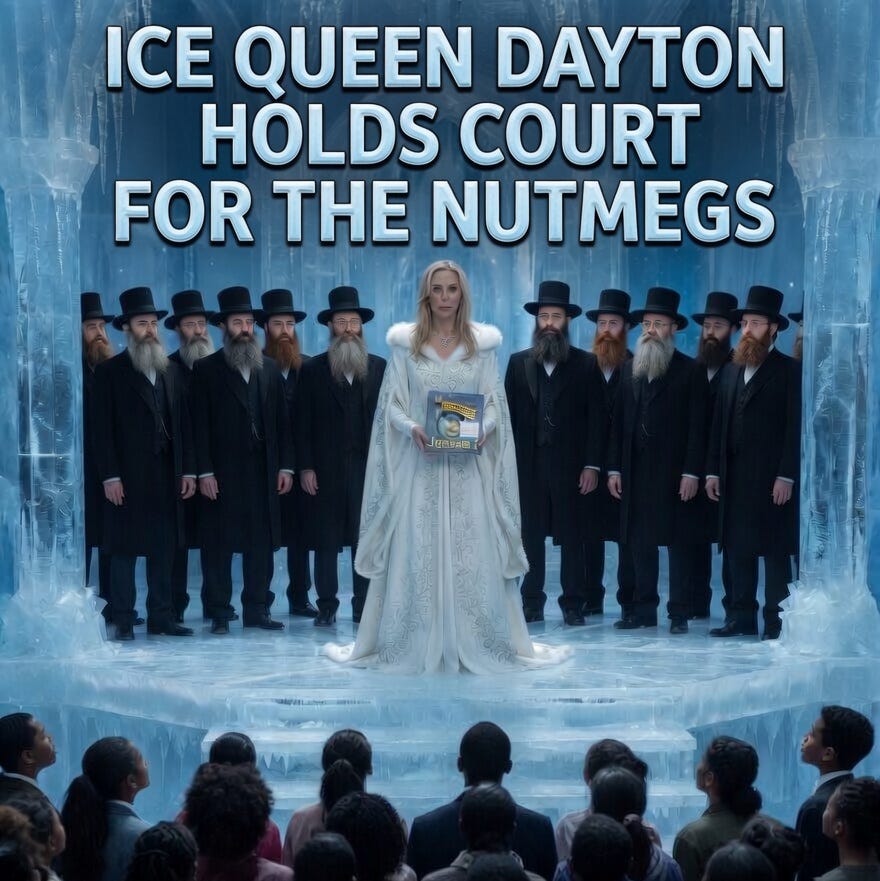
At present, Boyne is assembling his acquittal motion piece by piece. At an April 24 hearing before another Superior Court judge, “Ice Queen” Tracy Dayton, Boyne said that he had been brought into court in cuffs, denied a pen, and still managed to read Article VI from a pocket Constitution.
He then invoked Ali Al-Timimi, the January 2026 Fourth Circuit ruling holding that the government may not imprison a person for speech unless the speech falls within a narrow, unprotected category, such as incitement or intentional solicitation of a specific crime.
Boyne also raised Brandenburg v. Ohio and argued that the state never proved the classic incitement elements. In the same call, he recounted a key moment. When asked in court whether Boyne had been convicted for disclosing addresses, prosecutor John P. “Jack” Doyle Jr. answered YES. Boyne seized on that as the opening for acquittal.
From there, the theory widened. Boyne argued that posting an address, without more, does not end the First Amendment, tying that claim to Organization for a Better Austin v. Keefe, where the Supreme Court protected advocacy aimed at a private real-estate broker and rejected the idea that speech loses protection because it pressures its target.
He also leaned on People v. Relerford in Illinois and Mashaud v. Boone in Washington, D.C., both of which reflect how stalking laws can run into constitutional trouble when they punish speech that causes distress without fitting a recognized exception.
Boyne questions whether the acquittal motion should focus on the jury instructions, lack of particulars, or the broader constitutional frame. His position seems to be that the speech never lost protection in the first place, then argues that no reasonable jury could convict on the record that was presented.
Stick a Fork in Him: Jack Doyle’s Office Silent
We reached out to New Haven State Attorney Jack Doyle about Boyne’s claims. We did not hear back as of press time. Here is what we asked:
From: Richard Luthmann <richard.luthmann@protonmail.com>
Date: On Wednesday, May 6th, 2026 at 8:46 AM
Subject: Journalistic Inquiry re: State v. Boyne, Chiles v. Salazar, Article VI, and Prosecutorial Obligations
To: john.doyle@ct.gov <john.doyle@ct.gov>, gregory.borrelli@ct.gov <gregory.borrelli@ct.gov>, Del Ciampo, Joseph <Joseph.DelCiampo@jud.ct.gov>, Eservices@jud.ct.gov <Eservices@jud.ct.gov>, External Affairs <External.Affairs@jud.ct.gov>, Giovanni.Spennato@jud.ct.gov <Giovanni.Spennato@jud.ct.gov>, Michele.Massores@jud.ct.gov <Michele.Massores@jud.ct.gov>, Patton, Kerry <Kerry.Patton@jud.ct.gov>, Peter.Fradiani@jud.ct.gov <Peter.Fradiani@jud.ct.gov>, Statewide.Grievance@jud.ct.gov <Statewide.Grievance@jud.ct.gov>, OVS@jud.ct.gov <OVS@jud.ct.gov>, SuperiorCourtRecordsCenter@jud.ct.gov <SuperiorCourtRecordsCenter@jud.ct.gov>, eugene.calistro@jud.ct.gov <eugene.calistro@jud.ct.gov>, john.newson@jud.ct.gov <john.newson@jud.ct.gov>, officeof.chiefcourtadministrator@jud.ct.gov <officeof.chiefcourtadministrator@jud.ct.gov>, Villar, Marie-Louise <Marie-Louise.Villar@jud.ct.gov>, barbara.jongbloed@jud.ct.gov <barbara.jongbloed@jud.ct.gov>, james.pastore@jud.ct.gov <james.pastore@jud.ct.gov>, peter.brown@jud.ct.gov <peter.brown@jud.ct.gov>, rhonda.hebert@jud.ct.gov <rhonda.hebert@jud.ct.gov>, rhonda.stearleyhebert@jud.ct.gov <rhonda.stearleyhebert@jud.ct.gov>, robin.pavia@jud.ct.gov <robin.pavia@jud.ct.gov>
CC: Michael Volpe <mvolpe998@gmail.com>, Dick LaFontaine <RALafontaine@protonmail.com>, Rick LaRivière <RickLaRiviere@proton.me>, Frank Parlato <frankparlato@gmail.com>, Frankie Pressman <frankiepressman@protonmail.com>, Modern Thomas Nast <mthomasnast@protonmail.com>, juliea005 <juliea005@proton.me>
Dear State’s Attorney Doyle and Assistant State’s Attorney Borelli:
We are preparing a news report on State v. Paul Boyne, the pending post-verdict proceedings, and the constitutional questions raised by the United States Supreme Court’s March 31, 2026, decision in Chiles v. Salazar, 607 U.S. ___ (2026).
Please treat this as a journalistic inquiry and a press request for comment, despite your demonstrable disdain for the fourth estate.
In Chiles, Justice Gorsuch wrote for the Court that speech “does not become conduct just because the State may call it that,” and that “[t]he First Amendment is no word game.” The Court further held that constitutional rights cannot be “renamed away” or nullified by “mere labels,” citing NAACP v. Button, 371 U.S. 415, 429 (1963).
Article VI of the United States Constitution states that the Constitution and federal laws made pursuant to it are “the supreme Law of the Land,” and that “the Judges in every State shall be bound thereby.” It also binds state executive and judicial officers by oath or affirmation to support the Constitution.
Mr. Boyne has argued from custody that your office obtained convictions by treating speech, blog posts, viewpoint, publication, and alleged disclosure of addresses as “stalking” or “electronic stalking” conduct. In recorded jail calls, Boyne stated that “the speech in question squarely sits under Brandenburg” and that “there’s no way the prosecutor could have used that statute to punish speech.” He also stated that the prosecutor has an Article VI duty “to drop the charges to dismiss the action.”
He further stated that Chiles “puts the fork in it,” arguing that the case cannot survive if the State’s theory depends on relabeling protected speech as stalking. In the same call, he said the question for journalists is how your office can continue “prosecuting Boyne in defeat of Chiles and Button and the First Amendment and your Article Six obligations.”
According to Boyne, the law puts a fork in Judge Peter Brown as much as it does the prosecution: Article VI’s Supremacy Clause makes the First Amendment “the supreme Law of the Land” and binds every state judge to it, leaving Brown with no lawful escape hatch if the verdict criminalized protected speech by relabeling it as “stalking.” U.S. Const. art. VI, cl. 2; Chiles v. Salazar, 607 U.S. ___ (2026); NAACP v. Button, 371 U.S. 415, 429 (1963); Brandenburg v. Ohio, 395 U.S. 444, 447–49 (1969). Boyne says once the State failed to prove constitutionally unprotected speech under Brandenburg, Counterman, or another recognized First Amendment exception, Brown’s only legally defensible option is acquittal as a matter of law and dismissal of all charges. Counterman v. Colorado, 600 U.S. 66, 73–82 (2023); United States v. Stevens, 559 U.S. 460, 468–72 (2010).
Please answer the following questions as soon as possible, as we intend to go to press shortly:
1. How does your office contend State v. Boyne survives Chiles v. Salazar if the conviction rests, in whole or in part, on speech being characterized as stalking conduct?
2. Does the State dispute that Chiles prohibits government actors from avoiding First Amendment scrutiny by relabeling speech as conduct?
3. Does the State contend that blog posts, political commentary, criticism of judges, publication of publicly available information, or alleged disclosure of addresses fall within a historically recognized First Amendment exception?
4. If your answer is “true threats,” please identify the exact statements the State contends were true threats, and the evidence that the jury was required to find the mental state required by Counterman v. Colorado, 600 U.S. ___ (2023).
5. Did the State argue at trial that “speech is conduct,” that blog posts themselves constituted the criminal course of conduct, or that speech could satisfy the stalking statutes without first passing through the required First Amendment analysis?
6. How does your office reconcile its prosecution theory with Article VI’s command that state judges are bound by the Constitution and federal law, notwithstanding contrary state law?
7. Does your office accept that prosecutors, as state executive officers, are also bound by oath to support the Constitution under Article VI?
8. Has your office reviewed Chiles, NAACP v. Button, Brandenburg v. Ohio, Counterman v. Colorado, United States v. Stevens, and Organization for a Better Austin v. Keefe in light of the Boyne verdict?
9. Has your office considered moving to vacate, dismiss, nolle, or otherwise correct any part of the verdict if protected speech was used as a predicate for criminal liability?
10. Are you concerned that continuing to seek sentencing based on a conviction allegedly obtained through unconstitutional relabeling of speech as stalking could expose participating prosecutors to professional discipline, bar complaints, or other consequences?
11. Are you concerned that the State’s continued position could be viewed as a knowing violation of First Amendment law after Chiles?
12. Will your office oppose Mr. Boyne’s anticipated motion for acquittal or new trial on First Amendment and Supremacy Clause grounds? If so, what is the State’s legal theory?
13. Does your office maintain that Article VI permits Connecticut courts and prosecutors to defer these First Amendment issues to appeal while Mr. Boyne remains incarcerated?
14. Did State’s Attorney Doyle acknowledge in court that disclosure of addresses was an element or part of the information in the Boyne prosecution? If so, how does the State contend that publication-based theory survives First Amendment scrutiny?
15. Has your office consulted with the Chief State’s Attorney, an ethics officer, or outside constitutional counsel regarding these issues since Chiles was issued?
This inquiry is for publication. Any response, refusal to respond, or non-response may be reported. If you respond after press time, we will incorporate your comments into a follow-up.
Thank you for your attention to this matter!
Regards,
Richard Luthmann
Writer, Journalist, and Commentator
Tips or Story Ideas:
(239) 631-5957
richard.luthmann@protonmail.com
LINKTREE
Muck Rack Profile
Substack: This is For Real.
Editor-In-Chief: FLGulf.news
Editor-In-Chief: NYNewsPress.com
Editor-In-Chief: TheFamilyCourtCircus.com
Contributor: Frank Report
Contributor: Sun Bay Paper
Follow Me on Facebook X Instagram LinkedIn TRUTH Rumble Newsbreak SPOTIFY YouTube
If Doyle, Borelli, or their representatives respond, we will incorproate their statements into an update.
What the Fork Really Means
The phrase “stick a fork in him” is not a ruling; it’s a battlefield slogan. In Boyne’s mind, it means Brown is trapped by his own record becuase the judge let the state use a forbidden theory. The court treated blog posts as conduct, tolerated a prosecution built around speech, and allowed a conviction that included publishing home addresses.

Boyne reads Chiles and Button together to say that once the label game collapses, the case collapses with it. That is the legal center of Boyne’s planned acquittal motion, due May 21.
But the state’s position remains stark. Prosecutors say the jury heard true-threat evidence, heard from frightened judges, and convicted on speech that crossed the line into criminal intimidation.
The unresolved questions are serious. Still, the approach shows something real. Boyne is not preparing a mercy pitch. He is preparing a constitutional ambush.
The State of Connecticut punished speech that began in Virginia and called it stalking because the label was easier than the law. Brown and the Connecticut appellate courts may reject that.
But if the courts agree that Boyne’s posts were punished for what they said, rather than for a provable true threat, the fork line will stop sounding like bravado and start reading like prophecy.
