

The Sacred Strikes Back
Where Art Rekindles Faith: Luminiscience turns a historic Catholic landmark into an immersive act of cultural and spiritual renewal.


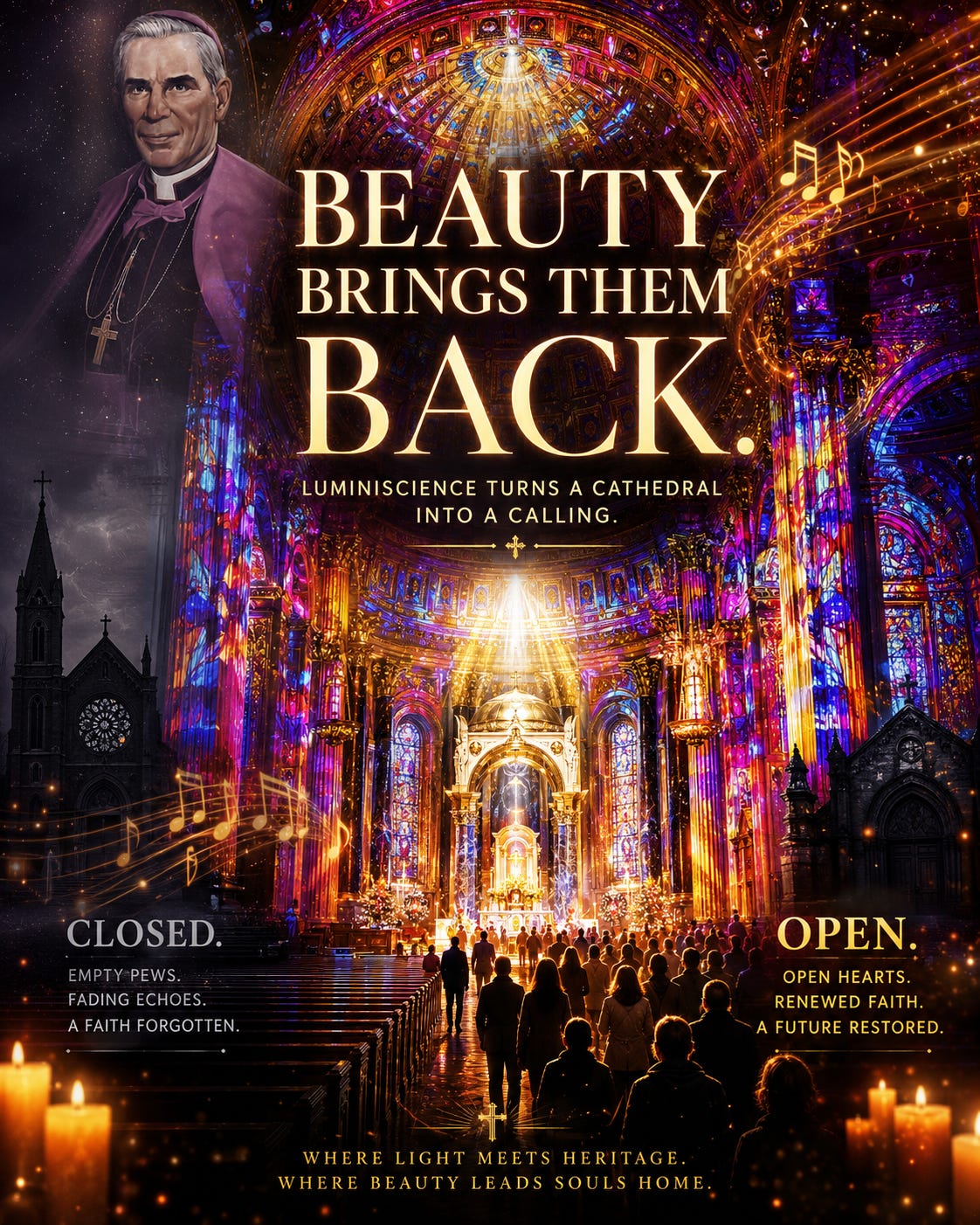
LUTHMANN NOTE: This is the kind of story the modern Church needs to understand. The answer to decline is not another committee, another consultant, or another watered-down slogan trying to make Catholicism sound like a nonprofit brand deck. The Church already has the weapon: beauty. Old stone. Sacred music. Stained glass. Memory. Awe. Luminiscience works because it does not apologize for the sacred. It illuminates it. In an age drowning in noise, the cathedral becomes a counterattack — not with politics, not with panic, but with transcendence. The pews may be emptying, but the light is not out. This piece is “The Sacred Strikes Back,” also available at FL Gulf News.

By Greg Maresca
Recent headlines speak of a growing return to the faith of our fathers, but the hard numbers tell a harsher story. Weekly church attendance has fallen from roughly 42% at the turn of the century to about 30% today, while church membership has dropped from 70% to under 50% in a single generation. Church closures now outpace openings with roughly 4,000 shutting their doors in a single year.
Revival may be whispered about, but the empty pews and darkened sanctuaries underscore how the road back is long and nowhere near a revival.
In the midst is an encounter called Luminiscience, a production already making waves across the country. It made its American debut in Minneapolis, where the Basilica of Saint Mary became the first American cathedral to host the vision before it later expanded to Philadelphia.
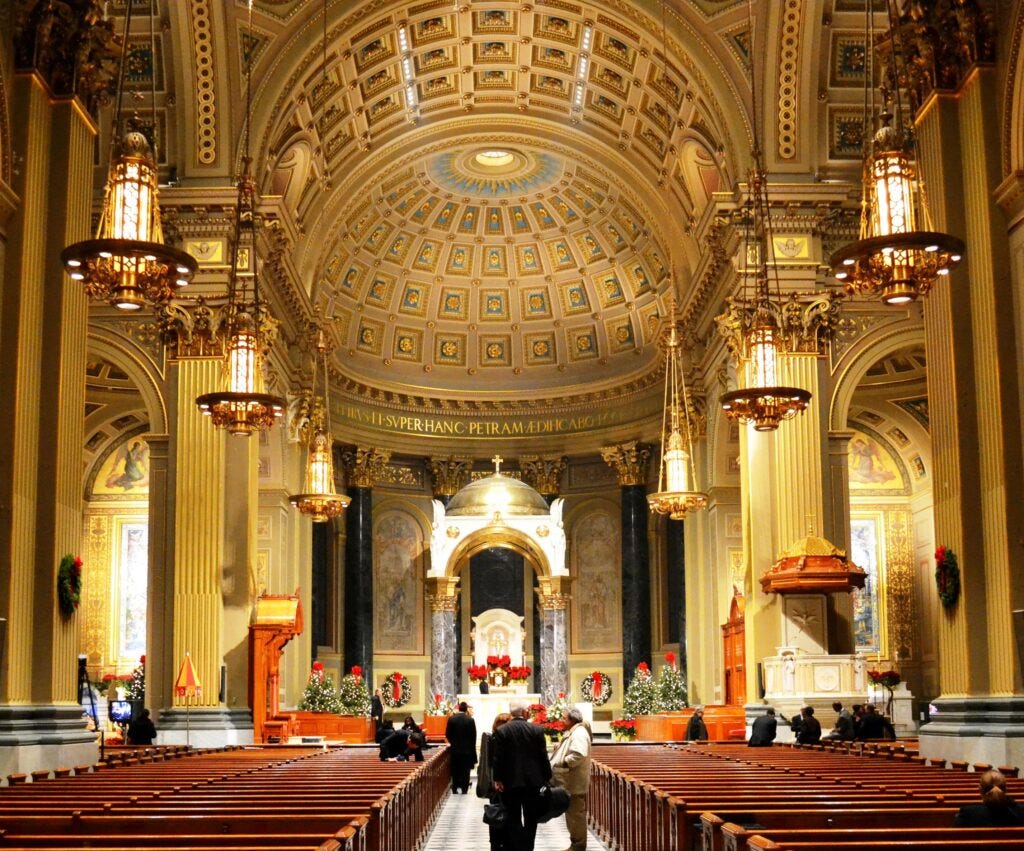
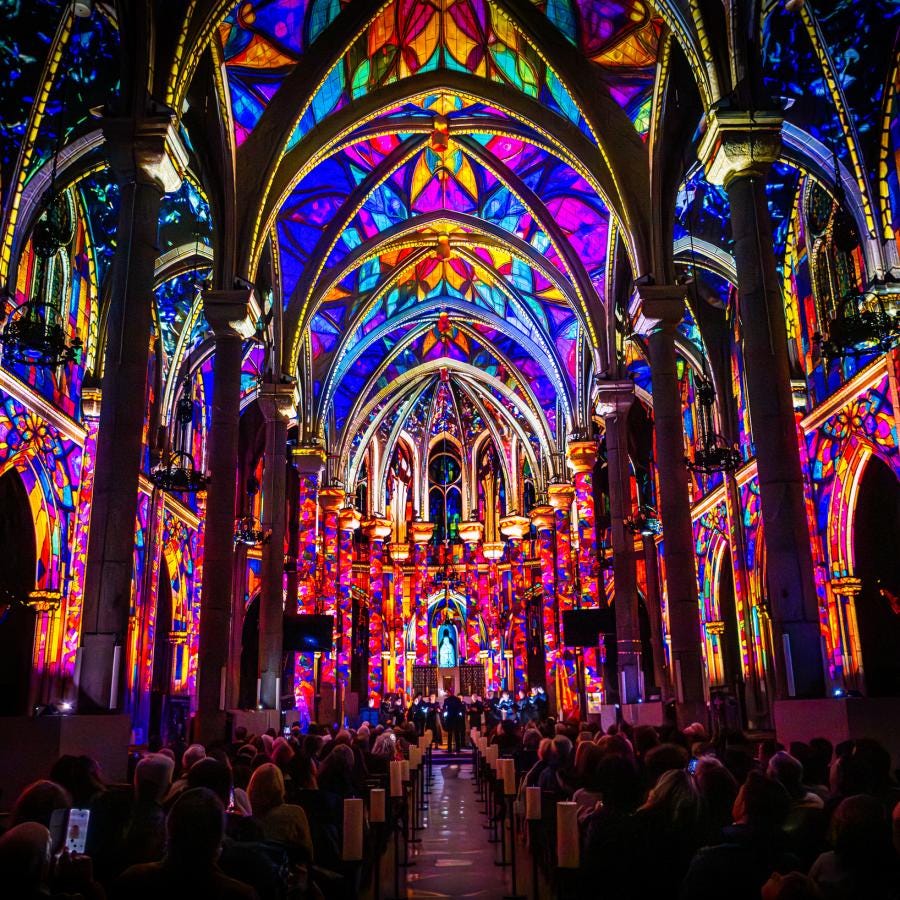
Now installed at the Catholic Cathedral Basilica of Saints Peter and Paul, it transforms one of the city’s grandest religious landmarks into something more than a serene, majestic space for worship. It has become a point of fascination, drawing interest not only from Philadelphians but from well beyond the city of brotherly love.
Romain Sarfati’s French team of artists adds a jolt of spectacle to the basilica’s imposing brownstone facade, vast domed interior, ornate altars, and stained glass with a tightly choreographed surge of music and light, creating an immersive chronicle that transforms the basilica into one unyielding opus of religious imagery.
Using projection, music, and voiceover, the production tells the history of the basilica, its architecture, its founding, its struggles, and its role as the centerpiece of a longstanding Catholic community. The basilica is not merely a structure of brownstone and glass; it is a monument to faith, immigration, and perseverance. Yet like so many sacred spaces, its significance is often overlooked by those who pass through its doors.
“The premise is relatively simple: if the walls could speak, what would they say?” explains Clayton Ferguston, who specializes in faith-centered storytelling and whose credits include the Chronicles of Narnia, Amazing Grace, and The Passion of the Christ. “The archdiocese of Philadelphia got behind our efforts right away.”
Luminiscience has become a globetrotting cathedral spectacle, lighting up sacred spaces across France, Spain, the United Kingdom, the Netherlands, Belgium, Germany, and Brazil, where too often those same cathedrals stand as museums of a faith remembered rather than a faith lived.
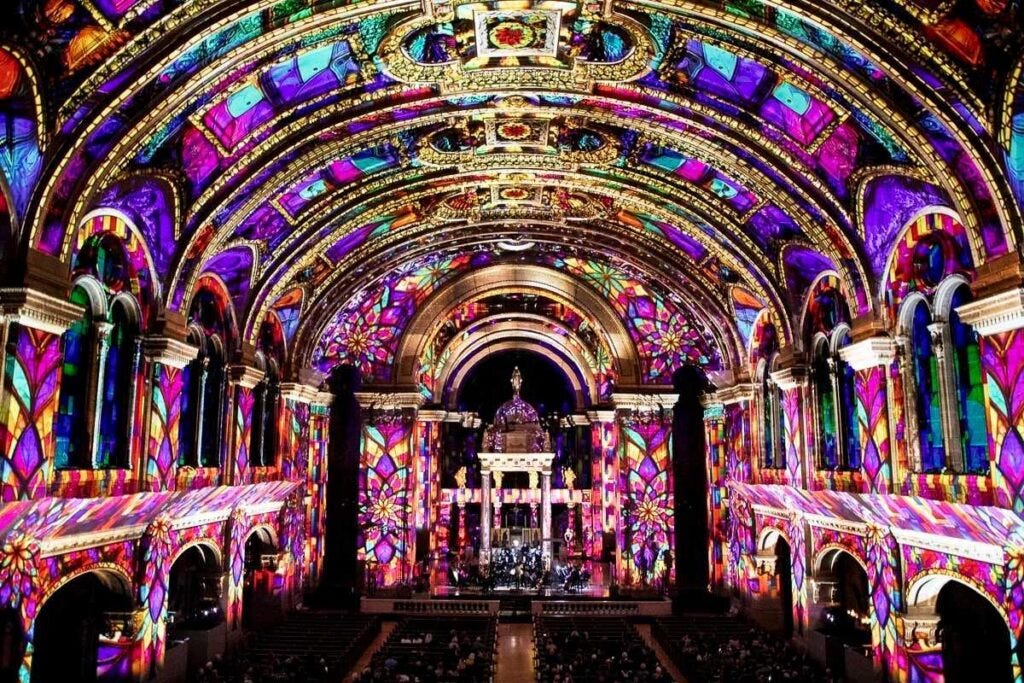
To their credit, the Philadelphia archdiocese recognized both its evangelistic and practical potential. While Luminiscience serves as a certifiable outreach, it also generates revenue for churches with proceeds helping to fund restorations from organs to ceilings to stained glass window repairs.
Visitors and long-time parishioners alike who have stepped into the Philadelphia basilica more times than they can count suddenly find themselves seeing it with startling freshness.
Light sweeps across the vaulted ceiling, usually lost in shadows, that reveals its storied architecture with a kind of quiet drama. Music rolls through the vast interior, not merely filling the space but animating it. Details that have blended into the background for years step forward with new clarity. What was once familiar becomes newly illuminated both literally and in a deeper sense of rediscovery.
“This is outreach but not in the traditional sense, but through beauty and art,” reminds Ferguston.
The creators understand something that the contemporary church sometimes forgets. Before belief is reasoned, it is often felt. The experience does not lecture or proselytize. Instead, it points upward toward transcendence, toward history, toward something beyond the immediate. In doing so, it creates space for curiosity, reflection, and perhaps reengagement that is all unfolding in real time.
Interest in this approach is already spilling beyond Philadelphia, drawing attention from Catholic dioceses across the United States. What began as a local experiment in sacred storytelling is now being scrutinized as a model with national potential, and conversations about expansion are not theoretical; they are active and growing.
It is a reminder that faith and preservation, spirit and structure, remain forever intertwined.
There is also something distinctly communal about the effort.
Ferguston says that in each city, they hire local musicians, choirs, and staff, embedding themselves into the fabric of the community they seek to serve. It becomes a shared experience that draws in both believers and the curious.
Without question, no event, no matter how sophisticated, can reverse decades of a faith decline. The deeper cultural forces reshaping Christianity in the United States are not so easily countered. But efforts like Luminiscience suggest that renewal may not come only from the pulpit, but from a broader rediscovery of what churches are and what they offer.
Not just doctrine, but beauty.
Not just catechism, but encounter.
The play of light across old stone, the swell of music rising beneath a cathedral dome, it is in moments like these where there is a quiet possibility that the way back may begin not with argument, but with awe.
In an age that so often mistakes the letter of the law for the fullness of faith, experiences like this return us to the spirit, where beauty, not debate, does the real proselytizing.
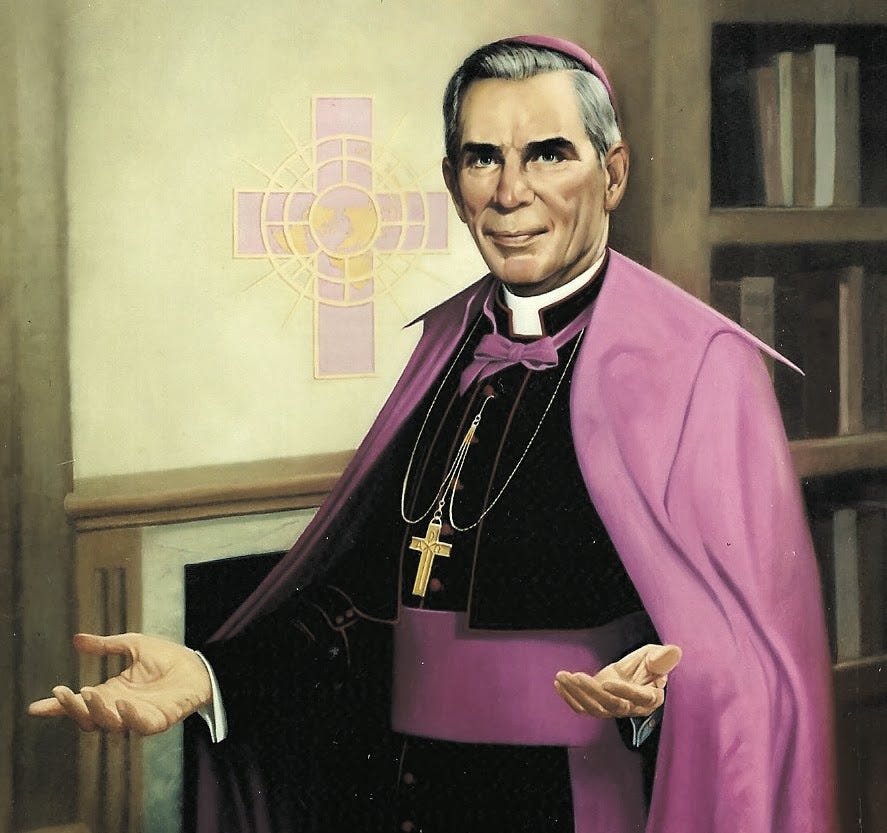
As Venerable Archbishop Fulton Sheen once prophetically reckoned decades ago, the future of the Church would not be secured by the ordained, but by the laity willing to live the faith with conviction.
Luminiscience is the laity doing exactly what Sheen foresaw, reviving the faith not by decree, but by illuminating the sacred through light and music.

 | A guest post by
|
Beauty matters. Trust me, I know!! Love the piece Greg & Richard. We need more religious foundation in America the Great—any way possible to save the Republic.