Weaponized Fake Mobs Destroy Real Lives
Danesh Noshirvan’s Machinery of Digital Execution


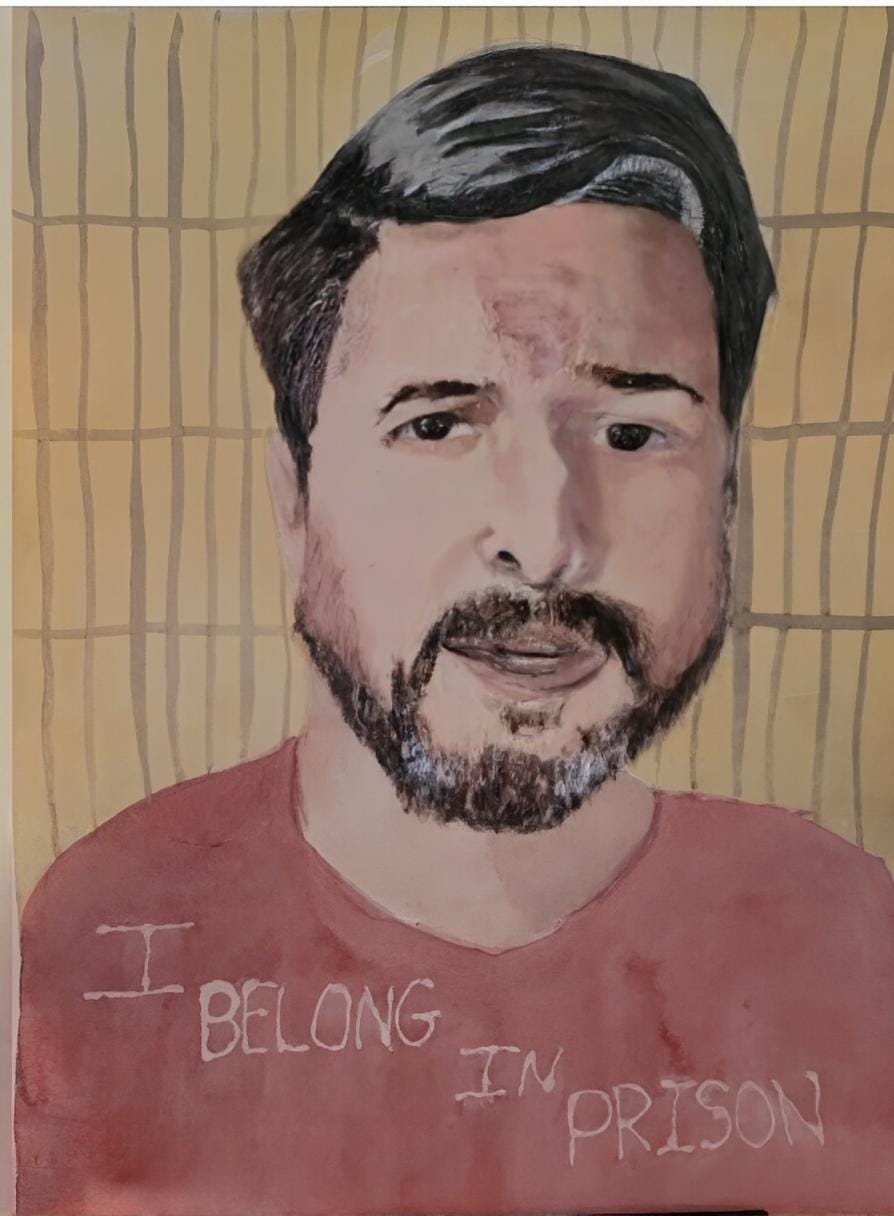
LUTHMANN NOTE: Let’s dispense with the myth that Danesh Noshirvan is some rogue outsider railing against power. The record shows a man entangled in multiple lawsuits across the country, repeatedly hauled into court over the very tactics he markets as “accountability.” Most notably, his conduct has landed him in federal court in Fort Myers, where judges have already put findings on the record regarding bad faith, misconduct, and abuse of process. This isn’t activism—it’s litigation fallout. Weaponized fake mobs destroy real lives. When your business model routinely ends in federal pleadings, sanctions, and sworn testimony, the problem isn’t the targets. It’s the operator. This piece first appeared on FrankReport.com.

By Frank Parlato
(FORT MYERS, FLORIDA) – His name is Danesh Noshirvan. Online, he’s ThatDaneshGuy.
He has, according to TikTok, two million followers, plus half a million on Instagram and 160,000 on YouTube.
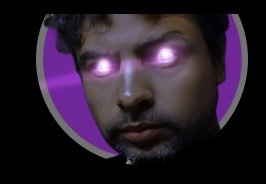
He needs no courtroom. His process is simple: select a target, display their image, name them, and doxx them. He calls it accountability culture.

Then comes the mob. But this mob is different. The mob, roaring in judgment, isn’t human. It’s bots programmed to express hate.
Once, this played out differently. The square, the crier, the condemned. A man’s name shouted to the mob, a woman’s crime whispered by a priest. They threw stones instead of comments, and rope instead of AI.
Danesh is the new executioner in an old morality play—the punishment is public, the crime is perception. Danesh uploads a face to TikTok. Somewhere, in an office or home, a life begins to come apart. Jobs are lost. Reputations collapse. Sometimes the police make an arrest. Sometimes it leads to death, as in suicide.
He can, with a keystroke, unleash botnets that spread across Reddit threads and comment sections, swarm Facebook posts, and litter them with AI-generated accusations. The human audience, mistaking massive comments for truth, joins in. It’s the bandwagon effect.
A single command, a script. In a minute, a digital army. Networks of fake accounts—botnets—fed into programs that post anywhere opinions can be posted —produced by software, polished by algorithms. They paste the same accusation, the same insult, rewritten a dozen ways. They even reply to each other. They upvote and downvote.

What looks like grassroots is AI. What looks like outrage is programming. The old methods—posters, placards, newspapers, billboards—have been supplanted by AI-simulated consensus. And all it takes is one man. Not a real mob. A fake one.
This is not a trick of numbers. It is an attack on the concept of public truth. His goal is to create an echo chamber of condemnation, fooling the public into believing there is a massive, organic outcry when, in reality, it is he pulling the strings. A life is wrecked by the false belief that thousands of people hate them. In reality, they are facing only Danesh with a telephone, a keyboard, and Auto-Dialer software. He places calls using a Spoofed Caller ID.

The calls appear to come from angry hordes demanding an arrest or a firing – cancellation.
Each call sounds distinct because it was written to sound distinct. Danesh supplies the lines—outrage, alarm, accusation. The software turns them loose in a thousand accents.
Friends run away; families are torn apart, and coworkers shun his targets. A teacher was suspended. A nurse was fired. They have been canceled.
One call after another. “I saw you,” the message says. “Die you dumb cunt,” “eat shit and die,” “kill yourself.” The AI voices deliver their script. Then hang up.
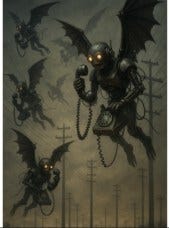
The AI voices call the police. The precinct non-emergency lines are clogged with hundreds of “concerned citizens,” each call lending weight to the notion that a public safety threat or bad publicity could result from inaction.
Behind the curtain is the executioner himself on his platform, making videos demanding arrest, demanding people call to put more pressure. Demanding that the police chief act faster, or the mob will turn on him.
Then he flips a switch, and the auto-dialer resumes its dialing to the police.

The numbers on the screen are spoofed. They recite a script by him and, by repetition, they manufacture panic. Police, unaware that it is 90 percent nonhuman, must decide whether to ignore a swarm or respond —sometimes responding means acting.
Then come emails. Automation tools send thousands of emails—templates tweaked in minor ways to slip past filters—to HR desks, executives, and inboxes. Each message carries a provocative claim: this employee of yours is a liability. There will be boycotts. Corporate cancellation. The goal is attrition—until the corporate mind reaches for the easiest remedy.
Next, he does review-bombing if his target has a business. Danesh sits and clicks. The program attacks: One-star. One-star. One-star. Fake reviewers destroy businesses.

There is economy to this—low cost, high effect. He then posts on TikTok to report the success. He even sings the Consequences Song, a fiendish howl of self-righteous satanism if ever there was such a thing. For Danesh, the calculus is simple: spend a few dollars, set the bots loose, watch a business dissolve, and claim victory.
He’s ThatDaneshGuy.
He is not a journalist, though he claims the title. Not an entertainer, though he performs. Not a judge, though his word brings punishment. He is something new—and very old. He is the inquisitor with Wi-Fi. He does not swing a sword; he presses “upload.”
The power’s the same—to accuse, to condemn, to erase. He is the face of outrage. A man who mistakes attention for justice, followers for friends, and destruction for truth. ThatDaneshGuy—part man, part machine, all appetite. Ruler of a mob without faces.
People are not informed. He is pioneering new territory. People think the mob is real. They move. They rage. They run. They cancel. They obey. They cower. He calls it accountability.
A kingdom built on numbers—two million followers, a figure that glitters. Polish it; it fades. Bots comprise maybe 80 percent of his followers and 90 percent of his engagement.
There are some people, people who require no evidence, who always shout with the mob, who don’t even know they shout with a mob of bots. A performer in a dark room who mistook manipulation for morality, who built a reputation on destroying people, who discovered that you can wound real people with fake crowds.
And one day they asked him, as if out of a Stanley Ellin’s story, “You, Danesh, you who destroy people for your living or your sport, whichever it is. You chose this work, didn’t you?”
“Somebody has to do it.” He called it duty; it must be done to rid the world of evil.
“But you enjoy it, don’t you?”
“Enjoy it,” he said, with a look of pain on his face. “You think I enjoy ruining people’s lives, seeing them canceled. An arrest here, a suicide there, many firings. People are in fear. It’s accountability culture, not cancel culture. Enjoy it? You ask as if I were not like the vast majority of common humanity, as if I did not have the same beating heart as every other human. Enjoy it? How could anybody not enjoy it?”
Then he chose his target, doxxed her, and programmed the bots to harass the living daylights out of her.
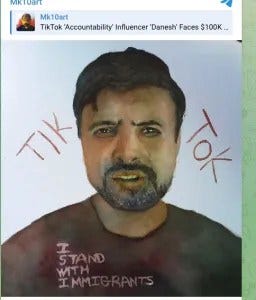
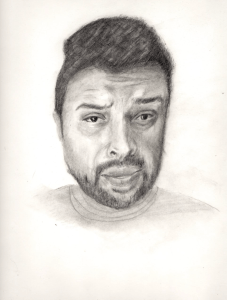
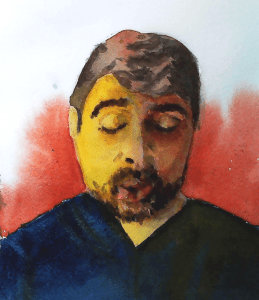
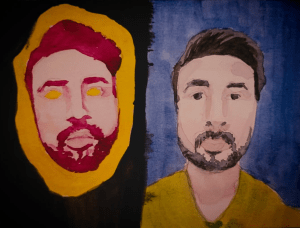
The artist MK10ART has captured the spirit of Danesh: