
McCrimmon’s Masterstroke Still Pays Off for Golden Knights
How Vegas Turned Shea Theodore Into a Franchise Pillar


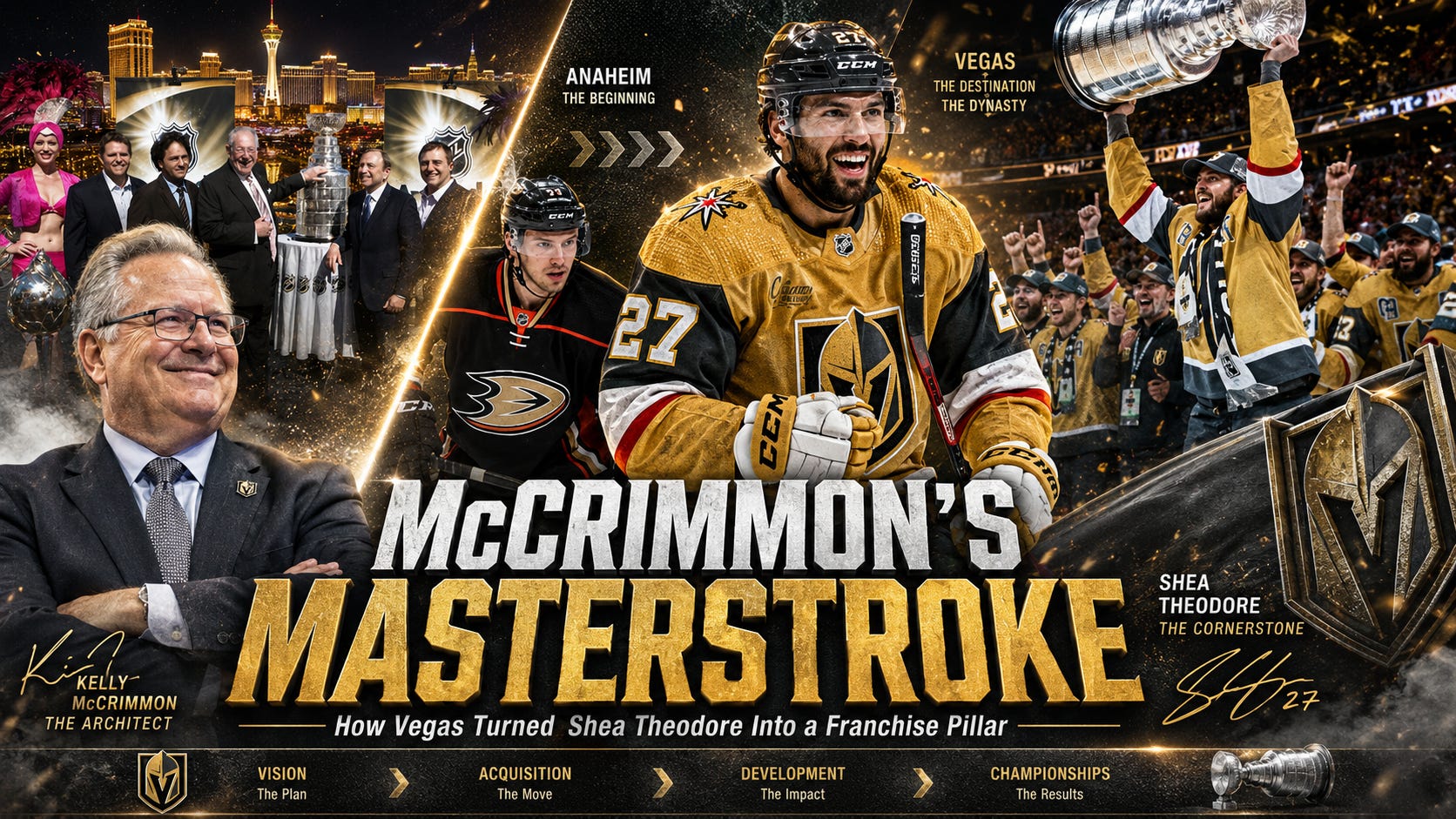
LUTHMANN NOTE: The Vegas Golden Knights were supposed to be a cute experiment, a desert novelty act, a placeholder while the “real” NHL franchises did business the old way. Instead, Vegas exposed the lazy thinking of the rinse-and-repeat hockey class. Kelly McCrimmon and the Golden Knights saw value where others saw problems, contracts, and expansion-draft math. Shea Theodore was not just another defenseman. He was a cornerstone hiding in plain sight. Anaheim let him go. Vegas built around him. That is the difference between managing fear and building a winner. This piece is “McCrimmon’s Masterstroke Still Pays Off for Golden Knights,” first available on NYNewsPress.com.
By Matt “Sully” Sullivan
(LAS VEGAS, NEVADA) – When the Vegas Golden Knights began assembling their organization in 2016, the hockey world treated the franchise like a desert experiment. Expansion teams were supposed to lose first, learn later, and spend years begging the league for respect. That was the script. Vegas ripped it up before the ink dried.
One of the most important pieces of that early foundation arrived when Kelly McCrimmon joined the organization as Assistant General Manager. McCrimmon brought decades of hockey experience, a sharp eye for talent, and a builder’s understanding of how winning organizations are constructed below the surface. He was not brought in to decorate an expansion office. He was brought in to help build a hockey operation that could compete faster, smarter, and harder than the old NHL expected.
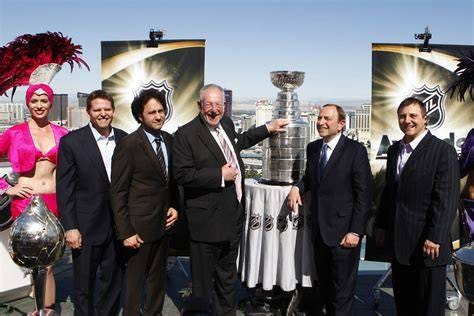
At the time, George McPhee was the original general manager, and McCrimmon was part of the front-office group helping prepare for the expansion draft, the entry draft, scouting, player evaluation, and the long-range architecture of the club. That distinction matters. The Shea Theodore move was not one man operating in isolation. It was a front office seeing the board better than the rest of the league.
But McCrimmon’s fingerprints were on the philosophy: find value before others recognize it, trust projection, and do not build an expansion team like a surrender document. Vegas did not simply want bodies. Vegas wanted pieces. Vegas wanted players who could grow with the franchise and become part of its identity.
Shea Theodore became exactly that.
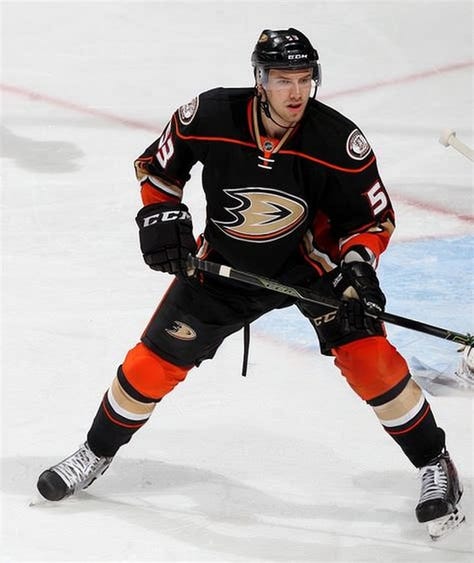
As the 2017 NHL Expansion Draft approached, teams across the league scrambled to protect their most valuable assets. The Anaheim Ducks faced a difficult defensive logjam, and Vegas found the pressure point. Anaheim had a promising young blueliner in Theodore, a 2013 first-round pick with elite skating, offensive instincts, and the kind of puck-moving ability modern contenders need from the back end. But Anaheim also had protection problems, roster calculations, and veteran contracts to manage.
Vegas turned that problem into an opportunity.
The Ducks traded Theodore to the Golden Knights in exchange for Vegas agreeing to select defenseman Clayton Stoner in the expansion draft. On paper, that looked like an expansion-draft side deal. In reality, it became one of the defining personnel moves in Golden Knights history. Anaheim solved an immediate roster problem. Vegas acquired a long-term foundation piece.
That is the difference between managing fear and building power.
Theodore was not yet a finished product when he arrived in Vegas. That was the point. The Golden Knights were not merely looking at what he was on that day. They were looking at what he could become in the right system, with the right opportunity, inside a franchise willing to treat him as more than a throw-in asset. His skating could change exits. His puck movement could change entries. His calm under pressure could change playoff shifts. His offensive instincts could give Vegas a dimension that most expansion teams could only dream about.
The impact came quickly. Theodore’s mobility helped transform the Golden Knights’ transition game. His ability to carry the puck, create offense from the blue line, and absorb heavy minutes gave Vegas a stabilizing force that no first-year team is supposed to have. Expansion teams are usually begging for competence. Vegas was suddenly dictating pace.
That was not luck. That was evaluation.
Year after year, the benefits multiplied. Coaches could trust Theodore in major situations. Teammates could rely on his composure when games tightened. Opponents learned that controlling Vegas often meant trying to contain Theodore’s influence from the back end. He became part of the franchise’s competitive personality: fast, confident, opportunistic, and unafraid of the moment.
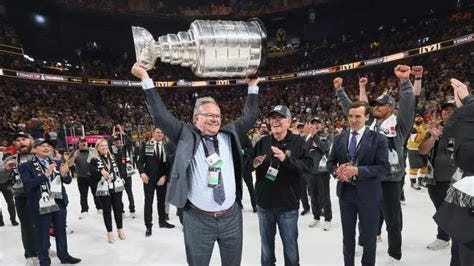
Meanwhile, McCrimmon’s role inside the organization continued to grow. He was named General Manager in 2019, after helping shape the roster and hockey operations from the beginning. By then, the Golden Knights had already proven they were not a novelty act. They were a problem. The old hockey world expected patience from Vegas. Vegas brought pressure instead.
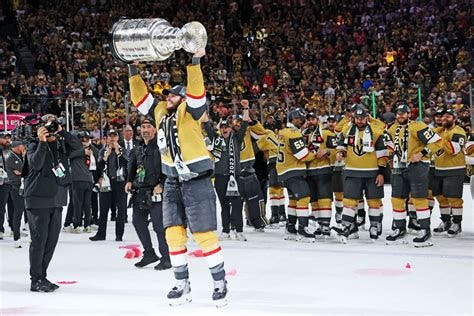
That pressure eventually produced the sport’s ultimate prize. The Golden Knights became Stanley Cup champions in 2023, validating the aggressive front-office model that had defined the franchise from its first breath. Vegas did not wait around for permission to become relevant. It attacked the market, trusted its evaluations, and built a culture where bold decisions were not treated as reckless simply because they made comfortable people nervous.
Theodore’s place in that story has only become clearer with time.
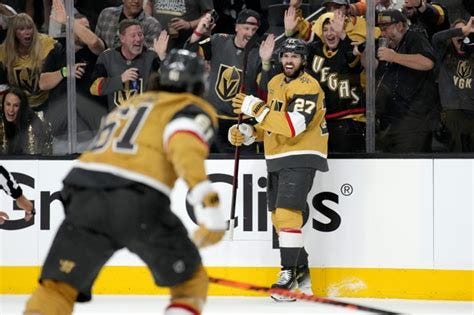
In the 2026 Stanley Cup Final, after a controversial Game 2 loss and a wild Game 3 in which Vegas saw a four-goal lead disappear, Theodore delivered another signature moment. In double overtime against Carolina, he scored the winner that gave the Golden Knights a 5-4 victory and a 2-1 series lead. It was the kind of moment that separates good players from franchise pillars. It was also the kind of moment that makes old front-office decisions look even smarter under the bright lights.
That goal was not merely a highlight. It was a receipt.
Years earlier, Vegas saw Theodore as more than Anaheim’s expansion-draft problem. The Golden Knights saw a defenseman who could become central to their identity. They saw skating, vision, upside, and playoff utility. They saw a player who could grow into the moment instead of shrink from it. Now, with Theodore producing in the heaviest games of the year, the connection is impossible to miss.
McCrimmon’s story in Vegas is not just about one trade, one draft, or one title. It is about a front-office worldview. The Golden Knights have operated like a franchise that understands windows are not promised, and value is often hiding inside another team’s anxiety. They have made hard decisions, sometimes ruthless ones, and they have not apologized for wanting to win immediately.
That approach will always irritate the old hockey class. Good. It should.
Vegas came into the league and refused to behave like an expansion team. McCrimmon helped build the operation that made that possible. Theodore became one of the clearest examples of the strategy working in real time. Anaheim had the first-round pick. Vegas had the vision. Anaheim had the roster crunch. Vegas had the stomach to act. Anaheim solved a short-term problem. Vegas built a long-term weapon.
That is how championship organizations separate themselves from excuse factories.
The Golden Knights’ rise was not magic. It was not a fluke. It was not merely the product of favorable expansion rules. Rules do not identify talent. Rules do not project development. Rules do not turn a young defenseman into a playoff-tested cornerstone. People do that. Organizations do that. Front offices with courage do that.
In many ways, the Vegas story begins with recognizing potential before everyone else is ready to admit it, then having the courage to act before the price catches up. Shea Theodore was one of those moments. Kelly McCrimmon and the Golden Knights saw gold where others saw complications.
Years later, the dividends are still paying out.

Six franchisees in Canada – – and they cannot mirror the Vegas success model in only a decade +. Imagine what they will be after 100 years like the Canadian franchisees.?