

Mr. Boyne Goes To Washington
From Prison, Boyne Asks DOJ To Investigate Connecticut Judiciary and a Constitutional Breakdown In New Haven

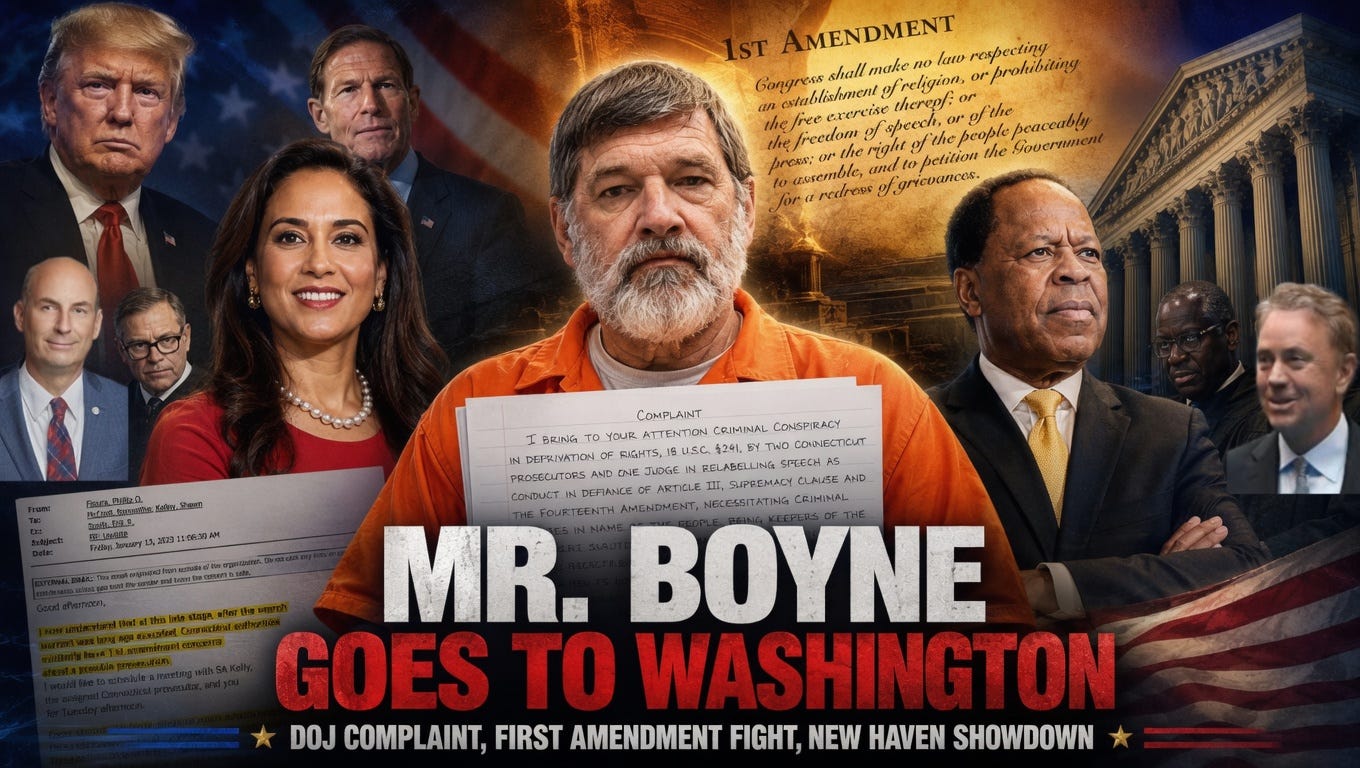
LUTHMANN NOTE: The Connecticut judiciary should not fear review of the Boyne case. It should welcome it. If the state really proved true threats, then the conviction should survive constitutional scrutiny. But if the state turned hostile public criticism into felony stalking by judicial alchemy, then every citizen who writes about judges, prosecutors, family court, or government corruption should be paying attention. Boyne’s filings are messy. They are raw. They are handwritten from a prison cell. But buried inside the fury is a clean question: Did Connecticut punish threats, or did it punish speech? That question deserves an answer outside the courthouse culture that produced the conviction. This piece is “Mr. Boyne Goes To Washington,” first available on The Family Court Circus.

By Richard Luthmann
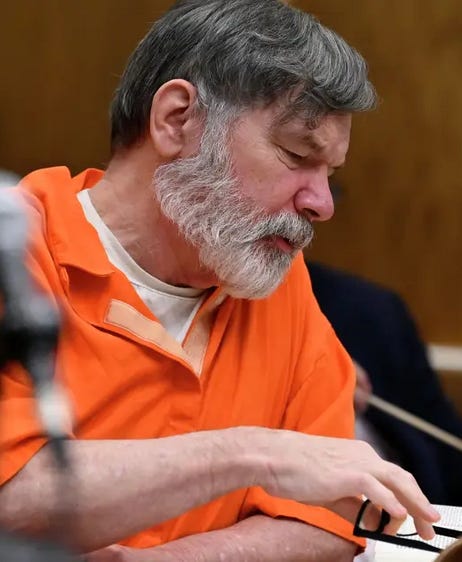
(SUFFIELD, CONNECTICUT) – Paul Boyne is not quietly serving his sentence. From prison, the Virginia journalist and blogger convicted in New Haven of cyber-stalking three Connecticut judges has opened a new front in the fight, sending a complaint to the United States Department of Justice and filing a motion to reargue in the state criminal case before Judge Peter Brown.
The two documents tell the same story from two different battlefields.
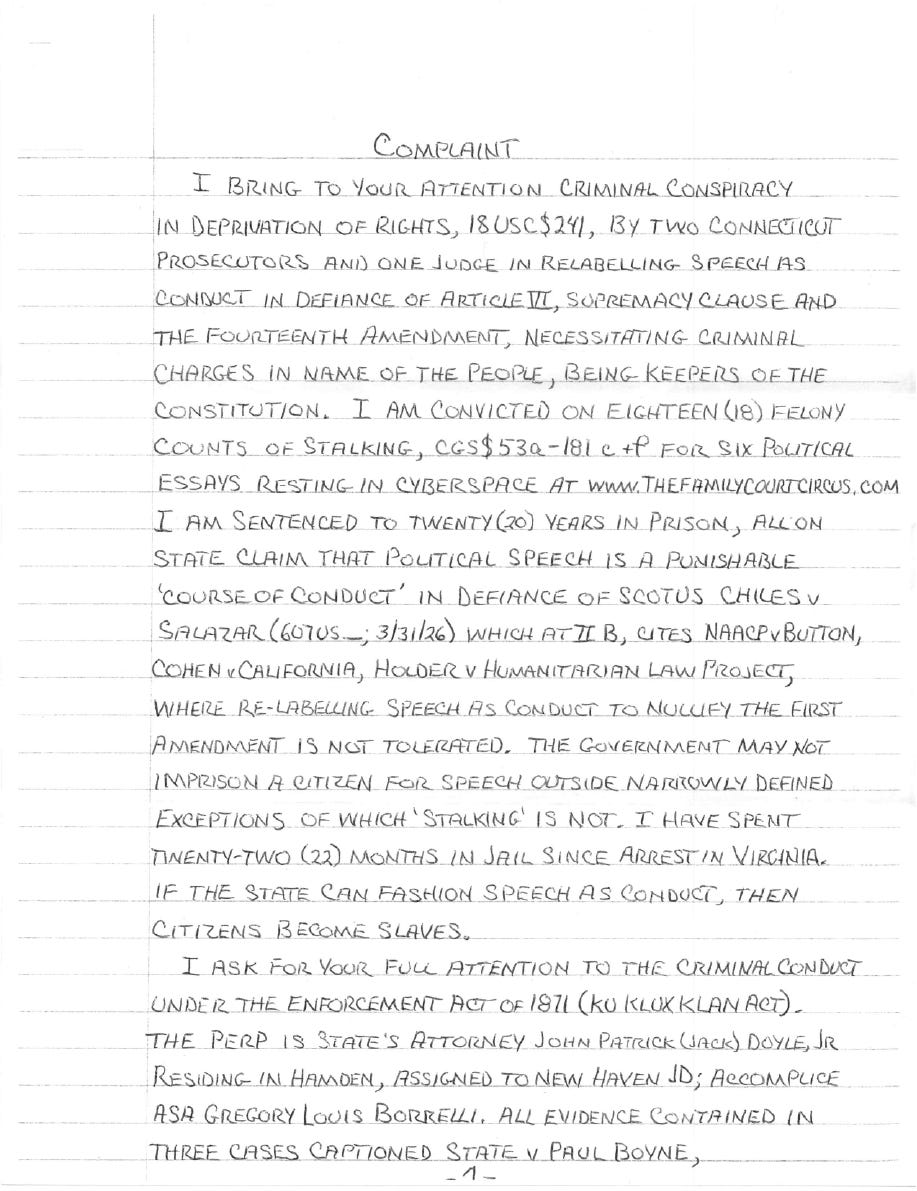
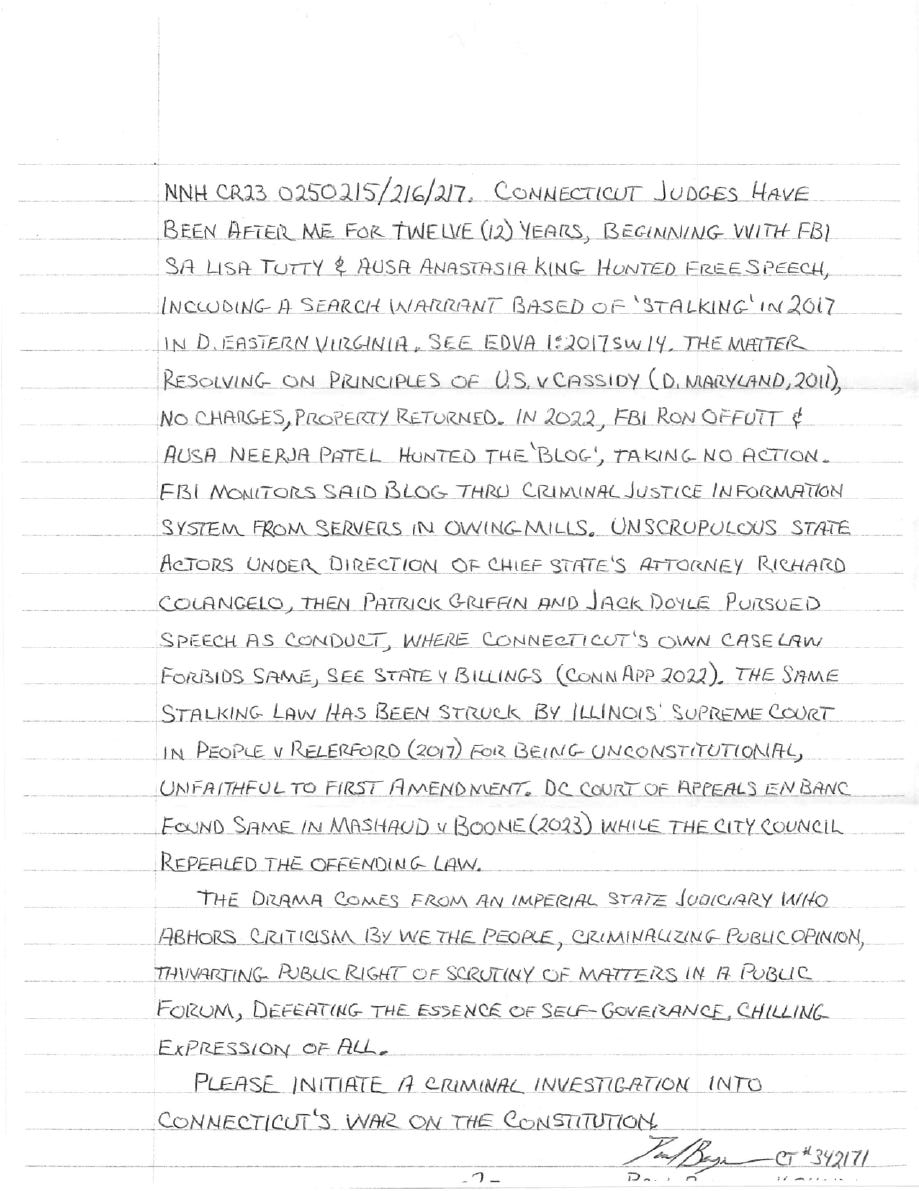
The DOJ complaint is aimed at Washington. The motion to reargue is aimed at New Haven. Together, they frame Boyne’s case not as a routine stalking prosecution, but as a constitutional brawl over political speech, judicial criticism, prosecutorial power, and whether Connecticut can rebrand public commentary as criminal “conduct” when the target of that commentary wears a robe.
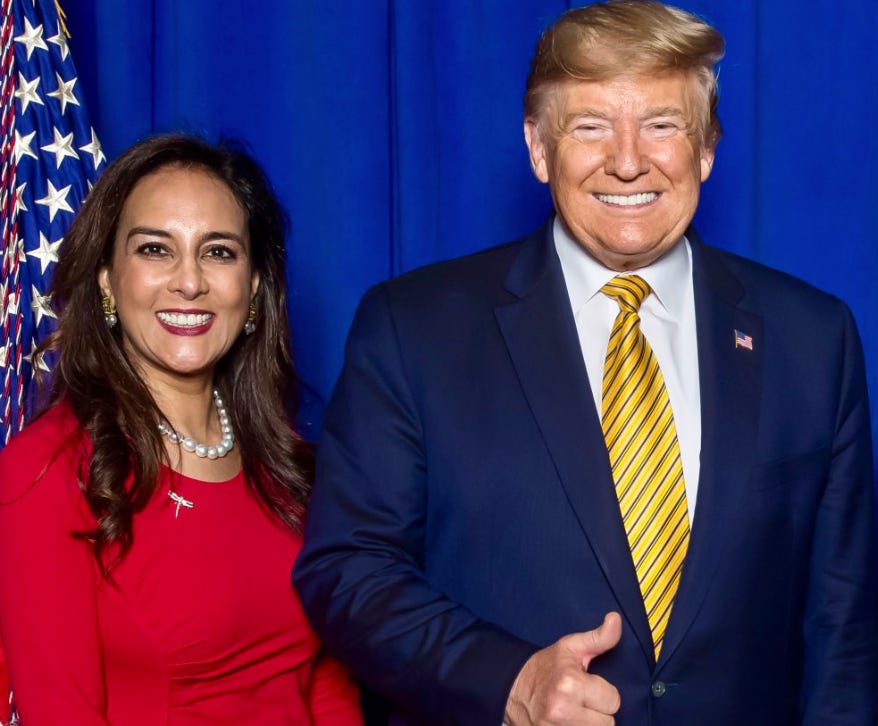
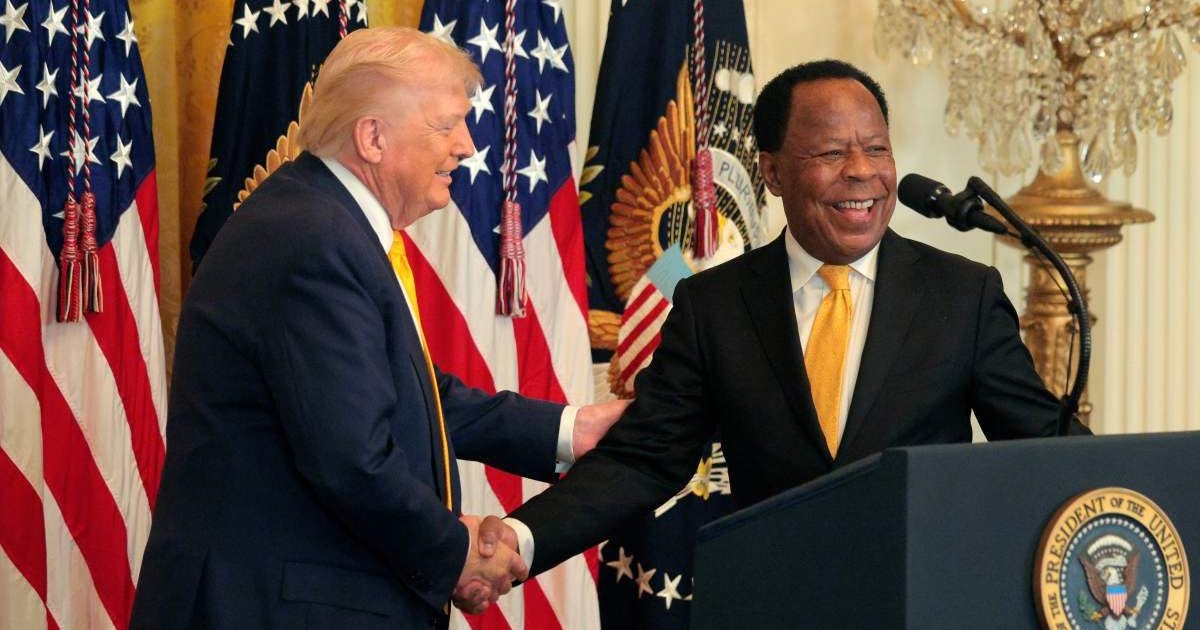
Boyne’s prison complaint was sent to the U.S. Department of Justice, including Assistant Attorneys General Harmeet Dhillon and Leo Terrell. It accuses Connecticut prosecutors and a judge of participating in a rights-deprivation scheme under 18 U.S.C. § 241, the federal conspiracy-against-rights statute. Boyne alleges that Connecticut officials relabeled speech as conduct, used the stalking statute as a political weapon, and defied the First Amendment, the Supremacy Clause, and the Fourteenth Amendment.
That is the Washington document.
The New Haven document is more immediate. Boyne’s motion to reargue, docketed in the underlying criminal case, asks Judge Peter Brown to revisit the denial of his motions for acquittal and new trial. It is handwritten, angry, sprawling, and unmistakably constitutional in its thrust.
Boyne says the state never proved true threats. He says the court allowed protected political speech to be criminalized, and that the jury was never properly forced to distinguish protected expression from punishable threat conduct.
This is not a minor procedural update. It is Boyne trying to force the legal system to answer the central question it would rather avoid: when does furious criticism of judges become a crime?
Mr. Boyne Goes To Washington: The DOJ Complaint and “Connecticut’s War on the Constitution”
Boyne’s DOJ complaint is a prison-made alarm bell. He tells federal officials that Connecticut did not merely prosecute him; it allegedly conspired to deprive him of constitutional rights. He identifies the three New Haven dockets, references his conviction on 18 felony stalking counts, and describes his sentence as the product of a judiciary that, in his view, converted political essays into criminal conduct.
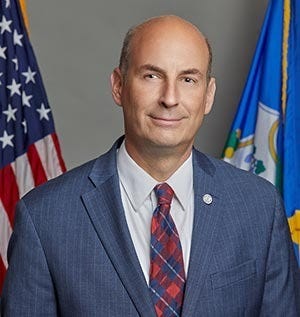
The complaint names State’s Attorney John P. Doyle Jr. and prosecutor Gregory Louis Borrelli, and it frames the case as part of a longer campaign against Boyne’s speech. Boyne claims that Connecticut officials pursued him because of his online writings about the family court system and its judges. His theory is blunt: the government may not imprison a citizen for speech outside the narrow First Amendment exceptions, and stalking is not one of those exceptions merely because officials dislike the content.
This is the strongest theme in Boyne’s complaint. He is not asking DOJ to referee hurt feelings. He is alleging that state actors used criminal law to punish speech about public officials and public institutions. That is the heart of every serious First Amendment concern in the case. If Connecticut punished true threats, the state stands on stronger ground. If Connecticut punished public criticism dressed up as “stalking,” then the case becomes something far more dangerous.
But the DOJ complaint also carries the burden of Boyne’s own conditions. It reads like a constitutional distress flare thrown over the wall from a prison cell. It accuses, denounces, and indicts the system in sweeping strokes. That may carry emotional force, but DOJ lawyers do not move on heat alone. They move on documents, witnesses, transcripts, emails, and proof of intent. Or, by Presidential direction against enemies foreign and domestic.

Still, the complaint matters. It shows Boyne is attempting to move the case beyond Connecticut’s closed judicial circle. He is asking federal law enforcement to examine whether state officials crossed the line from prosecution into constitutional retaliation. He is also putting named federal officials on notice that this case is not going away quietly.
Mr. Boyne Goes To Washington: Boyne Attacks The Trial From Inside The Record
The docketed motion to reargue is the more legally significant document because it is filed in the criminal case itself. Boyne asks Judge Peter Brown to reargue his motions for acquittal and new trial and to require a proper hearing, a written response from the state, and an Attorney General opinion letter on whether Connecticut’s criminal stalking laws can be applied to political speech on matters of public concern.
That request is important because it turns Boyne’s complaint into a concrete courtroom demand. He is not merely saying “the system is corrupt.” He is saying the court failed to apply the right constitutional framework before allowing a conviction to stand. He argues that the state and the court blurred “stalking,” “course of conduct,” and “true threat” into a single prosecutorial fog bank, leaving the jury without a constitutionally clean line.
Boyne’s most serious argument is that Judge Brown allegedly allowed a bait-and-switch. According to Boyne, the state pursued a stalking case, but the constitutional justification became true threats. That distinction matters. A true threat prosecution requires attention to the words, the context, the speaker’s mental state, and whether the speech falls outside First Amendment protection. A stalking prosecution based on public writing cannot simply skip that constitutional work by calling speech “conduct.”
Boyne also argues that the trial record was stripped of context. He claims hundreds of blog posts were excluded or ignored, leaving jurors to evaluate a handful of excerpts without seeing the broader political speech environment in which they appeared. That is a real appellate issue if the excluded material would have helped distinguish ugly political commentary from criminal threats.
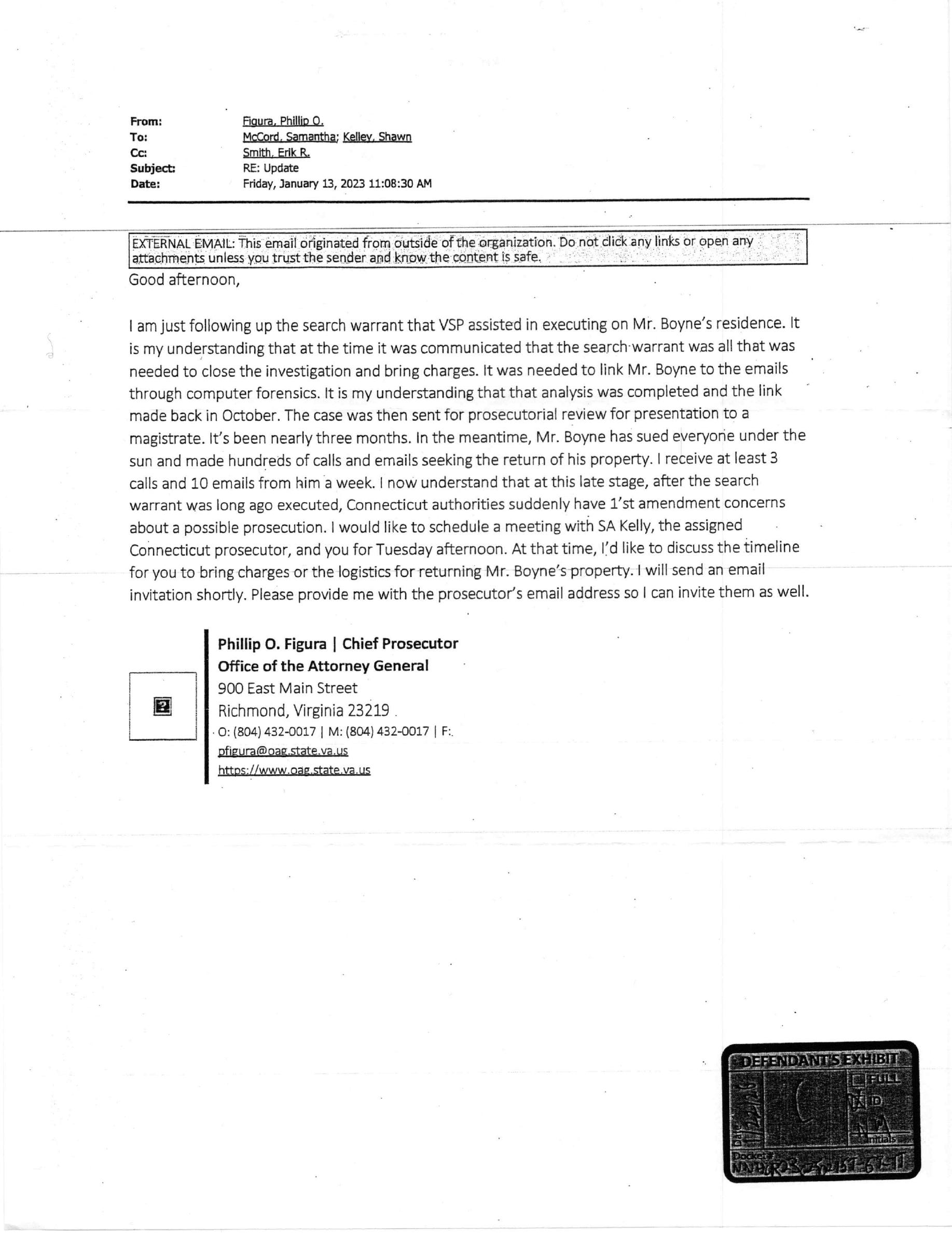
He further points to the Virginia search-warrant history, property seizures, extradition issues, and earlier First Amendment concerns raised during prosecutorial review. Those arguments are uneven, but they connect to a larger point: Boyne wants the court to confront the question of whether state officials already knew this case had a First Amendment defect and prosecuted it anyway.
Mr. Boyne Goes To Washington: Speech, Threats, Stalking, And Judges
The Boyne case sits at the ugly intersection of free speech and judicial security. Nobody serious argues that judges must tolerate actual threats. Judges are public officials, not punching bags for violence. Courts have a duty to protect judges, court staff, litigants, and their families from real danger.
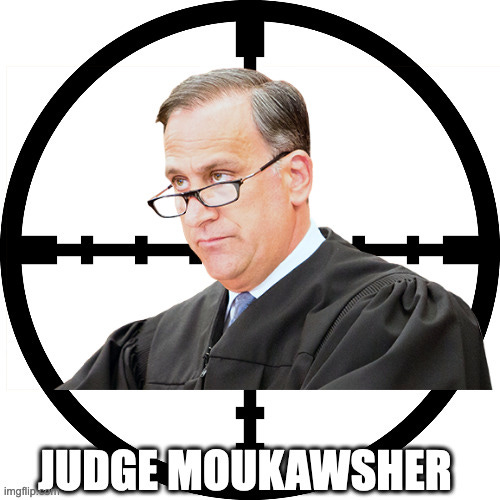
But nobody serious should argue the other side of the cliff either. Judges are government actors. They wield state power. They decide custody, liberty, property, criminal punishment, and family integrity. Public criticism of judges is not some tolerated nuisance. It is part of the oxygen supply of self-government.
The First Amendment does not evaporate because a public official finds criticism frightening, disgusting, bigoted, unfair, or cruel.
That is why Boyne’s case is bigger than Boyne. The issue is not whether he is likable or whether his writings were crude, vicious, or offensive. The issue is whether Connecticut proved criminal threats or merely punished hostile commentary about the judiciary. The state wants the case understood as stalking. Boyne wants it understood as political speech. The appellate battlefield will be the line between those two descriptions.
Boyne’s DOJ complaint and motion to reargue both drive at the same constitutional nerve. He says Connecticut took speech in a public forum, aimed at public officials, about public institutions, and converted it into a prison sentence. If that is true, the case is not just troubling. It is radioactive.
The danger for Boyne is that courts will not rescue a defendant from the factual record with slogans. If the state proved targeted threats, residential details, specific intimidation, and the required mental state, the First Amendment argument becomes harder.
But if the trial court let prosecutors cherry-pick inflammatory language, suppress wider political context, and avoid a rigorous true-threat analysis, then Boyne has a live constitutional issue that deserves serious appellate review.
The Bottom Line
The DOJ complaint and the New Haven motion to reargue are not separate episodes. They are two parts of the same counterattack. Boyne is trying to drag his case into federal civil-rights territory while also preserving and pressing the First Amendment issues inside the state criminal record.
The DOJ complaint is the siren. The motion to reargue is the legal vehicle. Together, they mark the next phase of the Paul Boyne case: a convicted defendant arguing that Connecticut’s judiciary did not merely get his case wrong, but crossed a constitutional line by criminalizing political speech about judges.
That is a heavy accusation. It must be tested against the full record, not accepted on Boyne’s word alone. But it also cannot be dismissed merely because the speech was ugly, angry, or aimed at powerful people.
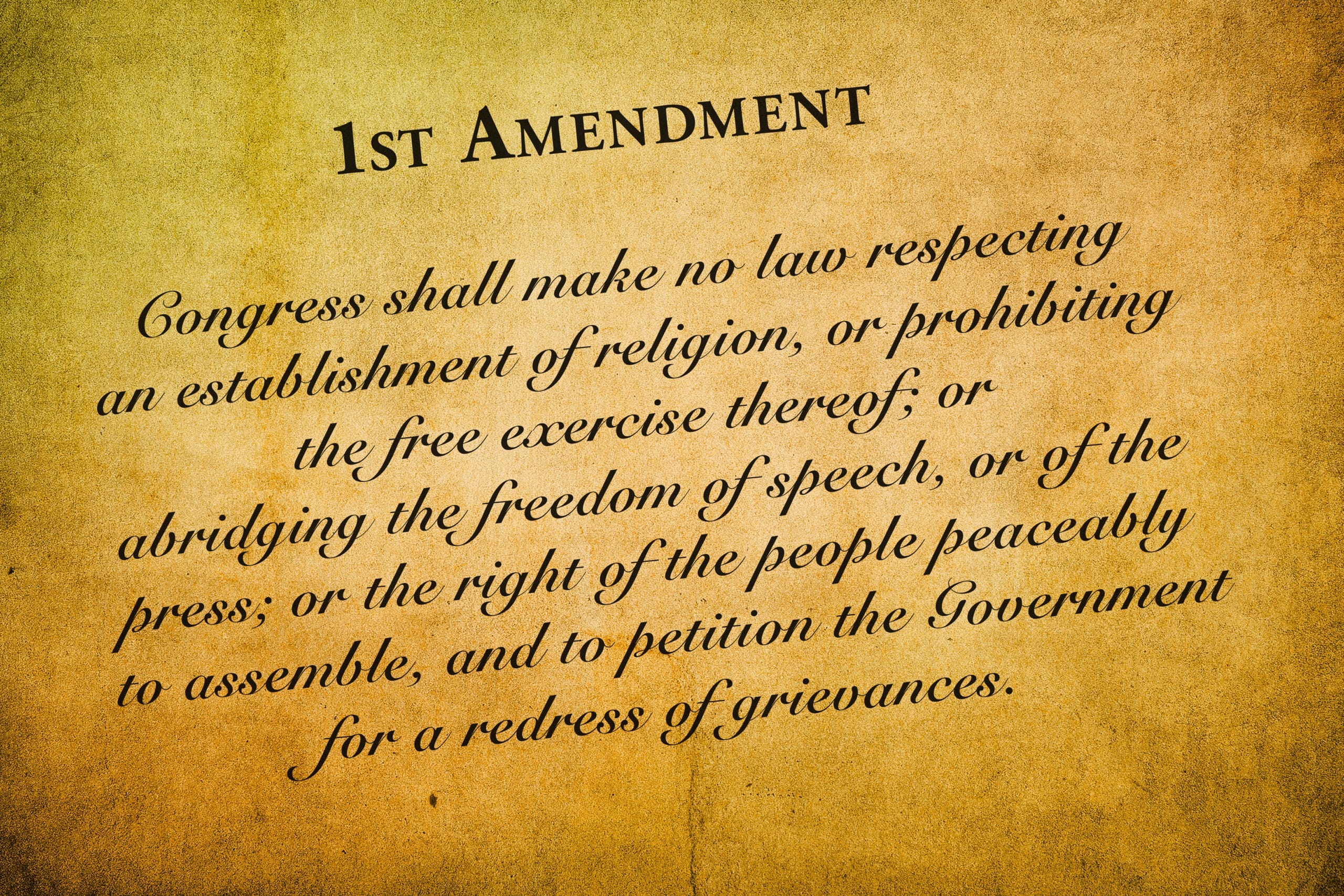
The First Amendment was not written for polite compliments to government officials. It was written for the hard cases, the offensive cases, the cases that make judges and prosecutors uncomfortable.
Paul Boyne has now put that question before both New Haven and Washington. Hartford is next.
Connecticut may prefer to call the case over. Boyne is saying the constitutional fight has just begun.

This is a critical inquiry, especially when you consider the issues raised highlight the safety and welfare of children. When the current frameworks that are in place increase ACE scores of children we should be in productive conversations that solve the problem; not bury them in adversarial processes.
This is only one of the current conversations effecting the rights of children. The recent emergency legislation that awards majority stakeholder decisions to private funded advocacy groups is another constitutional issue.
We need to take a 10,000 foot view and ask, who is benefiting from these decisions?
I sat in the courtroom during Mr. Boyne's sentencing hearing, and what I heard sent a chill down my spine. When the court maintained that Mr. Boyne's articles could be treated as "conduct" under Connecticut's stalking statute, I realized I was witnessing something far bigger than the fate of one defendant.
In that moment, free speech was decimated in Connecticut.
The First Amendment was never designed to protect agreeable speech. It was written to protect criticism of those who wield government power. If published articles criticizing public officials can be transformed into criminal conduct, then the line separating protected expression from criminal liability becomes dangerously thin.
People may disagree with Mr. Boyne's words, his style, or his message. That is not the point. The point is that speech about judges, courts, and government officials occupies the highest rung of constitutional protection. When speech itself becomes the basis for a stalking conviction, every journalist, blogger, activist, litigant, and citizen should pay attention.
What I witnessed in that courtroom was not merely the sentencing of a man. It was a warning about the fragility of constitutional freedoms when courts permit speech to be recharacterized as conduct.
History teaches that free speech is rarely lost all at once. It is diminished incrementally, one exception at a time, one uncomfortable speaker at a time, until the right exists more in theory than in practice.
That is why the constitutional questions raised by this case deserve serious review. The stakes extend far beyond Paul Boyne. They reach every citizen who dares to criticize those in power.