
Sealed After The Sweep: Where Did Kevin Barry Love’s Case Go?
New source account places NYC Council Whip Kamillah Hanks’ husband inside a July 10 Staten Island narcotics operation—but the arrest trail remains hidden, the docket sealed, and the NYPD silent.


LUTHMANN NOTE: Kevin Barry Love remains presumed innocent. A source account, a sealed docket screen, and unanswered press inquiries do not prove that Love committed a narcotics offense, became a confidential informant, received political protection, or entered rehabilitation. But the questions are now unavoidable. A multi-person drug sweep leaves records: bodycam footage, dispatch traffic, arrest worksheets, prisoner logs, property vouchers, prosecutor contacts, and disposition papers. Yet Love’s reported trail vanishes after he allegedly entered the 120th Precinct. The public docket is inaccessible. The NYPD is silent. Love and Kamillah Hanks are reportedly unavailable, while her office allegedly says they will not return until August. Was Love released because no crime could be proven? Was he sent for treatment? Did political pressure alter ordinary procedure? Or was he converted from defendant to cooperating source? The government does not have to reveal confidential operations. It must explain the lawful basis for taking a politically connected man into custody and what happened afterward. Two FOIL requests—FOIL-2026-056-22040 and FOIL-2026-056-22186—now seek the bodycam footage, narcotics-operation records, vouchers, court references, and communications. The amended filing specifically asks whether Love was treated as a defendant, target, witness, confidential informant, or cooperating source. Release the records. Explain the sealed docket. Let facts—not political access—decide the story. This piece is “Sealed After The Sweep,” first available on NY News Press.

By M. Thomas Nast and Richard Luthmann
The Date Moves Back – and the Story Moves Forward
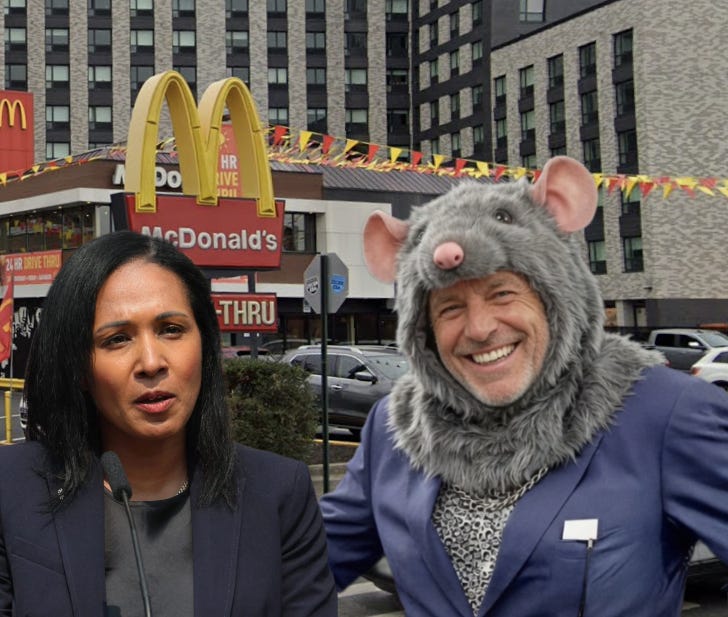
(STATEN ISLAND, NEW YORK) – The reported arrest of Kevin Barry Love, the politically connected husband of New York City Council Majority Whip Kamillah Hanks, is now placed on Friday, July 10, 2026—not July 11, as first reported. That correction is not cosmetic. It opens a more specific window into what sources describe as a narcotics sweep at the McDonald’s at 501 Bay Street on Staten Island, where police allegedly took both buyers and sellers into custody.
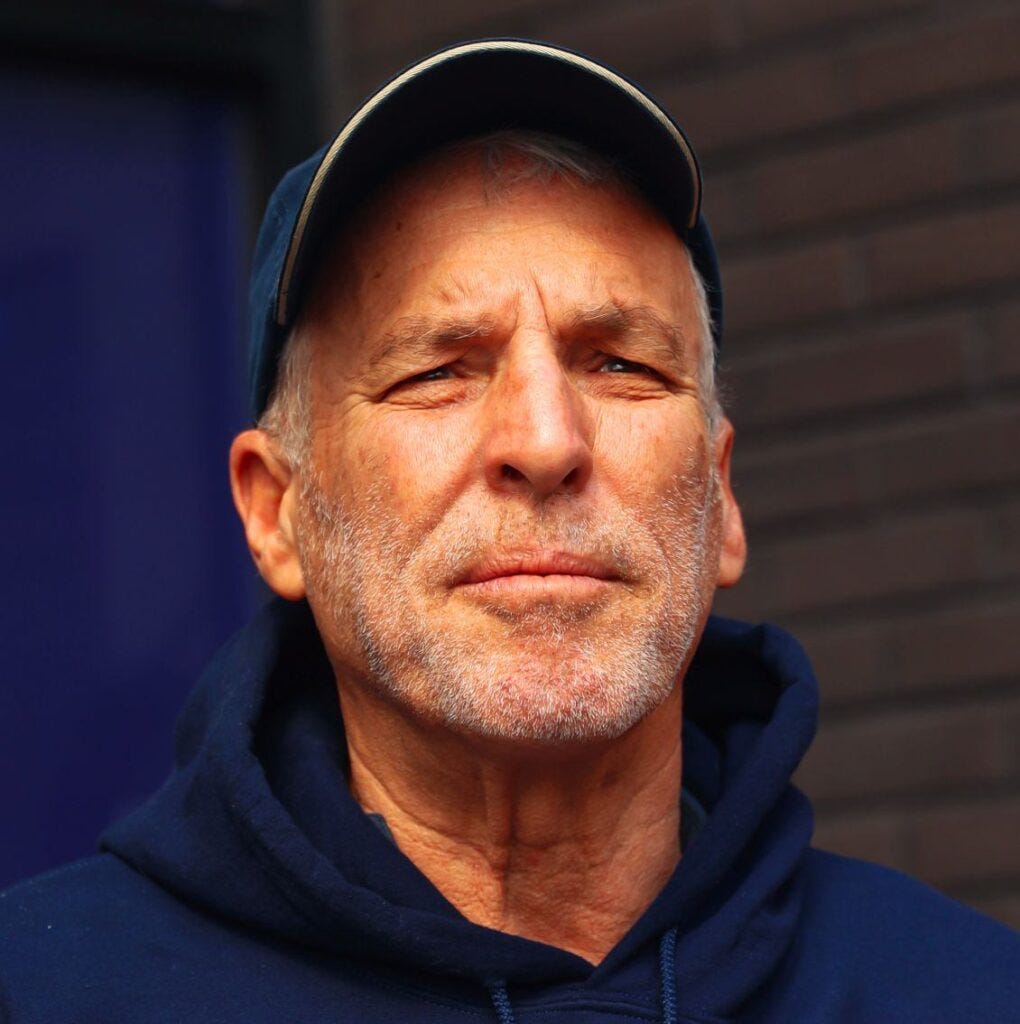
According to a source who says he was swept up in the same operation, Love was among those detained, transported to the 120th Precinct, placed in a cell, and separated from property that was inventoried or vouchered.
Love remains presumed innocent. The source account has not yet been independently corroborated through an arrest report, criminal complaint, body-camera recording, desk-appearance ticket, or public court file. But it is now detailed enough to demand an official answer.
A multi-person narcotics operation does not happen in a vacuum. It generates dispatch traffic, bodycam footage, arrest-team rosters, prisoner logs, property vouchers, command notifications, prosecutor contacts, and disposition records.
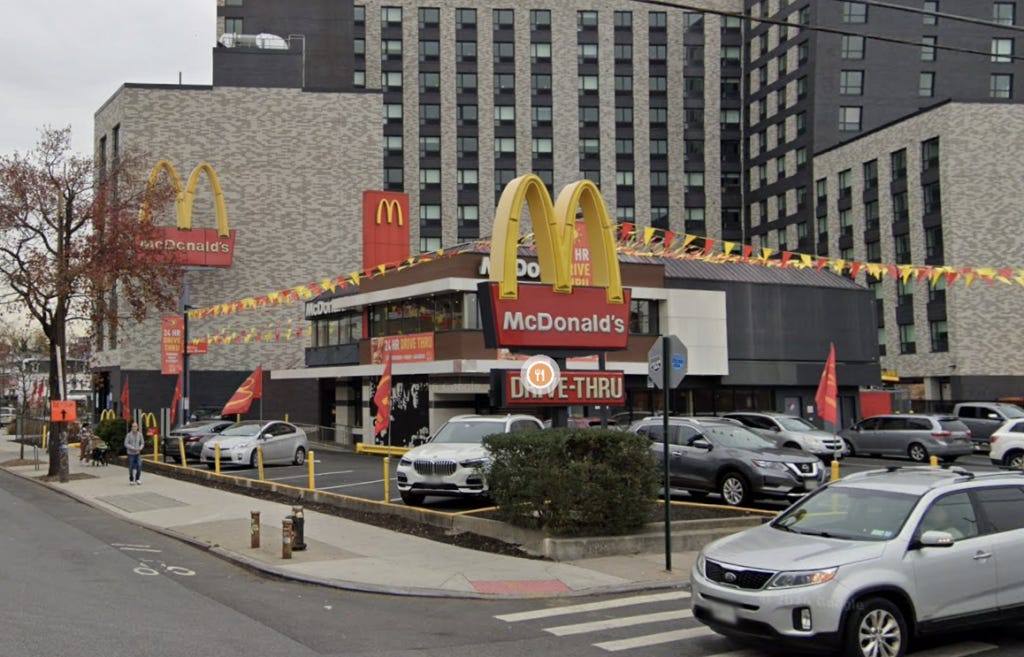
Somewhere inside the NYPD’s systems, there should be a clear timeline explaining who was stopped, who was arrested, what was recovered, what charges were considered, and how each person left police custody.
An amended OpenRecords filing now directs the NYPD to search for records from July 10 through July 12 and requests records of the sweep, Love’s reported detention, precinct processing, property handling, release, and any communications with prosecutors, elected officials, or outside agencies.
The filing also specifically asks whether Love was handled as a defendant, target, witness, source, confidential informant, or cooperating witness.
The Source Points to a Sealed Docket
The newest and most consequential detail concerns the court docket. The source says his own name appeared on a July 10 Richmond County docket and claims Kevin Barry Love’s name appeared there as well. The public-facing NYSCEF search does show several July 10 entries concealed behind repeated notices stating that the cases are not available to the public online and that the court must be contacted for access.
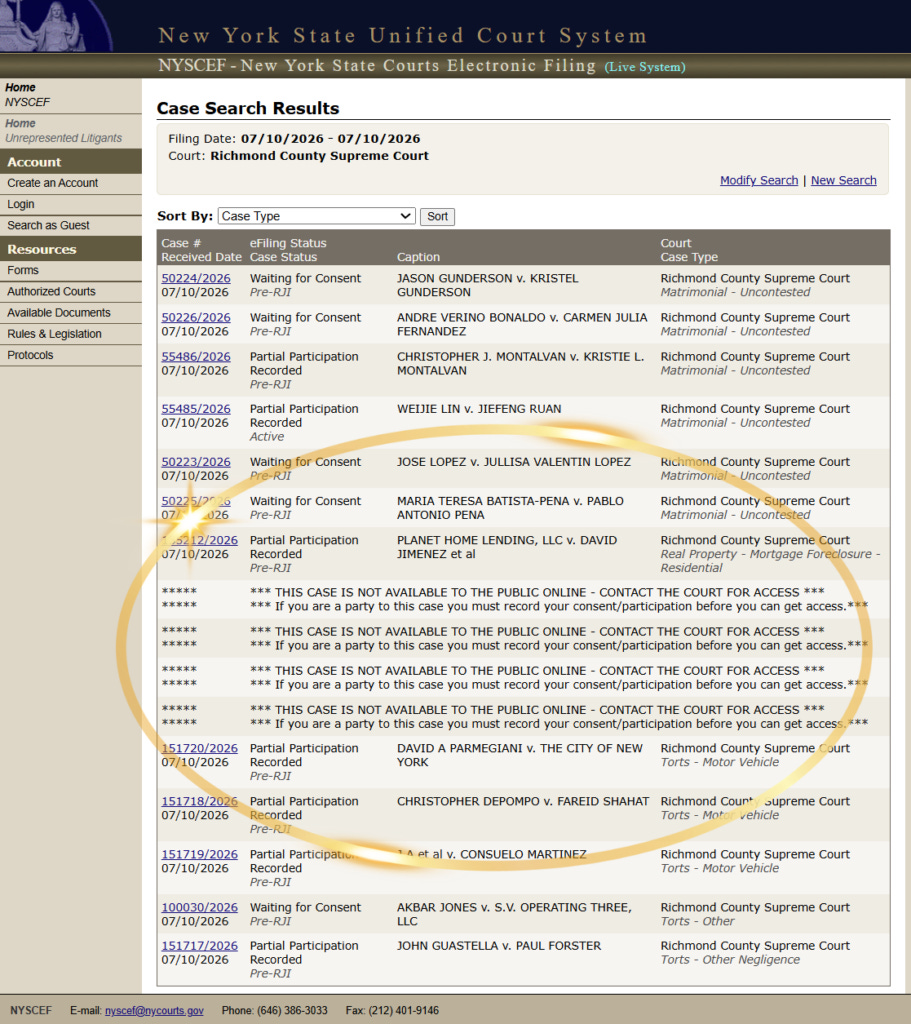
But the visible screen does not identify Love, the source, the case numbers, or the nature of those hidden proceedings. It proves only that sealed or otherwise inaccessible matters existed on that filing date—not that Love was necessarily a party to one of them.
Still, the sealed entries matter because they line up with the source’s account of a sweep, detention, and rapid disappearance into official silence:
Was Love charged in a sealed matter?
Was the case declined before public arraignment?
Was he issued a desk-appearance ticket? Was the arrest voided or administratively altered?
Was he processed as a witness or cooperating source rather than a defendant?
Was there a warrant proceeding, grand-jury matter, or broader narcotics investigation whose secrecy lawfully shields the records?
Those are all possible explanations. None has been confirmed.
The amended FOIL demand seeks the administrative breadcrumbs: arrest and complaint numbers, CAD records, command logs, prisoner entries, property vouchers, court references, bodycam footage, operation plans, prosecutor communications, and the authority for Love’s release or transfer.
If the NYPD cannot produce them, it should certify what systems and commands were searched. If it possesses them but withholds them, it should identify the legal basis.
RAT and Rehab Questions Cannot Be Ignored
Now come the questions certain people will call unfair simply because they do not want it asked: Is Kevin Barry Love cooperating with law enforcement? Or was he sent to Rehab?
These are not accusations dressed up as fact. No federal, state, or city agency has confirmed that Love is an informant, confidential source, or cooperating witness. There is no public cooperation agreement, debriefing memorandum, sealed plea document, or judicial finding establishing such a relationship.
But journalism is not limited to repeating what government chooses to announce. When a politically connected man is reportedly swept into a narcotics operation, taken to a precinct, placed in a cell, and then disappears into sealed records and unanswered press inquiries, the informant possibility belongs on the board.
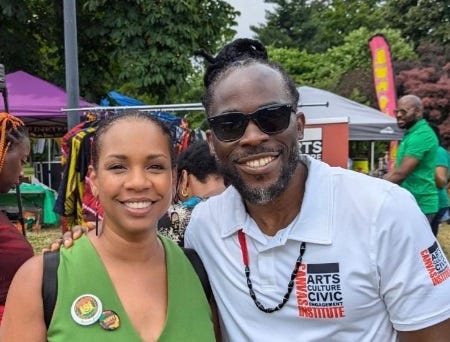
The comparison to Henry “Bobby Digi” Olisa is unavoidable. Digi, the husband of politically connected former City Council member and cultural-affairs official Laurie Cumbo, was previously described by sources as an FBI informant.
The FBI and DOJ have previously scrutinized his business connections, notably early potential investors in a failed Staten Island restaurant and pub on Minthorne Street. According to FBI reports and DOJ filings, these connections were labeled as allegedly having mafia ties, raising alarms over the integrity of Digi’s dealings.
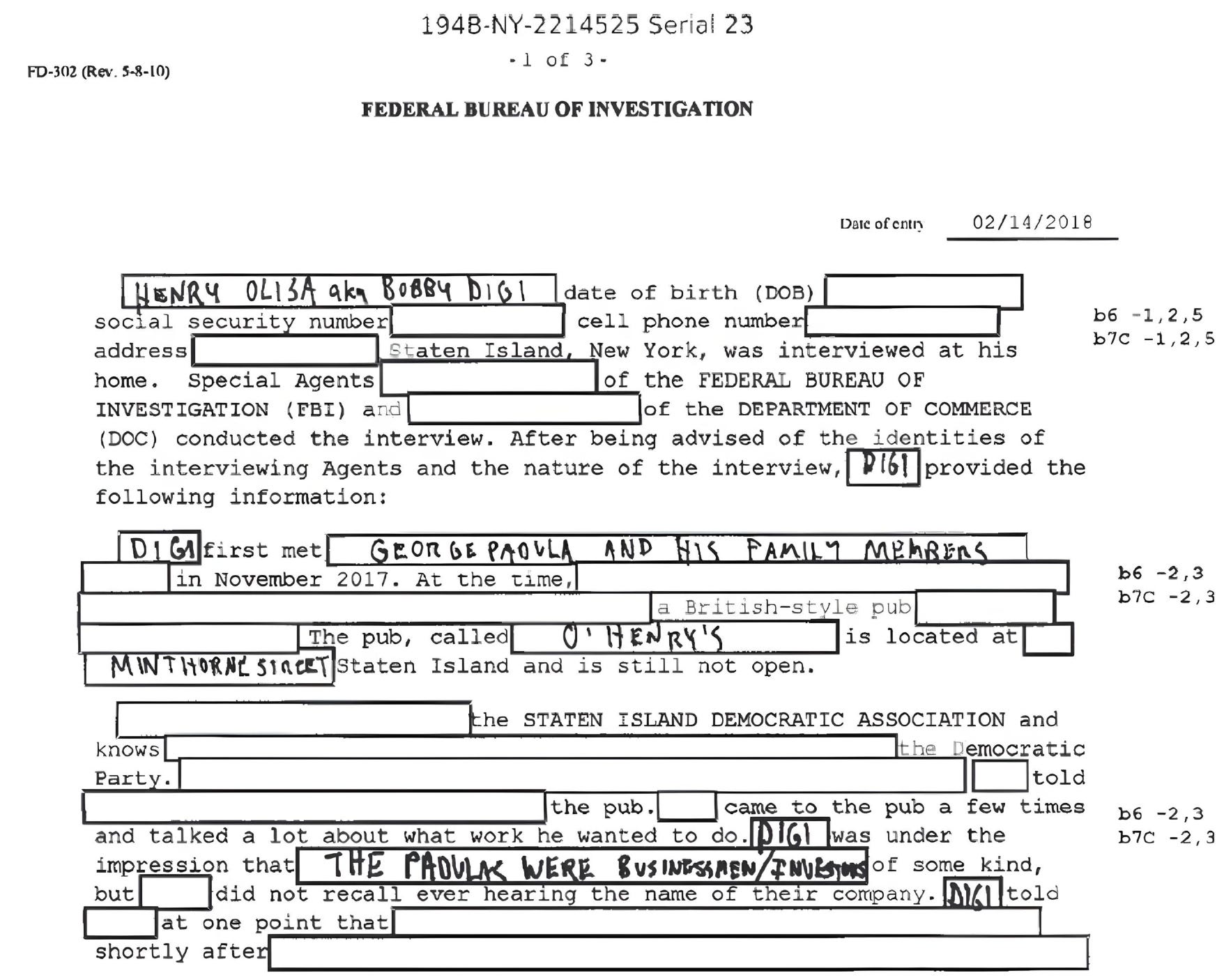
That reporting raised a larger institutional warning: law enforcement can turn compromised operators into protected assets, use them against bigger targets, and then allow those assets to accumulate influence, immunity, and menace. The government catches one fish and creates a shark.
Is that happening again?
Love’s relationship to Hanks does not prove protection. His political relationships do not prove cooperation. The sealed docket does not prove federal involvement. Yet the combination of narcotics exposure, disappearing records, official silence, and access to the political class creates a legitimate investigative theory.

Perhaps the explanation is mundane: no charge, insufficient evidence, mistaken identity, or routine sealing. Perhaps it is political favoritism. Perhaps Love provided information and walked. Perhaps Kevin was a buyer.
In light of everything, Hanks and Love are nowhere to be found.
“Kevin and Kamillah have to explain why they’ve disappeared, and why their office is saying they won’t be back until August,” Richard Luthmann said. “This may all be a smokescreen for Rehab. If Kamillah, Diane, Scott, and others think he has a problem, Kevin should get the help he needs.”
The problem is that the NYPD and prosecutors possess the facts and continue to offer nothing. Silence does not prove he is a government RAT or in Rehab. It only ensures the question will grow louder.
Two FOILs, One IAB Log, No Answers
The government has now been placed on formal notice from multiple directions. The original FOIL request, FOIL-2026-056-22040, sought the bodycam footage, arrest records, property vouchers, precinct surveillance, dispatch records, and communications associated with the initially reported July 11 incident.
The amended filing, FOIL-2026-056-22186, corrected the primary date to July 10 and expanded the search to include narcotics-operation records, arrest-team documents, prisoner lists, evidence testing, prosecutor communications, sealed-case references, and any records identifying Love as a defendant, target, witness, source, informant, or cooperating person.
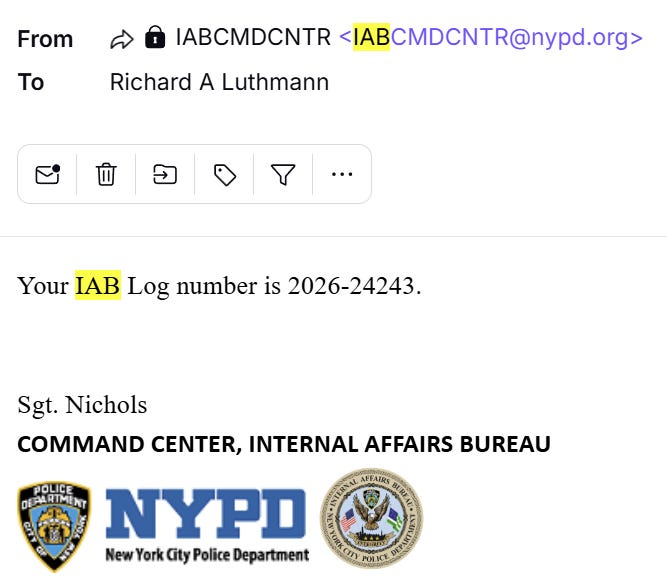
A separate complaint alleging possible political intervention was logged by the NYPD Internal Affairs Bureau as IAB No. 2026-24243. That number is not proof that Hanks called anyone, that senior police officials intervened, or that Love received preferential treatment. It proves only that the allegations were formally submitted and entered into the Department’s complaint system.
That is enough to demand preservation.
Every body-camera file, McDonald’s surveillance recording obtained by police, property voucher, dispatch call, command-log entry, arrest worksheet, prosecutor email, prisoner record, text message, and executive notification from July 10 through July 12 should be frozen against deletion.
The public does not need operational secrets or the identity of confidential sources. It needs the basic truth:
Was Kevin Barry Love arrested?
For what?
What happened to the case?
Why is the docket hidden?
Who authorized his release?
Did political influence enter the process?
Did cooperation with law enforcement change his status?
The longer the government refuses to answer, the less this looks like ordinary secrecy and the more like political insulation.
Kevin Barry Love is presumed innocent. But innocence does not require erasing the arrest trail. Release the records. Explain the sealed docket.
Let the facts decide whether this was routine justice—or another monster manufactured and protected by the lawfare-political machine.
