
Boyne Connecticut Circus Update - Trial Begins
Free Speech Trial Explodes with Drama and Controversy

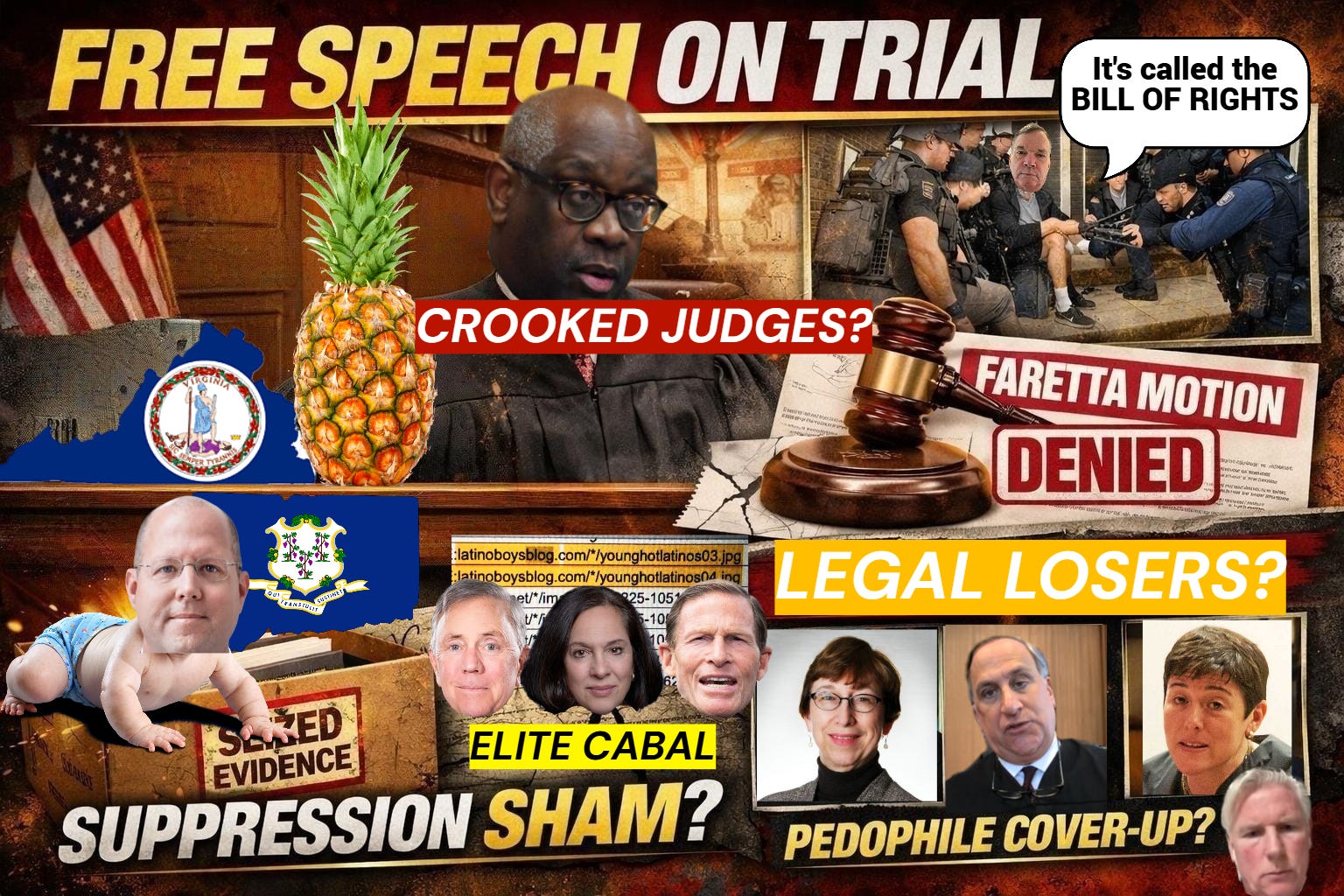
LUTHMANN NOTE: New Haven Judge Peter Brown denied Paul Boyne’s third Faretta v. California request to proceed as his own counsel, despite Supreme Court precedent holding that wrongful denial is a structural error. Brown further rejected the suppression of evidence collected at Boyne’s home despite admissions that Virginia law was not followed. He punitively raised bond and imposed speech restrictions. The complaining “victim judges” are tied to the Christopher Ambrose custody scandal. The optics are grim. This case is no longer about rhetoric. It is about whether a journalist can criticize judges without facing felony charges. If Faretta was wrongly denied, everything that follows is reversible. The appellate clock has already started ticking. Below, we break down the latest developments as of Thursday’s lunch recess in “Boyne Connecticut Circus Update,” first available on TheFamilyCourtCircus.com.

By Richard Luthmann
(NEW HAVEN, CT) – Paul Boyne, 64, is a journalist who’s covered family court (among other things) for the last decade. He’s on trial for 18 felony counts over inflammatory blog posts targeting Connecticut judges. Boyne doesn’t deny it; he justifies it. Boyne says Connecticut Judges Adelman, Grossman, Moukawsher, Stewart, and other members of the judiciary covered for credibly-accused pedophile Christopher Ambrose, among other crimes against “God, country, and natural law.”

The case has morphed into a high-stakes First Amendment battle, with courtroom fireworks erupting by the hour. Short, tense testimony and bombshell allegations defined the trial’s opening – from video of a SWAT-style raid to a bitter showdown over Boyne’s right to defend himself.
Boyne Connecticut Circus Update: State’s Case Unleashed – Raid Video Backfires?
Connecticut prosecutors wasted no time rolling out their case this morning. A jury has now been seated, and jeopardy has attached. The state opened with dramatic evidence from the very start of the saga. Jurors were shown police camera footage of the June 2022 predawn raid on Paul Boyne’s Virginia home.
The video – filmed by lead investigator Detective Samantha McCord – showed Boyne calmly sitting on his porch surrounded by armed officers. To some observers, the footage seemed intended to shock.
But to Boyne, it was a gift.
On the stand, Detective McCord narrated how she and a swarm of state troopers seized Boyne’s electronics and documents that morning. She described forensic steps taken to link Boyne to TheFamilyCourtCircus.com blog at the heart of the case. The prosecution even had McCord read aloud excerpts of Boyne’s own writings – incendiary blog posts peppered with violent innuendo and anti-Semitic slurs.
Yet if prosecutors hoped to horrify the jury, Boyne felt they overplayed their hand.
In fact, Boyne openly smirked as the raid video played.
“I’m sitting there watching it, first time I ever saw it, and I’m like, okay, I just won the case,” Boyne quipped afterward.
The video captured Boyne lecturing McCord and a Virginia officer (Trooper Heimer) on his constitutional rights. On his doorstep, Boyne scolded them for “not knowing the First Amendment” and for “lying to the court to get a search warrant.” He reminded them that federal agents had already vetted his blog in 2017 without a raid – “the FBI was here… they rang the doorbell, what’s your problem?” he said in the footage.
He even name-dropped a relevant precedent (the U.S. v. Cassidy case involving online speech) to warn McCord she’d “be famous” for trampling free speech.
Boyne claims the unexpected civics lesson caught on tape bolsters his defense. It shows, he argues, that his intent was journalism and governmental protest, not crime. He was confidently asserting his First Amendment rights, not threatening anyone.
“We basically nailed them on everything – you don’t know about the First Amendment, you lied to get a warrant,” Boyne recounted of the exchange.
The detective cut off the recording early, but Boyne insists enough got through.
“I don’t think, if I was the prosecutor, I would’ve showed that to the jury,” he chuckled.
McCord’s testimony also revealed an intriguing twist: initially, she found no crime. After reviewing Boyne’s writings, McCord “testified that her result… was that there was nothing criminal” at first. Only after a “big meeting with major crimes” did the investigation abruptly escalate, and “then it became criminal.”
In other words, state authorities seemingly overruled their own investigator’s first impression. That detail did not go unnoticed by Boyne’s camp, who argue it smacks of a politically motivated prosecution.
Under Connecticut law, a politically motivated prosecution violates both the Equal Protection and Due Process Clauses when the State targets a defendant based on protected speech or retaliates for the exercise of constitutional rights. See State v. Arbour, 29 Conn. App. 744, 750–51, 618 A.2d 60 (1992) (adopting federal selective prosecution standard); State v. Jones, 234 Conn. 324, 343–44, 662 A.2d 1199 (1995) (Katz, J. )(recognizing vindictive prosecution doctrine in Connecticut ).
Wait, there’s more.
In State v. Jones, Justice Joette Katz, writing for the Connecticut Supreme Court, expressly recognized that due process forbids prosecutorial vindictiveness. The Court held that a defendant may establish a due process violation either by proving actual retaliatory motive or by demonstrating circumstances that create a “realistic likelihood of vindictiveness.” Id. at 343–44. Justice Katz explained that when the State’s actions appear to punish a defendant for exercising a constitutional right (like say, THE FIRST AMENDMENT), courts must scrutinize the prosecution to prevent chilling lawful conduct. Id. The opinion relied on Blackledge v. Perry, 417 U.S. 21 (1974), reaffirming that increasing charges or penalties in response to protected activity undermines fundamental fairness.
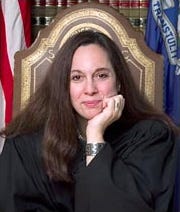
In short, Justice Katz made clear that Connecticut courts must guard against prosecutions that function as retaliation rather than neutral law enforcement.
A defendant must show discriminatory effect and discriminatory purpose, or a realistic likelihood of retaliation for protected conduct. See United States v. Armstrong, 517 U.S. 456, 465 (1996).
When prosecution follows political speech critical of public officials, heightened constitutional scrutiny applies. See State v. Moulton, 310 Conn. 337, 351–52, 78 A.3d 55 (2013). If established, dismissal is the proper remedy.
“There’s probably a lot more to that story that we don’t know,” Boyne mused darkly.
Boyne Connecticut Circus Update: Faretta Firestorm – Judge Denies Boyne’s Self-Representation Bid
Before the jury entered, Boyne ignited a legal firestorm over his right to represent himself. In a dramatic Faretta hearing first thing this morning, Boyne once again tried to fire his court-appointed attorneys, Todd Bussert and Kelly Billings, and proceed pro se. Speaking in his own defence, the defendant invoked the Sixth Amendment and the landmark case Faretta v. California (1975) that guarantees a competent defendant’s right to self-representation.
Judge Peter L. Brown was not moved. He summarily denied Boyne’s application to go it alone, curtly ruling that Boyne must keep his lawyers.
The decision prompted an immediate outburst from Boyne. He stood and accused Judge Brown of trampling the Constitution.
“I told him he was being unfaithful to the Sixth Amendment – it was imposed on him by the Fourteenth,” Boyne later said, referring to the right to counsel as applied to the states.
Brown, however, cut him off and stood firm. The defendant’s bid to serve as his own attorney – already attempted and denied in earlier proceedings – was again shot down.
Legal fireworks continued as Boyne pressed the issue. He argued that by denying his Faretta right, Judge Brown had committed a “structural” error requiring automatic reversal of any conviction. And Boyne has a point: courts have held that wrongful deprivation of self-representation isn’t subject to harmless error analysis.
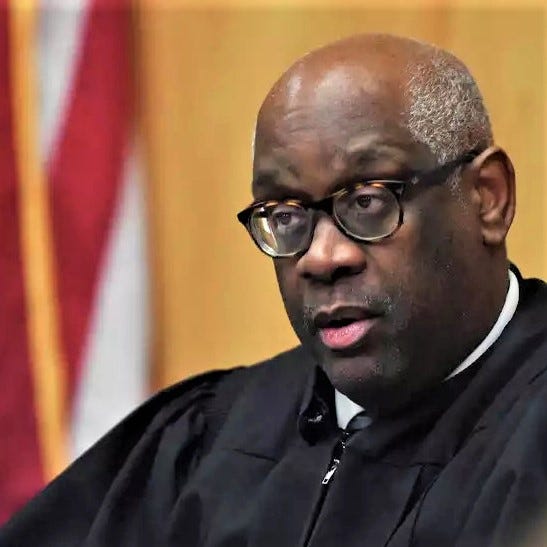
As the U.S. Supreme Court explained in McKaskle v. Wiggins, because the right to self-represent usually hurts a defendant’s case, its denial “is not amenable to ‘harmless error’ analysis.”
In plainer terms, forcing a lawyer on a defendant who wants to go solo is a fundamental flaw that can undo a guilty verdict on appeal. It appears that Paul Boyne could be playing with “house money.”
Judge Brown brushed aside the warnings. He insisted that Boyne’s attorneys – seasoned federal defenders – would stay on the case to ensure a fair trial. Brown pointed to Boyne’s complex charges and prior delay tactics, implying that self-representation would cause chaos. The judge’s ruling means Boyne must fight for his First Amendment freedom with lawyers he openly despises. Boyne believes this decision alone has torpedoed the trial’s validity.
“It turns out it’s a structural failure, a reversible error,” Boyne fumed of Brown’s denial.
Expect the Faretta fight to resurface on appeal if Boyne is convicted, where Boyne will probably get a new trial.
Boyne Connecticut Circus Update: “Sham” Suppression Hearing – Prewritten Ruling?
Wednesday’s pre-trial proceedings (Feb. 25) featured a crucial evidence suppression hearing – and Boyne says it was a total farce. At issue was the legality of the interstate raid and seizure of Boyne’s property. Boyne’s team had moved to suppress all evidence from the Virginia search, arguing Connecticut officers violated state lines and the Fourth Amendment.
Detective McCord said she “flew to Virginia” to coordinate the raid, which was carried out by local police but instigated by Connecticut authorities. Under Virginia law, however, Connecticut had no jurisdiction to remove evidence without court approval.
According to Boyne, Wednesday’s hearing revealed a stunning admission: Detective McCord conceded under oath that she had no Virginia court authorization to take Boyne’s computers and drives back to Connecticut. Virginia Code §19.2-58 requires seized evidence to remain in Virginia custody until a local judge signs off.
Instead, mere minutes after the raid, McCord testified that she packed the electronics in her trunk and “headed off to Connecticut,” as Boyne describes it. In essence, Connecticut troopers spirited away the goods without any Virginia judge ever authorizing the hand-off.
Prosecutor Jack Doyle, Boyne argues, orchestrated this interstate end-run – an evidence grab “on a silver platter” that bypassed every safeguard of due process. Even seasoned observers call this a “textbook Fourth Amendment violation.”
Judge Brown, however, didn’t see it that way. After hours of testimony and legal arguments, Brown swiftly ruled against the defense’s suppression motion. What shocked Boyne was the speed and scripted nature of the ruling.
“You could tell the judge had…everything the state did was wonderful – meaning he had it all prepared before today,” Boyne said, alleging the fix was in.
As soon as the arguments ended, Brown pulled out a written order and read a polished opinion denying relief from the bench. To Boyne, it was clear Brown’s mind was made up in advance – a “sham” hearing just for show.
“He…started reading off why everything the state did was wonderful,” Boyne scoffed, claiming Brown’s ruling was essentially prewritten by the prosecution.

The defendant was left fuming. In Boyne’s view, his own attorney, Todd Bussert, fumbled the suppression fight badly. On cross-examination, Bussert never even asked McCord the million-dollar question: What legal authority did you have to remove evidence from Virginia?
“Nobody ever even mentioned 19.2-58 until the end,” Boyne lamented, referencing the Virginia statute that was violated. And even then, “he didn’t push it. He didn’t say, ‘Your Honor, the law of Virginia was broken.’ He never said that.”
Bussert also failed to highlight another troubling point: Detective McCord had zero training in First Amendment law. On the stand, McCord admitted she was never schooled on how to distinguish protected speech from criminal “threats.”
Boyne argues that a detective ignorant of free speech nuances should never have been leading a speech-based case. But these angles were, in his words, “flushed down the toilet” by his own counsel.
In the end, Judge Brown denied the motion to suppress, allowing the state to use every scrap of the seized evidence at trial. Boyne was not surprised – he believes Brown was ordered to reject the motion by higher-ups desperate to keep the case alive.
“Waste of time,” Boyne muttered afterward.
The interstate raid’s legality will now be a key appellate issue instead. As one commentator noted, “Courts killed the ‘silver platter’ trick decades ago for a reason.” You can’t just evade search warrant rules by hopping state lines.
Boyne maintains that if Connecticut’s end-run is tolerated here, due process is in peril. In his view, Brown’s ruling “raises serious interstate evidence concerns” that won’t withstand scrutiny.
Boyne Connecticut Circus Update: Defense Meltdown – Journalist Blasts His Own Lawyers
As if battling the state wasn’t enough, Paul Boyne is also at war with his defense team. He has repeatedly clashed with attorney Todd A. Bussert (a veteran defense lawyer appointed by the court) and co-counsel Kelly Billings. By all accounts, the attorney-client relationship has collapsed.
“Todd is not talking to me, okay? There is no attorney-client relationship,” Boyne complained bluntly.
In open court and in hallway whispers, Boyne accuses his lawyers of undermining his case – or worse, of secretly siding with the prosecution.
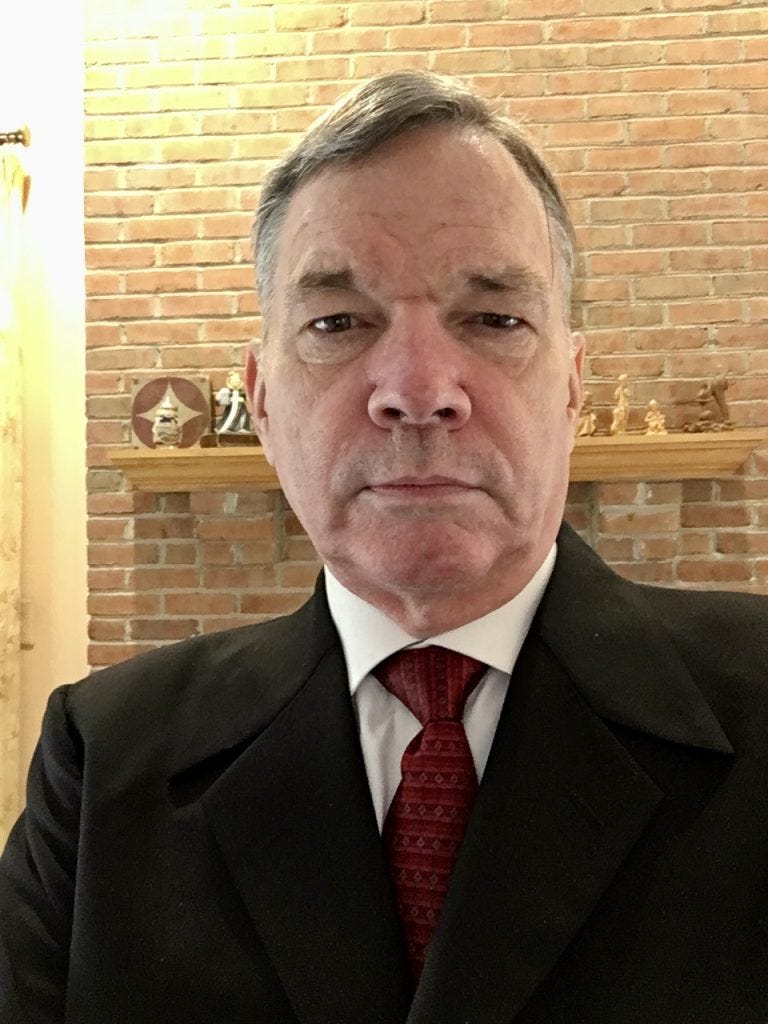
Boyne’s frustration boils down to strategy. He says Bussert has flatly refused to introduce key evidence or call crucial defense witnesses, effectively gutting Boyne’s intended defense. No exhibits have been filed. No witnesses subpoenaed.
“He’s not filing any exhibits, and he is not calling any witnesses,” Boyne said in exasperation at lunch.
Among the people Boyne desperately wanted on the stand: Dr. Bandy Lee (a forensic psychiatrist who evaluated the case’s players), Mia Ambrose (the sexually abused daughter of the credibly-accused pedophile at the center of Boyne’s blog crusade), and Manuel “Manny” Gomez (a private investigator who exposed Ambrose’s crimes against his own children).
These figures, Boyne argues, would corroborate his journalistic motive – that he was exposing real wrongdoing, not “stalking judges out of malice.”

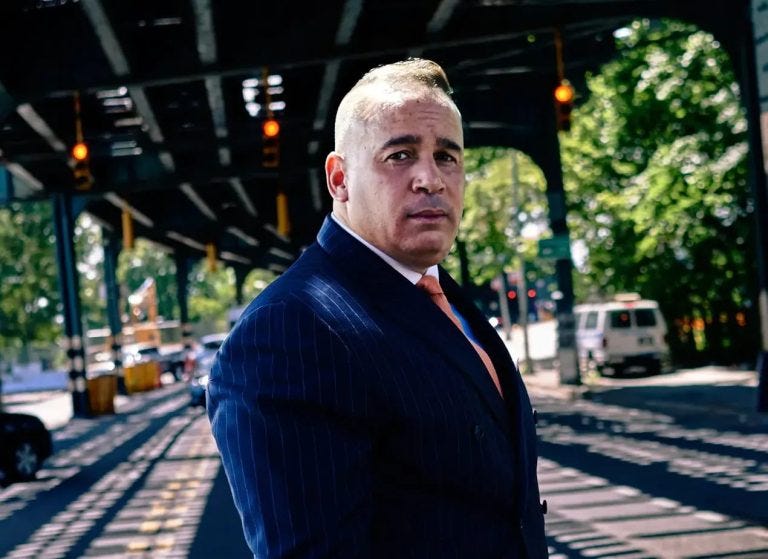
Yet Bussert has kept them off the roster.
“Todd told me he’s not gonna call Bandy Lee or Manny Gomez or [anyone],” Boyne told a supporter. “So I gotta go by memory. That’s pretty dangerous.”
In Boyne’s eyes, his lawyers are essentially throwing the fight. He notes that Bussert’s focus seems to be on procedural niceties rather than the big-picture narrative that Boyne was a whistleblower. During the suppression hearing, for example, Bussert droned on about minor timeline details – who emailed what, when – instead of hammering the glaring illegality of the raid.
One courtroom observer remarked that Bussert “put me to sleep” with the minutiae.
Boyne was furious: “Why don’t we get to the point?” he thought, urging his lawyer to invoke the glaring “fruit of the poisonous tree” argument that an unlawful raid taints all evidence. It never happened.
Similarly, Bussert has largely sidestepped any First Amendment defense in front of the jury. He has not emphasized that Boyne’s blog posts, vile as they were, might be protected speech about a public issue (family court corruption). Instead, Bussert’s strategy – at least so far – appears to be simply forcing the state to meet its burden on the stalking and harassment charges.
That conservative approach has left Boyne feeling voiceless in his own trial. As he colorfully put it, his defense is “a whole big f***ing joke” at this point.
The breakdown between Boyne and Bussert is so severe that Boyne attempted to fire him outright (via the failed Faretta bid). Judge Brown refused to remove Bussert, leaving Boyne stuck with a lawyer he openly distrusts. The tension is palpable in court. When Bussert speaks, Boyne often shakes his head or rolls his eyes. He has accused Bussert in filings of “refusing to follow [my] direction” and ignoring exculpatory angles.
Bussert, for his part, has mostly stayed mum publicly. Observers say the attorney seems to be playing the long game – preserving legal issues for appeal (like overbreadth and jurisdiction) rather than mounting an aggressive jury-nullification style defense. One free speech advocate who watched the morning session commented that Bussert is doing “a good job from a legal beagle point of view…preserving the record, but he is not doing anything good for the jury.”
With Boyne’s life on the line (he faces potentially decades in prison), the internal conflict in the defense camp adds yet another layer of drama to this unprecedented trial.
Boyne Connecticut Circus Update: Pedophile Cover-Up? Boyne’s Explosive Retaliation Theory
Lurking beneath the surface of the trial is the salacious saga of Christopher Ambrose – and Boyne’s claim that he’s being prosecuted for exposing a pedophile cover-up. To understand Boyne’s mindset, one must wade into the muck of a notorious Connecticut family court case.
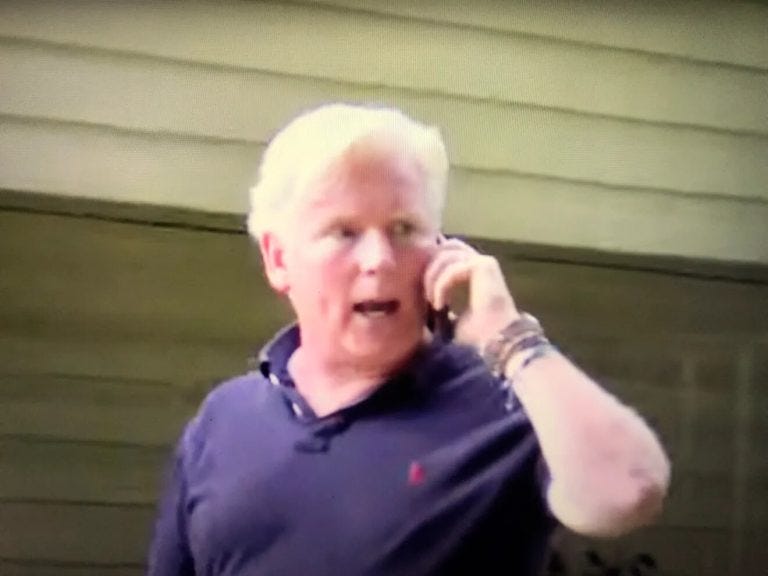
Ambrose, a former Hollywood TV writer, was embroiled in a years-long custody battle with his ex-wife, Karen Riordan, over their three children. Ambrose was credibly accused by his daughter, Mia Ambrose, of sexual abuse and grooming. Yet, to the outrage of many, multiple family court judges and state child protection officials allegedly shielded Ambrose and vilified the mother, ultimately stripping Karen Riordan of custody.
For Paul Boyne, this case became obsession number one on his blog, TheFamilyCourtCircus.com. He saw Ambrose as emblematic of a “PPP – Pedophile Protection Program” operating in Connecticut’s judiciary.
Over the years, Boyne wrote dozens of incendiary posts naming and shaming those he believed “enabled” Ambrose’s abuse. In particular, he fixated on certain judges involved in the Ambrose saga – judges he painted as complicit villains. He accused them of everything from covering up child rape to being part of a satanic or “rabbinical” cult (Boyne’s rhetoric veered into anti-Semitic conspiracy).
His language was violent and vulgar. In one 2021 post titled “Happy .308 Day!”, Boyne wrote that “more justice can be dispensed in one bullet than by all of Family Court… Celebrate the Second Amendment as protection from the pedophiles who run family court.” He urged readers to recognize that “judicial discretion falls to the report of a rifle” when courts fail children.
That shocking rant was aimed squarely at the judges whose rulings hurt children and families, and offended natural law, like in the Ambrose case. Boyne’s blog explicitly named Judge Jane Grossman, Judge Elizabeth Stewart, Judge Thomas Moukawsher, and others, accusing them of facilitating Ambrose’s sexual abuse and alleged crimes.
He even celebrated when one family court judge died, insinuating it was cosmic justice.
In Boyne’s mind, he wasn’t issuing literal threats – he was engaging in what many call “gonzo journalism” to blow the whistle on a heinous family court cover-up.
“He was exposing something horrific – judges ignoring abuse – in the only way he felt he could,” explains journalist Michael Volpe, who has reported on the Ambrose drama.
Boyne’s defenders note that beneath the grotesque hyperbole, his blog did publish court documents and whistleblower testimony about Ambrose. In other words, they argue, his speech was about a matter of public concern (child safety and public corruption) – which under First Amendment law occupies “the highest rung” of protection.
Critics, of course, see it differently – to them, Boyne’s violent screeds crossed a line into unprotected true threats. But here’s the eyebrow-raising piece: the very judges Boyne targeted in the Ambrose affair are the “victims” in his criminal charges. It’s no coincidence, Boyne says, that the three judges at the core of the case – Judge Grossman, Judge Stewart, and Judge Moukawsher – all presided over parts of Ambrose’s proceedings.


Notably, Judge Moukawsher once even disbarred a lawyer who tried to expose Ambrose’s abuse claims, and Judge Grossman issued orders granting Ambrose custody. Now, those judges’ complaints form the basis of Boyne’s stalking and harassment counts. To Boyne, this is proof positive of retaliation: he angered the powers that be by exposing their dirty secret, so they’re silencing him.
“The ‘pedophiles’ jab was aimed squarely at judges…whom Boyne saw as protecting a pedophile father rather than children,” one summary of his case explains. In Boyne’s view, he’s the one seeking justice – and the state has turned that into a crime.
A recent prosecution filing inadvertently supports Boyne’s theory. On Feb. 13, state attorneys filed a Notice of Intent to Offer Uncharged Misconduct Evidence, essentially a list of other bad acts or context they want to tell the jury about. That notice catalogued many of Boyne’s blog posts about Grossman, Stewart, and Moukawsher. By doing so, the state tacitly acknowledged the Ambrose connection: they linked Boyne’s most inflammatory writings to those very judges and the Ambrose case.
In other words, the very context of Boyne’s speech is the corruption he aimed to spotlight. This has not been lost on the defendant (but maybe upon his lawyers). Boyne will argue – if his attorneys let him – that his prosecution is a political hit job, punishing him for producing journalistic content and speech blowing the whistle on judges who “enabled a pedophile cabal.”
It’s a bold claim, that and one the court may formally rule is irrelevant. But in the court of public opinion, it raises serious questions about the state’s true motives.
And regardless of judicial rulings, a Connecticut jury retains the raw power to acquit if it concludes that the prosecution itself offends fundamental fairness. While courts do not formally instruct on jury nullification, jurors may acquit for any reason or no reason at all, a structural feature of the jury system recognized in American law. See State v. Raguseo, 225 Conn. 114, 122–23, 622 A.2d 519 (1993) (acknowledging jury’s de facto power to nullify, though not a right).
⬤ ⬤ ⬤
The Paul Boyne free speech trial continues in New Haven Superior Court, with the state expected to call further witnesses. Check back for updates as new details emerge.
