



NOTE: This case isn’t wobbling because Paul Boyne wrote angry, offensive, or uncomfortable words. It’s wobbling because the State decided the Constitution was optional once judges felt threatened. You don’t cross state lines, kick down a man’s door, grab his property, ignore chain-of-custody law, bury Brady material, then rush him to trial and call it justice. That’s not prosecution. That’s retaliation dressed up as process. Courts killed the “silver platter” trick decades ago for a reason. If Judge Peter Brown lets this trial proceed, he won’t be testing Boyne. He’ll be testing whether due process still means anything at all. This piece is Paul Boyne’s Ordeal Exposed, first published on TheFamilyCourtCircus.com.


By Richard Luthmann with Michael Volpe
Dawn Raid in Virginia: Blogger’s Home Stormed by “Little Green Men”
Paul Boyne was jolted awake at 5:15 AM on June 30, 2022, by “very heavy pounding on the front door” of his Virginia home. The 62-year-old Navy veteran and Family Court Circus blogger peered out to see the tip of an AR-15 rifle aimed at his head.
A SWAT team swarmed his porch.
“There must have been a dozen little green men with rifles,” Boyne later recalled of the camouflaged officers who smashed through his door.
The target of this paramilitary spectacle? A keyboard warrior accused of “writing mean blog posts” and allegedly posting “Second Amendment”-flavored rants against Connecticut judges.
Boyne was shoved a one-page search warrant – completely blanked out, marked sealed, and offering no clue why his home was invaded.

Only when a Virginia trooper introduced him to “two Connecticut state troopers” did the stunned blogger realize Connecticut authorities instigated the raid.
The Unknown Podcast, with co-hosts Michael Volpe and Richard Luthmann, captured Boyne’s shock: “I had no idea…until they introduced me to two Connecticut troopers”, he said. One was Detective Samantha McCord of the Connecticut State Police, flown in under the cover of darkness.
The Connecticut judiciary had reached across state lines to silence a critic. It was a scene ripped from a Kafka novella and a constitutional nightmare unfolding in real time. This brazen dawn raid set the stage for a legal battle now unraveling on a national stage.
Paul Boyne’s Ordeal Exposed: Chain-of-Custody Chaos
The June 30th raid yielded a trove of Boyne’s property – computers, hard drives, phones, notebooks – all seized at gunpoint. But what happened next is “textbook Fourth Amendment violation.”
By 7:15 AM, the operation was over; by 7:39 AM, Virginia Special Agent Spottenheimer had signed over every seized item to Detective McCord, who promptly stashed Boyne’s electronics in her trunk and “headed off to Connecticut.”
In Boyne’s words, “Connecticut cops took off with my computers without notifying the Virginia court. That’s a violation of Virginia law…contempt of Judge Saylor’s order.”
Virginia statutes (Va. Code §19.2-58) required that seized evidence be held in Virginia until a local judge authorized its release. Instead, Connecticut grabbed the goods. No Virginia judge authorized Connecticut officers to participate in the search or to spirit away the evidence.
State’s Attorney Jack Doyle effectively orchestrated an evidence hand-off “on a silver platter” between sovereigns, bypassing every safeguard of interstate due process.

Luthmann outlined the missing steps: a valid Virginia warrant limited in scope, proper cataloging of items, secured storage in Virginia, a court order transferring custody, and an unbroken seal authenticating the evidence.
None of it happened.
By late 2023, even Boyne’s previous lawyers were demanding, “Where’s all the stuff from this raid? Show us it was done right.” They got silence.
Connecticut’s hurry-up-and-grab operation shredded the chain of custody and tainted the integrity of everything seized. The evidence trail was broken before Boyne was ever hauled into court.
Paul Boyne’s Ordeal Exposed: Gag Orders, Brady Bombshells & “Muppet” Justice
Eighteen months after the raid, the prosecution’s case is falling apart in plain view. Boyne spent a year and a half in jail without trial, and in that time, the state repeatedly missed discovery deadlines.
In a scathing Order to Show Cause on January 15, 2026, Judge Peter Brown found the State had “not fully complied” with discovery orders. He demanded Connecticut prove why the charges shouldn’t be dismissed – or else face the exclusion of all evidence from the Virginia raid.
Judge Brown ordered prosecutors to finally cough up the hidden evidence trail: all emails between Detective McCord and Virginia police, the entire Virginia State Police internal affairs file on the Boyne raid, and documentation of every Connecticut officer who participated in the June 30, 2022, search.
These missing files are precisely the Brady materials (potentially exculpatory evidence) one would expect in a fair trial – yet Boyne’s team had been denied them until the eleventh hour.
Meanwhile, prosecutor Jack Doyle’s public story is unravelling. Doyle has implied that the Virginia raid was by-the-book and led by Virginia authorities.

But a contemporaneous report in the Hartford Courant tells a different tale: “State Police served [a] search warrant in Virginia” as part of the investigation – i.e., Connecticut State Police themselves executed the raid, contradicting any notion that Connecticut was hands-off.
Doyle’s own tactics have raised eyebrows. In August 2025, he tried to gag Boyne from discussing the case – an extraordinary attempt at prior restraint. This world-famous blog rightly lampooned it as the “Jackaz’s” gag motion.
The gag bid failed, but it underscored the prosecution’s desperation to control the narrative. That narrative is now collapsing under evidence of misconduct.

Even popular satire has seized on the spectacle – “The Muppets Take Connecticut” skews this prosecution as “a constitutional nightmare turned puppet show,” with prosecutors and judges cast as felted puppets.
What was once pitched as a righteous crackdown on “threats” now looks like a bungled, overreaching crusade against a blogger’s free speech. The case has devolved into exactly what Boyne’s blog always claimed: a circus of justice gone wrong.
Interstate Law Ignored: Will a Judge End the Constitutional Quicksand?
Across the country, laws exist to prevent this kind of interstate abuse. Prosecutors need a legal pathway for one state to obtain evidence in another. But Connecticut’s agents chose brute force over proper process.
It’s not the first time such overreach has been challenged. In Commonwealth v. Garmon (Mass. 1985), evidence seized by out-of-state officers without local authority was tossed out, suppressing the prosecution’s case. Likewise, U.S. courts abolished the old “silver platter” trick decades ago: one state (or the feds) can’t launder illegally obtained evidence through another.
Jack Doyle should know this. Yet Connecticut forged ahead, flouting interstate protocols and basic due process.
Boyne’s saga spans criminal and civil dimensions. After 18 months behind bars, he’s accused Connecticut’s governor and executive branch of orchestrating an illegal interstate raid to punish his speech. In the criminal case, he’s also arguing on First Amendment grounds, claiming that Connecticut’s “stalking” law criminalizes protected speech.
The stakes could not be higher for free expression and the rule of law. All eyes now turn to Judge Brown in New Haven.
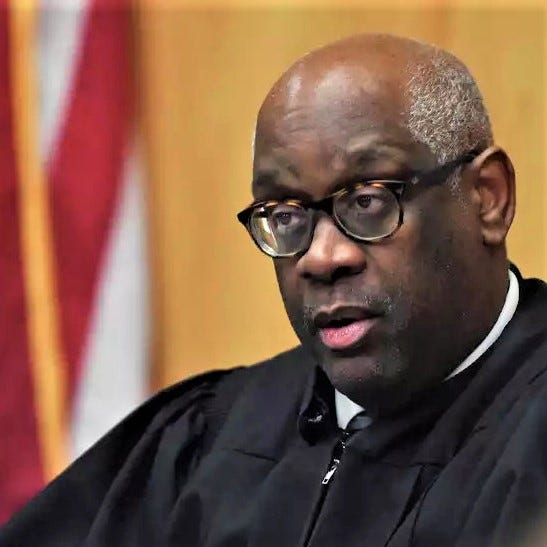
A jury is waiting, and trial dates are penciled in. But first, on January 22, 2026, Judge Brown will convene a hearing to weigh the sins of this prosecution.
Will he have the courage to throw out evidence “prosecuted…with stolen goods” (as Boyne puts it)?
Will he enforce the Constitution where the Connecticut State Police and prosecutors did not?
The foundation of State v. Boyne is looking shakier by the day – built on a busted door, a blank warrant, and a pile of procedurally poisoned evidence.
Will Judge Brown dismiss the case or greenlight a trial built on constitutional quicksand?


