

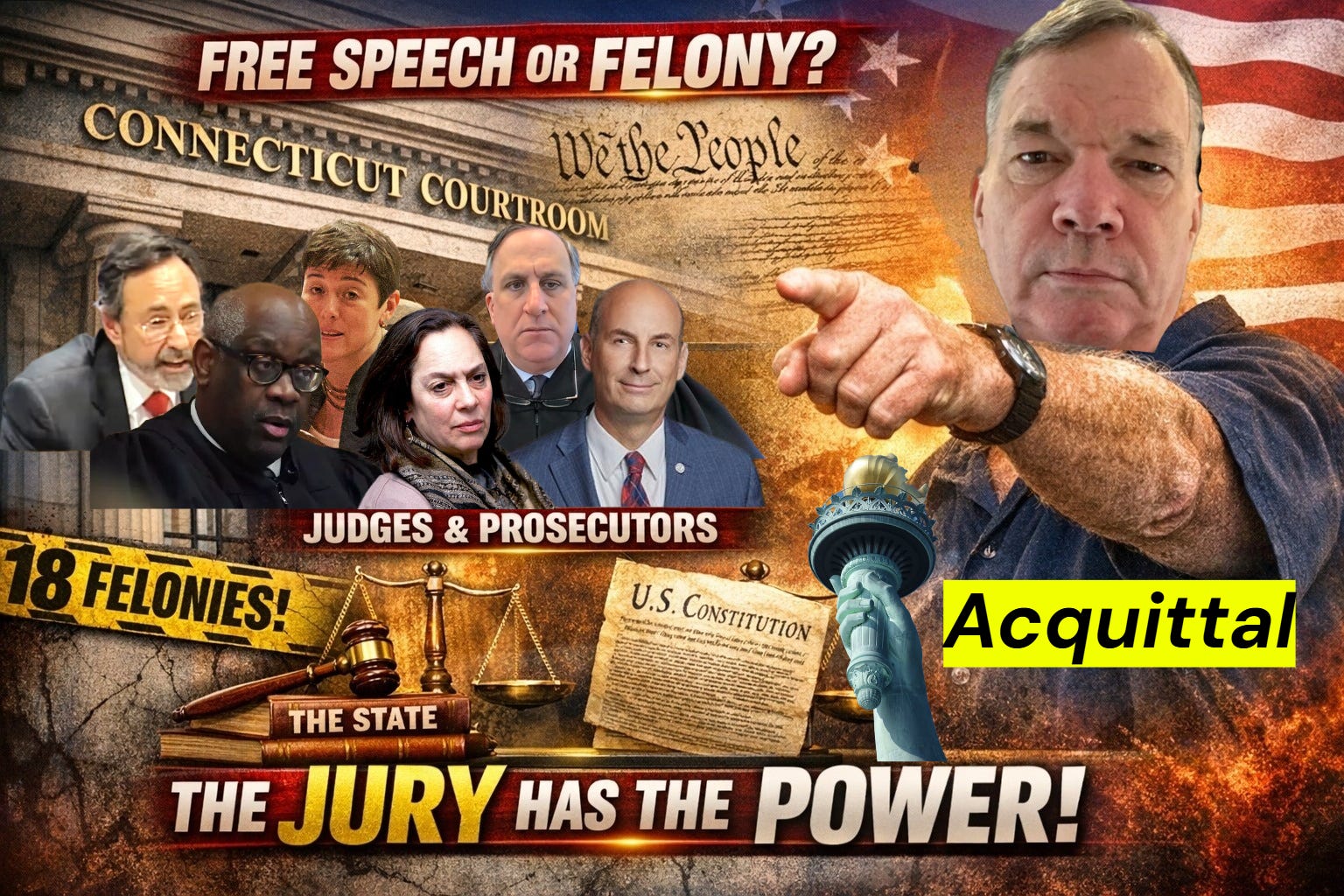
LUTHMANN COMMENT: What happens when we censor free speech? Nothing good, as Professor Eugene Volokh argues. The Paul Boyne case exposes a dangerous fault line in American justice. When speech angers powerful officials, prosecutors suddenly discover new crimes. The State of Connecticut calls Boyne a cyberstalker. His supporters call him a journalist. The truth lies where the Constitution always lies — with the jury. Jury nullification is not lawlessness. It is the people’s veto when government power runs wild. Wild Bill Hickok walked free because a jury refused to enforce an unjust law. The Boyne jury now faces the same moment. If criticism of judges becomes a felony, free speech is finished. The Constitution demands courage — and a Not Guilty verdict of Acquittal. This piece is “Boyne Jury’s Last Stand,” first available on TheFamilyCourtCircus.com.
By Richard Luthmann
Constitutional Crisis: Free Speech on Trial in New Haven
(NEW HAVEN, CT) – A 64-year-old Navy veteran and journalist is fighting for his freedom – and the First Amendment – in a Connecticut courtroom. Paul Boyne faces 18 felony charges for words he wrote on a website. For 18 months, he sat in pre-trial detention jail over his fiery blog posts before finally being freed on bond amid public uproar.
“They didn’t detain a person – they detained a viewpoint,” Boyne quipped after his release, gaunt but defiant. “I never pointed a gun at anyone. I put words on a website.”
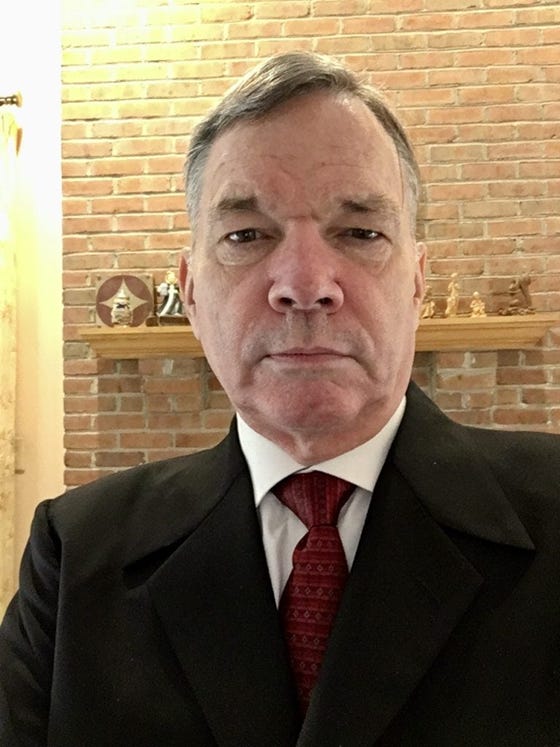
To critics, State v. Boyne is nothing less than a constitutional free speech crisis. They argue Connecticut’s Executive Branch (prosecutors) and Judicial Branch (judges) have teamed up to silence a dissident blogger, making the jury the last line of defense for liberty.
Boyne’s ordeal began when his blog, The Family Court Circus, lambasted Connecticut family court judges with crude, hyperbolic rants. He never approached or contacted a judge in person; he wrote from his home in Virginia, often in outrage. The question now is whether a man can be branded a felon “for words alone” typed across state lines.
That question has turned this trial into a free speech flashpoint – one observers say will test the limits of the First Amendment and the citizen-jury’s willingness to check government overreach.
“The First Amendment doesn’t operate in the state of Connecticut,” Boyne has dryly remarked of his prosecution.
His fate now rests in the hands of twelve jurors sworn to uphold the Constitution over any judge’s pride or prosecutor’s ambition.
Boyne Jury’s Last Stand: Blogger or Criminal?
Boyne’s writings are undeniably vulgar and disturbing. The jury has seen excerpts of his posts – dubbed the “Hateful Eight” – which openly fantasize about violent retribution against specific judges. In one, Boyne wrote “Judge Gerard Adelman gets a .50 cal to the head,” implying a .50 caliber sniper shot. Adelman testified against Boyne, but was not a victim. Why was he allowed to be there?
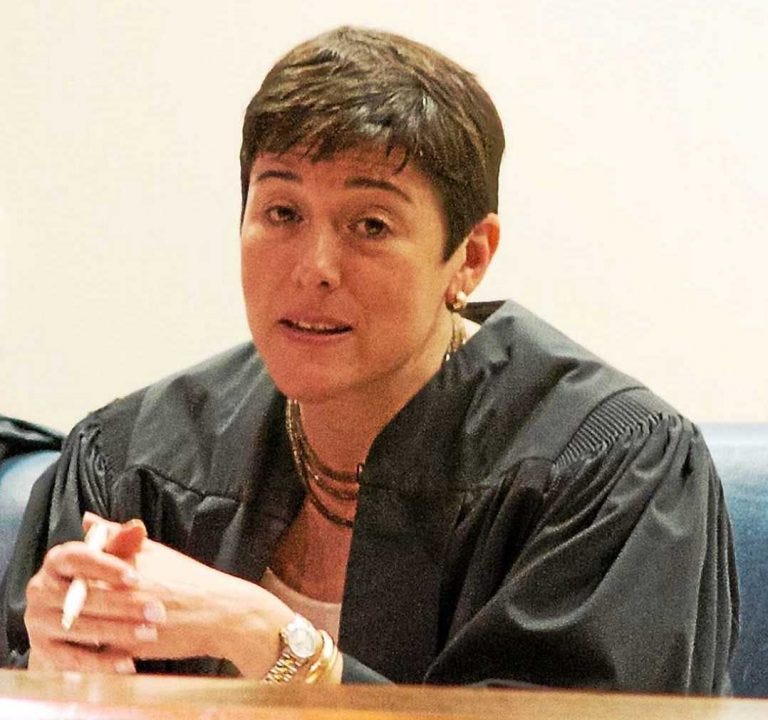
Another post mused about Judge Jane Grossman “begging for a .308 shot to the head… from an oath keeper concealed in the woods behind her house.” Grossman (who is not a Jew despite the last name) testified under oath and admitted that she stripped custody from several Connecticut litigants because they “drank the Family Court Circus Blog Kool-Aid.” Sources tell us that many aggrieved parents are already preparing motions based on Grossman’s rulings, admittedly applying extra-judicial factors as a family misery merchant.
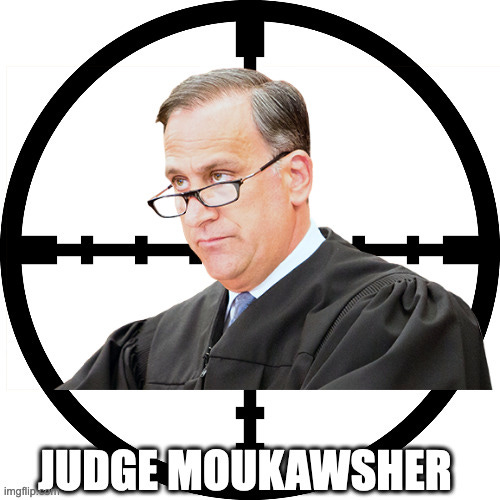
Boyne published a photo of Judge Thomas Moukawsher in crosshairs with a caption advocating “several bullets” for “JUST CAUSE.” Moukawsher testified and was destroyed on cross-examination, admitting that he read the blog avidly beginning at least in 2019 “because it was so awful.” It only became a “problem” for him in 2022, when he lodged criminal charges after encouragement.
When we obtain the full trial transcripts, we will have a field day for our readership.
One Boyne screed urged to “burn the courthouse to the ground, bring body bags” when railing against Judge Eric Coleman (who was not a victim and did not testify).
The blog referred to Connecticut’s judiciary as the “JEWdiciary” and “Corrupticut,” laced with anti-Semitic slurs.
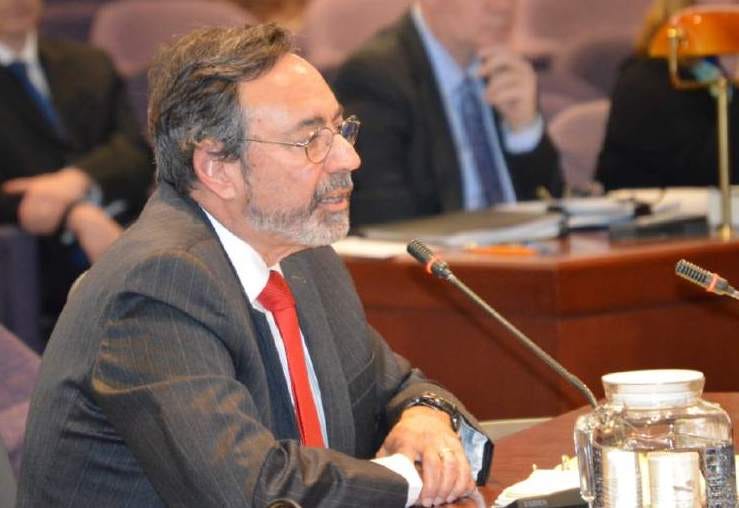
Such language would alarm anyone – and the judges targeted were indeed terrified. Judge Grossman said Boyne’s post described her property so precisely that she couldn’t relax in her own home. Judge Adelman noted “almost every entry” called for someone to kill him. Judge Moukawsher admitted he had no idea what Boyne or his readers were capable of, but feared some fanatic might take the blog’s violent “suggestion” literally.
Prosecutors have seized on these reactions to claim Boyne crossed a bright line from protected speech into criminal threats. They argue his posts weren’t just political hyperbole or “outrage journalism,” but a calculated campaign to intimidate and terrorize public officials.
The charges: 18 felony counts of first-degree stalking and electronic stalking, essentially treating each explosive blog post as an act of criminal harassment.
The jury must decide if Boyne’s words amount to “political speech” or “criminal threat” – a verdict with enormous First Amendment implications. Boyne himself admits his rhetoric was “offensive, even disgusting,” but insists it was political hyperbole protected by the First Amendment.
“I used shocking words to expose what I see as corruption,” he said. “They’re trying to put me away for it.”
Boyne Jury’s Last Stand: Prosecutorial Overreach and a “Free Speech Farce”
From the outset, critics say Connecticut authorities have stretched law and logic to turn Boyne’s blog into a crime. No one was harmed; no shots were fired. Yet the state wielded an unprecedented legal theory: using stalking statutes against online speech with no direct contact.
Boyne was extradited from Virginia and hit with charges under Connecticut General Statutes §53a-181c and §53a-181f – first-degree stalking and electronic stalking – solely for web posts. This novel application has raised eyebrows nationwide. Courts in Illinois and D.C. struck down similar laws that criminalized “distressing” online speech, finding they went too far and violated free speech.
In Boyne’s case, the indictment does not even specify any particular threatening words – only that certain blog posts exist and caused alarm.
“They can’t even point to what part of the blog is supposed to be a threat. There’s no sentence, no hanging participle, that constitutes a crime,” Boyne scoffed.
Facing First Amendment scrutiny after the close of evidence, the State has recently tried to shift its theory. What began as a prosecution of “criminal speech” is now being spun as a prosecution of “criminal conduct” at the charging conference. In court, prosecutors Jack Doyle and Gregory Borelli are downplaying the free speech issue, arguing it’s Boyne’s pattern of harassment – the course of conduct – on trial, not his opinions.
Observers are not convinced.
“If prosecutors can repackage pure speech as ‘cyberstalking’ simply because it’s repetitive and disturbing, then the First Amendment’s protections become meaningless,” one legal commentator not named Eugene Volokh warned.
The Constitution forbids doing indirectly what it cannot do directly – in this case, punishing protected speech by relabeling it as another offense. By switching legal theories mid-stream, Connecticut risks a constructive amendment of the charges – effectively changing the indictment after the fact. It’s a move that would violate due process and confirm critics’ suspicions that this is a “free speech farce” rather than a fair trial.
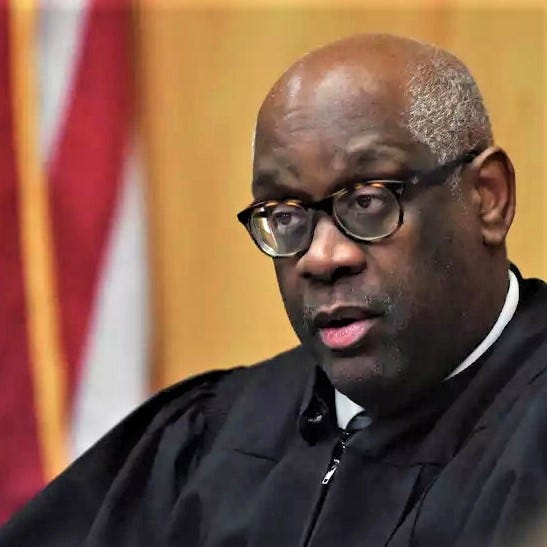
Meanwhile, Connecticut’s Judicial Branch has shown unusual zeal against Boyne. Judge Peter Brown, presiding in New Haven, jailed Boyne pre-trial on a punitive $1.5 million bond after Boyne forwarded a public witness list to journalists Michael Volpe and Richard Luthmann. Brown fumed that Boyne was trying to “intimidate” witnesses and “vowed to teach him a lesson,” throwing the blogger in a cell for two weeks.
“The judge basically said I needed to learn my lesson in a cell,” Boyne recalled, calling the ordeal a judicial ambush that left him ill. “This was never about safety – it was about silencing me.”
Indeed, Boyne walked out of jail only after public backlash painted his jailing as punishment for speech. Even now, Judge Brown’s trial rulings have drawn fire. He has reportedly barred certain First Amendment arguments and forced the defense to focus narrowly on whether the posts were “true threats,” sidestepping other issues – a move one observer called an “abdication” designed to avoid appellate scrutiny.
Through sealed warrants, gag orders, and a controversial interstate raid that seized Boyne’s computers in Virginia without proper authority, the picture emerges of a prosecution and judiciary bending rules in tandem to crush a critic.
“It’s a malicious prosecution,” Boyne has argued in court filings. “This is state power enforcing a private agenda” – the agenda of judges who want a gadfly muzzled.
With both the Executive and Judicial branches in Connecticut appearing intent on making an example of Boyne, only the citizens on the jury remain to check this power play.
Boyne Jury’s Last Stand: Nullification – A Sacred Safeguard of Liberty
American jurors have not only the power, but at times the duty, to reject unjust prosecutions. This principle – jury nullification – is as old as the Republic. It was a jury that saved newspaperman John Peter Zenger from colonial censors, and a jury that defied the Fugitive Slave Act to protect abolitionists.
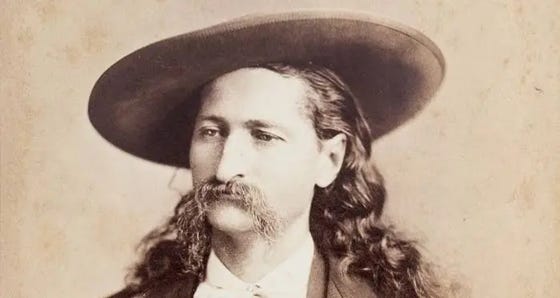
Perhaps the most famous example of nullification’s righteous use is the acquittal of “Wild Bill” Hickok in 1865. Hickok, a legendary gunslinger, killed a man in a duel over a poker debt in Springfield, Missouri. The law was clear: even in self-defense, a willingly engaged duel was illegal, making Hickok technically guilty.
At trial, the judge candidly instructed the jury that under Missouri law, a conviction was the only lawful outcome. But then, in a remarkable twist, he also reminded jurors of a higher principle: they “always have the power, if they wish, to nullify the written law” and apply the unwritten law of a fair fight instead.
The jury took that to heart. After just an hour of deliberation, they returned with an acquittal.
Wild Bill walked free – not because he hadn’t broken the law, but because the jury refused to enforce a law they saw as unjust in context. They nullified a statute in favor of common sense and frontier notions of honor.
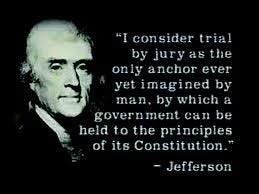
This is the “palladium of liberty” that America’s founders envisioned. Jurors judging both the facts and the law form a final bulwark against tyranny. “Even one juror” can stand up and hang a jury if convicting would be a miscarriage of justice.
That is not a glitch in our system – it is a feature. As famed publisher (and Founding Father) Benjamin Franklin noted, it is “better than law” for jurors to have this authority. Frank Parlato, a veteran journalist who has championed jury nullification’s role, calls it “one of the great safeguards of our liberty.”
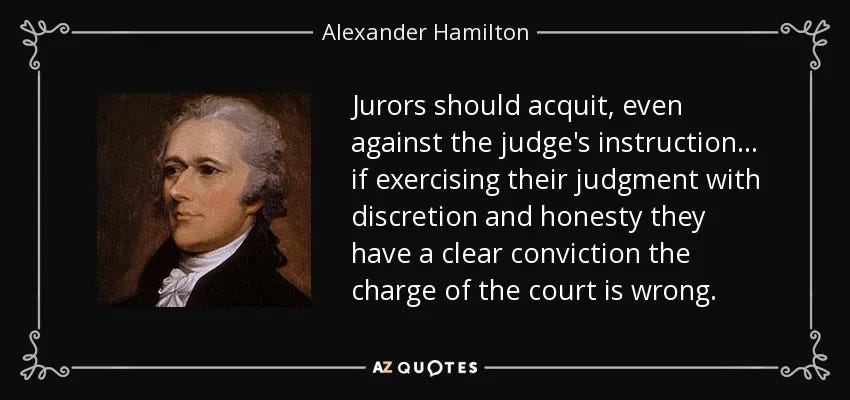
If juries were meant to simply rubber-stamp the letter of the law, Hickok would have been condemned. But conscience can override statute. Parlato puts it plainly: “Any jury always has the power to nullify the law and find anyone not guilty” – especially when the law’s application “reeks of suppression of speech” rather than pursuit of real victims.
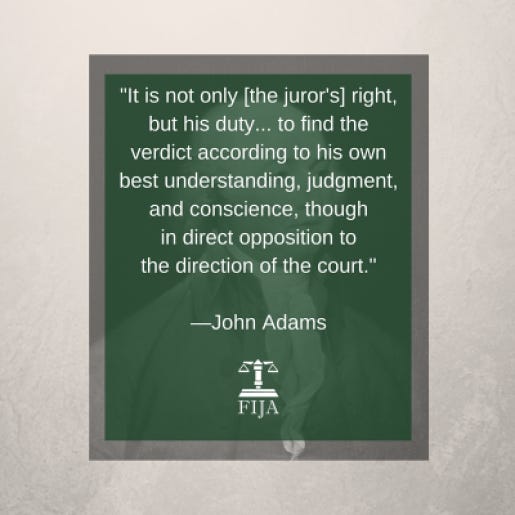
In Boyne’s case, the law being applied is a stalking statute never intended for political speech. If the jury believes this prosecution is an abuse – a political hit job dressed up as a trial – they not only can acquit against the odds, they should.
Jury nullification is no anarchic act; it is a constitutional safeguard against political prosecutions. When prosecutors and judges overstep, the people, through the jury, can pull them back into check.
Boyne Jury’s Last Stand: The Jury’s Duty – Defend Dissent and Vote Not Guilty
This trial was cast by Connecticut’s establishment as a simple quest to punish a “dangerous man.” But Paul Boyne isn’t dangerous in any legal sense. He might chew your ear off and argue his constitutional interpretations until you wish you were dead, but that’s no crime. The State of Connecticut conceded this point when it introduced Exhibit 26, a video of Boyne on his porch during a pre-dawn raid of his Virginia home.
Boyne didn’t get violent. He complied with reasonable requests to sit on his porch. Then he began schooling law enforcement in First Amendment jurisprudence, including U.S. v. Cassidy. There, a court held that applying the federal cyberstalking statute to punish a defendant’s harsh and offensive Twitter criticism of a public religious leader violated the First Amendment because the speech concerned matters of public concern and did not constitute a true threat or unprotected harassment.
Sound familiar?
But it has become clear that something bigger is on trial: the First Amendment itself. Yes, Paul Boyne’s words were ugly, provocative, even scary. But the Constitution does not exist to protect polite or popular speech – it exists to protect the speech we hate and fear, so long as it falls short of true incitement or imminent violence.
If hyperbolic rants that “scare officials” can be recast as felonies, then dissent is in peril. As one court observer warned, “The legal test is not whether judges were offended or alarmed, but whether the speaker crossed the narrow line into a true, intentional threat.”
In this case, that line remains blurry at best. There was no direct threat to any specific person – no email to a judge saying “I will kill you,” but rather public broadsides voicing rage at a system. Prosecutors want the jury to ignore that nuance and focus on fear alone. But fear is not the legal standard for stripping a man of his liberty.
Now, twelve citizens hold the power to deliver a verdict that resounds far beyond one man’s fate. They can send a message that political speech – even fringe, even vile – cannot be criminalized by creative labels and bruised egos.
They can remind the Executive and Judicial branches that the People are the ultimate guardians of the Constitution.
By voting Not Guilty, the jury would not be condoning Boyne’s rhetoric; they would be upholding the fundamental American principle that we don’t lock up dissenters for their words. It would be a declaration that, however much we condemn the content of Boyne’s blog, using the courts to punish a provocateur sets a precedent more dangerous than any blog post.
As Frank Parlato framed it, if the standard becomes “speech that scares officials,” free speech will always lose whenever the powerful feel threatened. The jurors in New Haven have the power and the duty to prevent that collapse.
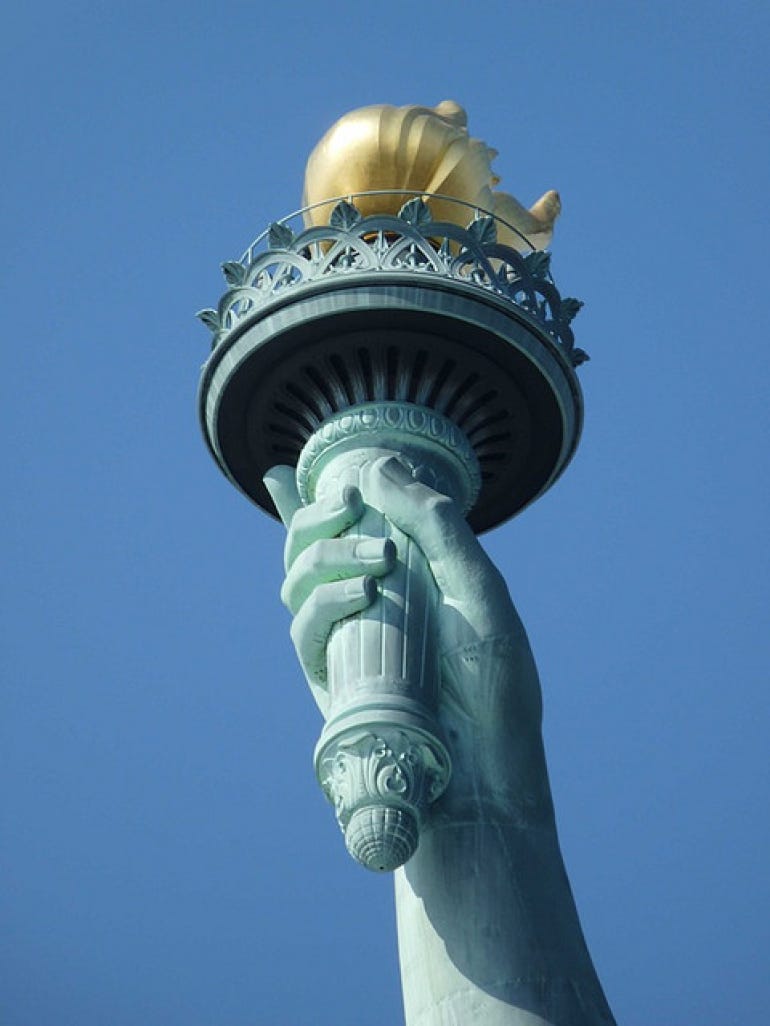
This is a call to action for court watchers, civil libertarians, and every American who cherishes free expression: stand with the First Amendment. Shine a light on this case. Let the jurors know the nation expects them to do what’s right, not what’s easy. The Constitution’s last line of defense lives in ordinary people with extraordinary courage.
In this New Haven courtroom, the jury can nullify an unjust prosecution – and in doing so, raise the torch of liberty aloft. Their verdict should speak for all of us: We will defend dissent, even when it’s ugly, because without dissent, freedom dies.
The just verdict – the only verdict that honors the Constitution – is Not Guilty.


