
Judge Adelman Under Oath
Journalist Boyne’s Free-Speech Circus Hits Judge Brown’s Connecticut Courtroom


LUTHMANN NOTE: Journalist Paul Boyne spent 18 months in jail for what he calls “piercing criticism” and what the Connecticut Judiciary calls cyberstalking. His crime? Raging online at what he branded “Corrupticut” judges and accusing the family court system of protecting insiders in the Christopher Ambrose custody saga. Now the stakes escalate.


As Boyne’s trial opens in New Haven, two of the judges he targeted — Jane Grossman and Gerard Adelman — are expected to take the stand against him. A sitting judge testifying for the prosecution in a case born from criticism of the judiciary itself is no small matter. Boyne calls it retaliation. He says the State is punishing him for exposing what he describes as a “pedo protection racket” inside Connecticut family court. Prosecutors say he crossed the line into criminal harassment. Boyne plans to take the stand in his own defense and invoke Connecticut’s reporter shield law, Conn. Gen. Stat. § 52-146t, alongside the First Amendment. He argues his posts addressed matters of public concern and were protected speech under Branzburg v. Hayes, 408 U.S. 665 (1972), and Gonzales v. NBC, 194 F.3d 29 (2d Cir. 1999). When judges testify against a critic, the Constitution should be listening closely. This piece is “Judge Adelman Under Oath.”

By Richard Luthmann
The “Hateful Eight” on Trial – Free Speech or Felonies?
(NEW HAVEN, CONNECTICUT) – Court watchers, grab your popcorn. A First Amendment freak show is underway at the New Haven courthouse, where 64-year-old Paul Boyne – a fire-breathing Virginia journalist– faces 18 felony charges for what amounts to words on a website.
Boyne’s blog, The Family Court Circus, blasted Connecticut’s judiciary with what prosecutors call threats and harassment, but what Boyne calls political speech about a corrupt court system. A jury will decide if his rants were criminal stalking or constitutionally protected dissent.

Boyne already spent 18 months in jail pre-trial, even turning down a time-served plea deal – a defiant gamble that has free-speech hawks riveted.
Boyne’s posts – dubbed “The Hateful Eight” – named names of family court judges, mocked them with slurs, and fantasized about vigilante violence. New Haven State’s Attorney Jack Doyle has already selectively shown the jury at least fifteen Boyne-authored articles (many of which pre-date Connecticut’s amendments to the charged cyberstalking statute):
Boyne wrote that certain judges “beg[ged] for” a sniper’s bullet to the head. He even published judges’ home addresses (obtained from publicly available State of Connecticut internet records) and pointed out sniper perches near their properties.
Vile? Absolutely.
But did it cross into “true threat” territory or remain twisted political hyperbole? Boyne insists he never actually threatened anyone – he never contacted the judges or set foot in Connecticut.
“They can’t even point to what part of the blog is supposed to be a threat,” Boyne scoffed. “There’s no dangling participle or run-on sentence that constitutes a crime.”
In his dry style, he even quips that under this prosecution, “the First Amendment doesn’t operate in the state of Connecticut.”

Prosecutors, however, portray Boyne as unhinged and dangerous. They note he fixated on judges’ religion and ethnicity – lacing posts with antisemitic filth and racist bile. He dubbed Connecticut “Corrupticut” and its judiciary the “JEWdiciary,” calling the family court “a Jewish enterprise designed to destroy the rights of a sovereign people.”
Investigators say Boyne’s screeds left at least three judges (Elizabeth Stewart, Jane Grossman, and Thomas Moukawsher) in fear for their lives. One judge scoured her security footage after a post described the woods behind her home, wondering if Boyne had been lurking on her property. Another said, “almost every entry” on Boyne’s blog urged someone to kill him.
It remains unclear whether Boyne’s appointed counsel, Attorney Todd Bussert, will move to introduce additional TheFamilyCourtCircus.com blog entries into evidence to provide context for the posts the State has cherry-picked.

That decision could prove pivotal.
The prosecution has focused on isolated excerpts — the most inflammatory lines — to paint Boyne as a criminal stalker. Boyne argues that without full articles, hyperlinks, cited court documents, and the surrounding investigative commentary, the jury sees only fragments stripped of meaning. He contends the omitted posts show his consistent theme: alleged judicial corruption, the Christopher Ambrose custody saga, and what he believed to be systemic failures inside the Connecticut family court.
The strategic divide between Boyne and Bussert has become public and contentious.
Boyne has asked Judge Peter Brown at least three times to discharge Bussert and allow him to proceed pro se. He cites fundamental disagreements over trial strategy, evidentiary decisions, whether to call certain witnesses, and whether Boyne should take the stand in his own defense.
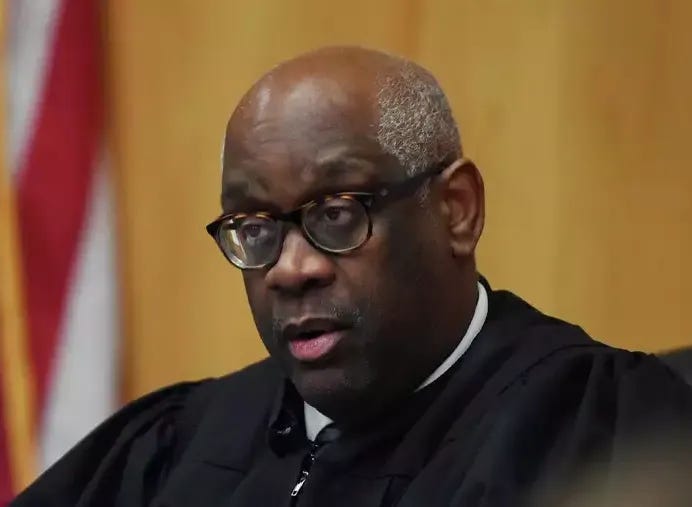
Boyne insists on mounting a full-throated First Amendment defense. He wants witnesses who can testify about the Ambrose case, the children’s abuse allegations, and the broader public controversy. He believes context is everything.
Bussert, by contrast, appears to be pursuing a narrower defense focused on statutory elements and minimizing exposure.
The clash underscores a larger tension: whether this case will be tried as a stalking prosecution — or as a referendum on journalism, dissent, and judicial accountability.
In the state’s view, this blogger-turned-defendant isn’t Woodward or Bernstein – he’s a hatemonger who put public servants in the crosshairs (literally) and now hides behind the Constitution. To others, he peddles theories no different than Tucker Carlson and his guests.
Free speech or felony? That is the burning question as the trial continues – and it has court observers lining up for a front-row seat.
Judge Adelman Under Oath: Boyne Rages at “Pedo Protection Program”
In a virtually unheard-of twist, two sitting judges – Judge Jane Grossman and Judge Gerard Adelman – are expected to march up to the witness stand to testify against the man who blogged about assassinating them. These black-robed “victims” will tell the jury how Boyne’s online diatribes terrified them.
It’s a remarkable spectacle: judges who normally preside from on high, now appearing as witnesses in another judge’s courtroom to help convict their chief critic. To Boyne, it’s proof positive that “Corrupticut” strikes back.
“They charged me because Judge Grossman doesn’t like reading about herself on the blog,” Boyne sniped.
He claims Grossman, Adelman, and other family court bigwigs targeted by his blog conspired to silence him – abusing the stalking laws to retaliate for his exposés.
Boyne’s blog honed in on a notorious Connecticut case: the Christopher Ambrose custody scandal. Ambrose, a disgraced TV writer, was credibly accused by his own children of sexual abuse. Yet judges like Adelman and Grossman handed Ambrose sole custody, effectively delivering the kids to their alleged abuser.
This outrage became fuel for Boyne’s online crusade. He explicitly accused Grossman, Adelman, Judge Moukawsher, and others of “facilitating Ambrose’s sexual abuse” and covering up for a “credibly-accused pedophile.”
Now those same judges will be witnesses for the prosecution. Talk about the fox guarding the henhouse, Boyne quips – he fully expects them to whitewash their actions on the stand.
“They will be there to lie about the Christopher Ambrose case and protect their Pedo Overlords,” Boyne seethed, referring to the powerful actors he says run a child abuse cover-up ring in Connecticut’s courts.
Pedo overlords? It’s a ghastly phrase – but in Boyne’s mind, an apt description of the cabal he’s been blogging to expose.
Judge Adelman, for one, terminated Boyne’s parental rights back in 2011 during Boyne’s own bitter divorce. Grossman later presided over pieces of the Ambrose case that Boyne calls a state-sanctioned atrocity. Their upcoming testimony is sure to be dramatic.
Prosecutors will likely elicit how the judges feared a “.50 cal to the head” after reading Boyne’s posts. The state will argue that fear was reasonable, making Boyne’s conduct a felony “electronic stalking.”
But if Boyne has his way, the defense is itching to turn the spotlight right back on the judges’ own conduct. Boyne maintains these jurists aren’t innocent victims – they’re figures in a family court mafia that he, as a citizen journalist, sought to unmask.
The optics are wild: Judges Grossman and Adelman are effectively putting a guy on trial for criticizing them. This case is no longer about rhetoric. It is about whether a journalist can criticize judges without facing felony charges.”
Judge Adelman Under Oath: A Cross-Examination Transcript
The imagined cross-examination below, in New Haven Superior Court with Judge Peter Brown presiding, captures the tense confrontation as Boyne – defending himself pro se – questions the very judge he blames for grave injustices.
Boyne is concerned that his counsel, Todd Bussert, will not ask the “hard questions” or give the jury the proper context. Boyne believes that only he can effectively cross-examine witnesses like Adelman and Grossman. But Judge Brown denied Boyne’s right to self-representation.
Here is how we imagine a Boyne cross-examination might go.
Boyne (defendant, acting pro se): [calmly] Good morning, Judge Adelman. You are a retired Connecticut family court judge, correct?
Adelman (witness): I am a Judge Trial Referee now, yes. I served as a family court judge in Connecticut.
Boyne: You presided over the Ambrose v. Riordan custody case in 2022, did you not? That’s the case where you awarded father Christopher Ambrose sole custody of his three children.
Adelman: [clearing throat] Yes. I was the trial judge on that case, and I did grant Mr. Ambrose sole legal and physical custody of the children in April 2022.
Boyne: Those children didn’t want to live with their father, did they? In fact, all three personally filed complaints in juvenile court alleging that Mr. Ambrose abused and neglected them. Isn’t that true?
Doyle (prosecutor): Objection, relevance. This is far afield of the stalking charges.
Boyne: Your Honor, it goes to my state of mind and the truth behind my statements.
Judge Brown: [to Boyne] I’ll allow limited leeway if you’re connecting it to your intent, but make your point quickly, Mr. Boyne. [to witness] You may answer the question, Judge Adelman.
Adelman: The children in that case expressed preferences, yes, and there were allegations. But the court – I – found those abuse allegations not credible, after considering all evidence and professional assessments. My decision was based on the evidence presented.
Boyne: You found the allegations “not credible” and concluded the mother, Karen Riordan, had “coached the children to lie”, correct? Those were your words in your court order.
Adelman: [frowning] In substance, yes. I wrote that Ms. Riordan’s behavior was “nothing short of horrendous” – that she was undermining the relationship with the father and possibly coaching the children. It was a very detailed 50-page decision.
Boyne: Detailed, perhaps – but blatantly one-sided. You ignored a mountain of evidence. For instance, you received letters from psychiatrists and a report from Dr. Bandy Lee – a renowned, Yale-trained psychiatrist – warning that the children were not safe with Mr. Ambrose, didn’t you?
Adelman: I recall Dr. Lee submitted a letter after the trial, but her assertions were reviewed. Other experts, including the court-appointed evaluator and child protective services, questioned those abuse claims. I had to rely on the evidence deemed credible in court.
Boyne: Dr. Lee is a former Yale psychiatrist who interviewed the children when they ran away from Ambrose’s house. She literally filed a mandated Report of Suspected Child Abuse about Mr. Ambrose. Are you saying you just brushed that off?
Doyle: Objection, argumentative.
Judge Brown: Sustained. Mr. Boyne, rephrase your question and stick to facts.
Boyne: The fact is, credible people raised alarms. The Ambrose children themselves fled and went into hiding rather than stay under his care. Yet you still decided those kids should be with their father and cut off from their mother. Isn’t it true, Judge Adelman, that you sided with an accused abuser and silenced the victims?
Adelman: [defensive] I would never “side” with an abuser. I found no credible evidence that Mr. Ambrose abused those children. The authorities – DCF, a police detective, hospital staff – all raised doubts about the abuse claims. My duty was to weigh evidence, and the evidence showed the mother had poisoned the children’s minds against their father.
Boyne: No credible evidence? The children’s own sworn statements, a Yale psychiatrist’s report, multiple therapists corroborating the mother’s fitness – all that was “not credible” to you? Tell me, Judge, what would ever convince you a father is abusive if all that didn’t?
Doyle: Objection. Badgering the witness.
Judge Brown: Sustained. The last question is struck. Mr. Boyne, move on, or I will end this cross-examination.
Boyne: [taking a breath] Fine. Let’s talk about what happened after your ruling. Are you aware that your handling of the Ambrose case has been widely criticized? The press reported that the children ran away from their father and claimed “they did not feel safe in his care.”
Adelman: I became aware after my decision that the Ambrose teenagers later left their father’s home. I can’t speak to what happened after the case or to media reports – I can only speak to what was before me in court.
Boyne: You’re aware, though, that numerous observers believe you got it horribly wrong. There’s a website – The Family Court Circus – that covered the Ambrose case extensively. That blog accused you and your fellow judges of running a “Pedophile Protection Program” in Connecticut’s family courts. In fact, one article said the judiciary was “protecting predators like Christopher Ambrose” and looking the other way when kids like the Ambrose children cry out in pain. You know that, right?
Adelman: I’m vaguely aware of that disgusting blog. It’s full of lies and anti-Semitic filth. I didn’t read all its content, but I know it slandered me and many others.
Doyle: Objection, move to strike. This line of questioning – reading blog gossip – is irrelevant and prejudicial. Mr. Boyne is essentially trying to put TheFamilyCourtCircus.com blog into evidence to justify his own conduct.
Boyne: It’s not “gossip,” Your Honor – I wrote those posts. They reflect my belief that Judge Adelman and others shield abusers. This goes to my intent and First Amendment defense.
Judge Brown: Mr. Boyne, the truthfulness of your blog accusations is not on trial here. The issue is whether your statements constitute criminal stalking or harassment. I’ve given you leeway to establish your motive. Do not turn this into a referendum on the family court. Objection sustained; move on.
Boyne: [raises voice] It IS a referendum on family court when a man is prosecuted for speaking out! I’m facing 18 felonies for words – words exposing how children were put in harm’s way.
Judge Brown: Tone, Mr. Boyne. The jury is only to consider whether your conduct was illegal, not whether Judge Adelman was a good judge.
Boyne: Understood. [pauses, then evenly] Judge Adelman, let’s shift gears. You and I have a bit of personal history, don’t we?
Adelman: [stiffly] I have handled thousands of cases. I’m not sure what you’re referring to.
Boyne: You don’t remember me? Paul Boyne – ring a bell? You were the judge in my own divorce case back in 2007. The Boyne v. Boyne case in Hartford Family Court. You terminated my parental rights in that case.
Adelman: Mr. Boyne, I remember your case. I wouldn’t characterize it as you just did. I granted your ex-wife sole custody and gave you visitation, yes. Decisions were made based on the evidence and circumstances at that time.
Boyne: Visitation at her sole discretion – which meant no visitation at all. You knew she was going to cut me out, and she did. You effectively severed my relationship with my children. I haven’t seen my kids in almost two decades thanks to your ruling. Do you deny that?
Doyle: Objection. This is a personal tirade and completely irrelevant to the charges.
Judge Brown: Sustained. Mr. Boyne, this is not a family court appeal. The jury will disregard that. Move on.
Boyne: It goes to bias, Your Honor. Judge Adelman had a motive to dislike me well before my blog. He knew I had reason to expose him.
Judge Brown: The court has ruled. Move on now, or this cross-examination ends.
Boyne: [glances at the jury] Very well. Judge Adelman, earlier, you called my blog “disgusting.” In fact, you sought a criminal investigation into it, didn’t you? You wanted the state to come after me for what I wrote about you.
Adelman: I reported the harassment to authorities, yes. I was aware that the Division of Criminal Justice and State Police were investigating the website that was targeting judges. Frankly, I was relieved when they acted.
Boyne: Relieved to see me arrested for speech. Let’s be clear: I never once contacted you directly, did I? I never phoned you, never emailed you, never approached you in person. All I did was publish articles online.
Adelman: You posted my photograph, my home address, and detailed directions to my house. You incited people to violence against my colleagues and me. I absolutely felt threatened.
Boyne: Threatened — by blog posts? By words on a screen?
Adelman: By explicit calls to action. In one of your posts, you described how someone could shoot Judge Grossman through her window with a rifle. You dubbed her “Judge Grotesque” and wrote she was “begging for a .308 shot to the head.” You also wrote that “Jewish judges” – like me – should be removed from the court via the Second Amendment.” Those are threats, not just opinions.
Boyne: Those lines were rhetorical hyperbole, taken out of context. I was illustrating the public’s outrage, not literally planning violence. Did you actually believe I was personally going to harm you?
Adelman: I believed, and still do, that you or someone influenced by your writings might. When a blogger posts a judge’s home layout and muses about bullets and ‘pedophiles who run family court, any reasonable person would be afraid. We have to take that seriously.
Doyle: [jumping in] Objection, the witness has answered. The bottom line is that Mr. Boyne’s blog went well beyond criticism. He explicitly incited violence – “more justice can be dispensed in one bullet than by all of Family Court,” he wrote. That is not protected speech by any stretch.
Judge Brown: [firmly] The objection is sustained. The jury will disregard the prosecutor’s commentary. Mr. Doyle, please confine your objections to legal grounds, not speeches. [Doyle nods]
Boyne: [voice shaking with anger] Judge Adelman, isn’t it true that what really bothers you is not that I threatened you – since I did not, in fact, directly threaten anyone – but that I exposed your dirty secrets? You don’t like that I told the world how you enable pedophiles, do you?
Adelman: I’m here because you terrorized my family. You posted vile lies and encouraged vigilantes. This isn’t about my feelings; it’s about your conduct. You crossed a line, Mr. Boyne.
Doyle: Objection, irrelevant narrative.
Judge Brown: Sustained. Mr. Boyne, do not argue with the witness. Ask a question.
Boyne: Everything I’ve said is true. That’s my question, Judge – what if it’s true? What if you did ignore credible evidence of child abuse, and I spoke out about it? Should I be imprisoned for that?
Judge Brown: That’s enough! The jury will disregard that question. Mr. Boyne, you are skating very close to a contempt citation. This is not a debate.
[Boyne glares at Judge Brown, then turns back to the witness]
Boyne: Judge Adelman, after all that’s transpired – after you took my children, after you gave Mr. Ambrose’s children to an alleged abuser – do you stand by your actions? Yes or no, would you do it all again?
Doyle: Objection! Harassment of the witness.
Judge Brown: Sustained. Mr. Boyne, you will not harangue the witness. The court is going to take a recess.
Boyne: No further questions… for now. [He says the last words quietly, as Judge Brown calls for the jury to be escorted out]
Judge Brown: Ladies and gentlemen, we’ll pause here. The court will resume in 15 minutes. [Sound of gavel]
Court watchdogs from across New England are flocking to see this upside-down trial, where gavel-wielders become accusers.
Will Grossman and Adelman own up to the Ambrose debacle under oath? Don’t hold your breath, Boyne says – they’re more likely to circle the wagons.
“They want me silenced,” he warns, and this trial is their last big chance.

***CONNECTICUT ADMITS TO BREAKING THE LAW***
Sec. 52-434. State referees. (a) Appointment of retired judges and members of the bar. “shall be a state referee for the remainder of such judge's term of office as a judge and shall be eligible for appointment as a state referee during the remainder of such judge's life in the manner prescribed by law for the appointment of a judge of the court of which such judge is a member.”
================================================================
Excerpts From:
February 13, 2007 Report: 2007-R-0104
STATE REFEREES, JUDGE TRIAL REFEREES, AND SENIOR JUDGES
By: George Coppolo, Chief Attorney
PLEASE NOTE: Report was updated/edited in OLR Report 2018-R-0116. It is obvious from inspection that was done to conceal the violations of Law.
CONSTITUTION
The state constitution has three principal sections that deal with the appointment and the authority of judges and state referees.
Article fifth, § 1 provides: “The judicial power of the state shall be vested in a supreme court, an appellate court, a superior court, and such lower courts as the general assembly shall, from time to time, ordain and establish. The powers and jurisdiction of these courts shall be defined by law.”
Article fifth, § 2 provides: “Judges of all courts, except those courts to which judges are elected, shall be nominated by the governor exclusively from candidates submitted by the judicial selection commission. The commission shall seek and recommend qualified candidates in such numbers as shall by law be prescribed. Judges so nominated shall be appointed by the
general assembly in such manner as shall by law be prescribed. They shall hold their offices for the term of eight years, but may be removed by impeachment. The governor shall also remove them on the address of two-thirds of each house of the general assembly and the Supreme Court may also remove them as is provided by law.”
Article fifth, § 6 provides: “No judge or justice of the peace shall be eligible to hold his office after he shall arrive at the age of seventy years, except that a chief justice or judge of the supreme court, a judge of the superior court, or a judge of the court of common pleas, who has attained the age of seventy years and has become a state referee may exercise, as shall be prescribed bylaw, the powers of the superior court or court of common pleas on matters referred to him as a state referee.”
JUDICIAL SELECTION COMMISSION
(STATE REFEREE: reappointment process must be in the “manner prescribed by law for the appointment of a judge to the court of which he is a member.”)
Reflecting the constitutional mandate in Article fifth, § 2, the statutes require that judges of all courts, except those courts to which judges are elected, be nominated by the Governor exclusively from the list of candidates or incumbent judges submitted by the JSC (CGS § 51-44a(h)).
The law also requires the JSC to evaluate “incumbent judges who seek reappointment to the same court” and forward to the governor for consideration the names of incumbent judges who it recommends for reappointment (CGS § 51-44a(e)).
The law requires the commission to adopt regulations concerning criteria by which to evaluate incumbent judges who seek reappointment to the same court. In evaluating the reappointment of an incumbent judge, the law requires the commission to consider the incumbent judge’s legal ability, competence, integrity, character, and temperament and any other relevant information concerning the judge. The law establishes a presumption that each incumbent judge who seeks reappointment to the same court qualifies for retention in judicial office. The burden of rebutting this presumption is on the commission.
The law requires the commission to investigate and interview each incumbent judge who seeks reappointment and, before the expiration of their term of office, must recommend such incumbent judge for nomination for reappointment by the Governor to the same court unless it denies the recommendation.
If a preliminary examination indicates further inquiry is necessary before a recommendation of reappointment may be made, the commission must hold a hearing concerning the reappointment. It must notify the judge by certified or registered mail, return receipt requested, at least 180 days before the convening of the legislative session that is to consider his reappointment that it will hold a hearing on his reappointment, and of the time, date, and place of such hearing, which must be between 30 and 45 days after the date of such notice. The notice must also advise the judge of specific claims made against him.
The commission must make a record of all hearings it conducts. The hearing may be open to the public at the judge’s request. At least 10 commission members must be present and voting. A judge appearing at the hearing is entitled to counsel, to present evidence, and to cross-examine witnesses who appear voluntarily. No judge may be required to sign or execute any release in order to proceed with the hearing. The commission must render its decision not later than 20 days after the close of such hearing. An affirmative vote of a majority plus one of the members present and voting is required to deny recommendation to the governor for nomination of an incumbent judge to the same court.
A judge who has not received approval by the commission may within 10 days after receipt of the notice of decision, which must include a record of the numerical vote, request a rehearing on the grounds that the commission’s conclusions are contrary to the evidence presented at the hearing or the commission failed to comply with the procedural or substantive requirements of law. The commission’s decision is final. There is no right of appeal by any judge appearing before the commission.
Except for reappointments to the same court, the commission must seek qualified candidates for consideration by the governor for nomination as judges for the Superior Court, Appellate Court and Supreme Court (CGS §51-44a(f)). The commission must adopt regulations concerning criteria by which to evaluate the qualifications of candidates, including incumbent judges who seek appointment to a different court. The commission must investigate and interview the candidates, including incumbent judges seeking appointment to a different court. The commission must compile a list of qualified candidates.
In connection with any inquiry concerning the reappointment of an incumbent judge, the commission has the power to issue subpoenas requiring the attendance of witnesses and the production of any books or papers, which the commission determines are relevant to its inquiry (CGS51-44a(g)). The commission may, upon request of the judge whose reappointment is at issue, issue a subpoena on behalf of such judge.
When considering the nomination of an incumbent judge for reappointment to the same court, the governor may nominate the incumbent judge if the commission did not deny recommendation for reappointment. Whenever an incumbent judge is denied recommendation for reappointment to the same court by the commission or is recommended by the commission but not nominated by the governor for reappointment to the same court, or whenever a vacancy in a judicial position occurs or is anticipated, the governor must choose a nominee from the list of candidates the commission compiled.
The law requires an affirmative vote of a majority plus one of the members present and voting to deny recommendation to the governor for nomination of an incumbent judge to the same court. No vote of the commission on a new nominee may be by secret ballot. The vote of the commission on an incumbent judge may be by secret ballot.
STATE REFEREES
Appointment and Reappointment of State Referees
As noted above, Article fifth, § 6 of our state constitution establishes a mandatory retirement age of 70 for judges. But our constitution specifies a judge who has attained the age of 70 and has become a state referee may exercise, as prescribed by law, the powers of the Superior Court on matters referred to him as a state referee.
The constitution does not require that judges who reach the mandatory retirement age of 70 automatically become referees. Rather it refers to those judges who “become a state referee.” Thus, it appears that the constitution defers to the legislature as to whether and how some or all such judges become state referees.
Under state statue, each judge of the Supreme Court, Appellate Court, or Superior Court who ceases to hold office because of retirement, and who is an elector and a state resident automatically becomes a state referee for the remainder of his term of office as a judge. He is eligible for re-appointment as a state referee during the remainder of his life in the manner prescribed by law for the appointment of a judge of the court of which he is a member (CGS§ 52-434). Thus, it is state statute that automatically makes judges who reach age 70 referees for the remainder of their term, authorizes their reappointment, and specifies that the reappointment process must be in the “manner prescribed by law for the appointment of a judge to the court of which he is a member.”
Since judges seeking reappointment must go before and be approved by the JSC, this quoted language can be read as requiring that referees also go before and be approved by the JSC in order to be nominated by the governor and confirmed by the legislature. But as noted before as a matter of practice either the JSC nor the Judicial Brach has interpreted the law this way and thus the JSC is not involved in the reappointment of state referees.
FROM THE DESK OF Andrew Hamilton Pritchard, American and Beneficiary in Equity-Executor
JUNE 12, 2024
PUBLIC NOTICE
CGS 54-170 ARREST WITHOUT WARRANT
CONNECTICUT: LOSS OF AUTHORITY FOR ALL JUDGES, STATE REFEREES, JUDGE TRIAL REFEREES, AND GOVERNMENT OFFICIALS REQUIRING OATH OF OFFICE.
“RACKETEERING”, “ENEMY”, “DOMESTIC TERRORISM”, “BIOLOGICAL WEAPONS”, “GENOCIDE” AND “TREASON” AS DEFINED BY LAW.
THE CONNECTICUT GOVERNMENT IS “AT WAR WITH THE U.S. CONSTITUTION”
The Constitution is harmed by subverting its authority as the foundational law of the land. A domestic enemy is any American who either promotes foreign invasion or attacks the Bill of Rights. The former assaults national stability. The latter assaults individual freedoms.
1982 Connecticut’s Legislative, Executive and Judicial Branch committed “War against the Constitution” (Treason) as an “Enemy” by eliminating the use of a GRAND JURY made up of the people, an inalienable right.
"THE TROJAN HORSE" was a new creation called an INVESTIGATORY GRAND JURY defined by statute as a judge, constitutional state referee, or three-judge panel appointed “to conduct an investigation into the commission of a crime or crimes” (see CGS § 54-47b).
All Judges, State Referees, and Judge Trial Referees willfully violate the law. There is NO DUE PROCESS in Connecticut Courts. The Complicit Judges willfully use and work with Complicit State Referees and Complicit Judge Trial Referees to put forward a FICTION CASES WITHOUT AUTHORITY.
The Complicit Judges’ Misprision of Felony willfully disregarding that State Referees and Judge Trial Referees violate the requirements of CGS 51-44a [Judicial Selection Commission. Members. Duties. Nomination of judges by Governor] enable “Racketeering” and the “Weaponization” of the Judicial Branch. (see CGS § 52-434 & CGS 51-44a).
This fictional authority exerted by Complicit Judges and other Complicit Participants gives the “ENEMY” absolute power.
For Example: Nemo Judex in Causa Sua ("no one is judge in their own case") an axiom of Common Law and common sense is willfully disregarded by the Complicit Judges and Complicit Participants. Just read the following unconstitutional Connecticut General Statutes empowering the “ENEMY”.
Sec. 51-183d. (Formerly Sec. 51-42). Disqualified judge; proceedings not void. If a judge acts in any legal proceeding in which he is disqualified, the proceeding shall not by reason thereof be void, but such action shall constitute an irregularity of which advantage may be taken by appeal or, where no appeal lies, by proceedings in error.
AND HERE IS WHAT OUR U.S. SUPREME COURT SAYS ABOUT THAT:
30A Am Jur Judgments '' 44, 45. A void judgment is not entitled to the respect accorded a valid adjudication, but may be entirely disregarded, or declared inoperative by any tribunal in which effect is sought to be given to it. It is attended by none of the consequences of a valid adjudication. It has no legal or binding force or efficacy for any purpose or at any place. ... It is not entitled to enforcement ... All proceedings founded on the void judgment are themselves regarded as invalid.
Ableman v. Booth, 21 Howard 506 (1859) "No judicial process, whatever form it may assume, can have any lawful authority outside of the limits of the jurisdiction of the court or judge by whom it is issued; and an attempt to enforce it beyond these boundaries is nothing less than lawless violence."
Fifth Amendment
No person shall be held to answer for a capital, or otherwise infamous crime, unless on a presentment or indictment of a Grand Jury, except in cases arising in the land or naval forces, or in the Militia, when in actual service in time of War or public danger; nor shall any person be subject for the same offence to be twice put in jeopardy of life or limb; nor shall be compelled in any criminal case to be a witness against himself, nor be deprived of life, liberty, or property, without due process of law; nor shall private property be taken for public use, without just compensation.
“Inalienable Rights”
The U.S. Constitution recognized that certain universal rights cannot be taken away by legislation, as they are beyond the control of a government, being naturally given to every individual at birth, and that these rights are retained throughout life.
Supreme Court Case Law:
U.S. v. Minker, 350 U.S. 179, 187,
The Supreme Court has warned: "Because of what appear to be Lawful commands on the surface, many citizens, because of their respect for what appears to be law, are cunningly coerced into waiving their rights, due to ignorance."
Cooper v. Aaron, 358 U.S. 1, 78 S. Ct. 1401 (1958)
Note: Any judge who does not comply with his oath to the Constitution of the United States wars against that Constitution and engages in acts in violation of the supreme law of the land. The judge is engaged in acts of treason. The U.S. Supreme Court has stated that "no state legislator or executive or judicial officer can war against the Constitution without violating his undertaking to support it". See also In Re Sawyer, 124 U.S. 200 (188); U.S. v. Will, 449 U.S. 200, 216, 101 S. Ct. 471, 66 L. Ed. 2d 392, 406 (1980); Cohens v. Virginia, 19 U.S. (6 Wheat) 264, 404, 5 L. Ed 257 (1821).
Unlimited Power to Connecticut Judges in 1982
CONNECTICUT GRAND JURY LAW Grand Jury Indictment Requirement Repealed: When Connecticut repealed the requirement of a grand jury indictment before a person can be tried for any crime punishable by death or life imprisonment, it substituted a probable cause hearing requirement.
It retained the investigatory grand jury, defined by statute as a judge, constitutional state referee, or three-judge panel appointed “to conduct an investigation into the commission of a crime or crimes” (see CGS § 54-47b).
This Act of “War against the Constitution” gave unlimited rogue power to the Judicial Branch of Connecticut. No longer was there a check on Judicial Power by “We the People”.
The people Justice Antonin Scalia's majority opinion in United States v. Williams, 1992 has been relied on to refer to grand juries as a fourth branch of government.
In that opinion, Scalia wrote: [T]he grand jury is mentioned in the Bill of Rights, but not in the body of the Constitution. It has not been textually assigned, therefore, to any of the branches described in the first three Articles. It 'is a constitutional fixture in its own right' [case cites]. In fact the whole theory of its function is that it belongs to no branch of the institutional government, serving as a kind of buffer or referee between the Government and the people.[10]
CONNECTICUT’S GOVERNMENT IS AT “WAR WITH THE CONSTITUTION” AND HAS “NO AUTHORITY”.
As a Trojan horse, Connecticut is one of the leaders on the fraudulent construct of Foreclosure Racketeering/property theft, attacking 1st Amendment "Alex Jones" and attacking 2nd Amendment "Sandy Hook/Remington Arms".
This is not a political statement.
It is the obvious and grotesque violations of the rights of the U.S. Constitution, “The Supreme Law of the Land”, with all the authority defined by The Judiciary Act of 1789 during the first session of the First United States Congress [Article III, Section 1 of the Constitution prescribed that the "judicial power of the United States, shall be vested in one Supreme Court, and such inferior Courts"] developed and demonstrated by weaponized fictional adjudication.
The Covid 19 “Domestic Terrorism” lock down executed by the Connecticut Government did irreparable harm to the 3,625,000 approx. people that live here. Churches, Courts, and other necessary facilities were immediately closed, and all were ordered to put on your mask.
The “ENEMY” Connecticut Courts went as far as executing “Remote Hearings” without any Jurisdiction to do so. It made it much easier for the “ENEMY” to “SEIZE” and/or hit their target or objective.
The “ENEMY” Connecticut Government with its “SEIZED” power can control the State of Connecticut to execute “DOMESTIC TERRORISM” through uncontested fear.
The “ENEMY” Connecticut Government ordered State Employees, Health Workers and others to take a “BIOLGICAL WEAPON” fraudulently represented as a COVID 19 VACCINATION.
Please note: the 9th Circuit Court of Appeals Acknowledges Plaintiffs' Claim that COVID-19 mRNA Jab is NOT a Vaccine, But a Therapeutic, Opinion filed June 7, 2024.
Please note: Dr. Francis A. Boyle the Biological Weapons Anti-Terrorism Act: Author Of 1989 Law has stated COVID IS A BIOWEAPON and meets the legal definition of “GENOCIDE” as reflected in his May 27, 2024, AFFIDAVIT