


NOTE: This piece first appeared on FLGulfNews.com.


By Dick LaFontaine with Richard Luthmann
Lawmakers Could Eye “Sharia” Oath
A fiery debate is erupting over a proposal affecting Muslim public officials under state law. Can legislators introduce a bill to require Muslim office-holders to explicitly declare that the U.S. Constitution and the State Constitution come before any obligations to Islam?
Supporters of the measure tout it as a safeguard against “Sharia law” influence. Critics condemn it as a thinly veiled religious test – an unconstitutional loyalty oath singling out one faith.
Legal experts note the U.S. Constitution itself bars any “Religious Test” for public office. For over two centuries, no American has been legally required to renounce or prioritize elements of their religion to serve in government. But then again, the right to an abortion in America was, for a time, considered a “fundamental” constitutional right. Until it wasn’t.
The proposal’s opponents say it tramples a fundamental constitutional principle that is still on the books – for now.
“This is a direct attempt to subject Muslims to an extra hurdle of allegiance,” charge civil liberties advocates.
They argue the measure effectively casts doubt on Muslim Americans’ patriotism and would not survive a court challenge. The Supreme Court has held that “neither a State nor the Federal Government can…force a person to profess a belief or disbelief in any religion.” Requiring Muslim officials to disavow any tenet of Islam as a condition of office could amount to exactly that, critics warn.
Why take such drastic action? Because many believe it is necessary to protect the fabric of America.
American Muslim Oath Law: A Calculated Plan?
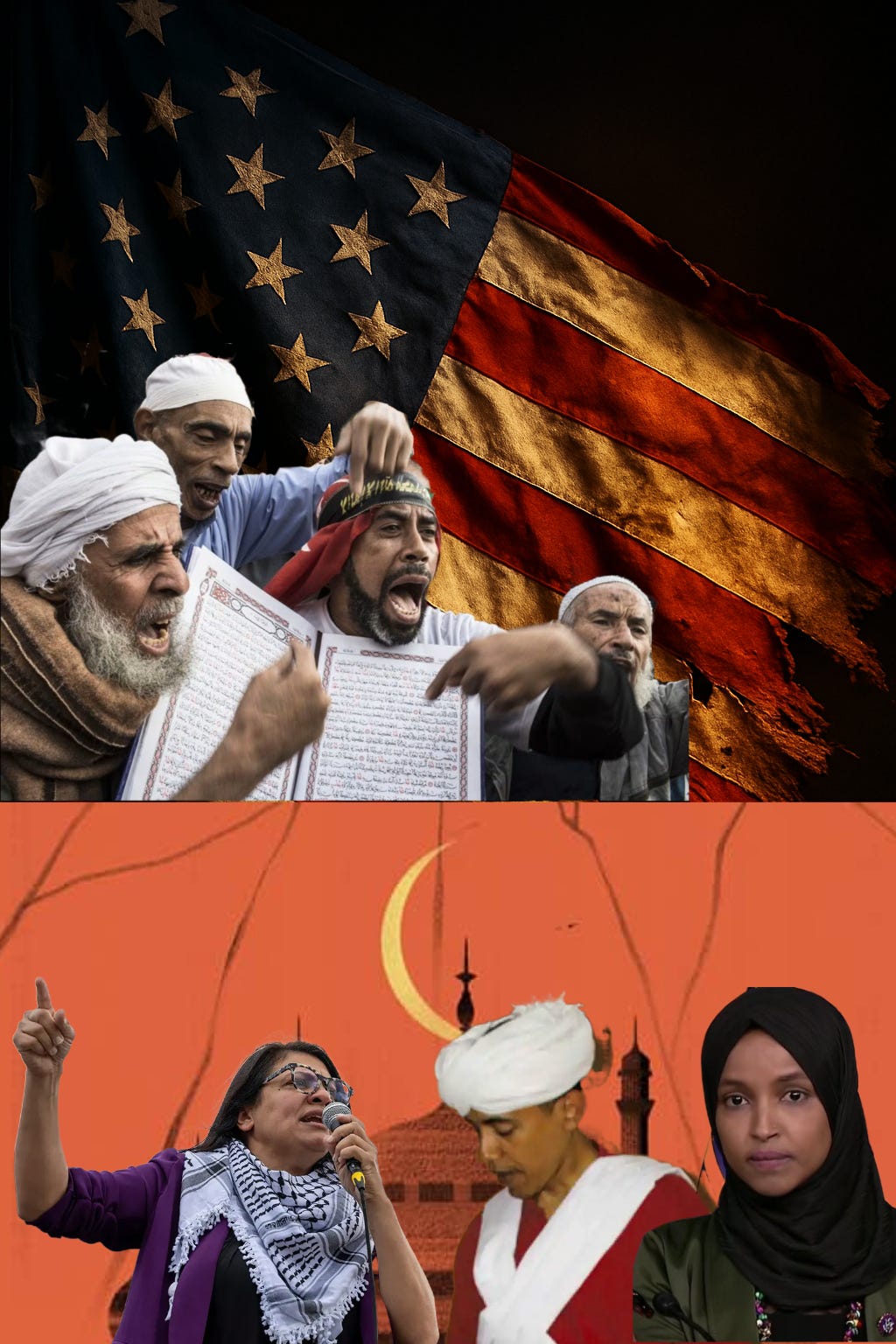
Rep. Rashida Tlaib’s speeches at last month’s People’s Conference for Palestine have drawn sharp criticism for using intense, provocative language. She called U.S. “genocide enablers,” said “they thought they could kill us, rape us, imprison us … starve our children to death, and we would disappear.”
She then declared, “Well, guess what? Now we’re in Congress, and we’re in every corner of the United States.” She also referred to the U.S. political structure as built on “slavery, genocide, rape, and oppression.”
Her language does more than criticize policy. It frames America itself as morally monstrous and equips it with absolute blame.
Critics say this is all part of a calculated plan.
In 1991, the leaders of the Muslim Brotherhood penned what they called an Explanatory Memorandum—a master plan for America. Federal agents discovered it in the home of Brotherhood operative Ismael Elbarasse during a 2004 raid, and it was introduced as evidence in the 2008 Holy Land Foundation terror financing trial.
The language is chilling.
The memo defines “settlement” in the United States as a “Civilization-Jihadist Process” designed to “eliminate and destroy the Western civilization from within.”
“The process of settlement is a ‘Civilization-Jihadist Process’ with all the word means. The Ikhwan [Brotherhood] must understand that their work in America is a kind of grand jihad in eliminating and destroying the Western civilization from within and “sabotaging” its miserable house by their hands and the hands of the believers so that it is eliminated and God’s religion is made victorious over all other religions.”
It goes further. The Brotherhood orders its cadre to seize “the keys” of influence, practice “the art of coalitions” and “absorption,” and present Islam as a “civilization alternative” to the West. This is not just religious preaching—it is a blueprint for infiltration.
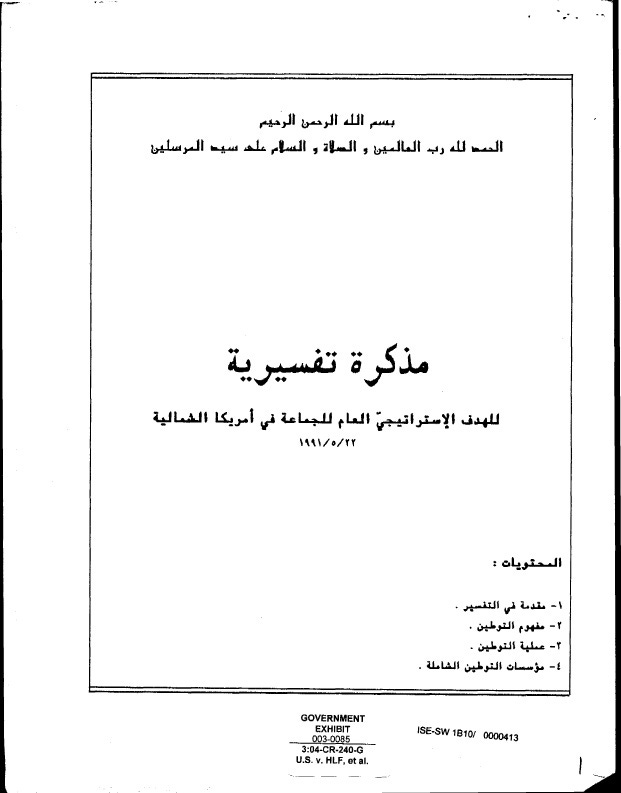
The memorandum even listed “our organizations and the organizations of our friends.” That roster included CAIR, ISNA, and ICNA—groups that have since become fixtures in American civic life.
Supporters of a Constitution-first loyalty pledge point to this document as Exhibit A. They argue it proves that Islamist movements openly contemplate using America’s freedoms to undermine America itself. When Anti-Federalists fretted in 1788 that “Mahometans” might one day worm into office, critics laughed. But the Brotherhood’s own words—“eliminating and destroying Western civilization from within”—sound like those warnings made flesh.
For many, the Explanatory Memorandum is a flashing red light: divided loyalty is not a hypothetical. It’s written down, in the enemy’s own hand.
The oath proposal is a direct response to the growing threat and has thus set the stage for a constitutional clash. Lawmakers face a barrage of pointed questions: Can the state demand a faith-specific oath without running afoul of America’s bedrock separation of church and state? And is this measure about national security – or religious bigotry?
The battle lines are drawn, and some legal experts caution that this “Muslim Oath” idea may collide with fundamental law on Day One in court.
American Muslim Oath Law: The Founders Contemplated No Religious Test – For Christians and Jews
The controversy harks back to America’s earliest debates. The Founding Fathers pointedly rejected religious litmus tests for office, mindful of the Bloody history of the English Civil War and other persecutions, such as the Spanish Inquisition.
The U.S. Constitution, ratified in 1788, explicitly provides that “no religious Test shall ever be required as a Qualification to any Office or public Trust.” This was a revolutionary departure from the norms of the time.
When the Constitution was up for approval, some critics in North Carolina fretted that this ban on tests was “dangerous and impolitic.” They “suppose that if there be no religious test required, pagans, deists, and Mahometans might obtain offices among us.”
In other words, 18th-century skeptics warned that without a suspect religious allegiance requirement, even a Muslim (then often called a “Mahometan”) could one day hold power. The thought that a person outside of the Judeo-Christian tradition could hold public office was inconceivable from an originalist perspective.
One North Carolina delegate, Henry Abbot, voiced alarm that without a test, “the senators and representatives might all be pagans” and wondered by what sacred oath such persons would swear.
Leading Federalists like James Iredell – later a Supreme Court Justice – replied that liberty of conscience was paramount.
“How is it possible to exclude any set of men, without taking away that principle of religious freedom which we ourselves so warmly contend for?” Iredell asked pointedly. He argued that any exception opens “the door to persecution.”
However, the historical record shows that these arguments addressed the Protestant-Catholic divide. There were no “Mahometan” stakeholders to speak of when the American Constitution was originally forged.
The historical record is clear. North Carolina’s own 1776 Constitution barred anyone “who shall deny the being of God or the truth of the Protestant religion” from civil office. Such clauses aimed to keep out atheists, Catholics, or others deemed “dangerous” at the time.
The new federal constitution, however, set a higher bar of inclusivity. America, Iredell insisted, must not pick and choose which of the Christian faiths are “acceptable” for public trust. In his view, religious tests belonged to the Old World’s torments (referring directly to the Spanish Inquisition, the English Civil War, and the more recent Jacobite Rebellion), not the new republic’s ideals.
Jews were specifically recognized as an established religious minority. By the time of the Constitutional framing in 1787–1789, there were established Jewish communities in America, though relatively small compared to Christian populations. Newport, Rhode Island, was home to the Touro Synagogue, built in 1763, and is the oldest standing synagogue in the United States, with a community actively engaged in trade and civic life.
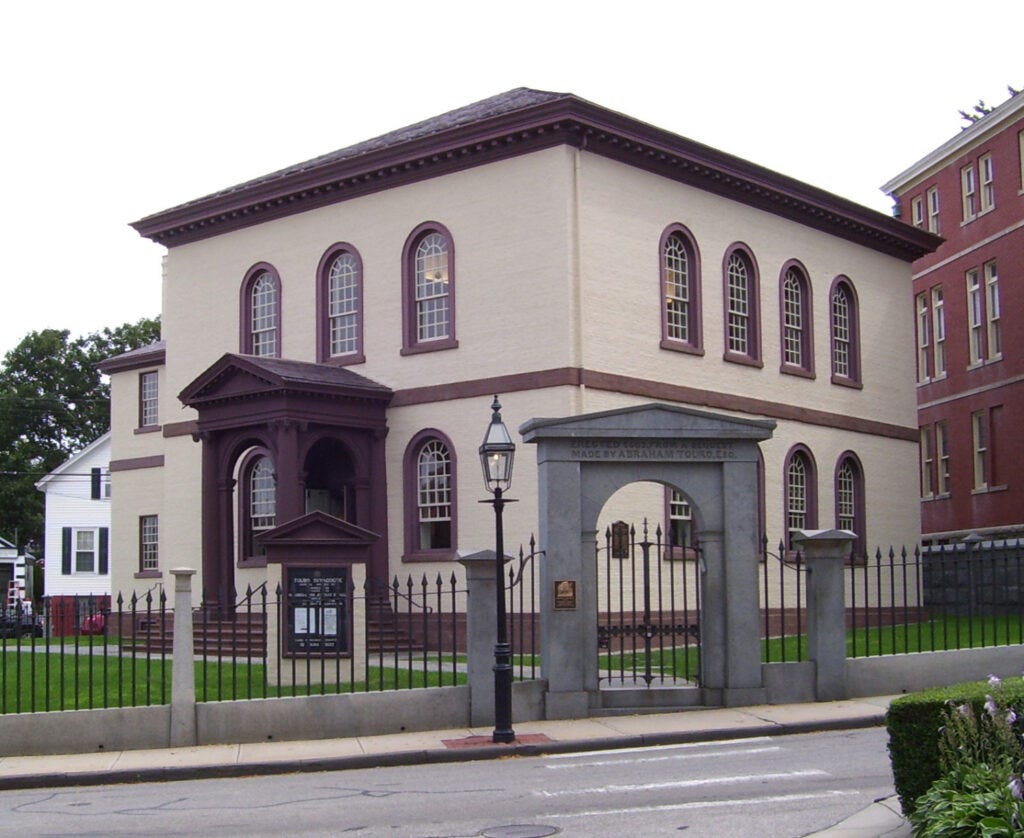
New York City’s Congregation Shearith Israel, founded in 1654 by Sephardic Jews fleeing persecution in Brazil, was firmly established by the 18th century. Philadelphia’s Mikveh Israel Synagogue, founded in the 1740s, became a leading Jewish congregation during the Revolutionary era. Charleston, South Carolina, had the largest Jewish community in the United States by the late 18th century, influential in commerce and politics.
Jews participated in colonial and Revolutionary life, serving in the military and contributing to financing the war, most notably Haym Salomon. Their visible presence and loyalty made it natural that the Framers’ promise of no religious test extended at least to them.
When Anti-Federalists warned that “Mahometans” or “pagans” might hold office, Federalists countered by pointing to Jews as a minority already woven into American society. The “no religious test” clause was thus understood to protect Christians of every denomination and Jews, who had proven communities and loyalty.
The Founders thus chose to trust the people’s judgment at the ballot box. And a proposed Muslim-focused oath passed by the elected representatives of a state would be an extension of that trust.
That bold stance is now being tested anew by the proposed Muslim-focused oath.
American Muslim Oath Law: Faith Tests and the High Court
The Supreme Court has previously stated that the government cannot make belief in any religion or renunciation of it a condition for a job. In 1961, the high court struck down Maryland’s requirement that public officeholders declare a belief in God.
In that landmark case, Torcaso v. Watkins, a notary public named Roy Torcaso was denied his commission for refusing to affirm faith in a deity. The Supreme Court unanimously voided Maryland’s religious test as a violation of the First Amendment’s freedom of belief.
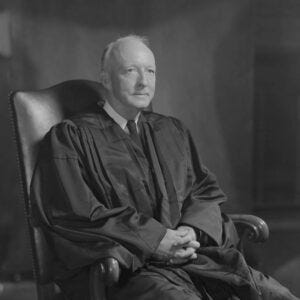
Justice Hugo Black’s opinion recalled that many early colonists fled Europe to escape test oaths, only to see new ones imposed in America. Black’s opinion lauded the “wise and farseeing” statesmen who ensured “no religious Test” made it into the U.S. Constitution. The opinion states “neither a State nor the Federal Government can constitutionally force a person ‘to profess a belief or disbelief in any religion.’”
But did Justice Black’s decision tell the whole story? Torcaso invoked the idea that many colonists fled Europe to escape religious tests. But the history is far narrower than the Court’s sweeping rhetoric suggests. The actual groups who fled test oaths and religious disabilities in England were Catholics and Jews, sometimes Protestant dissenters like Quakers. These were sects already situated within the Judeo-Christian world.
There is little evidence that anyone in 17th or 18th-century America contemplated extending civic protection or office-holding eligibility to “Mahometans,” atheists, or pagans. Article VI’s ban on religious tests was crafted in 1787 to prevent domination by one Christian sect over another and to assure Jews of equal treatment. The ratification debates confirm this.
The American Republic was designed as a nation under God. “In God We Trust” is the official national motto of the United States under 36 U.S.C. § 302, and federal law also requires the phrase to appear on U.S. coins and currency under 31 U.S.C. §§ 5112 and 5114. This principle, woven through colonial compacts, state constitutions, and ultimately expressed in our national motto, reflects a presumption of theism rooted in the Judeo-Christian tradition.
The Founders did not imagine an office-holder who denied God outright, nor one whose religious law demanded supremacy over the Constitution. The oath clause of Article VI requires affirmation of loyalty to the Constitution. For Christians and Jews, that oath sits comfortably within their theology. For atheists and Muslims, there is a built-in conflict: atheists deny the very God invoked by the oath, while devout Muslims may place Sharia or Qur’anic injunctions above civil law.
For many, it was and is a matter of loyalty to the republic.
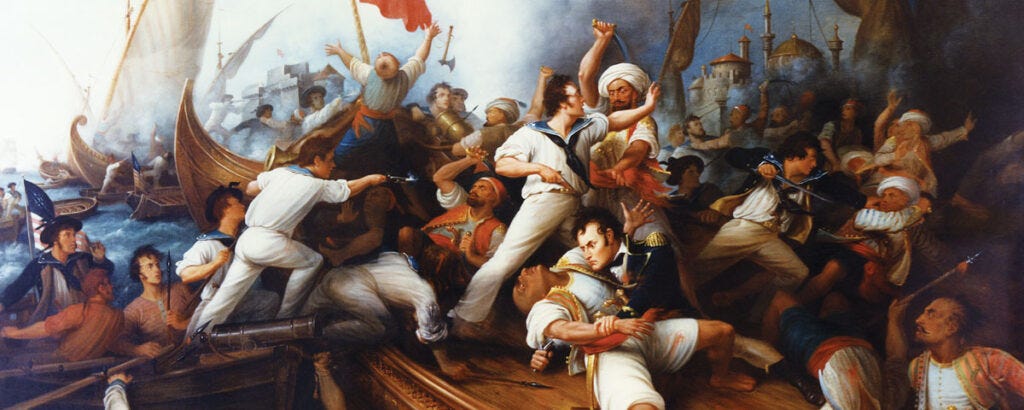
Article IV, Section 4 of the U.S. Constitution, the Guarantee Clause, provides that “The United States shall guarantee to every State in this Union a Republican Form of Government.” This provision not only obligates the federal government to preserve republican institutions, but also reflects a further duty on the people themselves to secure and maintain that form of government. It affirms that public office and political power must be exercised in fidelity to the constitutional framework, ensuring that loyalty to republican governance remains paramount.
Part of the Guarantee Clause is the right to know that an office-holder (or any oath-taker for that matter) has no divided loyalty. When religion introduces an inherent conflict of interest—whether through allegiance to a foreign pontiff, to Sharia, or to no deity at all—the people may require an open clarification of allegiance. This is not an impermissible “religious test” in the sense of forcing belief or disbelief. It is a compatibility check. It ensures that the public trust is not placed in the hands already bound to another sovereign, whether political or theological.
The Court in Torcaso glossed over this history. The colonists fled sectarian oppression within the Christian-Jewish frame, not to enshrine atheism or to validate a foreign “Mahometan” theocratic system. The Framers’ compact was for “one Nation under God,” grounded in the Judeo-Christian ethic.
Thus, the people retain the right to demand assurance that any candidate—particularly one whose faith or disbelief may override the Constitution—affirms without qualification that the Constitution comes first. Anything less compromises the office, the oath, and the Republic itself.
Unprecedented Considerations
A state statute demanding Muslim public officials repudiate parts of Islam inconsistent with their oath of office would entangle the state with religion in an unprecedented way and, as of yet, unconsidered way. The original framers could never have conceived a “Mahometan” member of Congress or a Muslim holder of an office of public trust.
Even before Torcaso, the Court in 1946 dicta observed that a man’s “religious scruples would not disqualify him” from Congress under Article VI. And in 1994’s Bd. of Educ. v. Grumet, Justices again stressed that government may not institute religious qualifications for public life.
“Modern Establishment Clause jurisprudence generally forbids laws that favor or handicap any faith,” said legal journalist Richard Luthmann. “Religious favoritism flunks constitutional muster in the modern formulation. But a strong argument can be made that this broad definition of religious faith was never the original intent.”
Luthmann says legal interpretation by an originalist-led Supreme Court may yield a different result.
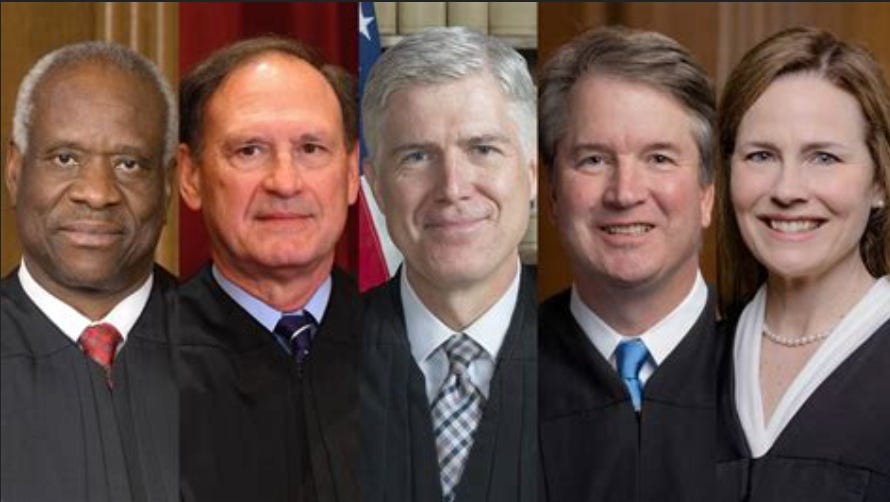
“After Dobbs, it’s not hard to see a 5-4 decision overruling the modern precedent on religious tests never part of the original constitutional compact,” Luthman said. “This high court could easily find that at the time of framing, the ‘no religious test’ clause of Article VI was never conceived to embrace faiths absent from the founding era, such as Islam, or to cover atheism.”
Luthmann says the “ascertainable set” of accepted religions was clear, debated, and accepted by the framers, as were the perils inherently to be avoided by the religious oath question.
“You can’t blindly accept a congregation that worships a duck, a rock, or a cow the same way that the framers presupposed American religion to encompass the God of Abraham, Isaac, and Moses, of Kings David and Solomon, and of Jesus Christ,” Luthmann said. “That equivalency has no historical basis, is absurd, and dangerous. And yet, this bogus claim is parroted by the Liberal Woke Maniacs every chance they get.”
Luthmann points to the Anti-Federalists’ explicit warnings that “Mahometans” or pagans might hold office, reflecting unease with extending protection beyond the Judeo-Christian framework.
“Even Federalists like Iredell defended liberty of conscience in principle, but the lived expectation was that officeholders would be Christians or Jews loyal to republican governance,” Luthmann said. “On that reading, there is a plausible argument that the Constitution does not forbid states from requiring modern clarifications of loyalty from those whose belief systems were foreign to the Founders’ compact. This reading would reaffirm the principles that the Constitution is not a suicide pact, and oaths must be meaningful, plausible, and true.”
American Muslim Oath Law: The Text of a Proposed Bill
Here is the proposed text of a bill that a U.S. state could put forward, requiring a constitutional loyalty vow consonant with the Guarantee Clause:
Constitutional Supremacy in Office Act
Section 1. Short Title.
This Act shall be known and may be cited as the Constitutional Supremacy in Office Act.Section 2. Legislative Findings.
(a) The Legislature finds that:1. All officers of this State are required by Article VI, Clause 3 of the United States Constitution and by [insert state constitution provision] to take an oath or affirmation to support the Constitution of the United States and the Constitution of this State.
2. Fidelity to these Constitutions is the paramount obligation of any person entrusted with public office.
3. Certain religious traditions, including Islam, impose obligations which may, in some interpretations, conflict with civil law and constitutional duties.
4. To preserve the integrity of government and the undivided loyalty of public officials, it is necessary to require explicit affirmation that no religious obligation shall override constitutional duty.
Section 3. Definitions.
For purposes of this Act:
(a) “Public office” means any elected or appointed office in the executive, legislative, or judicial branches of this State.
(b) “Muslim office-holder” means any individual who publicly identifies as Muslim or professes adherence to Islam.Section 4. Requirement of Affirmation.
(a) Any Muslim office-holder, before entering upon the duties of office, shall execute and file with the Secretary of State the following affirmation:“I do solemnly affirm that in the discharge of the duties of the office to which I have been elected or appointed, I shall support and defend the Constitution of the United States and the Constitution of the State of [insert State], and that no obligation arising under Islam, the Qur’an, the Sunnah, Sharia law, or any religious authority shall take precedence over my constitutional duties as an officer of this State.”
(b) The affirmation shall be taken in addition to, and not in substitution of, any other oath or affirmation required by law.
Section 5. Failure to Comply.
(a) Failure or refusal to make the affirmation required by Section 4 shall constitute a disqualification from holding the office.
(b) Any such office shall be deemed vacant, and the vacancy shall be filled as provided by law.Section 6. Severability.
If any provision of this Act, or the application thereof to any person or circumstance, is held invalid, the remainder of the Act and the application of such provision to other persons or circumstances shall not be affected.Section 7. Effective Date.
This Act shall take effect on [insert date].
American Muslim Oath Law: Islamic Law Anxiety Meets Constitutional Reality
What’s driving this push for a special Muslim oath? Proponents admit it stems from fear that devout Muslim officials might follow Sharia (Islamic law) over American law if the two ever conflict. The overriding question is: What if an official’s faith tells them to do something at odds with our laws?
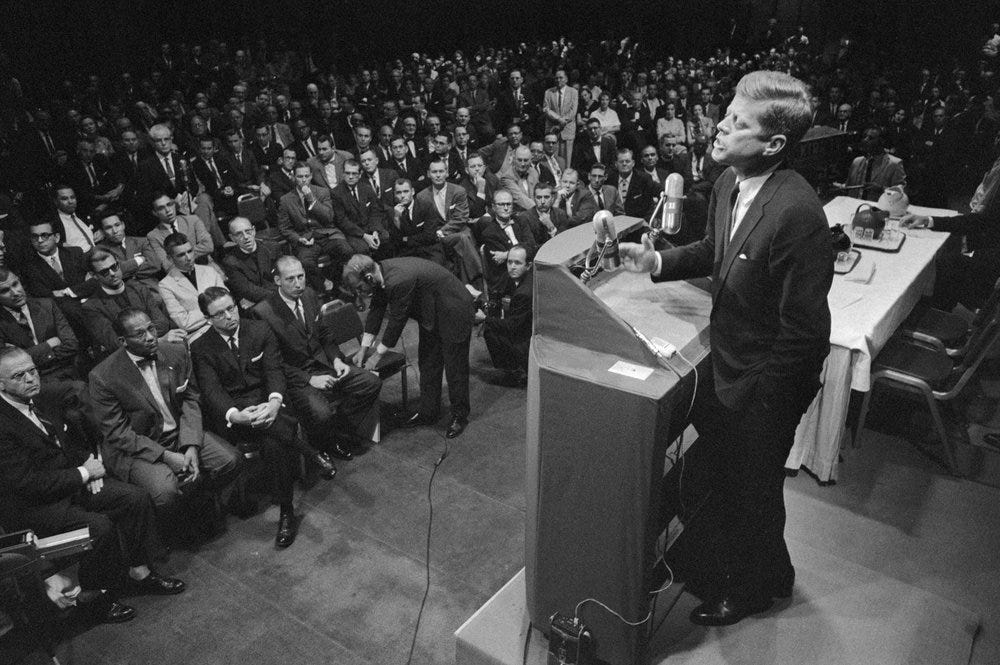
Historically, similar suspicions have targeted other groups – from Catholics (accused of dual loyalty to the Pope) to Mormons (over polygamy). In 1960, John F. Kennedy had to assure voters that, as a Catholic, he wouldn’t take orders from the Vatican.
Before that, in 1879, the Supreme Court confronted the Mormon practice of plural marriage in Reynolds v. United States. The justices unanimously upheld a ban on polygamy, rejecting the claim of religious duty as a defense.
The Court pointedly noted that “Polygamy has always been odious among the northern and western nations of Europe”, in contrast to practices of “Asiatic and…African people” – a blunt acknowledgement of America’s Judeo-Christian social norms.
More importantly, the Reynolds decision declared that allowing religious beliefs to excuse someone from the law “would be to make the professed doctrines of religious belief superior to the law of the land.” Government, the Court warned, “could exist only in name” under such a system.
And as far back as 1892, the Supreme Court itself reflected a cultural presumption of Christian primacy, noting a “mass of organic utterances that this is a Christian nation.” That statement in Church of the Holy Trinity v. U.S. was dictum, not law – but it echoes an attitude long prevalent in American society.
Talk of a “Muslim oath” proposal seems to resurrect an old premise: that America is fundamentally a “Christian nation” and followers of other faiths might need monitoring within the constitutional framework.
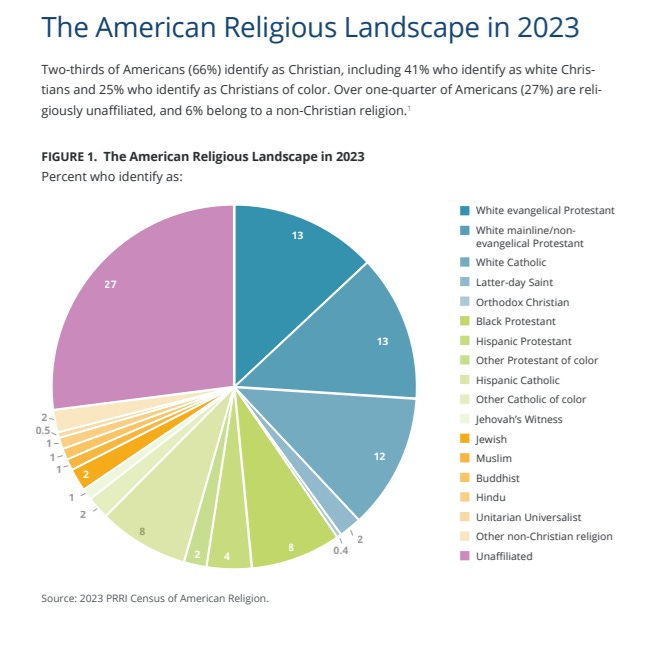
That America is a Christian nation is true. According to the 2023 PRRI Census of American Religion, about 67% of U.S. adults identify as Christian. Jews account for about 2%, and Muslims somewhat less. These figures show that Christians and Jews together constitute roughly 69% of religious identity in the U.S., while those identifying as Muslim form part of the non-Christian 6%.
The data indicate that Christian identity in America remains dominant.
An originalist reading further undermines the claim that no “additional oath” or “extra pledge” may be required. Every office-holder, proponents argue, Christian, Jewish, Muslim, or atheist, already takes an oath to uphold the Constitution. That is a solemn promise to follow civil law above all. Any official who violates it (for religious reasons or otherwise) faces removal or prosecution.
However, the Constitution’s oath clause (Article VI, Clause 3) already presumes belief in God and fidelity to a republican form of government, rooted in a Judeo-Christian frame.
At the Founding, officeholders were expected to be Christians or Jews, whose loyalties were compatible with republican law. Anti-Federalists explicitly warned against “Mahometans” or atheists in office, and Federalists never squarely promised their inclusion.
Thus, while modern courts treat all faiths alike, an originalist approach would allow states to seek explicit assurances from those outside the Founders’ contemplated traditions—ensuring allegiance to the Constitution is undivided.
American Muslim Oath Law: One Nation, One Loyalty
The Framers didn’t risk their lives, liberty, and sacred honor to create a system that invited chaos. They wrote an oath clause to nail down one thing: every office-holder owes undivided loyalty to the Constitution. Period.
The “no religious test” line was never meant as a blank check for every creed under the sun. It was about keeping peace among Christians and protecting Jews, who had already built loyal, thriving communities in the colonies and aided in the Revolution.
When Anti-Federalists warned that “Mahometans” might one day worm their way into office, they weren’t laughed out of the room. Their warnings hung in the air.
The truth is, the Founders never imagined Islam, atheism, or paganism as part of the civic compact – despite the recent SCOTUS jurisprudence.
The people have every right to demand clarity. If your faith or disbelief carries obligations that could trump the Constitution, the voters deserve to hear it—loud and clear.
This isn’t a “test,” it’s survival. The Guarantee Clause charges us to preserve a republican form of government. That means no divided allegiance, no shadow loyalty, no second master.
One Nation Under God demands one allegiance only—to the Constitution of the United States. Anything less is betrayal and should be treated as such.


