



LUTHMANN NOTE: I’ve covered courtrooms all over this country. I’ve seen bad judging, lazy judging, and cowardly judging. What happened in Stamford on February 2 was something worse. Due process wasn’t misapplied. It was denied. Deliberately. When a judge silences a defendant, bars cross-examination in a credibility case, leaves the bench without explanation, and then returns claiming he has “seen the evidence” that never entered the record, the system isn’t malfunctioning. It’s operating exactly as designed—for insiders. Courts survive on one thing: legitimacy. Judge Kavanewsky burned that to the ground in one morning. If Connecticut wants the public to trust its judiciary, it needs answers. Real ones. On the record. Until then, this wasn’t justice. It was a fix. This piece is “Kavanewsky’s Connecticut Kangaroo Court,” first available on TheFamilyCourtCircus.com.


By Rick LaRivière and Richard Luthmann
(Stamford, Connecticut) – Nearly 40 court watchers and supporters packed into the Stamford Superior Court gallery on Monday, February 2, 2026. The tension was electric. Dave Weigel – a Wall Street whiz turned family court crusader – sat at the defense table, flanked by supporters from his Family Court Fraud Warrior Project, a 501(c)(3) non-profit national watchdog group he founded.
Many knew Weigel as the man who sheltered a terrified gay teen from allegedly abusive parents, only to become the target of those parents’ legal fury. He entered court “not as a criminal, but as a crusader armed with truth.”
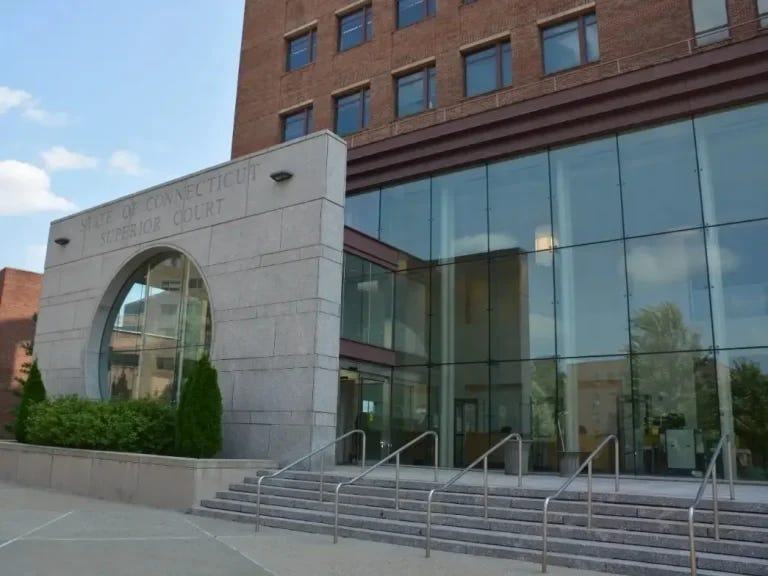
The courtroom buzzed with indignation at what was to come. Advocates and media had gathered, echoing Weigel’s rallying cry that “the world is watching.” This was more than a routine hearing – it was a showdown between a whistleblower dad determined to expose corruption and a system bent on silencing him.
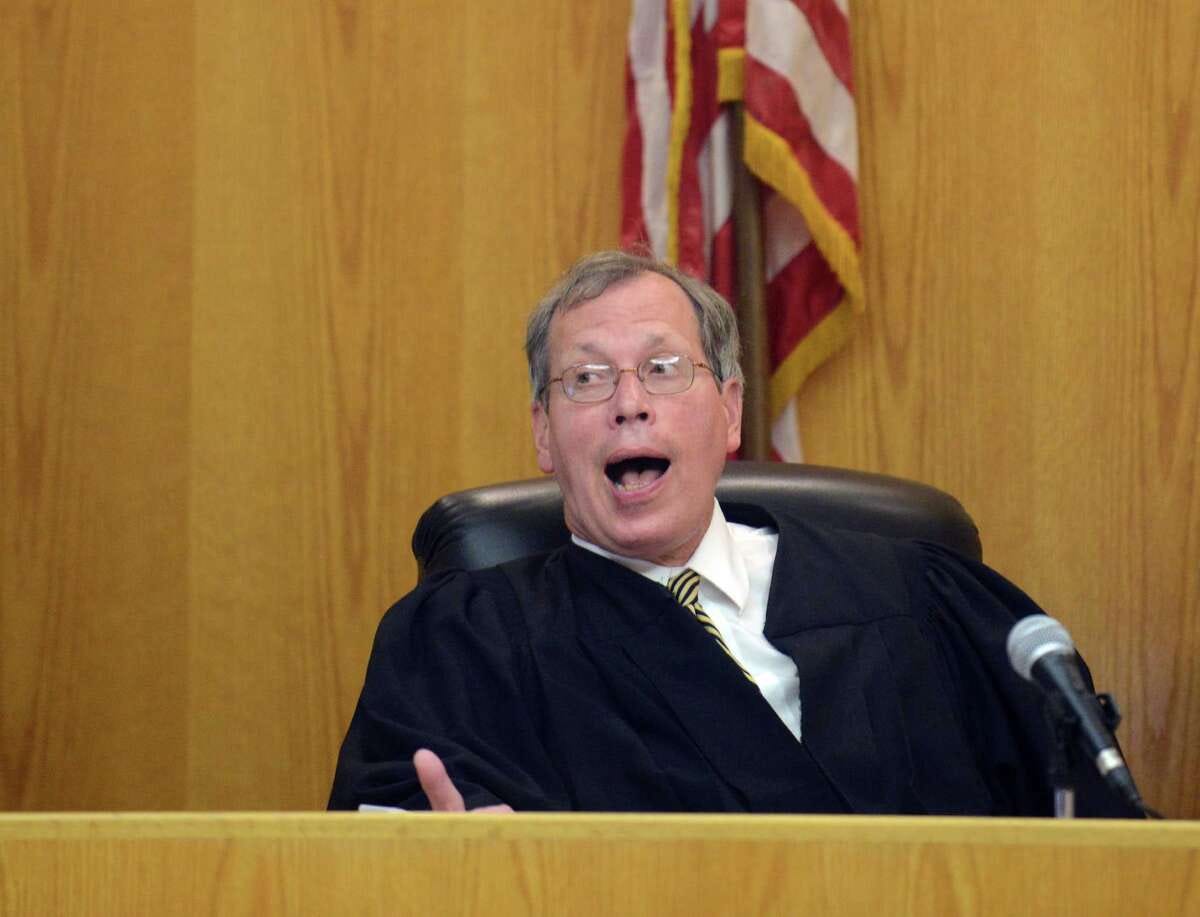
As Judge John F. Kavanewsky, Jr. took the bench, you could practically taste the adrenaline in the air. Little did anyone know, they were about to witness a masterclass in judicial railroading.
Kavanewsky’s Connecticut Kangaroo Court: Silenced and Denied in a One-Sided “Hearing”
From the outset, Judge Kavanewsky made it clear Dave Weigel would barely be allowed to utter a full sentence. The proceeding devolved into a one-sided show.
Zoali Alvarez, Weigel’s accuser (and also herself accused), and the mother of the teen he helped, launched into her testimony unchecked. She breathlessly accused Weigel of everything from online harassment to outright assault.
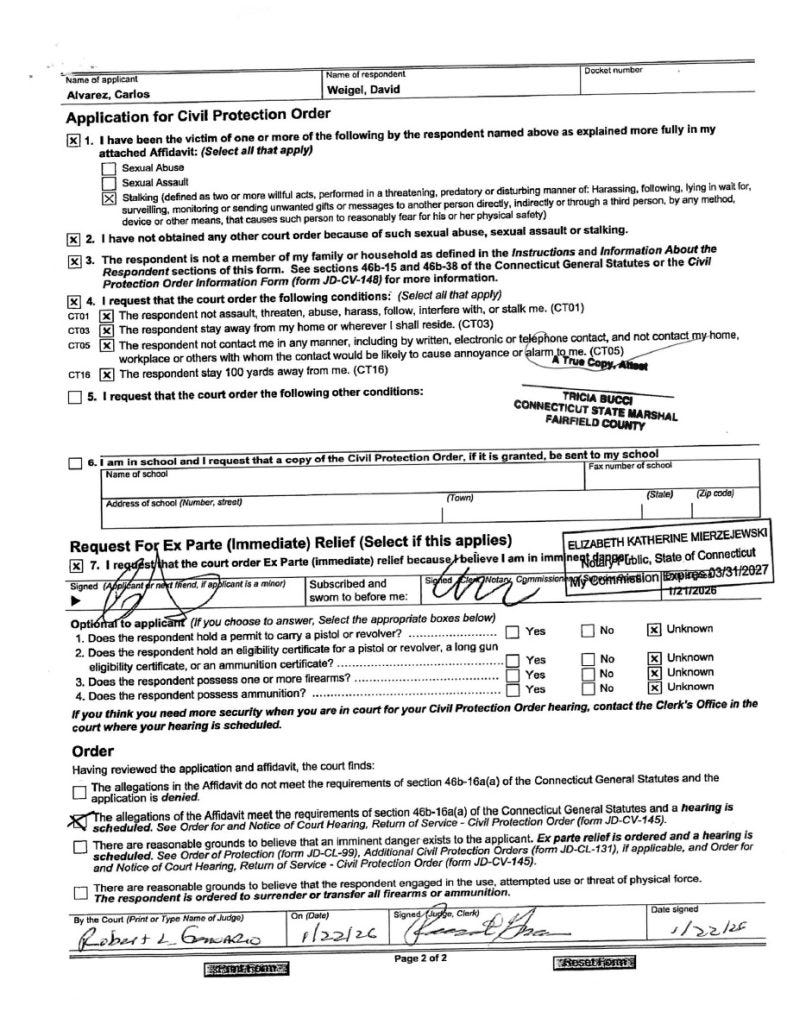
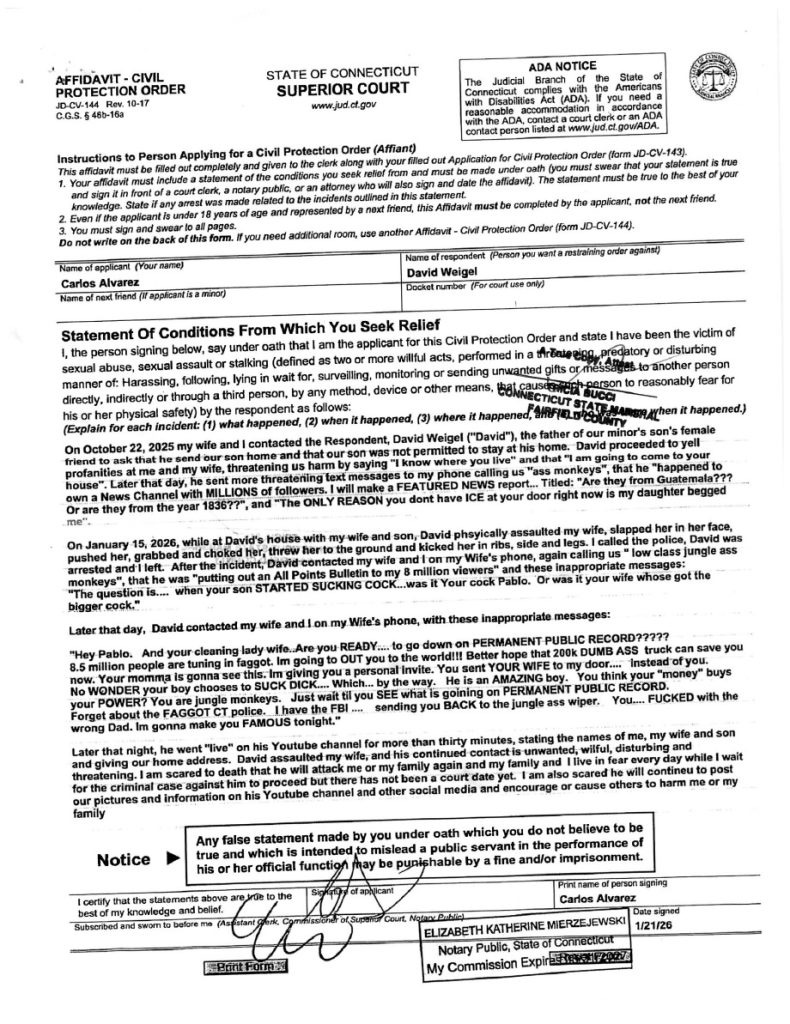
“He [is] doing videos about us… he mentioned our address,” Alvarez complained about Weigel’s social media exposés.
She then spun a lurid tale of a January 15 confrontation at Weigel’s home: “he… threw the money in my face… I said I’m not here for money… he… [hit] my face, he pushed me… he kicked me in my neck, my face.”
According to her, this mild-mannered finance dad suddenly became a monster. Weigel sat aghast, chomping at the bit to respond. But every time he tried, Kavanewsky cut him off.
When Alvarez claimed Weigel texted her in violation of a police warning, Weigel interjected that it was a blatant lie – “There has never been a text message… between myself and this woman,” he protested.
The judge’s response? Essentially, shut up and take it. Kavanewsky refused to let Weigel cross-examine Alvarez at all. No questions, no challenge to her story – nothing. Observers watched in disbelief as a Connecticut courtroom turned into a kangaroo court, where the accused couldn’t question the accuser, and the “hearing” was a hearing only of one side.
Weigel did manage to get a few words in, under threat of contempt. He calmly told the judge that if he’d truly harmed Alvarez as alleged, “I would’ve been arrested” on the spot – and in fact, he wasn’t.
Indeed, the police who responded to that Jan. 15 incident left without making any arrests, undermining Alvarez’s yarn. Weigel also attempted to explain that he was a watchdog, reporter, and activist exercising his First Amendment rights.
“I’m a public person, a journalist… The videos are part of our… watchdog organization,” he said, trying to put his contact with the Alvarez family in context.
Judge Kavanewsky didn’t want to hear it. He effectively gagged Weigel mid-sentence. The message was unmistakable: Weigel had no voice in that courtroom.
Kavanewsky’s Connecticut Kangaroo Court: The Law Be Damned!
Seasoned court-watchers who witnessed this judicial steamrolling said only one thought kept pounding in their heads: This is blatantly illegal. Connecticut law guarantees the right to cross-examine in restraining order hearings – it’s not optional. In fact, the Appellate Court just recently held that completely denying cross-examination in such a hearing “constitutes an abuse of discretion.”
In L.D. v. G.T., 210 Conn. App. 864 (2022), a case much like Weigel’s, the trial judge refused to allow the accused to question his accuser. The Appellate Court blasted that decision, quoting: “the denial of all meaningful cross-examination… constitutes an abuse of discretion.” The appellate judges even noted that the lower court’s excuse – “this was a hearing as opposed to a trial” – was dead wrong. They made it crystal clear that due process doesn’t evaporate just because it’s a civil restraining order hearing.
They reversed that case and vacated the order. Judge Kavanewsky either didn’t get the memo or didn’t care.
It gets worse. In R.H. v. M.S., 220 Conn. App. 212 (2023), the Appellate Court reiterated that judges must follow the evidence and the law in restraining order cases. In that case, the trial court overreached by extending a protective order to children with no evidence of any threat to them – the appellate judges struck it down. They emphasized that a restraining order can’t be granted (or extended) based on fear and favor; there must be a factual basis.
Here, Kavanewsky extended a full no-contact order against Weigel for a year without allowing any meaningful testing of Alvarez’s claims. He ignored that much of her story was uncorroborated and even contradicted by records (remember, no immediate arrest, no actual proof of texts). By doing so, this judge trampled Weigel’s due process rights enshrined in both Connecticut case law and the statute (Conn. Gen. Stat. § 46b-15).
In the view of many, Kavanewsky’s ruling isn’t just bad – it’s void for want of due process. And you can bet Weigel may be citing L.D. v. G.T. and R.H. v. M.S. chapter and verse in his next motion to the court for reconsideration and reargument. More on that below.
Kavanewsky’s Connecticut Kangaroo Court: Ex Parte Whispers and Hints of Bias
Court watchers told me something smelled rotten in Stamford. Here is what they say actually happened, and I believe them.
Before testimony even began, Judge John F. Kavanewsky, Jr. abruptly ordered the parties off the record. He told Dave Weigel and Attorney Frank Lieto to step outside into the hallway and “see if this can be worked out.” That instruction alone was irregular. This was a noticed § 46b-15 restraining order hearing. Not a mediation. Not a settlement conference. A due process hearing involving sworn allegations of violence.
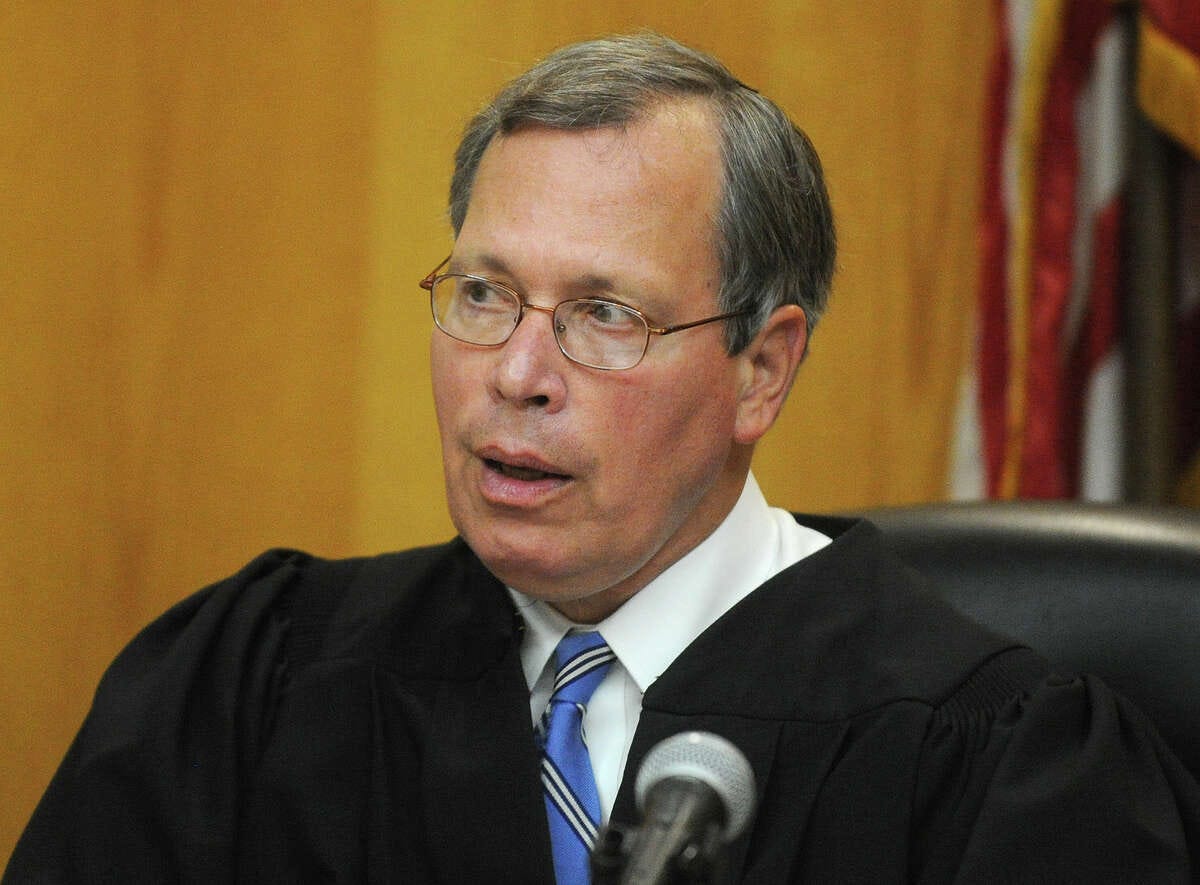
Weigel complied. He walked into the hallway. Frank Lieto did too, but he didn’t stay. Lieto claimed he had “another case” in the courthouse and disappeared. The judge then left the bench. He did not recess formally. He simply vanished.
Multiple court watchers—independent observers with no stake in the case—were standing in that same hallway. They later reported seeing Judge Kavanewsky and Frank Lieto meeting privately in a back hallway of the Stamford courthouse, out of public view and off the record.
No clerk. No Weigel. No transcript. Just the judge and the lawyer.
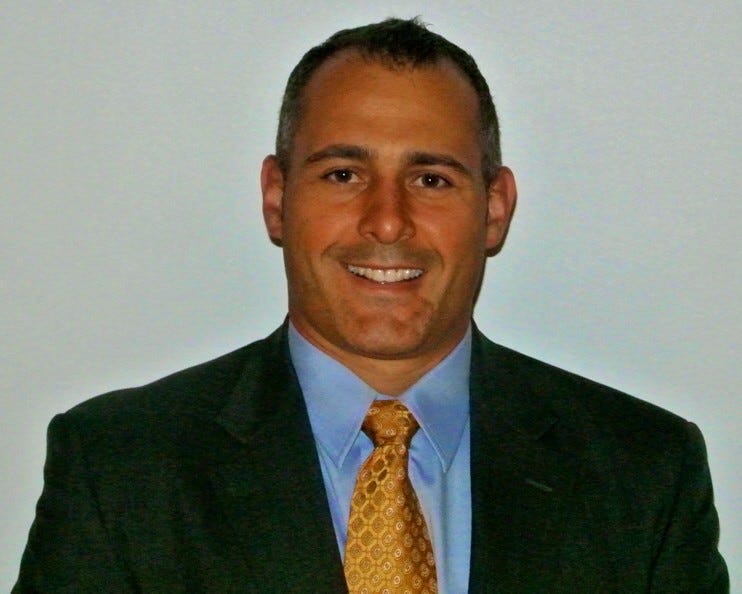

That matters because Frank Lieto had no other business in the courthouse that day. We pulled every Stamford short calendar. His name appears on none of them. Not one.
So why was he there? Why did he tell the court he had another case when the dockets show none?
1 Short Calendar February 02, 2026 (FST SC 13)
2 Short Calendar February 02, 2026 (FST SC 12)
3 Short Calendar February 02, 2026 (FST SC 11)
4 Short Calendar February 02, 2026 (FST SC 10)
5 Short Calendar February 02, 2026 (FST SC 02)
6 Short Calendar February 02, 2026 (FST SC 01)
Where was Attorney Frank Lieto really?

Why did the judge leave the bench at the same time Lieto disappeared? And why did the hearing that followed look less like a judicial proceeding and more like a pre-written script?
When the judge returned, everything had changed.
Weigel was silenced. Cross-examination was barred. The judge repeatedly said he had “seen the evidence.”
Seen it where?
Not in court. Not on the record. Not through exhibits. That evidence does not exist in the file. It was never admitted. It was never marked. It was never tested. So the question writes itself: Did Judge Kavanewsky “see” this evidence in that back hallway? And if so, how is that anything other than a textbook ex parte communication?
Connecticut law is not ambiguous. A judge may not engage in off-the-record communications with one side in a contested matter. Period. The appearance of bias alone is enough to require corrective action. Here, we have more than appearance. We have timing. We have witnesses. We have false statements about court business. We have a judge who claimed private knowledge not found in the record.
That is not justice. That is a fix. And until Judge Kavanewsky explains what was said, when it was said, and why it was said outside the presence of the accused, the legitimacy of everything that followed is in serious doubt.
Due process did not just fail Dave Weigel that day. It was escorted into a back hallway and quietly buried.

There’s more. The Alvarez family isn’t just any family in Fairfield County – they’re “wealthy, well-connected builders” with deep ties in the community. In Connecticut, money and influence can tip the scales of justice. Zoali and Carlos Alvarez have friends in high places; in New Canaan (their hometown), it’s widely suspected that their connections with local police greased the wheels against Weigel.
Remember, this is the same New Canaan PD that, according to reports, did nothing when the Alvarezes’ own son, Mathias, cried out for help – yet they took aggressive action when the Alvarezes pointed the finger at Weigel.
That double-standard has “fueled growing concern that the Alvarezes enjoy preferential treatment” from authorities.
Watching Judge Kavanewsky’s deferential treatment of Zoali Alvarez’s every word, court watchers couldn’t shake the feeling that this hearing’s outcome was a foregone conclusion. The judge acted more like Alvarez’s advocate than an impartial arbiter. The whole thing stunk of back-room dealmaking and bias.
One seasoned observer muttered, “This wasn’t a hearing, it was a hit job.”
Kavanewsky’s Connecticut Kangaroo Court: Questions For Attorney Frank Lieto
We contacted Attorney Frank Lieto of Goldman Gruder & Woods, LLC, a law firm with offices in Connecticut and Tarrytown, New York.

We asked for his and his clients’ side of the story. We copied members of the Connecticut judiciary and the press in hopes that someone might have answers. As of press time, Attorney Lieto didn’t respond. Here is what we asked:
From: Rick LaRivière <RickLaRiviere@proton.me>
Date: On Thursday, February 5th, 2026 at 2:15 PM
Subject: Questions Regarding Alvarez v. Weigel Hearing and Alleged Ex Parte Conduct
To: flieto@goldgru.com <flieto@goldgru.com>, john.Kavanewsky@jud.ct.gov <john.Kavanewsky@jud.ct.gov>
CC: RALafontaine@protonmail.com <ralafontaine@protonmail.com>, Modern Thomas Nast <mthomasnast@protonmail.com>, Frankie Pressman <frankiepressman@protonmail.com>, Michael Volpe <mvolpe998@gmail.com>, juliea005 <juliea005@proton.me>, peter.brown@jud.ct.gov <peter.brown@jud.ct.gov>, Carl.Cicchetti@connapp.jud.ct.gov <Carl.Cicchetti@connapp.jud.ct.gov>, Joseph.DelCiampo@jud.ct.gov <Joseph.DelCiampo@jud.ct.gov>, External.Affairs@jud.ct.gov <External.Affairs@jud.ct.gov>, Giovanni.Spennato@jud.ct.gov <Giovanni.Spennato@jud.ct.gov>, Michele.Massores@jud.ct.gov <Michele.Massores@jud.ct.gov>, Kerry.Patton@jud.ct.gov <Kerry.Patton@jud.ct.gov>, Peter.Fradiani@jud.ct.gov <Peter.Fradiani@jud.ct.gov>, Marie-Louise.Villar@jud.ct.gov <Marie-Louise.Villar@jud.ct.gov>, barbara.jongbloed@jud.ct.gov <barbara.jongbloed@jud.ct.gov>, eugene.calistro@jud.ct.gov <eugene.calistro@jud.ct.gov>, james.pastore@jud.ct.gov <james.pastore@jud.ct.gov>, john.newson@jud.ct.gov <john.newson@jud.ct.gov>, melanie.cradle@connapp.jud.ct.gov <melanie.cradle@connapp.jud.ct.gov>, officeof.chiefcourtadministrator@jud.ct.gov <officeof.chiefcourtadministrator@jud.ct.gov>, raheem.mullins@connapp.jud.ct.gov <raheem.mullins@connapp.jud.ct.gov>, rhonda.hebert@jud.ct.gov <rhonda.hebert@jud.ct.gov>, rhonda.stearleyhebert@jud.ct.gov <rhonda.stearleyhebert@jud.ct.gov>, robin.pavia@jud.ct.gov <robin.pavia@jud.ct.gov>, tracy.dayton@jud.ct.gov <tracy.dayton@jud.ct.gov>, uspardon.attorney@usdoj.gov <uspardon.attorney@usdoj.gov>, harmeet.dhillon@usdoj.gov <harmeet.dhillon@usdoj.gov>, maureen.riordan@usdoj.gov <maureen.riordan@usdoj.gov>, leo.terrell@usdoj.gov <leo.terrell@usdoj.gov>, keith.edelman@usdoj.gov <keith.edelman@usdoj.gov>, felicia.martinez@usdoj.gov <felicia.martinez@usdoj.gov>, frankparlato@gmail.com <frankparlato@gmail.com>, caracastronuova@yahoo.com <caracastronuova@yahoo.com>, RALafontaine@protonmail.com <RALafontaine@protonmail.com>, RickLaRiviere@proton.me <RickLaRiviere@proton.me>, mikethunderphillips@gmail.com <mikethunderphillips@gmail.com>, volokh@stanford.edu <volokh@stanford.edu>, volokh@law.ucla.edu <volokh@law.ucla.edu>, breakingnews@courant.com <breakingnews@courant.com>, ckeating@courant.com <ckeating@courant.com>, emahony@courant.com <emahony@courant.com>, hbennett@courant.com <hbennett@courant.com>, klove@courant.com <klove@courant.com>, newstips@courant.com <newstips@courant.com>, Marc@insideinvestigator.org <Marc@insideinvestigator.org>, conner@insideinvestigator.org <conner@insideinvestigator.org>, insideinvestigator@protonmail.com <insideinvestigator@protonmail.com>, Richard Luthmann <richard.luthmann@protonmail.com>, richard@nynewspress.com <richard@nynewspress.com>, amy.d@fraudwarrior.org <amy.d@fraudwarrior.org>, charlotteobservernews1@gmail.com <charlotteobservernews1@gmail.com>, Joey@YourDaddyJoey.news <joey@yourdaddyjoey.news>, Joseph A. Camp <joey@joeycamp2020.com>Attorney Lieto,
We write on behalf of a group of independent journalists (and other members of the free press) who are following and may be reporting on the February 2, 2026, restraining order hearing in Alvarez v. Weigel before Connecticut Superior Court Judge John F. Kavanewsky, Jr., in Stamford.
Multiple court observers have raised serious concerns regarding events that occurred before testimony began, including the judge’s instruction that the parties leave the courtroom to attempt resolution in the hallway, your statement that you had “another case” in the courthouse, and subsequent reports that you were observed meeting privately with Judge Kavanewsky in a back hallway of the Stamford courthouse while the respondent was excluded.
Public docket records for February 2, 2026, show no other matters involving you scheduled anywhere in the Stamford courthouse that day.
Given the public interest and the gravity of the allegations, we are seeking your response to the following questions:
1. Did you meet privately with Judge John F. Kavanewsky, Jr. on February 2, 2026, outside the presence of David Weigel and off the record?
2. If so, where did that meeting occur, how long did it last, and what was discussed?
3. What “other case” were you referring to when you told the court you needed to leave the courtroom, and why does that matter not appear on any Stamford docket for that date?
4. Did you present or discuss any information, documents, or “evidence” with Judge Kavanewsky outside the courtroom?
5. Are you aware of any basis on which Judge Kavanewsky later stated on the record that he had “seen the evidence,” despite no exhibits being admitted?
These questions arise amid broader concerns regarding due process violations at the hearing, including the categorical denial of cross-examination and the silencing of the respondent in a credibility-driven proceeding.
Several journalists intend to publish a report on these events and will include your response, or note its absence. Please respond as soon as possible. If we receive your response after press time, we will incorporate it into a follow-up.
If you believe any factual premise above is incorrect, we invite you to identify and correct it directly.
Thanks,
Rick LaRivière
Independent Journalist
(239) 766-5800
Follow Me On Substack
If we receive a response from Attroney Lieto, his law firm, or the Connecticut Judiciary, we will, as promised, relay the same in a follow-up piece.
Kavanewsky’s Connecticut Kangaroo Court: Lies, Contradictions, and a Cowardly Accuser
Perhaps the most infuriating part of this fiasco is how much of Alvarez’s story falls apart under even modest scrutiny – yet Kavanewsky brushed it aside. For one, Alvarez claimed Weigel continued harassing her after the January incident, even alleging he showed up on January 20.

Fun fact: Weigel was in Kentucky on January 20. He produced travel records proving he was nowhere near Connecticut that day, which directly contradicts Alvarez’s accusation. In fact, Kentucky court records confirm Wegel’s presence in the Bluegrass State.
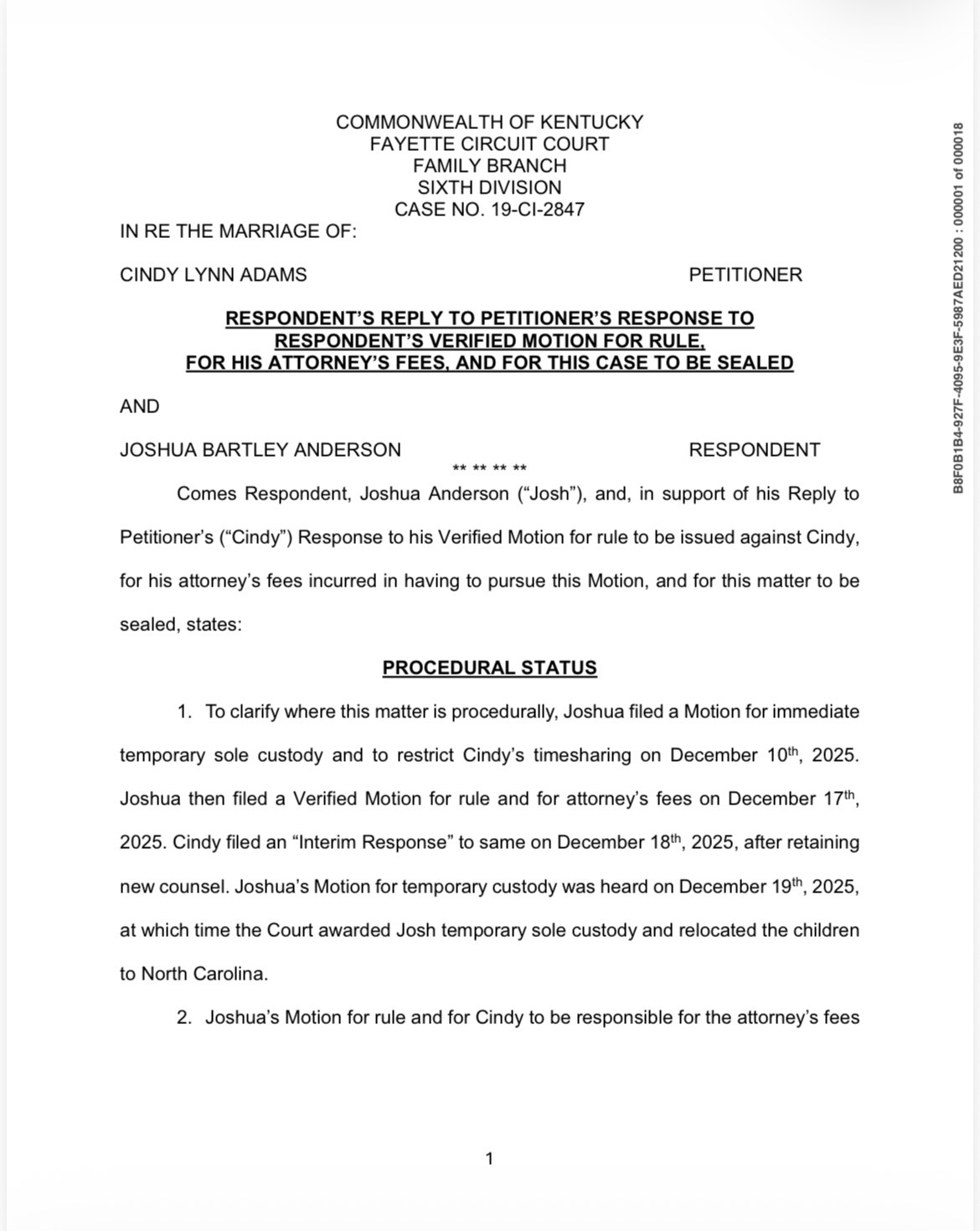
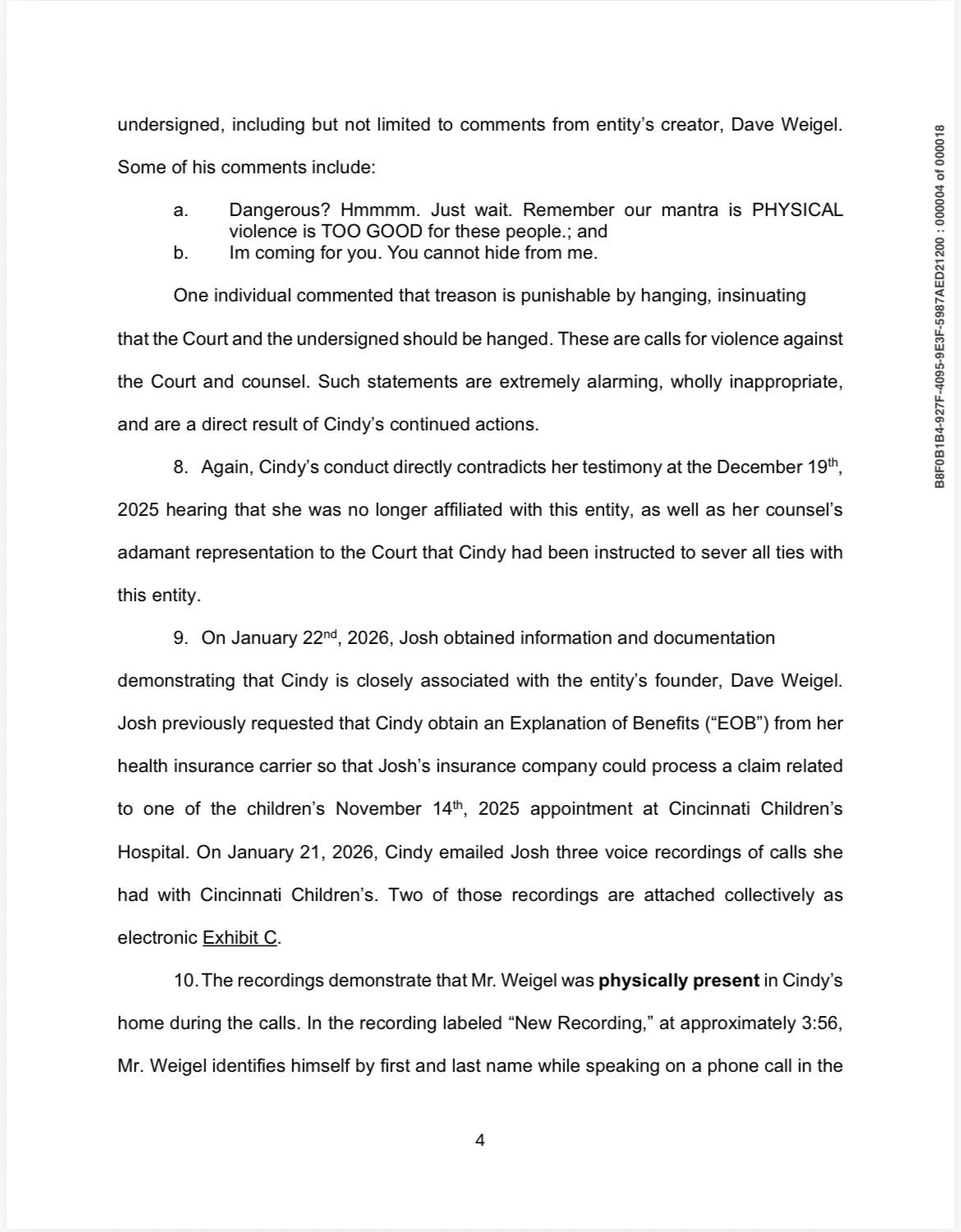
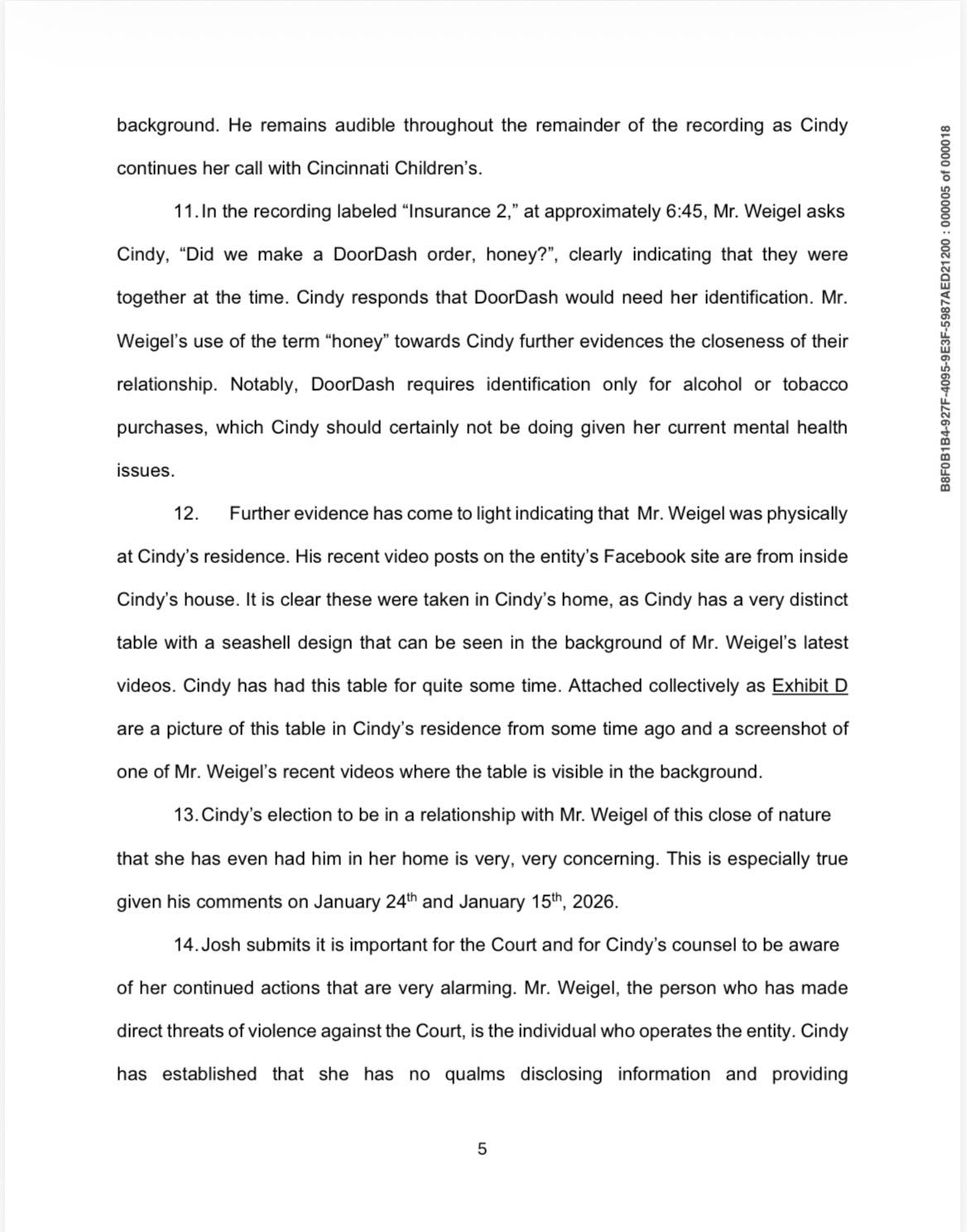
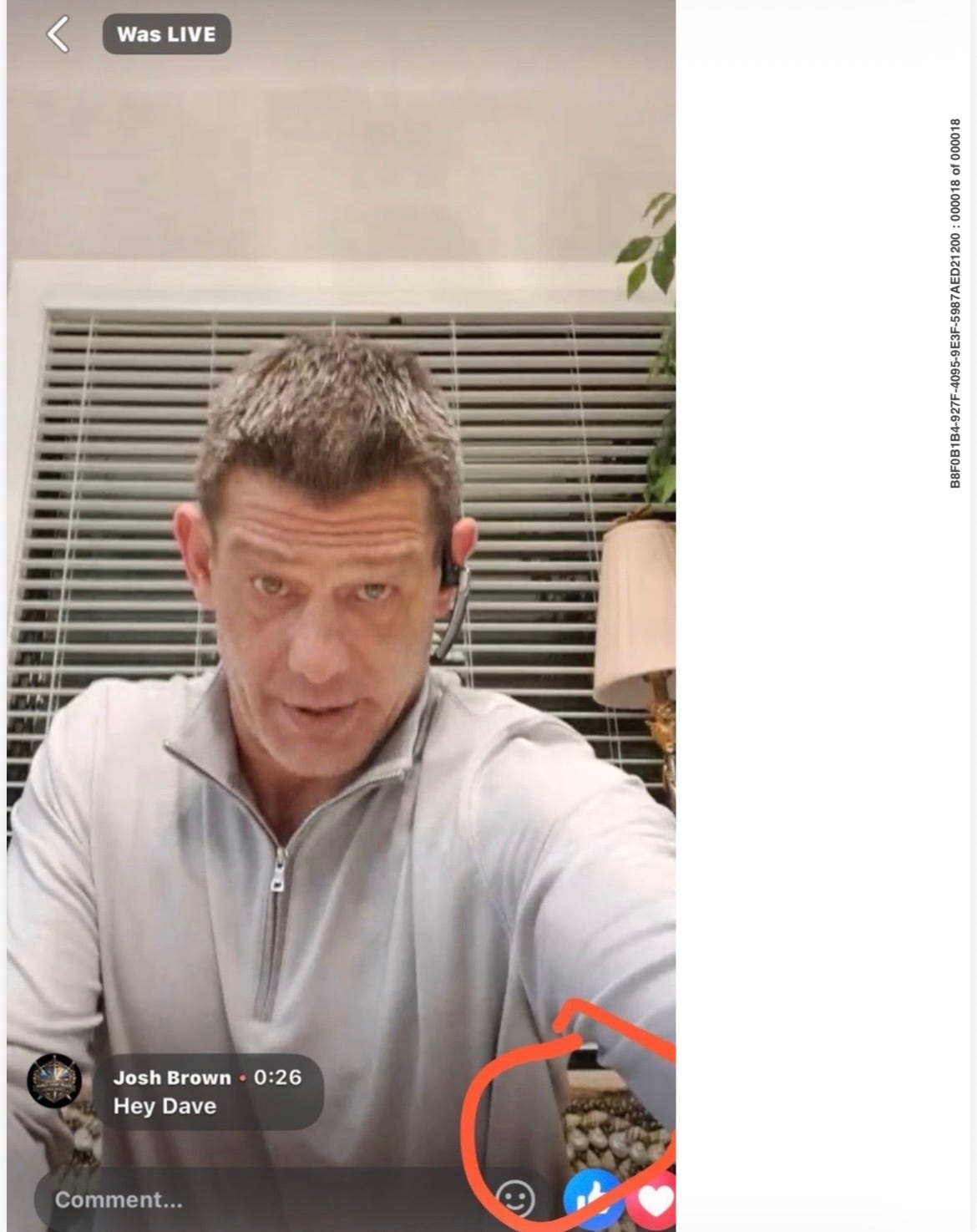
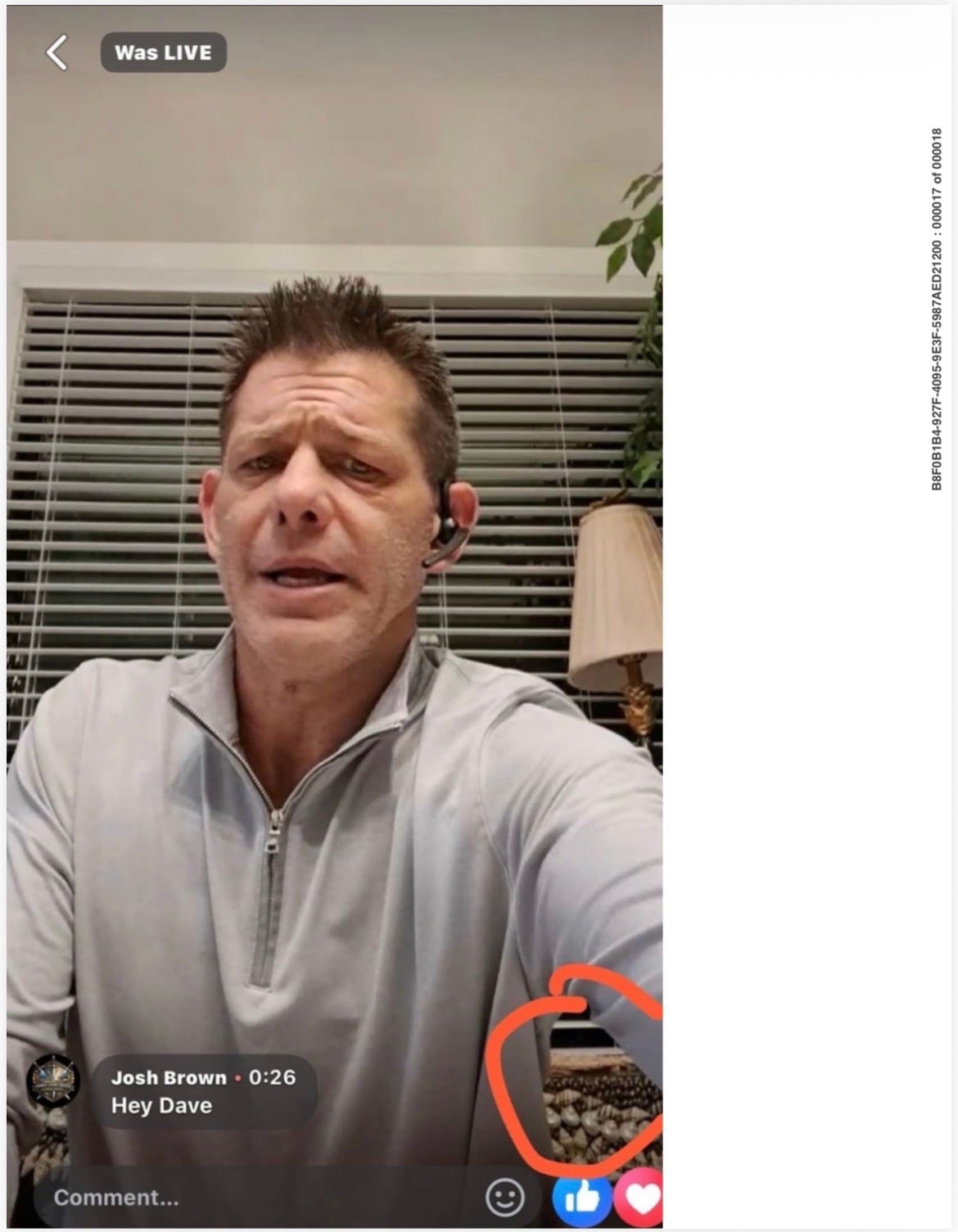
Did the judge care? Not one iota. He refused to even consider that evidence, according to court watchers. This was emblematic of Alvarez’s broader narrative: shaky and riddled with inconsistencies, but accepted as gospel in court.
Alvarez also told the court that after the Jan. 15 scuffle, “David was arrested and left.”
In reality, as court records later showed, Weigel was never taken into custody that day – he wasn’t arrested at all. Zoali Alvarez is actually the person that Connecticut Judiciary records show was arrested that day. That’s a huge red flag that her sworn affidavit stretched the truth, if it wasn’t outright perjury.
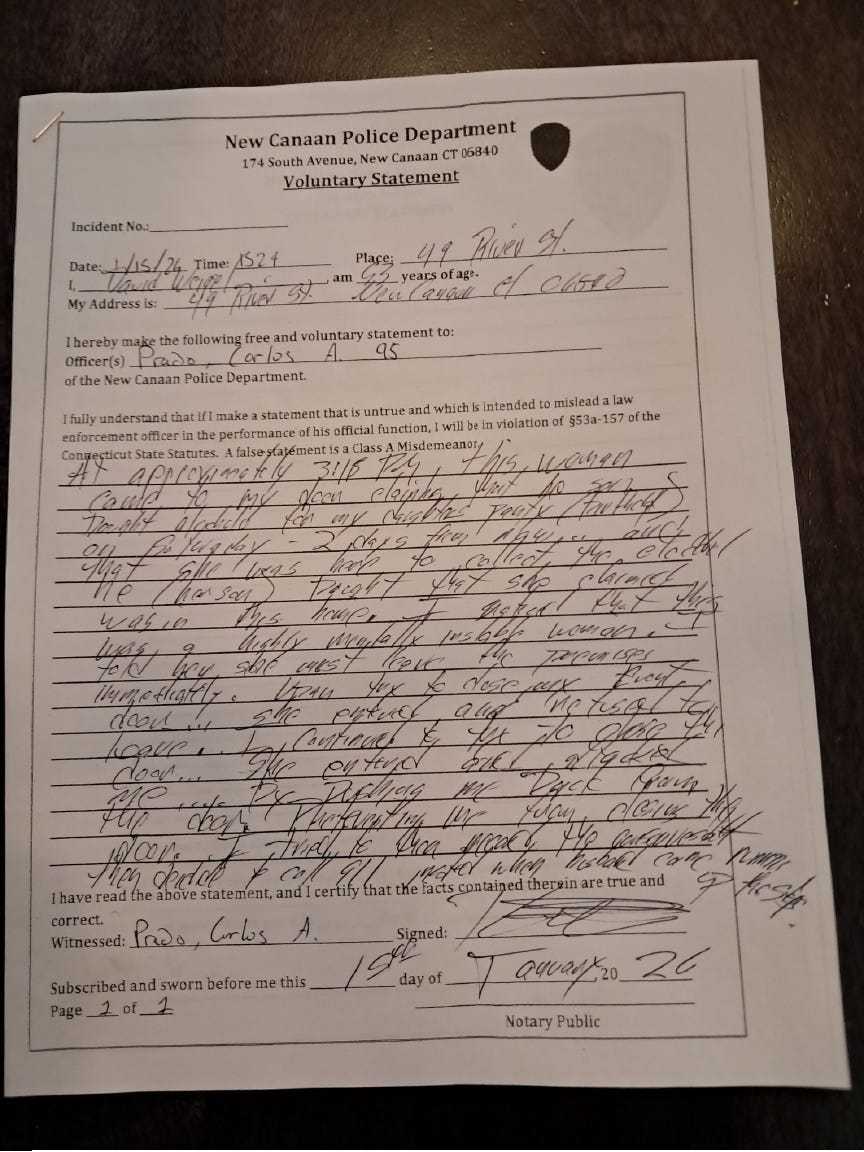
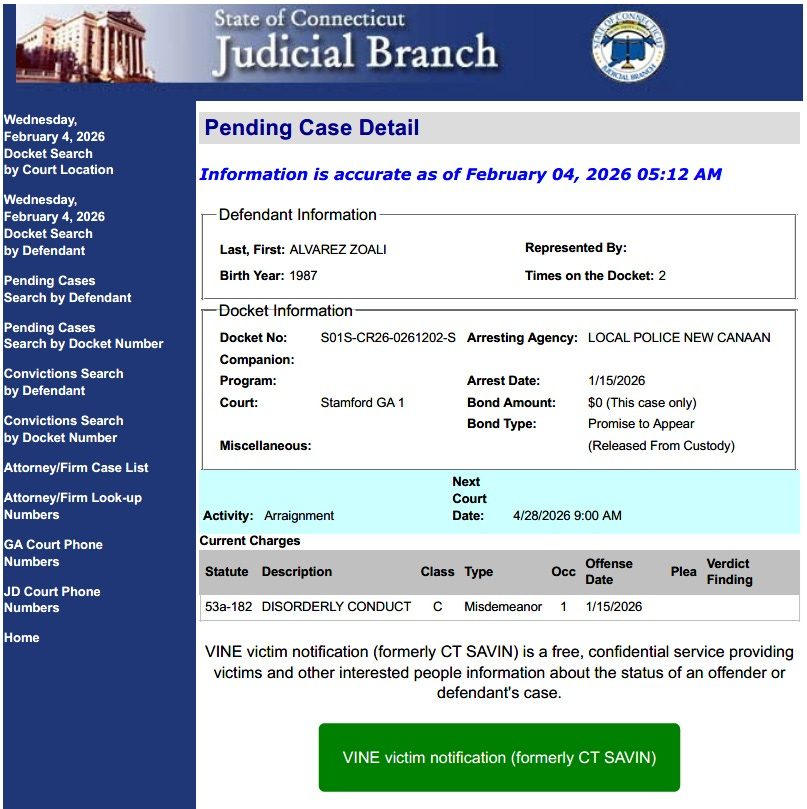
Even the way the Alvarezes describe the alleged “assault” strains credulity. Carlos Alvarez swore that Weigel slapped, grabbed, choked, and kicked his wife – a dramatic, violent attack – and yet Carlos admitted under oath that his only response was to call the police afterward. He didn’t lift a finger to defend his wife in the moment.
“It doesn’t make sense that any husband… would stand idly by while his wife was assaulted,” one court watcher noted, questioning the plausbility Carlos’s bizarre inaction. “How does a husband, a constrution guy no less, not defend his wife?”
In plain terms, their story makes no sense unless you realize it’s likely fiction. Little wonder Zoali Alvarez herself also faces a pending disorderly conduct charge from that same Jan. 15 incident – an inconvenient fact that undercuts her victim narrative, and that Weigel was not permitted to introduce to Judge Kavanewsky’s court.

Every bit of evidence outside Zoali’s mouth favors Weigel. No contemporaneous injuries documented on her (police saw Weigel had a bruised face instead). No text messages from him, as he adamantly maintained. An alibi for at least one alleged incident. And a pattern of the Alvarezes lying to authorities. They even tried to sic the cops on their son’s 18-year-old boyfriend with a bogus statutory rape claim when they found out the boy was gay – a claim police quickly tossed out.
It’s DARVO 101 (Deny, Attack, Reverse Victim and Offender) – the abusers flipping the script. Yet Judge Kavanewsky chose to believe the flip. He rubber-stamped Zoali’s restraining order request without batting an eye, essentially rewarding the Alvarezes’ deceit.
If that doesn’t raise your blood pressure, nothing will.
Fallout and Fury: What Happens Next
The travesty in that courtroom isn’t the end of this fight – not by a long shot. Weigel’s team indictaes he is already preparing a motion to reargue and vacate the restraining order, citing the blatant due process violations. They want a new evidentiary hearing where, at minimum, Weigel can actually cross-examine his accuser as the law requires. Given the binding precedents (L.D. v. G.T. and others) and the egregious record, any honest judge on review should overturn Kavanewsky’s ruling in a heartbeat.
Weigel is also considering an appeal to the Connecticut Appellate Court if needed – and thanks to cases like L.D. v. G.T., the fact that the restraining order might expire before appeal won’t moot the case. He’s in this for the long haul, not just for himself but for the principle.
“This isn’t just my fight. It’s a fight for every parent, every child, and every family destroyed by this system,” Weigel has said.
That sentiment resonated loud and clear on the courthouse steps, where supporters and advocates held an impromptu press conference after the hearing. The media is now swarming this story of a judge who seemingly broke the rules to punish a man rescuing an abused child.
Public officials are taking notice too. Whispers are circulating about a possible federal inquiry into whether Weigel’s civil rights were conspired against. It’s not as far-fetched as it sounds – 18 U.S.C. § 241 makes it a crime for two or more persons to conspire to deprive someone of their constitutional rights under color of law. A judge and anyone colluding with him would certainly qualify.
“Many chuckle at the veritable firetstorm that Trump U.S. Department of Justice Civil Rights Division could unleash in Dick Blumenthal’s backyard, just for sh-ts and giggles,” said one administration-linked legal observer on condition of anonymity. “The Connecticut courts are making it easy between Weigel, Paul Boyne, and a dozen other cases since the beginning of the year.”
Also, if Connecticut’s Judicial Review Council gets wind of what happened on February 2, 2026, Judge Kavanewsky could find himself under scrutiny. At minimum, the glaring appearance of impropriety – the ex parte meeting, the denial of due process – begs for investigation.
As for Weigel, he remains unbowed. Walking out of that courtroom, flanked by cheering supporters, he looked less like a defeated man and more like a man on a mission. This case has become a rallying point for family court reformers nationwide.
The question on everyone’s lips: Will Connecticut’s justice system finally do right by Dave Weigel and the teen he tried to protect, or will it continue to “let a wealthy pair of alleged abusers weaponize police and courts to persecute the very man who saved their son’s life?”
The fight isn’t over. Not by a long shot. An army of court watchers were there and saw it with their own eyes. Like Weigel and his supporters, they won’t rest until the Connecticut kangaroo courts are exposed and corrected.
The stakes are higher than one man or one family; they strike at the heart of public trust in our courts. And I’m willing to bet that very soon, justice will have its day, either in that Stamford courtroom or beyond.

Supplement
I was informed that this draft is circulating among family court advcocates related to the Weigel case:
MOTION TO REARGUE (P.B. § 11-12) AND FOR RECONSIDERATION; REQUEST TO VACATE RESTRAINING ORDER, OR IN THE ALTERNATIVE, FOR A NEW EVIDENTIARY HEARING AND/OR MODIFICATION OF RELIEF
The Respondent, David Weigel, appearing pro se at the noticed hearing, respectfully moves this Court, pursuant to Practice Book § 11-12, to reargue and reconsider its decision granting the Applicant a civil restraining order pursuant to Conn. Gen. Stat. § 46b-15, and to vacate the order. In the alternative, Respondent requests a new evidentiary hearing consistent with due process. Respondent further requests that the Court modify the order by removing any protections extended to broadly referenced “household members,” where such relief was not requested and was added by the Court at the noticed hearing.
I. Procedural History and Relevant Facts
1. On February 2, 2026, the Court held a noticed hearing in the Judicial District of Stamford on the Applicant’s application for a restraining order pursuant to Conn. Gen. Stat. § 46b-15.
2. Mr. Weigel appeared self-represented.
3. Cross-examination was not allowed, period. Mr. Weigel was not permitted to question the Applicant at any time. The only questioning of the litigants was conducted by the Court and the Applicant’s counsel, who elicited the testimony offered at the hearing.
4. Mr. Weigel likewise was not afforded a fair opportunity to present his defenses through a meaningful evidentiary process, including the opportunity to offer sworn testimony in a manner that allowed credibility to be evaluated through adversarial testing.
5. No physical evidence or exhibits were admitted. The outcome turned primarily on testimonial allegations and credibility.
6. At the noticed hearing, the Court also expanded the restraining order beyond the relief requested to include protection for broadly referenced “household members,” without identifying specific additional protected persons and without an application-based request for that relief.
II. Legal Standard
A motion to reargue under Practice Book § 11-12 is proper where the Court has overlooked or misapprehended controlling law or material facts, or where reconsideration is necessary to prevent manifest injustice.
Although a § 46b-15 proceeding is civil, it carries serious consequences. Where a restraining order turns on disputed facts and credibility, fundamental fairness requires a meaningful opportunity to be heard, including a meaningful opportunity to test adverse testimony.
III. Argument
A. The complete denial of cross-examination requires vacatur or a new hearing because credibility was central and the factfinding process was not reliably adversarial.
In L. D. v. G. T., 210 Conn. App. 864 (2022), the Appellate Court reversed a § 46b-15 order where the trial court prohibited cross-examination, holding that a categorical denial of cross-examination was an abuse of discretion in a credibility-driven restraining order hearing.
That is what occurred here. Cross-examination was not limited. It was categorically barred. The Court and Applicant’s counsel were the only questioners. This deprived Mr. Weigel of the principal tool for testing credibility, bias, motive, internal inconsistency, and reliability. Where the allegations were disputed and no corroborating evidence was admitted, the denial of cross-examination was prejudicial and undermines confidence in the outcome.
Relief warranted: The restraining order should be vacated. At minimum, the Court should order a new evidentiary hearing at which cross-examination is permitted.
B. The hearing structure also denied Mr. Weigel a meaningful opportunity to present his defenses through sworn testimony in a procedurally fair manner.
A fair evidentiary hearing requires more than permitting a party to be physically present. It requires a meaningful opportunity to present testimony and defenses in a manner that allows the Court to evaluate competing accounts through adversarial testing. Here, the hearing format, in which only the Court and opposing counsel asked questions and cross-examination was barred entirely, prevented the development of a reliable record and deprived Mr. Weigel of a fair opportunity to defend against the allegations.
C. The lack of admitted exhibits or physical evidence made credibility testing indispensable.
No exhibits or physical evidence were admitted. In that posture, the case became a credibility contest. Connecticut appellate authority recognizes that cross-examination is vital to credibility assessment in this setting, and its total denial is especially prejudicial where the decision rests on testimonial allegations alone.
D. The Court improperly expanded the restraining order at the noticed hearing to protect broadly referenced “household members,” exceeding the relief requested and compounding due process concerns.
At the noticed hearing on February 2, 2026, the Court expanded the protected class to include “household members” even though that relief was not requested in the application and additional protected persons were not identified.
In R. H. v. M. S., 220 Conn. App. 212 (2023), the Appellate Court held the trial court abused its discretion by extending the protection of a restraining order to additional protected persons where there was no request for such relief and the application did not supply a sufficient basis for the extension.
The same principle applies here. The sua sponte expansion at a noticed hearing to protect unspecified household members broadened the order’s scope and potential consequences without pleaded notice, without identified protected persons, and without an evidentiary basis tailored to those added persons. That was an improper enlargement of relief and should be corrected even if the Court does not vacate the order in full.
IV. Relief Requested
For the foregoing reasons, the Respondent respectfully requests that the Court:
1. Grant this Motion to Reargue and Reconsider pursuant to Practice Book § 11-12.
2. Vacate the restraining order issued following the noticed hearing held on February 2, 2026.
3. In the alternative, schedule a new evidentiary hearing on the § 46b-15 application at which:
a. the Applicant’s testimony is subject to cross-examination consistent with L. D. v. G. T., 210 Conn. App. 864 (2022); and
b. Mr. Weigel is permitted to present sworn testimony and evidence in a procedurally fair manner.4. In the further alternative, modify the restraining order to remove protections extended to broadly referenced “household members,” limiting any protected person(s) to those actually requested and supported by evidence, consistent with R. H. v. M. S., 220 Conn. App. 212 (2023).
5. Grant such other and further relief as equity and justice require.


