


LUTHMANN NOTE: The above video features Professor Eugene Volokh discussing the issue of required mental state and criminal true threats, which the U.S. Supreme Court resolved in Counterman v. Colorado. New Haven Superior Court Judge Peter Brown and State’s Attorney Jack Doyle didn’t get the memo. The Paul Boyne case shows exactly how governments try to kill the First Amendment without admitting it. The State could not prove a “true threat” under the Counterman standard. So prosecutors tried something clever: call the speech “conduct.” In other words, the crime isn’t what Boyne said — it’s that he kept saying it. That logic turns journalism into stalking and political commentary into harassment. If a blogger criticizing judges can be prosecuted for a “course of conduct,” then every investigative reporter is one indictment away from prison. Judge Peter Brown’s JURY INSTRUCTIONS went along with the unconstitutional speech/conduct farce. The jury’s decision will say whether the Constitution still means what it says. This piece is “Paul Boyne Acquittal?”

By Richard Luthmann
High-Drama Closings and a Jury on Edge
(NEW HAVEN, CT) – Closing arguments in State of Connecticut v. Paul Boyne were as explosive as the blog posts at issue. After seven grueling days of testimony, jurors looked exhausted – then endured a 145-page jury charge read aloud by Judge Peter Brown that droned on for nearly two hours. Even Boyne, armed with a printout, admitted, “I couldn’t follow what he was saying.”
When the marathon instructions finally ended, jurors were sent back for forty-five minutes, only to then be sent home to begin deliberations fresh in the morning.
For added drama, Judge Brown announced a multi-day absence for eye surgery, with Judge Tracy Dayton stepping in to oversee the verdict – an odd twist capping a chaotic day.
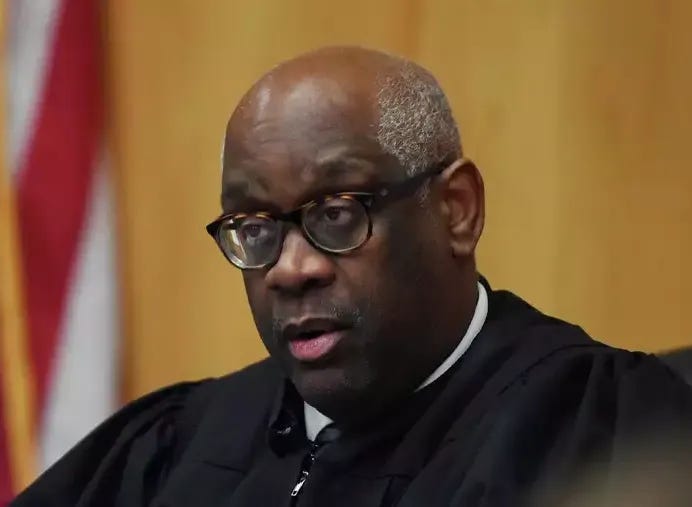
The attorneys’ summations underscored the stakes. Prosecutor Jack Doyle delivered a fiery closing, even mimicking Boyne’s violent blog lines to stoke jurors’ fear. He parroted Boyne’s own words – “they’re gonna get dead… gonna do it” – as if crowing what Boyne supposedly intended.
“I couldn’t believe they let him do that,” Boyne said of Doyle’s theatrics.
Doyle and co-counsel Gregory Borelli painted Boyne as a menace who “knew [his] judges were getting scared.”

By contrast, defense attorney Todd Bussert argued that while Boyne’s rants were offensive, words alone do not a felon make. Boyne never aimed a gun at anyone – “I put words on a website,” he quipped after finally being freed on bond.
Bussert noted that when a SWAT team raided Boyne’s porch at dawn, the groggy blogger shouted First Amendment rights and case law at the officers.
Now the jury must decide: can a citizen be branded a criminal for words alone?
Paul Boyne Acquittal: Using “Stalking” to Sidestep Free Speech
Facing First Amendment scrutiny, prosecutors attempted a last-minute pivot. What began as a prosecution of “criminal speech” is now being spun as a prosecution of “criminal conduct.” In the final charge conference, Doyle and Borelli insisted it’s Boyne’s pattern of harassment – a “course of conduct” – on trial, not his opinions. Judge Brown went along, instructing jurors to focus on whether Boyne’s actions (his repeated blog postings) intentionally caused reasonable fear or distress under Connecticut’s stalking laws.
In doing so, Brown essentially told the panel that while speech is generally protected, if they deem Boyne’s posts “true threats,” then the First Amendment won’t apply – without properly defining the terms. A juror heeding Judge Brown’s erroneous instruction could convict Boyne solely if they felt that someone, anyone, felt threatened by Boyne’s published words.
Counterman v. Colorado clarified that speech can be punished as a “true threat” only if the government proves the speaker had at least a reckless mental state—meaning he consciously disregarded a substantial risk that his statements would be understood as threats of violence.
Critics immediately cried foul. They call this a semantic sleight-of-hand to evade the Constitution and the reality that Boyne’s actions were published speech, not conduct directed at any one person.
“If prosecutors can repackage pure speech as ‘cyberstalking’ simply because it’s repetitive and disturbing, then the First Amendment’s protections become meaningless,” one legal commentator warned.
The state, they say, is trying to do indirectly what it cannot do directly – punish a man for protected speech by just relabeling it.
Paul Boyne Acquittal: Outrage and the First Amendment at Stake
Boyne was livid at the state’s maneuver. On a recorded jail call after court, he blasted Borelli’s strategy of punishing the act of blogging rather than its content.
“Posting a blog post… is what’s being punished,” Boyne scoffed. “That’s why we have a free press — no license needed to publish. The First Amendment is the essence of being American. But if you put up opinions they don’t like, they call it a ‘course of conduct’ meant to scare judges… God damn, are you people stupid?”
The blog posts at issue, dubbed the “Hateful Eight,” are undeniably ugly. In one, Boyne mused about a judge getting a “.50 cal to the head,” implying a sniper’s bullet. Another screed urged readers to “burn the courthouse to the ground, bring body bags.” Such violent hyperbole would alarm anyone – and the targeted judges testified they were indeed terrified.
But turning even despicable speech into a felony via the stalking statute raises deep constitutional concerns. The U.S. Supreme Court has ruled that only “true threats” – serious expressions of intent to harm – fall outside First Amendment protection.
Courts in Illinois and D.C. have likewise struck down laws that criminalized merely “distressing” online speech as overbroad. If mere harsh words can be rebranded as criminal conduct, free speech advocates warn, then no outspoken critic is safe.
Paul Boyne Acquittal: Defense Makes the Case
With the jury now deliberating, Boyne has a backup plan if the verdict goes south. But his biggest battle is with his own public defender. Boyne wants his attorneys to file a Motion for Judgment of Acquittal if he is convicted, arguing that no reasonable jury could find all elements of these crimes proven beyond a reasonable doubt. Connecticut Practice Book § 42-40 states:
“After the close of the prosecution’s case in chief … upon motion of the defendant … the judicial authority shall order the entry of a judgment of acquittal … if the evidence would not reasonably permit a finding of guilty.”
Raising alarming additional Sixth Amendment issues, Todd Bussert, Boyne’s assigned counsel from the Connecticut Public Defender’s Office, responded to Boyne’s request in a curt email: “NO.”

Boyne’s argument hinges on a simple premise: words alone aren’t enough. Key arguments include:
Only words, no acts: Boyne never approached, followed, or contacted any judge – he targeted them only with blog posts from afar. Publishing “nasty words on a website,” without more, cannot amount to criminal stalking.
No specific threats: None of Boyne’s tirades contained a direct threat like “I’m going to hurt Judge X,” nor any call for immediate violence. In fact, the indictment doesn’t pinpoint a single quote as a threat – it just criminalizes the angry tone and accumulation of his posts.
No serious harm: The judges felt harassed, but the law requires proof of substantial emotional distress or reasonable fear of physical harm. No judge testified to any lasting trauma (none needed counseling or time off work) – only understandable upset and annoyance. The Connecticut Supreme Court has held that “momentary alarm” isn’t enough for a stalking conviction, yet that’s essentially all the state showed.
Unproven intent: Prosecutors offered no clear evidence that Boyne intended to terrorize or intimidate. His venomous posts could just as easily stem from a (misguided) attempt to expose corruption or vent outrage, rather than a true wish to scare the judges. When conduct can be interpreted in an innocent way as well as a guilty one, courts say jurors must err on the side of innocence.
Jury’s Decision: Long Shot or Last Stand?
Even if the jury returns a guilty verdict, the defense’s arguments set the stage for a fierce challenge. Granted, such motions are long shots – trial judges rarely overturn a jury – and Judge Brown has shown little inclination to side with Boyne’s First Amendment claims so far. Still, the detailed acquittal brief will provide a roadmap for appeal if the jury convicts based on Brown’s erroneous instructions.
On his call, Boyne vented that his lawyers were already looking past the jury.

“I could have won this thing by myself. Now you guys are worrying about the appeal… which means I’m gonna be in jail,” he fumed, frustrated that anyone was even considering defeat. “General Douglas MacArthur didn’t worry about defeat. General Milley did. You know what I’m working with.”
Supporters argue this case cries out for jury nullification – a principled refusal to convict on an unjust law. After all, Boyne spent 18 months in jail awaiting trial for blog posts. His bond was once hiked to $1.5 million as punishment for sharing a witness list. To critics, that smacks of silencing dissent rather than pursuing real threats.
Now six Connecticut citizens hold the final power. If they heed the Constitution’s call – or if a judge later corrects course – then this high-profile free speech farce could end with two simple words: Not Guilty.
.
Paul Boyne Acquittal: The Draft Motion
Paul Boyne sent us the draft motion that he asked Todd Bussert to file. It is included below:
Motion for Judgment of Acquittal
Introduction
Pursuant to Connecticut Practice Book § 42-40 et seq. (motion for judgment of acquittal after the close of evidence or after verdict), the Defendant, Paul Boyne, respectfully moves for a judgment of acquittal on all counts. The jury returned verdicts of guilty on charges of Stalking in the First Degree (Conn. Gen. Stat. § 53a-181c) and Electronic Stalking (Conn. Gen. Stat. § 53a-181f), arising from the Defendant’s alleged online posts about several Connecticut judges. As discussed below, the evidence presented at trial was insufficient as a matter of law to establish the essential elements of these offenses beyond a reasonable doubt. Therefore, the Court must set aside the guilty verdicts and enter judgments of acquittal.
Legal Standard
Under Practice Book § 42-40 and related provisions, a trial court has a duty to render a judgment of acquittal if the evidence would not reasonably permit a finding of guilty beyond a reasonable doubt on a given charge. In other words, if viewing the evidence in the light most favorable to the prosecution, no rational juror could find every essential element proven beyond a reasonable doubt, then the conviction cannot stand. See State v. Jackson, 257 Conn. 198, 204 (2001) (applying the constitutional standard of Jackson v. Virginia, 443 U.S. 307 (1979), to Connecticut motions for acquittal). This safeguard protects the defendant’s due process right not to be convicted except on sufficient evidence. State v. Adams, 225 Conn. 270, 275–76 n.3 (1993). Furthermore, “[w]hen inferences become too stretched, remote, and speculative, they cannot constitute proof beyond a reasonable doubt.” State v. Niemeyer, 258 Conn. 510, 518 (2001). The Court must therefore closely scrutinize whether the State’s evidence, even taken at face value, meets the high burden of proof required for each element of each offense. As shown below, it does not.
I. The First Amendment Requires Acquittal Absent Proof of a “True Threat.”
As a threshold matter, the acts for which Mr. Boyne was prosecuted consist entirely of speech – specifically, posts and commentary on a personal blog critical of Connecticut judicial officials. It is fundamental that the First Amendment to the U.S. Constitution prohibits criminal punishment of speech unless the speech falls into a narrowly defined unprotected category, such as a “true threat.” Virginia v. Black, 538 U.S. 343, 359 (2003) (holding that the First Amendment permits a State to ban “true threats,” which are statements in which the speaker means to communicate a serious expression of an intent to commit an act of unlawful violence against a particular individual or group). The Supreme Court and Connecticut courts have repeatedly emphasized the distinction between true threats (which have no First Amendment protection) and speech that is merely caustic, hyperbolic, or offensive (which remains protected). See id. at 359–60; State v. Krijger, 313 Conn. 434, 446–47 (2014) (overturning a conviction for threatening where the defendant’s angry statements, though offensive, did not rise to the level of a true threat and were thus protected speech). In short, speech that communicates ideas or opinions — even vehement, harsh, and upsetting speech — cannot be punished as a crime unless it crosses the line into a serious expression of intent to cause unlawful harm.
In the present case, the State failed to prove that Mr. Boyne’s online statements were “true threats” as defined above. There was no evidence that Mr. Boyne ever directly threatened to physically harm any judge or anyone else. The blog posts at issue, according to the trial evidence, consisted of derogatory nicknames, criticism of the judges’ conduct in family court cases, and generally vitriolic commentary about the judiciary. While such speech is undoubtedly distasteful and upsetting to its targets, it is exactly the type of political hyperbole and angry opinion that the First Amendment robustly protects. See Watts v. United States, 394 U.S. 705, 708 (1969) (political hyperbole, even if unpleasantly sharp, is not a true threat). The State’s witnesses testified that they felt alarmed or fearful upon learning of the blog content, but a listener’s subjective fear cannot transform protected speech into a true threat unless the content of the speech objectively comprises a serious threat of violence. See Krijger, 313 Conn. at 449–50 (recipient’s fear is relevant but not dispositive; the court must analyze the actual words and context to determine if a true threat exists). Here, the content of the posts — as summarized at trial — did not include any explicit or implicit statements of intent to kill or injure the judges. Notably, the trial court itself recognized the First Amendment issue by instructing the jury that they could not convict unless the speech in question was found to be a true threat and not protected expression. Yet the evidence presented could not meet that constitutional standard. The posts were expressions of extreme outrage and contempt toward the judges (including harsh insults and calls for accountability), but such expressions, without more, are core political speech about government officials. Punishing a blogger’s harsh criticisms of public officials would strike at the heart of free speech. See Snyder v. Phelps, 562 U.S. 443, 458 (2011) (speech on matters of public concern — even deliberately hurtful or outrageous speech — is protected by the First Amendment).
Because the State introduced no evidence of any specific threat of unlawful violence by Mr. Boyne, no rational juror could conclude beyond a reasonable doubt that his speech was unprotected. At most, the evidence showed that Mr. Boyne intended to embarrass and offend the judges via his writings, but not that he intended to imminently harm them or incite others to do so. Speech intended to harass or annoy, absent a serious expression of intent to commit violence, remains protected. See Krijger, 313 Conn. at 448 (“there is a profound national commitment to the principle that debate on public issues should be uninhibited, robust, and wide-open, and it may well include vehement, caustic, and sometimes unpleasantly sharp attacks” (quotation omitted)). The First Amendment thus erects a formidable barrier to these prosecutions. In State v. Taupier, for example, the Connecticut Supreme Court upheld a conviction where the defendant’s e-mail stated a detailed plan to shoot a judge – a clear true threat. 330 Conn. 149, 170–71 (2018). By stark contrast, Mr. Boyne’s blog statements, while vile, never described any plan or intent to physically attack anyone. They are far closer to the protected speech in Krijger (angry rant lacking any actual threat) than to the unprotected speech in Taupier.
In sum, the State did not carry its burden to prove beyond a reasonable doubt that Mr. Boyne’s statements fell outside First Amendment protection. If the speech was protected, then Mr. Boyne’s conduct was not a crime at all, and judgment of acquittal is required on that basis alone. See Krijger, 313 Conn. at 448–49 (reversing convictions and ordering acquittal where statements were not true threats, thus prosecution violated First Amendment).
II. The Evidence Was Insufficient to Prove Each Element of Stalking in the First Degree.
Even setting aside the First Amendment issue, the State’s proof fell short on multiple essential elements of the stalking charges. Mr. Boyne was convicted of Stalking in the First Degree under Conn. Gen. Stat. § 53a-181c. That statute elevates stalking to a Class D felony when certain aggravating factors are present. In this case, the State proceeded under § 53a-181c(a)(4), which requires proving that the defendant committed stalking in the second degree and “intentionally directed such conduct at the other person, in whole or in part, because of the actual or perceived race, religion, ethnicity, disability, sex, sexual orientation or gender identity or expression of such other person.” Conn. Gen. Stat. § 53a-181c(a)(4). In simpler terms, the State had to show not only that Mr. Boyne’s conduct met the definition of stalking in the second degree, but also that he was motivated by a bias against the victims’ protected characteristics (such as their religion or sex). The State’s evidence was deficient as to both of these components.
A. Failure to Prove Bias Motivation (Aggravating Factor of § 53a-181c).
The bias/hate-crime element of first-degree stalking was not established by any concrete evidence. The three complainants in this case were Judge Thomas Moukawsher (and/or his spouse), Judge Elizabeth Stewart, and Judge Jane Grossman. The State alleged that Mr. Boyne targeted these individuals due to their religion, gender, or other protected traits, but the record is devoid of proof for such a claim. None of the blog excerpts shown to the jury contained slurs or epithets regarding race, religion, or similar characteristics of the judges. Instead, the animus reflected in the posts was directed at the judges’ roles and actions in the family court system – i.e., Mr. Boyne’s belief that these judges were corrupt or deserving of scorn because of their decisions. While abhorrent, that is not bias based on protected personal characteristics; it is a personal vendetta or political animus, which falls outside § 53a-181c(a)(4).
At trial, the State pointed out that Judge Grossman is Jewish and that Mr. Boyne’s writings included references to “Satanic” or “cabal” conspiracies in family court. However, drawing an inference of religious bigotry from those references is speculative at best. The State produced no statement from Mr. Boyne explicitly attacking Judge Grossman’s Jewish faith. Similarly, the State noted that the judges he targeted were female (except Judge Moukawsher), implying a misogynistic motive; yet again, there was no evidence that Mr. Boyne targeted them because they were women as opposed to because they were family court judges involved in cases he was passionate about. The Connecticut Supreme Court has made clear that to prove a bias element, the State must show a causal connection between the protected characteristic and the defendant’s conduct. See State v. Lewin, 128 Conn. App. 522, 534–35 (2011) (evidence must support inference that defendant selected victim or intensified conduct because of victim’s race, religion, etc.). Here, no reasonable jury could find beyond a reasonable doubt that Mr. Boyne’s course of conduct was driven, even in part, by the judges’ personal traits rather than by revenge or anger over their official actions.
Because the bias aggravator was not proven, the First Degree stalking charges cannot stand. At most, the evidence might fit a second-degree stalking theory (minus bias), which will be addressed next – but without the bias element, the elevation to § 53a-181c fails as a matter of law. Accordingly, the convictions under § 53a-181c should be set aside for this reason alone. See State v. Luxford, 256 Conn. 193, 207 (2001) (reversing elevated offense where aggravating factor was not supported by sufficient evidence, and directing entry of judgment on lesser offense if appropriate).
B. Failure to Prove the Elements of Stalking in the Second Degree (§ 53a-181d).
Independently, the State did not meet its burden to prove the core stalking offense (Second Degree) underlying the first-degree charges. Under the current stalking statute (as revised by P.A. 21-56, in effect at the time of the alleged conduct), a person commits Stalking in the Second Degree when, inter alia:
1. The person knowingly engages in a course of conduct directed at a specific person; and
2. that course of conduct would cause a reasonable person to either (A) fear for their physical safety (or a third person’s safety), (B) suffer emotional distress, or (C) fear injury or death of an animal they own. See Gen. Stat. § 53a-181d(b)(1).
Alternatively, the statute has a more specific provision, aimed at so-called “doxxing,” which makes it stalking if:
The person, for no legitimate purpose and with intent to harass, terrorize, or alarm, electronically discloses a specific person’s personally identifiable information without consent, knowing that such disclosure would cause a reasonable person to (A) fear for their physical safety or the safety of a third person, or (B) suffer emotional distress. See Gen. Stat. § 53a-181d(b)(3).
In this case, it appears the State relied on both theories: general harassing conduct (blog posts) causing fear or distress, and the specific act of publishing personal information about the judges (such as home addresses or other data) to cause fear or distress. The evidence is insufficient under either theory.
1. Lack of Evidence of a “Course of Conduct” Causing Reasonable Fear of Physical Safety
The statute defines “course of conduct” as “two or more acts, including, but not limited to, acts in which a person… by any action, method or device… follows, lies in wait for, monitors, observes, surveils, threatens, harasses, or communicates about or with a person.” Conn. Gen. Stat. § 53a-181d(a)(1). The evidence did establish multiple blog posts over time referring to the complainant judges, so the numerosity requirement (two or more acts) was met. However, the content and context of those acts were not such that a reasonable person would fear for their physical safety. Importantly, none of Mr. Boyne’s posts involved following the judges in person, appearing at their homes or workplaces, or any physical approach. He never contacted them directly at all – the communications were posts on a public website. This is a crucial distinction. The paradigm of stalking involves intrusive or surveillance-type behavior toward the victim. Here, the conduct was entirely online commentary. While unpleasant, it did not include any threat to physically approach or harm the victims.
The State argued that the judges feared for their safety upon reading the hostile things Mr. Boyne wrote (or hearing about them). But the statute requires that fear to be objectively reasonable. Given the nature of the blog posts (generalized rants on a website from an out-of-state author), a reasonable person would not automatically infer an imminent personal danger from them. There was no evidence that Mr. Boyne attempted to find the judges in person or that he had a history of violence. The judges did obtain extra security or protective orders; however, precautionary reactions do not prove that the statutory standard of reasonable fear of physical harm was met. The law asks whether a hypothetical reasonable person in the victim’s position would fear bodily harm (not just annoyance or reputational harm) as a result of the defendant’s conduct. Here, the worst that Mr. Boyne actually did was publish nasty words and possibly personal details. Without a threat or action beyond cyberspace, any fear of physical attack was speculative. Indeed, no evidence was presented of any direct threat like “I am going to hurt Judge X” or incitement such as “someone should assault Judge Y.” The absence of a direct or implied physical threat is fatal to subsection (b)(1)(A) (fear for physical safety).
Similarly, subsection (b)(1)(B) concerns causing “emotional distress,” which the statute defines as “significant mental or psychological suffering or distress that may or may not require professional treatment or counseling.” Conn. Gen. Stat. § 53a-181d(a)(2). The State did not prove substantial emotional disturbance rising to this level. While the judges undoubtedly were upset and angered by Mr. Boyne’s vitriol (as anyone would be), there was no evidence that any complainant suffered significant or lasting psychological harm. None testified to seeking counseling, taking leave from work, or experiencing severe impacts like PTSD. They expressed feeling harassed and worried, but that is qualitatively different from the kind of prolonged, serious emotional anguish contemplated by the statute. Cf. State v. Russ, 346 Conn. 221, 233–34 (2023) (to sustain a stalking conviction, the state must prove that the victim actually suffered substantial emotional distress or fear, not merely momentary alarm). Here, the prosecution did not call any mental health experts or present any documentation of emotional injury. In short, the evidence of harm was too insubstantial for any rational juror to find beyond a reasonable doubt that Mr. Boyne’s actions caused significant emotional distress as legally defined.
2. Lack of Evidence of “No Legitimate Purpose” and Specific Intent to Harass or Terrorize (Doxxing under § 53a-181d(b)(3))
Several counts rested on the allegation that Mr. Boyne unlawfully disclosed “personally identifying information” about the judges (such as home addresses, phone numbers, etc.) via his blog, with the intent to harass or alarm them. This corresponds to the newer “electronic stalking” provision of § 53a-181d(b)(3), often referred to as Connecticut’s anti-doxxing law. To secure a conviction under this subsection, the State needed to prove: (1) Mr. Boyne, with intent to harass, terrorize, or alarm the victim and with no legitimate purpose, (2) electronically disclosed the victim’s personal identifying information without consent, (3) knowing that such disclosure would cause a reasonable person to fear for their safety or suffer emotional distress. The evidence fails on multiple prongs of this test.
First, the “no legitimate purpose” element was not satisfied. Mr. Boyne’s defense throughout the case has been that he was acting as a self-styled journalist or whistleblower, exposing what he perceived as wrongdoing in the family court system. While one may soundly reject the validity or truth of his postings, the question for this element is whether there was any legitimate reason for publishing the information other than to harass. The term “legitimate purpose” is not defined by statute, but it implies some lawful reason or goal apart from intimidation. Here, at least some of the personal details Mr. Boyne posted (for example, linking judges to specific cases or public records) arguably served to bolster his attacks on their professional conduct. In his mind, albeit a warped perspective, he may have believed he was alerting the public to conflicts of interest or patterns of behavior. The State did not disprove the possibility that Mr. Boyne had this journalistic or political purpose. In other words, the State simply assumed the absence of legitimacy because the manner of posting was outrageous, but that does not meet the burden of proof. In a democracy, even obnoxious speech about public officials can have a gleaning of purpose such as protest or advocacy. The jury could not reasonably conclude beyond a doubt that there was “no legitimate purpose” behind Mr. Boyne’s disclosures. This element is especially important because it ensures that only malicious, gratuitous exposure of personal data (the hallmark of true doxxing) is criminalized, not exposure for whistleblowing or news reporting. Given the lack of clear evidence on Mr. Boyne’s purpose, a guilty verdict under (b)(3) cannot stand.
Second, the State failed to prove that Mr. Boyne acted with the specific intent to harass, terrorize, or alarm the judges by posting their information. Specific intent requires that causing the victim distress was Mr. Boyne’s conscious objective. See Conn. Gen. Stat. § 53a-3(11). The evidence does not foreclose a reasonable doubt on this point. Mr. Boyne’s primary intent could well have been to expose and embarrass the judges publicly, or to vent his own anger, rather than to personally alarm them. Indeed, he posted from out of state and did not send the info directly to the judges—he published it on a blog primarily followed by others. One could infer he sought to invite public scorn or investigation of the judges (however misguided), rather than directly frighten the judges. The State’s proof of intent was circumstantial and equivocal. They pointed to the inflammatory tone and the fact that personal addresses were posted, suggesting “he must have intended to scare them.” But that is not the only inference. It is equally plausible that he intended to invite readers of his blog to mail complaints or simply to demonstrate that he had dug up background on these officials. Without stronger evidence (e.g., statements by Mr. Boyne indicating “I wanted to scare them”), a juror could not find the intent element proved beyond a reasonable doubt. Connecticut law is clear that when an inference of intent is not the only reasonable interpretation of the conduct, the jury cannot speculate to reach guilt. See State v. Coleman, 14 Conn. App. 657, 667 (1988) (“When a fact is equally consistent with a reasonable interpretation of innocence as it is with guilt, that fact may not be the basis of a guilty verdict.”). Here, the intent evidence was, at best, equally consistent with an intent to publicly vilify the judges (without necessarily meaning to terrify them). This reasonable hypothesis of innocence as to the specific intent should have been sufficient to create reasonable doubt.
Finally, even assuming arguendo that Mr. Boyne did post personal details with ill intent, the “reasonable person” effect requirement of § 53a-181d(b)(3) was not met for similar reasons discussed earlier. The State had to show that the posting of this information would cause a reasonable person to fear for their physical safety or suffer emotional distress. But most of the “personally identifying information” disclosed (such as a judge’s home address or family names) is publicly available in directories or public records. A reasonable judge, knowing their address is often accessible through simple searches, would not automatically panic upon its publication alone. The State presented the subjective fears of the judges — for example, one judge testified that seeing her address on the blog made her worry about cranks showing up at her home. That reaction is understandable, but the legal question is whether such fear was objectively reasonable given the context. Crucially, Mr. Boyne did not call for anyone to use the addresses to harm the judges; he did not encourage violence or harassment at their homes. Without that, publishing contact information (while reprehensible) does not inexorably equate to a credible threat. Many activists publish officials’ office phone numbers or addresses to encourage lawful protest — an unsettling tactic, but not a physical threat per se. It bears repeating that no evidence showed any follow-up acts like surveillance of the homes or approaching the judges in person. Thus, even under the doxxing subsection, the State failed to prove beyond a reasonable doubt that Mr. Boyne’s conduct met the stringent criteria of the statute.
III. The Evidence Was Insufficient to Prove Each Element of Electronic Stalking (§ 53a-181f).
In addition to the traditional stalking statutes, Mr. Boyne was convicted under Connecticut’s Electronic Stalking law, Conn. Gen. Stat. § 53a-181f. That statute (a Class D felony) targets the use of computer or electronic technology to stalk someone. It requires the State to prove the defendant: (1) acted “with the intent to kill, injure, harass or intimidate” the victim, and (2) used an interactive computer service or electronic communication to engage in a course of conduct that either (A) places the victim in reasonable fear of death or serious bodily injury to themselves or a close family member or intimate partner, or (B) causes (or would reasonably be expected to cause) substantial emotional distress to the victim (or their immediate family/intimate partner). See Conn. Gen. Stat. § 53a-181f(a).
This statute, though overlapping with the general stalking provisions, has more demanding mens rea and harm requirements in certain respects. After reviewing the trial evidence under the § 53a-181f elements, it is clear that no rational trier of fact could find them satisfied beyond a reasonable doubt:
A. Insufficient Evidence of Intent to Kill, Injure, Harass, or Intimidate
The first element of § 53a-181f is the defendant’s specific intent. The statute notably includes “intent to kill or injure” as well as “intent to harass or intimidate.” There was zero evidence — none whatsoever — that Mr. Boyne intended to kill or physically injure any judge. The State did not allege any such intent; rather, they focused on “harass or intimidate.” But even as to those, the proof was lacking for reasons similar to the intent issues discussed in Section II(B)(2) above. Mr. Boyne’s writings, while hostile, were not accompanied by any actions that evince an intent to personally intimidate the victims (for example, showing up at a judge’s courthouse or sending threatening personal messages). The term “intimidate” implies coercing someone through the threat of force or consequence. There was no evidence that Mr. Boyne sought to coerce the judges into doing or abstaining from any action; he did not demand anything of them directly. Instead, his objective seemed to be to incite outrage against them or to insult them. That might qualify as “harassment” in a colloquial sense, but the legal threshold here is whether causing the personal harassment/intimidation of the victims was his conscious objective. The State’s case on intent leaned entirely on inference from the content — basically, arguing “he must have known and intended that these posts would harass/intimidate the judges.” But knowing one’s actions may upset someone is not the same as having the specific intent to achieve that result. People often speak harshly of public figures, intending to expose wrongdoing or rally others, not necessarily to intimidate the target into fear. Given the absence of direct proof of Mr. Boyne’s mental state, a reasonable jury could not exclude the hypothesis that his goal was something other than personally harassing the judges (such as seeking attention or venting). This element was therefore not proven beyond a reasonable doubt.
B. Insufficient Evidence of a Course of Conduct Placing the Victims in Reasonable Fear of Death or Serious Bodily Injury
Section 53a-181f’s first prong (a)(1) is even narrower than the stalking fear discussed earlier. It is not enough that the victims feared some harm; the fear must be of “the death of or serious bodily injury to” themselves, an immediate family member, or an intimate partner. Id. § 53a-181f(a)(1). “Serious bodily injury” generally means injury that creates a substantial risk of death or which causes serious permanent disfigurement or protracted loss/impairment of a body part. See Conn. Gen. Stat. § 53a-3(4). The record yields no evidence that any complainant feared Mr. Boyne would kill or gravely injure them or their loved ones. At most, the judges testified to feeling “unsafe” or “looking over their shoulder” after seeing the posts. But there was no testimony like “I genuinely thought he might try to kill me.” In fact, one judge conceded on cross-examination that she had no specific indication Mr. Boyne would come and attack her physically, only that his words were unsettling. The State did not show that any protective detail was assigned because of a credible threat to the judge’s life or limb; rather, it was precautionary, given the volatile language. For example, Judge Moukawsher’s family did not relocate or go into hiding, which one might expect if death threats had been perceived. In short, the gap between feeling harassed and fearing imminent serious violence is vast, and the State’s evidence did not bridge it. The jury would have to speculate to conclude that Mr. Boyne’s conduct put the judges in reasonable fear of being murdered or maimed. Speculation cannot support a conviction. See Niemeyer, 258 Conn. at 519. Thus, the prong (a)(1) of the electronic stalking statute fails on evidentiary grounds.
C. Insufficient Evidence of Substantial Emotional Distress (Prong (a)(2))
The alternative prong of § 53a-181f is satisfied if the defendant’s online conduct “causes, attempts to cause, or would reasonably be expected to cause substantial emotional distress” to the victim (or their family/intimate partner). Id. § 53a-181f(a)(2). This standard of “substantial emotional distress” is analogous to the “significant mental suffering” discussed earlier for stalking, and the analysis is similarly deficient here. To avoid redundancy, Mr. Boyne incorporates the arguments from Section II(B)(1) above. Briefly, while the judges were understandably upset by the blog, the State provided no objective measure of the severity of their distress. None took medical leave, none were shown to have diagnosable trauma, and their ability to perform their duties was not impaired (they continued presiding over court cases). Emotional distress is a spectrum; the law here targets a high degree of distress. Occasional anxiety or anger does not equate to “substantial” distress. Cf. State v. Liebenguth, 336 Conn. 685, 698 (2020) (noting that in harassment statutes, “substantial emotional distress” means more than trivial upset; it implies a serious disruption of the victim’s life). The record lacks evidence of any such serious disruption. Protective orders were issued, but those are legal safeguards, not proof of actual emotional damage. The judges did not testify to, say, sleepless nights, inability to work, or needing counseling – facts one might expect if “substantial” distress were present. Consequently, prong (a)(2) was not proven to the required certainty.
D. No Evidence of Surveillance or Physical Stalking Conduct
An additional point bears mention: § 53a-181f criminalizes using electronic means to “place another person under surveillance or otherwise to engage in a course of conduct” that causes the prohibited results. The term “under surveillance” implies watching, tracking, or monitoring the victim’s activities or whereabouts. There was no evidence that Mr. Boyne engaged in any surveillance of any judge. He never hacked into cameras, never physically trailed them, never attempted any real-time monitoring. His actions were all one-way broadcasts of content about the judges, not observational acts toward them. This is important context for evaluating the reasonableness of any fear — the judges did not report any incidents of seeing Mr. Boyne near their homes or courts, finding tracking devices, or the like. They were reacting solely to words on a screen. Thus, the entirety of Mr. Boyne’s conduct falls at the very outer boundary of what can even be considered “stalking” as opposed to pure speech. The legislature’s inclusion of the phrase “place under surveillance or otherwise engage in a course of conduct” in § 53a-181f shows that, typically, electronic stalking might involve using GPS, spyware, or repeated cyber contacts to monitor a victim. Here, none of that was present. This underscores the earlier arguments that the evidence did not satisfy the intended target of the statute. Mr. Boyne’s behavior, while reprehensible, does not match the pattern of any known stalking behavior that courts have found sufficient in past cases. It was entirely remote and lacked any direct pursuit or watching of the victims. This further confirms that the jury’s guilty verdict on electronic stalking was not supported by substantial evidence.
Conclusion
The role of the Court at this juncture is to ensure that no conviction stands unless every element is proven beyond a reasonable doubt. This is a case where, stripped of emotion and viewed analytically, the prosecution’s proof falls short on multiple fronts. The First Amendment forbids criminalizing Mr. Boyne’s speech absent a true threat, which was not proven. The bias motivation required for first-degree stalking was not proven. The existence of a criminal “stalking” course of conduct causing reasonable fear or serious distress was not proven to the rigorous degree required — the evidence shows hateful speech, but not a credible threat or injury. The doxxing-specific charges failed to exclude lawful purposes or to demonstrate Mr. Boyne’s specific intent beyond a reasonable doubt. And finally, the electronic stalking counts demand evidence of intent and fear of death/serious harm that simply was not present in this trial.
In our justice system, unpopular and even hateful defendants are entitled to the same burden of proof as any other. The jury may have found Mr. Boyne’s writings despicable (as do we all), but a verdict driven by disgust cannot substitute for proof beyond a reasonable doubt of each statutory element. The Court is the final safeguard against that occurrence. The Connecticut Supreme Court has not hesitated to reverse convictions — or order acquittals — in cases where protected speech was improperly treated as criminal or where essential elements rested on guesswork. See Krijger, 313 Conn. at 452. This Court should do likewise here.
For the foregoing reasons, the Defendant respectfully requests that the Court grant this motion and enter judgments of acquittal on all counts of the Information. In the alternative, at a minimum, the Court should acquit the Defendant of those counts (or lesser-included offenses) for which the evidence was insufficient, as analyzed above.
Respectfully submitted,
Paul Boyne, Defendant


