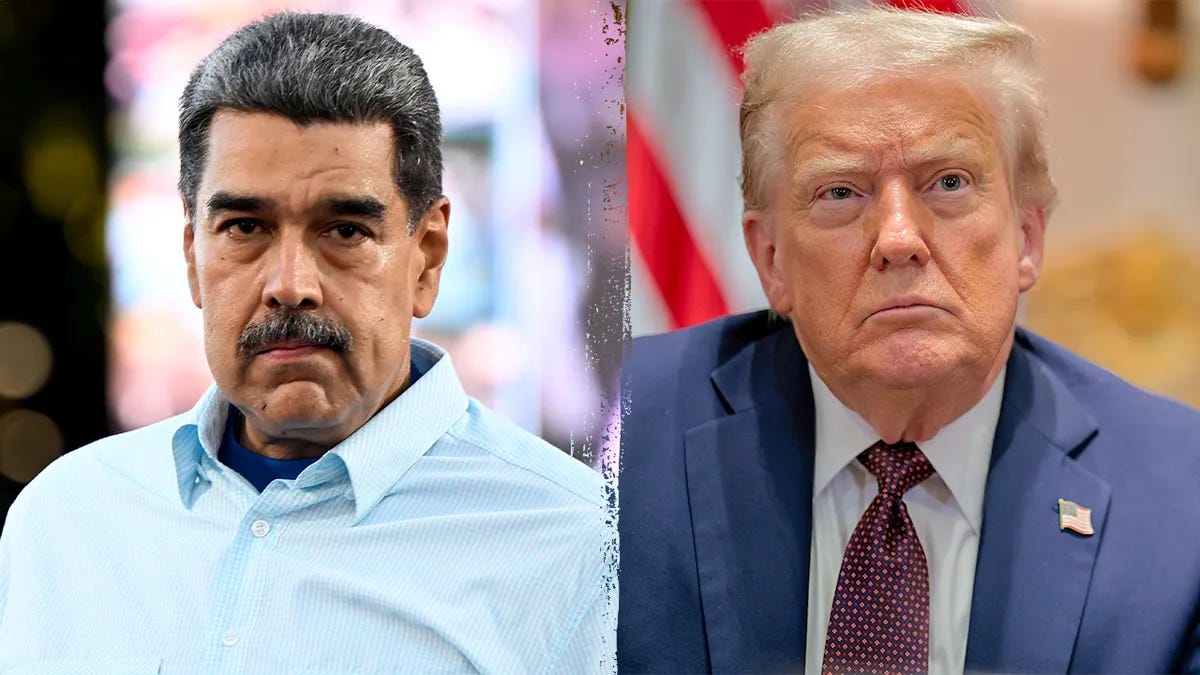
NOTE: This story isn’t about speculation. It’s about leverage. Nicolás Maduro isn’t fighting for acquittal; he’s fighting for daylight. His legal defenses are gone, his inner circle has flipped, and the precedent is brutal. Noriega tried immunity. He failed. Toscanino is a fantasy. The evidence is overwhelming. That leaves one move left on the board. Trump doesn’t need Maduro’s pity. Maduro may need Trump’s mercy. And Trump wants one thing above all else: the truth about 2020. That’s why the briefing-room question mattered. That’s why Trump didn’t deny it. Dominion isn’t a slogan here. It’s a bargaining chip. This piece is “Dominion or Doom,” first available on NYNewsPress.com.

By Richard Luthmann
On Tuesday in the White House briefing room, LindellTV correspondent Cara Castronuova lobbed a question that instantly shifted the political frame: “Now that Maduro is in U.S. custody, will you speak to him directly about Venezuela’s role in 2020 election tampering?”
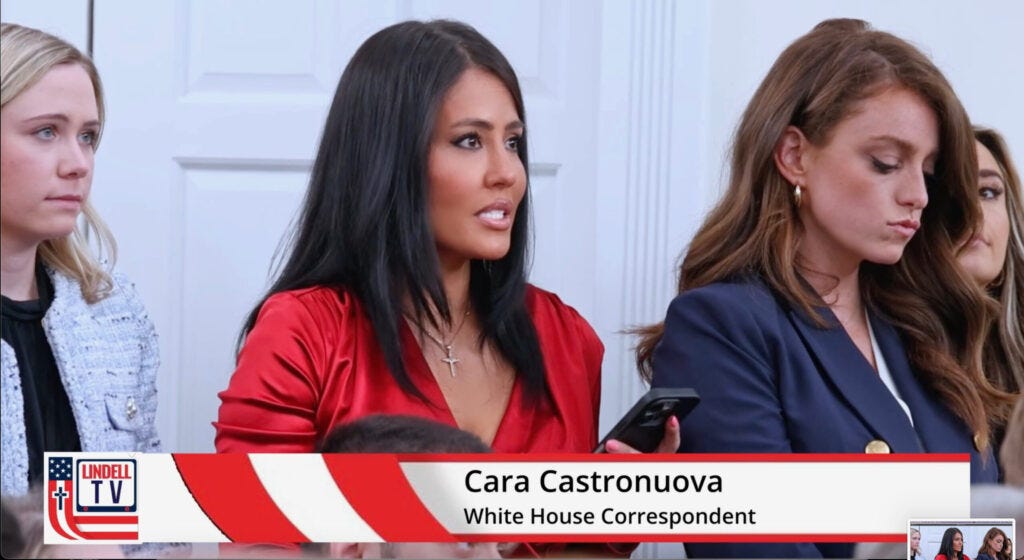
The question landed squarely on the nexus of two explosive realities now consuming Washington: the arrest of Nicolás Maduro, now in custody in New York, and the persistent — and politically potent — claims that Venezuela somehow factored into the disputed 2020 U.S. election.
President Trump did not definitively take the bait — at least not in straightforward terms. He deflected, saying, “No, I don’t think I would be doing that. My lawyers would be very unhappy… They’ve learned some things.”
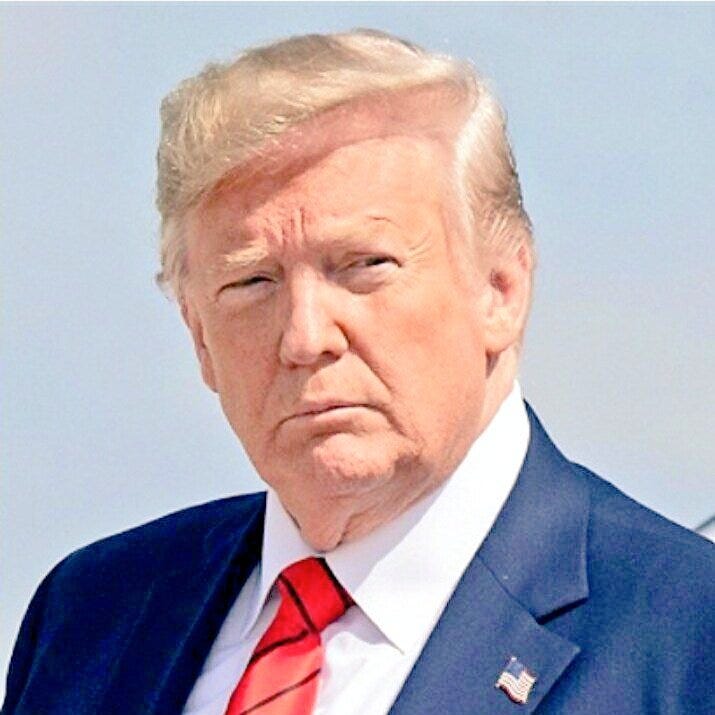
He didn’t deny the premise. He didn’t slam the door. And he didn’t retreat to the familiar drug-cartel talking points. On this question, Trump left the possibility open — enough to ignite political and media speculation: Venezuela. Election software. 2020. It’s all on the table now.
With Maduro now in the hoosegow, that question doesn’t just echo in the briefing room. It ricochets across the Justice Department, inside MAGA media circles, and straight toward the very heart of Trump’s ongoing claims about the 2020 election’s legitimacy.
Arraigned in New York and Drawing Dead
Nicolás Maduro shuffled into a Manhattan courtroom earlier this month with his hands cuffed and his luck run out. The deposed Venezuelan strongman – captured in a dramatic U.S. military raid – pleaded not guilty as prosecutors unsealed sweeping narco-terrorism charges against him and his wife, Cilia Flores.
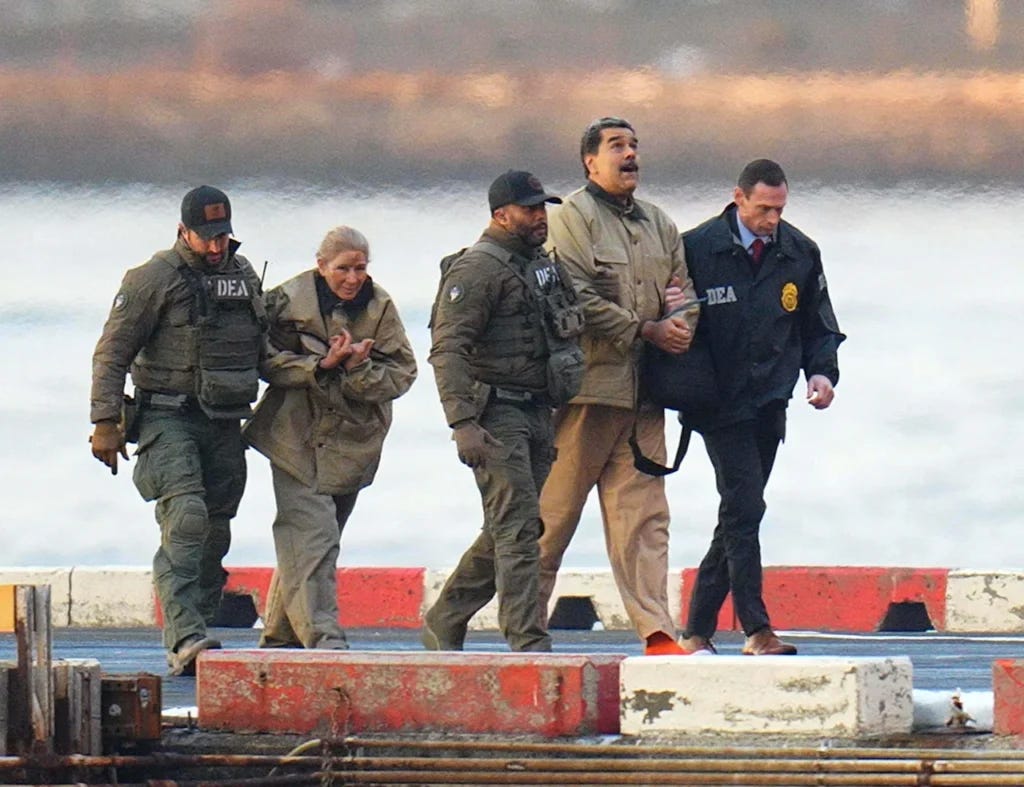
The indictment accuses Maduro of partnering with cartels and Colombian guerrillas to smuggle “thousands of tons” of cocaine into the United States. It even alleges he ordered kidnappings and killings of those who crossed his drug empire.
If convicted on all counts, the 61-year-old “presidente” faces multiple mandatory life sentences – effectively the rest of his life rotting behind foreign bars.
Judge Vernon Broderick ordered Maduro and Flores held without bail, underscoring that no leniency will be afforded to the accused cocaine traffickers. The once-defiant ruler looked on in silence as U.S. marshals led him out.
He knows the bleak reality: legally, Maduro is drawing dead. His supporters may rant that the U.S. just wants Venezuela’s oil, but in court, that rhetoric means nothing. Evidence is king here – and prosecutors have it in spades.
Maduro’s longtime spy chief has already flipped to the Americans, and more insiders are lining up to testify. With the weight of U.S. justice bearing down, the socialist autocrat’s legal strategy is evaporating before his eyes.
He has no cards left to play – except, perhaps, one long-shot wildcard that has nothing to do with drugs at all.
Dominion or Doom: ‘El Pollo’ Sings as Evidence Piles Up
Maduro’s worst nightmare is coming true: his inner circle is betraying him. Hugo Carvajal, the regime’s former intelligence chief known as “El Pollo,” is poised to be a star prosecution witness in the case, officials say. Carvajal was once Maduro’s trusted enforcer, but he fell out with the regime and was nabbed by U.S. agents in 2021.
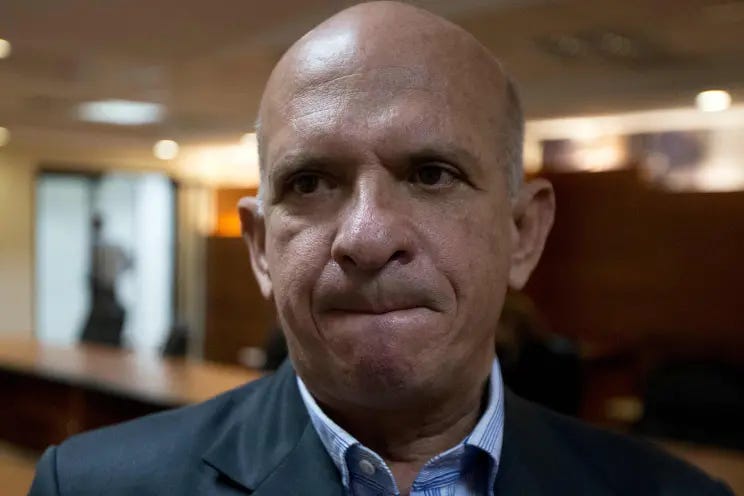
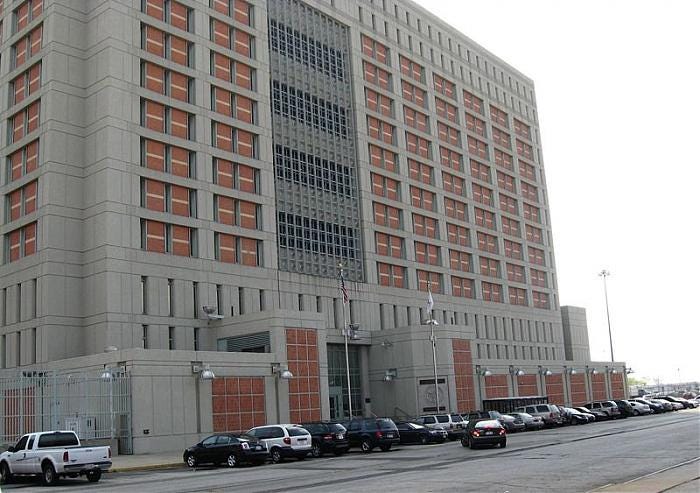
In June, Carvajal pleaded guilty to narco-terrorism and drug trafficking charges in the same indictment that ensnared Maduro. Now both men sit in Brooklyn’s Metropolitan Detention Center – but Carvajal may be about to sing like a canary to save his own skin.
“This is exactly the type of person that would be a witness in the case,” notes former federal prosecutor Neama Rahmani.
With a potential life term hanging over him, Carvajal has every incentive to spill Maduro’s secrets in exchange for a lighter sentence. And he’s not the only one. According to Richard Gregorie, who helped take down Panamanian dictator Manuel Noriega in 1988, U.S. prosecutors will have “a number of internal people from Venezuela and drug dealers who were involved in moving the drugs” ready to testify against Maduro.
The feds have spent years flipping members of the so-called Cartel of the Suns (the drug ring allegedly run out of Venezuela’s highest offices). Carvajal’s own lawyer even bragged that his client holds information “extraordinarily important to our national security and law enforcement.”
In short, Maduro is cornered by a mountain of evidence from his former allies. The betrayals that toppled him are about to bury him. No wonder the desperate despot is grasping at exotic legal defenses – even ones doomed to fail.
No Immunity: Noriega Precedent Dooms Maduro
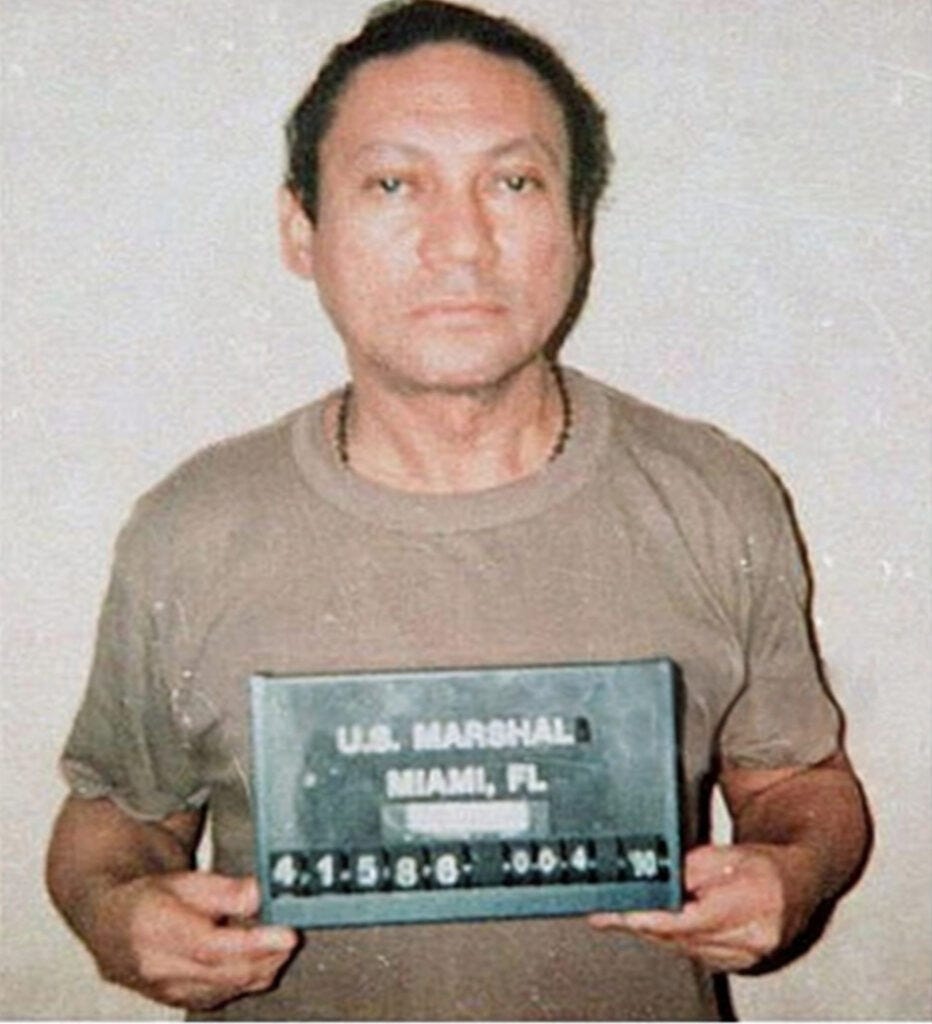
Maduro’s attorneys have floated the idea of sovereign immunity – the notion that a head of state can’t be prosecuted in a U.S. court. It’s a Hail Mary legal claim, and history shows it won’t fly. The exact same gambit was tried – and crushed – in the case of Panamanian strongman Manuel Noriega decades ago.
Legal experts note that the question was “largely settled” by Noriega’s trial: U.S. courts will not throw out charges simply because a foreign leader was hauled inapnews.com. The key reason is simple: Washington long ago stopped recognizing Maduro as a legitimate head of state.
“There’s no claim to sovereign immunity if we don’t recognize him as head of state,” explains Dick Gregorie, the ex-prosecutor who put Noriega in the dock. “Several U.S. administrations, both Republican and Democratic, have called his election fraudulent and withheld U.S. recognition. Sadly, for Maduro, it means he’s stuck with it.”
In plainer terms, Maduro can’t claim presidential immunity when the U.S. doesn’t view him as President at all.
Back in the ’80s, Noriega’s lawyers argued the U.S. invasion that captured him was an illegal “act of war” and tried to get his case tossed. The judge slammed that door shut. Noriega was convicted on drug trafficking and racketeering charges and spent nearly 30 years behind bars across three countries.
Maduro’s fate looks no different. He can protest all he wants that he’s a sovereign president – the American courts aren’t listening.
As one Miami defense attorney quipped, “Before you ever get to guilt or innocence, there are serious questions about whether a U.S. court can proceed at all… [but] for U.S. courts, the only opinion that matters is that of the State Department.”
And the State has tagged Maduro a fugitive, even dangling a $15 million bounty for his capture in years past (a reward he has now unwittingly helped someone collect).
Bottom line: the sovereign immunity defense is DOA. The judge in New York will cite Noriega’s case and dozens of other precedents, then swiftly show Maduro’s lawyers the door.
Dominion or Doom: Kidnapping Complaints Fall Flat (The Toscanino Flop)
Since immunity is a dead end, Maduro’s legal team is reportedly mulling an even more exotic defense – the “Toscanino rule,” a rarely-used doctrine from a 1974 case (United States v. Toscanino) involving a Mafia narcotics smuggler. The Toscanino rule holds that a U.S. court may lose jurisdiction if a defendant was brought into the country by conduct so outrageous, so “shocking to the conscience,” that it violates due process.
In other words, if American agents kidnapped or tortured Maduro in defiance of the law, perhaps the court could be forced to let him go. Maduro has already begun laying the groundwork for this claim – as guards escorted him out of court, he loudly griped that he’d been “kidnapped” and was a “prisoner of war” of the U.S.
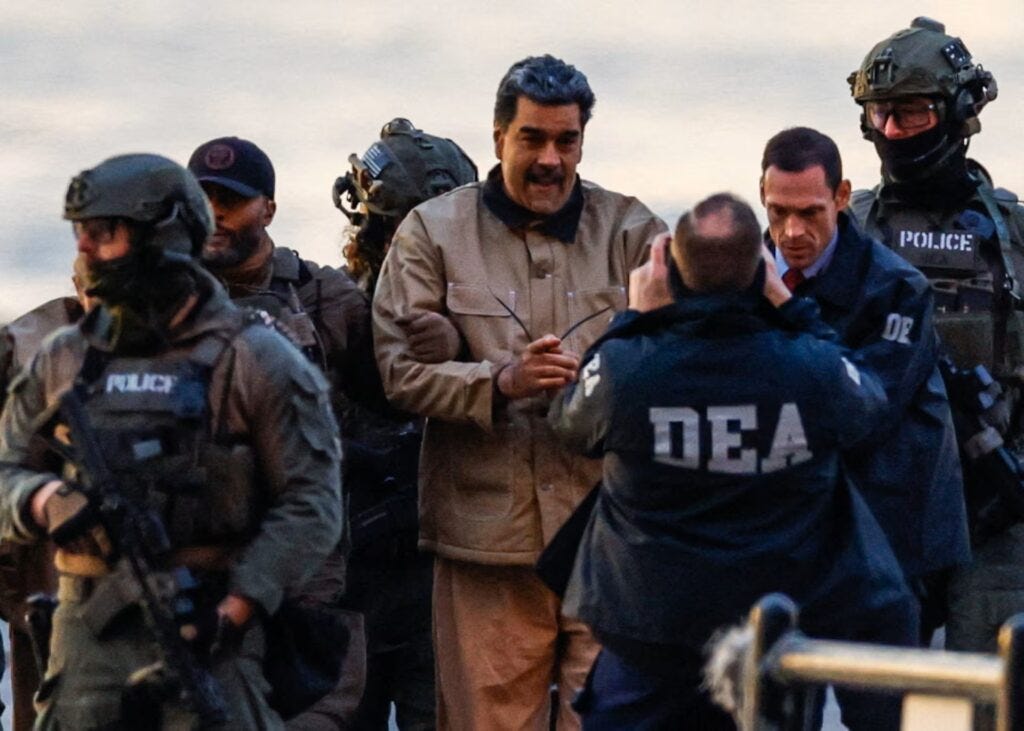
His lawyers will argue that the military strike and snatch operation in Caracas fits the Toscanino exception: a foreign leader seized by force, without congressional approval, equals an “outrageous” abduction that bars prosecution.
Here’s the problem: that defense is a pipe dream. The Ker-Frisbie doctrine – long-standing U.S. law – says fugitives can be tried in U.S. courts regardless of how they were captured. Toscanino exceptions apply only to extreme cases of torture or brutality beyond the pale.
By all accounts, Maduro’s capture was executed with precision and professionalism, not bloodlust. There are no credible reports that U.S. forces beat or brutalized him; at most, the 61-year-old may have earned a bruise or two while being rushed out of bed. That’s hardly the kind of abuse that would shock a judge’s conscience.
When Noriega tried a similar argument – calling the U.S. invasion that nabbed him “shocking” and illegal – the courts brushed it aside. In fact, the Justice Department had explicitly blessed “forcible abductions” abroad in a 1989 legal memo by then-AG Bill Barr, asserting the U.S. can snatch fugitives in foreign lands to enforce its laws.
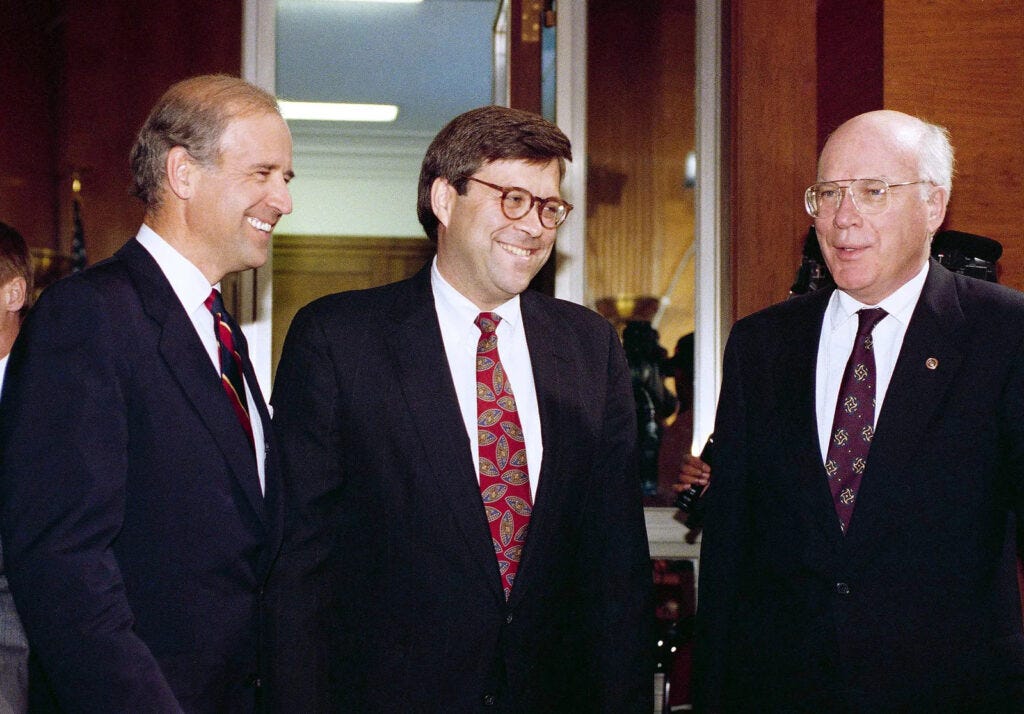
The U.S. Supreme Court has repeatedly upheld America’s right to prosecute foreign defendants “regardless of whether their presence was lawfully secured.”
Simply put, Maduro’s whining about a “kidnapping” won’t get him off the hook. Unless he can show he was waterboarded for weeks (he wasn’t), the court will retain jurisdiction. The Toscanino rule is a lifeline in theory – in practice, here, it’s dead on arrival.
Dominion or Doom: Maduro’s Trump Card
With courtroom maneuvers failing, Maduro is left with one astonishing option – political capitulation to the one man who could save him: Donald J. Trump. The U.S. president who ordered Maduro’s capture is also the only person who might pardon him or cut a deal down the line. Trump has made it abundantly clear what he hungers for in return: proof that the 2020 U.S. election was “stolen.”
In Trump’s view, Venezuela – and Maduro’s regime specifically – played a sinister role in flipping votes against him via compromised voting machines. This isn’t just idle conspiracy chatter; it’s a claim Trump himself has openly pushed. In the hours after Maduro’s arrest, Trump reposted a video alleging that Dominion voting machines were manipulated to favor Joe Biden.
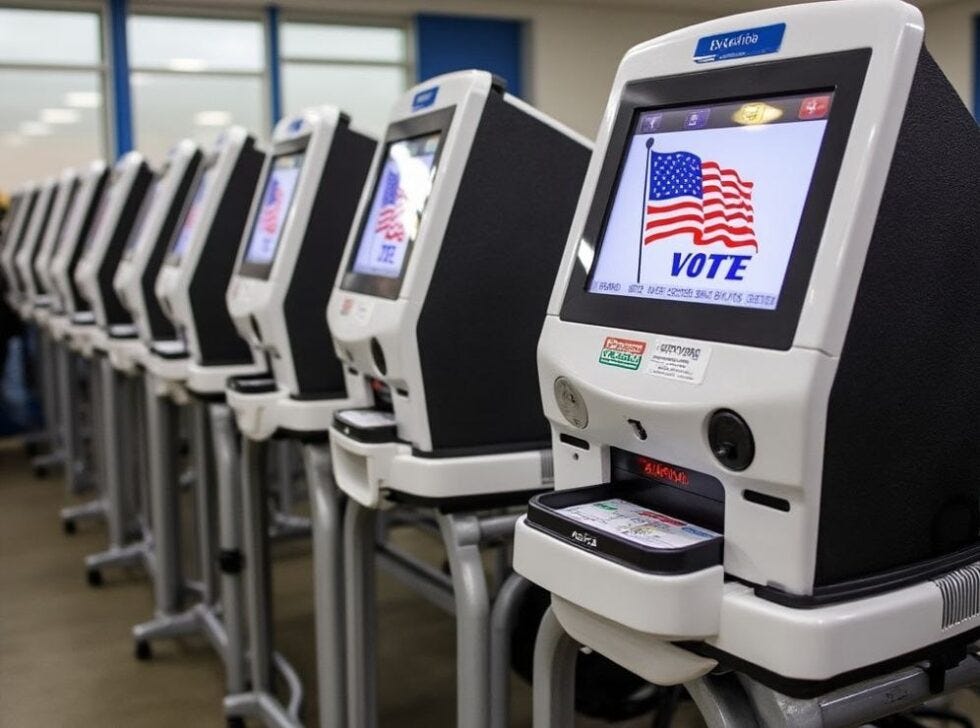
He thundered on Truth Social: “We must focus all of our energy and might on ELECTION FRAUD!!” – a none-too-subtle nod to the long-running theory that Venezuelan technology helped rig 2020.
Right-wing allies immediately connected the dots. “Nicolás Maduro might be Trump’s final revenge for the election theft of 2020,” declared commentator Benny Johnson. According to Johnson, Maduro “knows where all the bodies are buried” when it comes to dodgy voting machines.
“Smartmatic and Dominion Voting Systems… are Venezuelan by design,” Johnson claimed, designed to rig elections worldwide. He even alleges he has it on good authority that Maduro admitted to helping rig the 2020 U.S. vote and is “in possession of all of that evidence.”
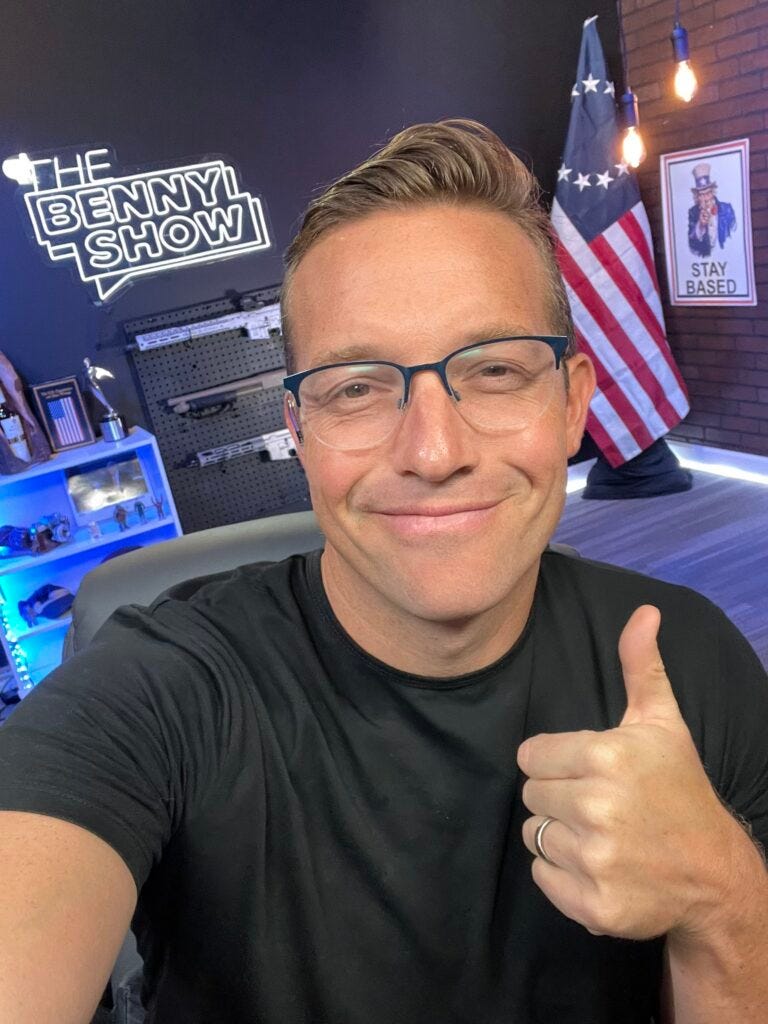
In sensational fashion, he warned that “globalists around the world [are] bricking in their pants” now that Maduro is in U.S. custody.
Trump clearly suspects Maduro holds the key to validating his claim of a stolen election, and recent revelations have given Trump’s allegations new life. In Georgia, an official investigation this year found that Atlanta’s Fulton County likely double-counted over 3,000 ballots during the 2020 recount – a glaring irregularity.
“It has now been factually proven that both the hand audit and machine tally violated Georgia election law,” the voter who exposed the issue proclaimed, adding one word: “vindicated.”
This wasn’t outright fraud, according to state officials, but it fuels Trump’s narrative that the 2020 process was robbed. Pile on other anomalies, sworn affidavits, and surveillance videos cited by Trump’s team, and you have heaps of smoke that his base is sure to indicate fire. Maduro, amazingly, may hold a match to light that fire into a blaze.
For Maduro, dangling the Dominion card might be the only ace left in his hand. If he can hand Trump concrete evidence – say, internal documents from Smartmatic/Dominion’s Venezuelan founders, or data showing how votes were flipped in swing states – it could be revolutionary. In theory, Maduro could name names of co-conspirators and provide a roadmap of the supposed election heist.
Who might he implicate?
Johnson mused about a rogue’s gallery of Trump’s enemies: Soros, the Chinese Communist Party, left-wing NGOs, Democratic megadonors – anyone who allegedly “funded his regime” or benefited from the vote manipulation. It’s the kind of bombshell that would make Trump a hero to his supporters for “catching the cheaters,” and utterly vindicate the narrative that 2020 was stolen.
And in return, what would Maduro get?
Perhaps mercy – maybe a deal from Trump’s Justice Department, or a full pardon on Trump’s last day in office. It’s not so far-fetched: Trump has already pardoned other leaders convicted of drug crimes (like Honduras’s ex-president) if it suits U.S. interests.
Make no mistake, this is a cynical bargain with the devil, and Maduro knows it. To even entertain it is an admission of desperation. But desperation is exactly where he finds himself.
Every traditional legal exit is blocked.
Sovereign immunity? Shot down.
Abduction defense? Laughable.
Beating the charges at trial? Impossible, with his own henchmen testifying against him.
The only person who can deliver Maduro from a U.S. prison is the man in the Oval Office – and Trump’s price for salvation is delivering him the scalp of Dominion. In the end, it comes down to this stark choice for Nicolás Maduro: give Trump what he wants, or die in an American cell.
The narco-dictator’s legal strategy has vanished like smoke. All that remains is the one word that could seal both his fate and Trump’s legacy: DOMINION.