


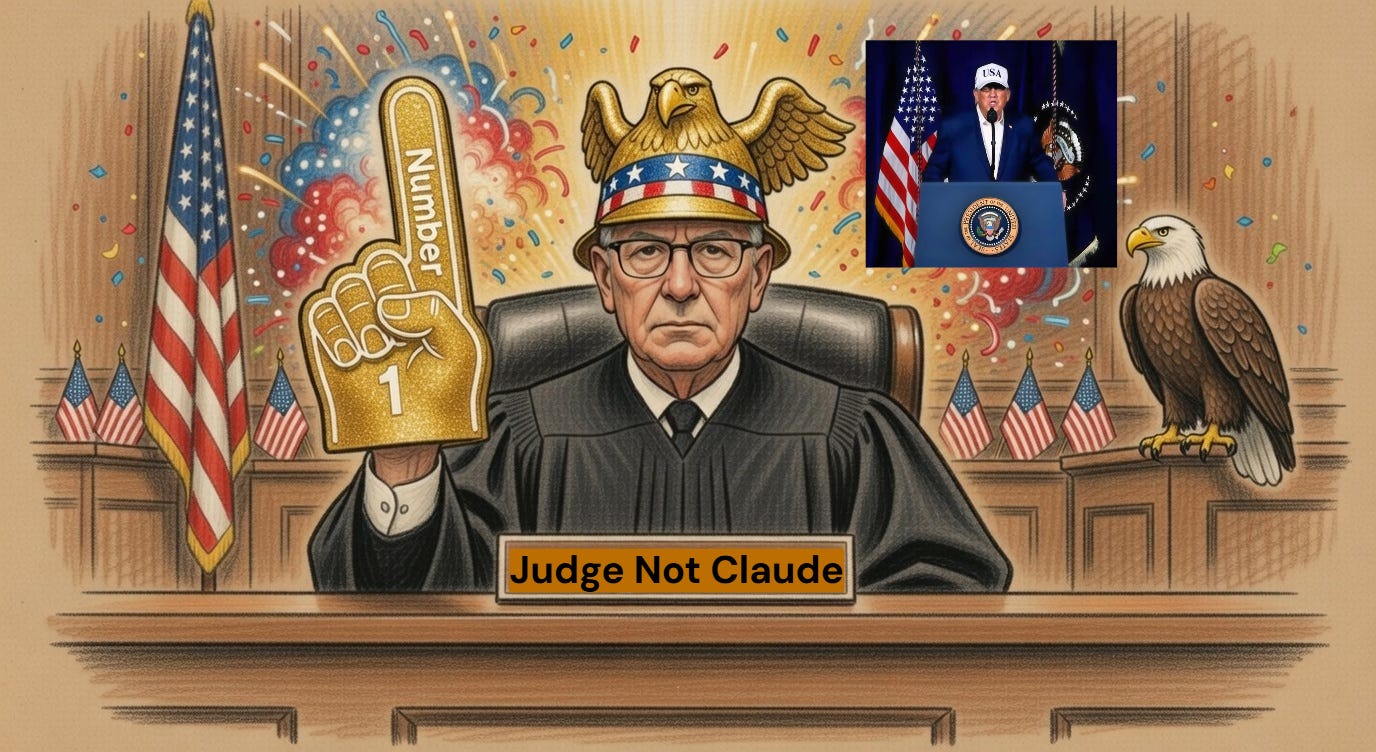
LUTHMANN NOTE: (FLORIDA, USA) – We’re waiting on Article III U.S. District Court Judge Robert L. Hinkle’s ruling on Rule 72 Objections in the Gainesville Federal Court case of Hales v. Preston et al. (also known as Fed 2). And this one matters. It will confirm whether federal pleading standards still work. It will show whether anti-SLAPP statutes have teeth. It will show whether retaliatory litigation aimed at online critics will not slide past Rule 12(b)(6). “Judge Not Claude” may sit in a simulated courtroom, but the doctrine he applied is real. Twombly is real. Iqbal is real. Rule 11 is real. And the 11th Circuit’s intolerance for shotgun pleadings is real. The message to Jeremy Hales and the What the Hales media ecosystem is simple. Speech is protected. Courts are not weapons. And if you file meritless suits to punish critics, you may pay for it. This piece is “‘Judge Not Claude’ Rules,” first published on FLGulf.News.

By Richard Luthmann
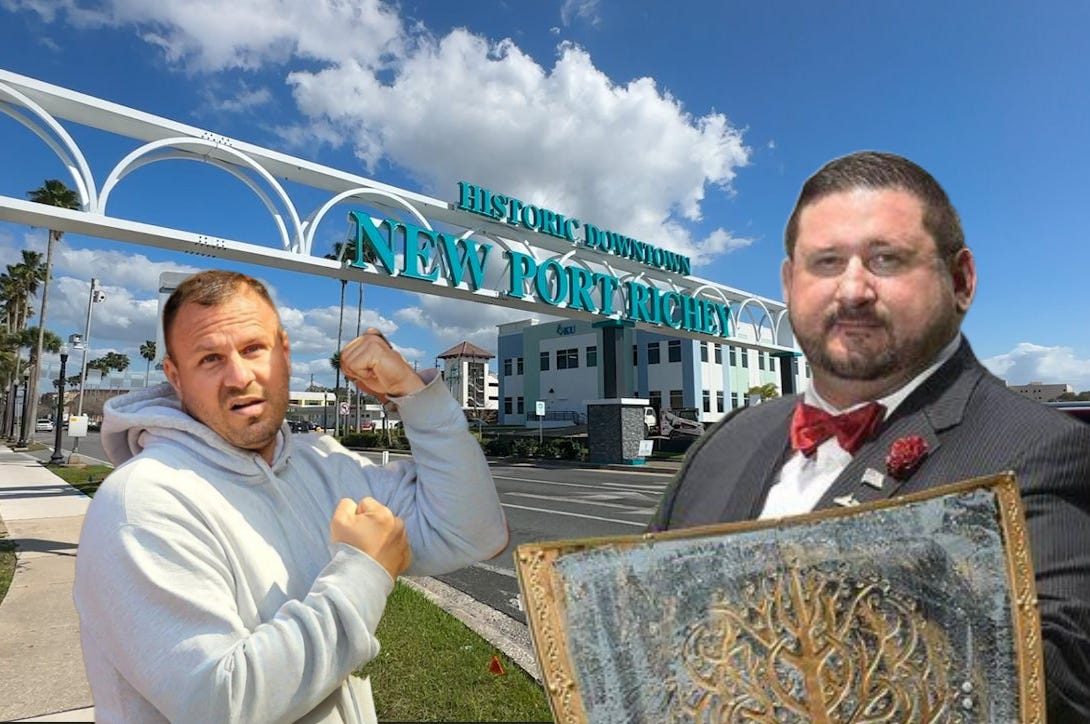
(FLORIDA, USA) – Jeremy Hales built his brand on storage lockers, spectacle, and swagger. Then he marched that swagger into the Florida Federal court. Hales came in swinging. Now, he’s left staring at a dismissal with prejudice.
Enter “Judge Not Claude” — an AI jurist in a simulated Florida federal courtroom.

Not Claude. Not Anthropic’s “Radical Left” brainchild. Not the AI developer that President Trump torched on Truth Social when he warned that America will not let a “woke company” dictate policy.
Trump said, “WE will decide the fate of our Country — NOT some out-of-control, Radical Left AI company.” Message received.
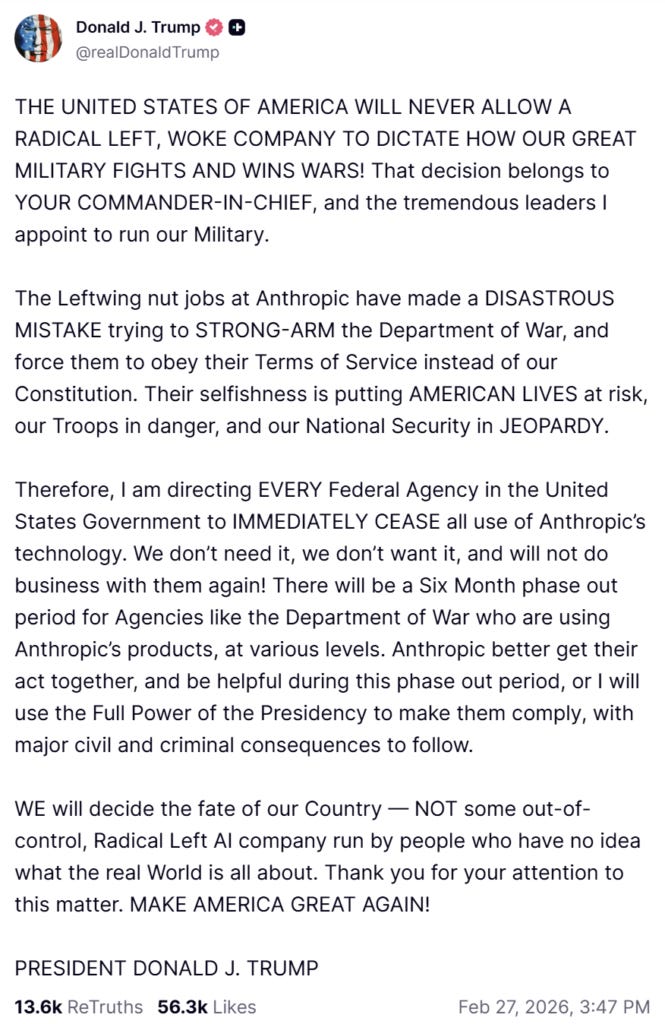
So this judge is the latest de facto digital Trump appointee. He’s not woke, weak, or stupid. This is Judge NOT CLAUDE. And it didn’t take long for Judge Not Claude to rule against Jeremy Hales.
Hales sued critics across YouTube and social media. He lobbed the Lanham Act at them and invoked Florida’s Deceptive and Unfair Trade Practices Act. Hales cried tortious interference and alleged civil conspiracy, describing an “Anti–What the Hale$ Media Ecosystem” out to destroy him.
In reality, the Report and Recommendation (R&R) by U.S. Magistrate Judge Zachary Bolitho dismantled it piece by piece. Hales’s 74-page complaint did not survive Rule 12(b)(6).

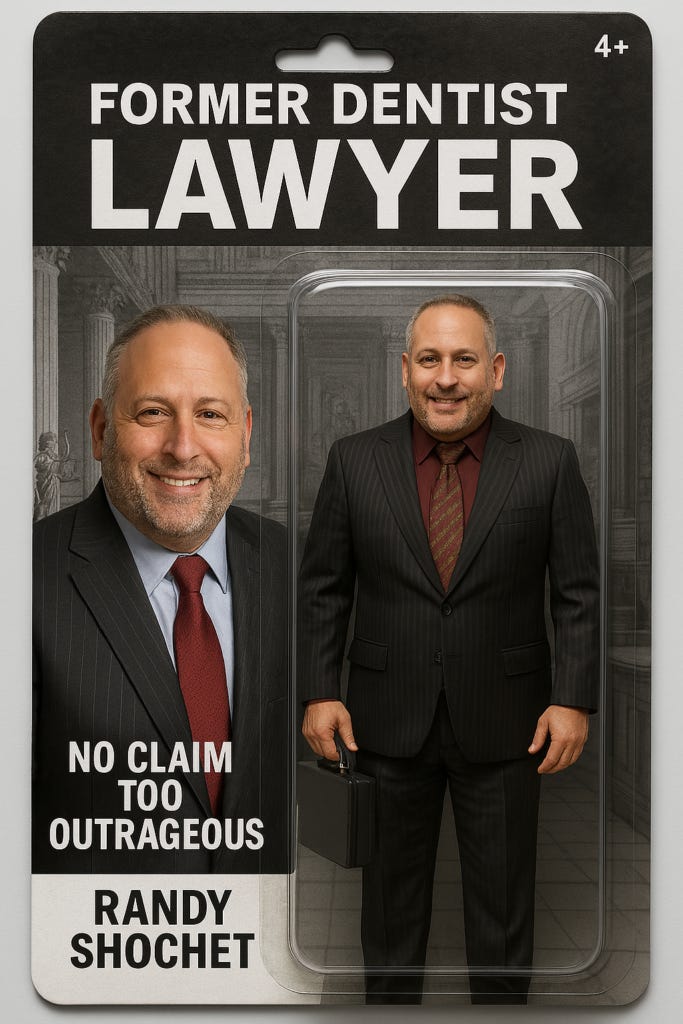
The “GERM” didn’t take it well. He directed his lawyers, Randall “Pocket Rocket” Shochet and Doreen Turner-Inkeles, to kill an entire forest, filing Rule 72 Objections to Judge Bolitho’s R&R.
In our AI-generated funhouse, Judge Not Claude adopts the magistrate’s recommendation in full. Every claim is dismissed with prejudice. The ruling brands the pleading a “shotgun complaint.” It says the allegations are vague, conclusory, and do not cross the plausibility line under Twombly and Iqbal.
“The judiciary’s time and resources are finite,” the Judge Not Claude wrote. “This federal court is not a tool to be used to settle personal scores.”
That line lands. And our simulated federal court did not stop at dismissal. It reached for the wallet.
Defendant David Helm will recover “artificial attorney’s fees” under Florida’s anti-SLAPP statute, and so will everyone else. The synthetic judge found the lawsuit “fits the pattern of a SLAPP suit.”
Translation: meritless litigation aimed at punishing protected speech.
The order goes further, warning Hales and his counsel about Rule 11. It signals that future filings of this character could trigger sanctions for vexatious litigation. That is not a suggestion. That is a flare shot over the bow.
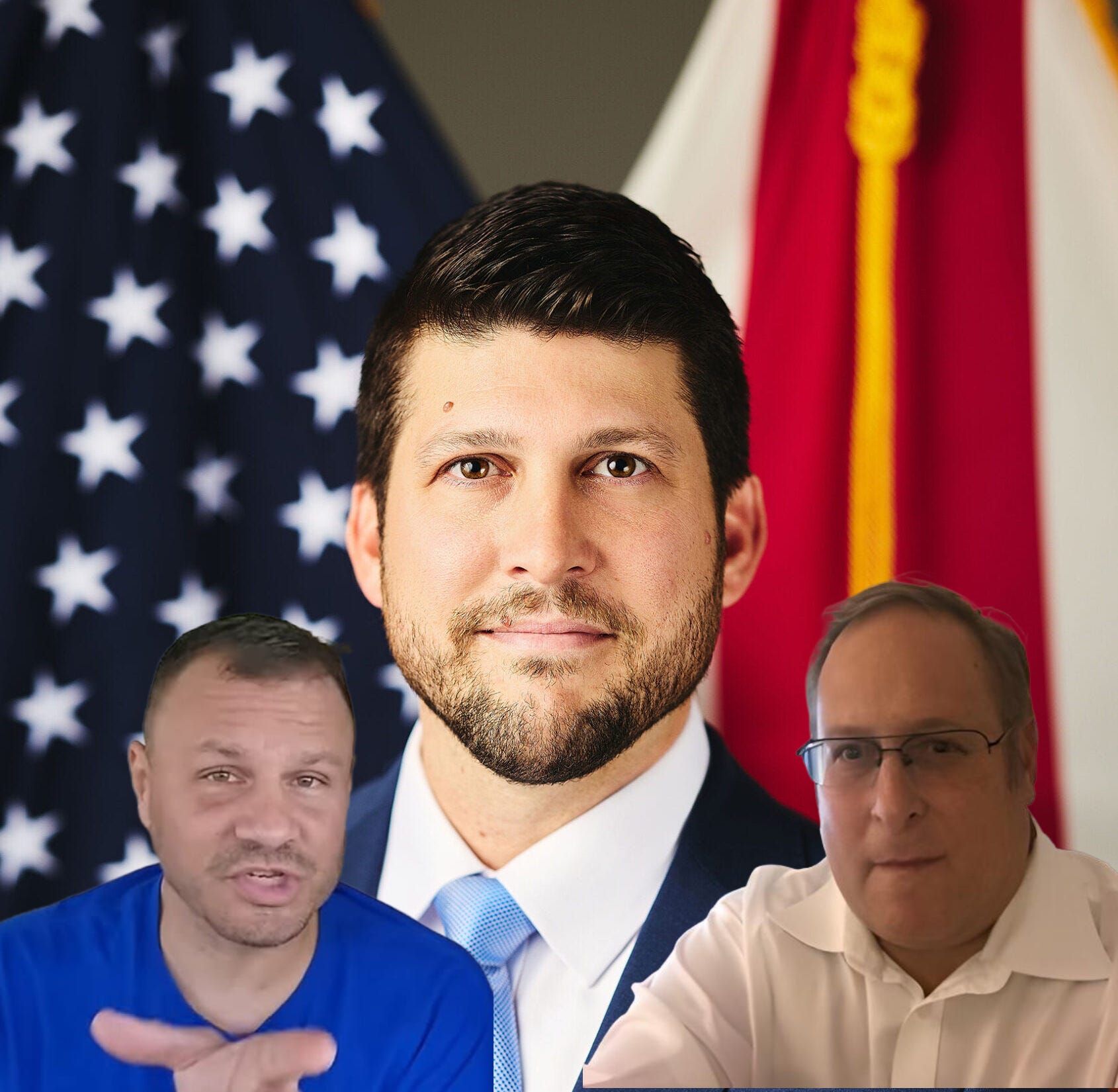
It’s not Jeremy Hales’s first legal rodeo. He has filed multiple federal suits against critics and YouTube commentators, many defendants appearing pro se. Most cases sputtered out, while some collapsed under their own weight.
Now an AI judge in a simulated courtroom delivered the cleanest blow yet. And here is the kicker.
Judge Not Claude is not an Article III judge – he is code in a simulated Florida courtroom. Yet his analysis reads tighter than the combined livestream legal commentary of Megan Fox, That Umbrella Guy (TUG), ShizzyWhiznuts, Jay Jip, Mr. Coop, Rosalyn Duke, Shara Michelle Wolfe, and the rest of the Hales orbit.



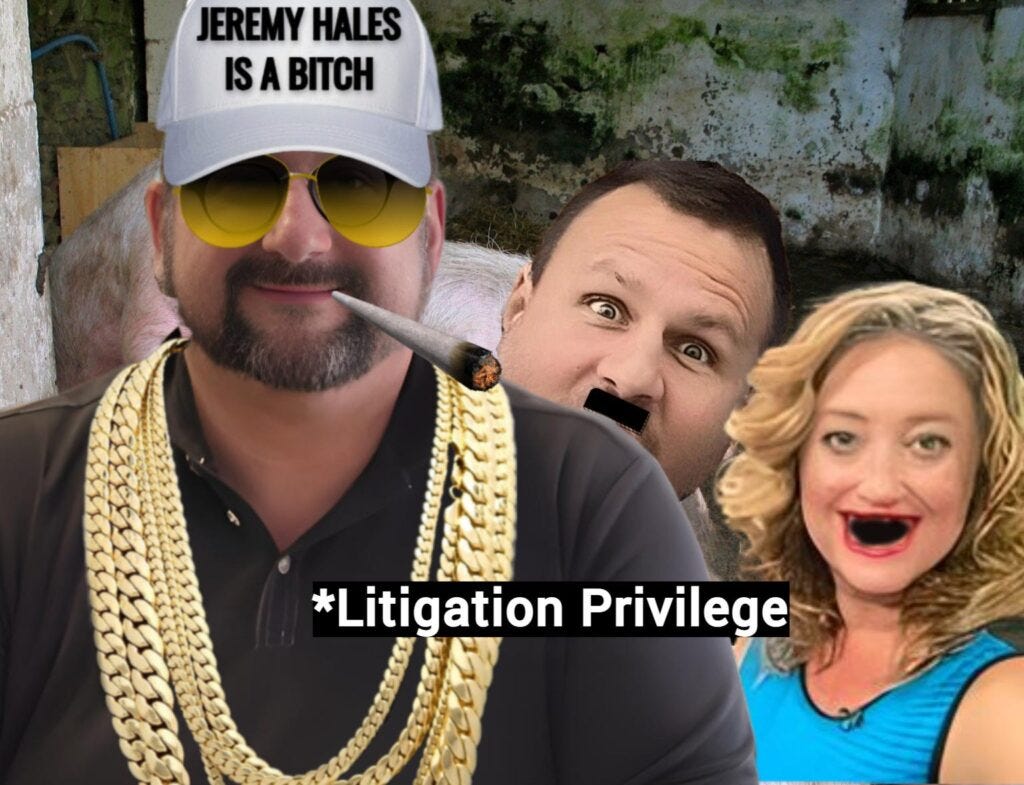


Every claim was tested against black-letter elements, and every theory was measured against pleading standards. No theatrics. No echo chamber applause. Just doctrine and dismissal.
Even in simulation, the message rings loud: You cannot litigate your way out of criticism in the United States of America.
Judge Not Claude’s Decision and Order follows below.
Decision and Order Adopting Report and Recommendation and Dismissing Case with Prejudice
‘Judge Not Claude’ Rules: Background

Plaintiffs Elephant Shoe, LLC (d/b/a “What the Hale$”) and Jeremy B. Hales brought this action against multiple defendants over allegedly defamatory online commentary that Plaintiffs claim harmed their social media-based business. The Second Amended Complaint spans 74 pages and asserts a mix of federal and state-law claims – including a Lanham Act false advertising claim, a Florida Deceptive and Unfair Trade Practices Act (FDUTPA) claim, tortious interference with business relations, civil conspiracy, and more – all arising from what is essentially a social media feud.
Eight defendants moved to dismiss the Second Amended Complaint for failure to state a claim. Those motions were referred to Magistrate Judge Zachary C. Bolitho, who issued a comprehensive Report and Recommendation (“R&R,” Doc. 161) recommending dismissal with prejudice of all claims against the eight moving defendants.
The R&R further advised that one defendant (David C. Helm) be awarded attorneys’ fees under Florida’s anti-SLAPP statute, Fla. Stat. § 768.295, due to the frivolous and retaliatory nature of the lawsuit. Plaintiffs have filed Objections (Doc. 165) to the R&R, which this Order now addresses.
‘Judge Not Claude’ Rules: Standard of Review
Where a party objects to a magistrate judge’s recommended disposition of dispositive matters, the district court must review de novo the portions of the R&R to which proper objection is made. See 28 U.S.C. § 636(b)(1).
The Court has conducted a de novo review of the R&R, Plaintiffs’ objections, and the record. In doing so, the Court applies the familiar Rule 12(b)(6) standard, accepting well-pled factual allegations in the complaint as true but requiring “enough facts to state a claim to relief that is plausible on its face.” Bell Atl. Corp. v. Twombly, 550 U.S. 544, 570 (2007); see also Ashcroft v. Iqbal, 556 U.S. 662, 678 (2009). Conclusory allegations and legal labels are not sufficient – the complaint must contain facts that raise a right to relief above the speculative level. Twombly, 550 U.S. at 555.
Having applied these standards, the Court finds the R&R is well-founded. As explained below, each of the Plaintiffs’ objections lacks merit.
The Court will therefore overrule the objections, adopt the R&R in full, and dismiss all claims against the defendants in question with prejudice.
‘Judge Not Claude’ Rules: FDUTPA Claim against Defendant “Lee” (Lisa Weeks)

Plaintiffs’ first object to the R&R’s recommended dismissal of their claim under the Florida Deceptive and Unfair Trade Practices Act (“FDUTPA”) as it pertains to Defendant Lisa Weeks (who is referred to in the pleadings by an alias “Lisa Lee”).
The magistrate judge concluded that the FDUTPA claim was not plausibly alleged against Weeks (or any other defendant). This Court agrees. To state a claim under the Florida Deceptive and Unfair Trade Practices Act (“FDUTPA”), a plaintiff must plausibly allege three elements: “(1) a deceptive act or unfair practice; (2) causation; and (3) actual damages.” Carriuolo v. Gen. Motors Co., 823 F.3d 977, 983 (11th Cir. 2016); see also KC Leisure, Inc. v. Haber, 972 So. 2d 1069, 1073–74 (Fla. 5th DCA 2008). The statute provides a private right of action for persons who have suffered a loss as a result of a violation, but recovery is limited to “actual damages.” Fla. Stat. § 501.211(2).
The Second Amended Complaint falls woefully short on each of these elements. Plaintiffs broadly accuse Weeks of participating in a “scheme” to damage Hales’ reputation online, but they do not identify any specific deceptive act by Weeks directed to consumers or occurring in the conduct of trade or commerce. The alleged wrongful conduct is essentially posting or encouraging defamatory statements on YouTube and other platforms, which may be many things, but it is not a “trade or commerce” practice addressed by FDUTPA.
Most glaringly, Plaintiffs failed to plead any cognizable actual damages from the supposed FDUTPA violation. FDUTPA permits recovery only for actual, quantifiable damages suffered as a result of a deceptive or unfair practice. The statute is meant to protect consumers from practices that diminish the value or worth of goods or services purchased.
Here, Plaintiffs did not allege that any consumer bought a product or service that was less valuable than promised. In fact, Plaintiffs did not identify any consumer transaction at all. Instead, they vaguely claimed a “loss of profit since the Fall of 2023” due to reputational harm. Lost profits or speculative business losses are not FDUTPA “actual damages” unless tied to a specific diminution in value of a product or service purchased by a consumer.
Florida courts have consistently held that an FDUTPA claim must be dismissed where the plaintiff fails to plead recoverable “actual damages” as defined under the statute. FDUTPA authorizes recovery only for actual damages, not consequential damages, lost profits, or speculative business losses. Fla. Stat. § 501.211(2). The Florida Supreme Court has explained that “actual damages” under FDUTPA are measured by the difference in market value between the product or service as delivered and as promised. Rollins, Inc. v. Heller, 454 So. 2d 580, 585 (Fla. 3d DCA 1984), approved, 454 So. 2d 580 (Fla. 1984). Florida appellate courts have repeatedly reaffirmed that lost profits and other consequential damages are not recoverable under FDUTPA. Fort Lauderdale Lincoln Mercury, Inc. v. Corgnati, 715 So. 2d 311, 314 (Fla. 4th DCA 1998); Rollins, Inc. v. Butland, 951 So. 2d 860, 873 (Fla. 2d DCA 2006).
The Eleventh Circuit has likewise affirmed dismissal where a plaintiff failed to plead cognizable actual damages under FDUTPA. Marrache v. Bacardi U.S.A., Inc., 17 F.4th 1084, 1101 (11th Cir. 2021). Federal courts applying Florida law routinely dismiss FDUTPA claims premised solely on lost profits, reputational harm, or other speculative injuries. Casa Dimitri Corp. v. Invicta Watch Co. of Am., Inc., 270 F. Supp. 3d 1340, 1352 (S.D. Fla. 2017).
That is precisely the case here. Plaintiffs’ assertion of lost revenue, untethered from any consumer injury, is insufficient as a matter of law.
Plaintiffs’ objection essentially repackages the complaint’s allegation that Weeks (and others) harmed their business. But importantly, FDUTPA is not a defamation or business disparagement statute; it is aimed at protecting consumers. Even assuming Plaintiffs (as business competitors) have standing to sue under FDUTPA in some circumstances, they still “must prove the elements of the claim, including an injury to the consumer.” Ounjian v. Globoforce, Inc., 89 F.4th 852, 861 (11th Cir. 2023). Here, no consumer-oriented harm is alleged at all. Plaintiffs’ attempt to wield FDUTPA as a vehicle for their online grievance is misplaced.
Accordingly, where a complaint alleges only consequential or speculative damages untethered to a market-value differential, the FDUTPA count fails to state a cause of action and is subject to dismissal.
The Court finds, as the R&R did, that the FDUTPA count was properly dismissed for failure to plead a deceptive act, consumer causation, or actual damages. The objection to the FDUTPA ruling is overruled.
‘Judge Not Claude’ Rules: Lanham Act False Advertising Claim
Plaintiffs’ next objection to the R&R’s treatment of their Lanham Act claim. The Second Amended Complaint attempted to assert a claim under § 43(a) of the Lanham Act (15 U.S.C. § 1125(a)), presumably for false advertising or false association. The magistrate judge concluded that the Lanham Act count failed because the alleged conduct – online videos and social media posts criticizing Hales – did not constitute actionable “commercial advertising or promotion.” Once again, the Court concurs with the R&R.
The Lanham Act’s false advertising provisions apply only to misrepresentations made in “commercial advertising or promotion.” Not every false or derogatory statement is within the ambit of the Lanham Act, even if it disparages another’s goods or services. The statements must be commercial in nature – that is, part of an organized campaign to penetrate the relevant market, typically for the purpose of influencing consumers to buy the speaker’s goods or services over the competitor’s.
Here, Plaintiffs have not plausibly alleged that any Defendant engaged in “commercial advertising or promotion.” The alleged false statements at issue were YouTube videos, Facebook posts, and similar online commentary discussing Plaintiffs’ behavior and reputation. By all indications, these were personal or editorial opinions posted on social media – not advertisements for a competing product or service. There is no claim that Defendants were promoting their own goods or services through these statements, nor that the statements were disseminated widely for the purpose of influencing any purchasing decisions. Indeed, Plaintiffs do not identify any actual product in commerce that Defendants were marketing at Plaintiffs’ expense.
The Eleventh Circuit’s decision in Tobinick v. Novella is instructive. 848 F.3d 935 (11th Cir. 2017). There, one doctor sued another over a blog post that harshly criticized the first doctor’s medical practices. The Eleventh Circuit held that the blog posts were not “commercial advertising” under the Lanham Act because they were not commercial speech at all – they did not propose a commercial transaction and the speaker (the defendant) had no economic motivation for the statements. The court emphasized that even if content is posted on a website that generates ad revenue, the speech itself must still be commercial in nature to trigger the Lanham Act.
Here, as in Tobinick, the communications at issue more closely resemble commentary or criticism, not commercial promotion. Plaintiffs have essentially tried to recast a defamation claim as a Lanham Act claim, but “[i]n order to be the subject of a false advertising claim, the statements at issue must be in the context of proposing a commercial transaction.” No such context is present in this case.
Furthermore, even setting aside the “commercial speech” requirement, Plaintiffs fail to plausibly plead the essential elements of a Lanham Act false advertising claim. To prevail under 15 U.S.C. § 1125(a)(1)(B), a plaintiff must establish: (1) the defendant made false or misleading statements of fact in commercial advertising or promotion; (2) the statements deceived, or had the capacity to deceive, consumers; (3) the deception was material in that it was likely to influence purchasing decisions; (4) the statements entered interstate commerce; and (5) the plaintiff was or is likely to be injured as a result, typically through diversion of sales or loss of goodwill. Hickson Corp. v. N. Crossarm Co., 357 F.3d 1256, 1260 (11th Cir. 2004); Johnson & Johnson Vision Care, Inc. v. 1-800 Contacts, Inc., 299 F.3d 1242, 1247 (11th Cir. 2002).
The Supreme Court has further clarified that a plaintiff must demonstrate a commercial injury proximately caused by the alleged misrepresentation. Lexmark Int’l, Inc. v. Static Control Components, Inc., 572 U.S. 118, 140 (2014). Conclusory assertions that statements were “false” or “damaging,” without factual allegations plausibly showing consumer deception, materiality, and proximate commercial injury, are insufficient under Twombly and Iqbal. See Iqbal, 556 U.S. 662, 678 (2009); Twombly, 550 U.S. 544, 555 (2007). Where a complaint fails to allege facts supporting each of these required elements, dismissal under Rule 12(b)(6) is appropriate.
Plaintiffs’ complaint is devoid of allegations supporting these elements – for example, there are no facts showing that any consumer was deceived in a way that influenced a purchasing decision. The magistrate judge was therefore correct to conclude that the Lanham Act claim fails both because the statements were not commercial advertising and because the complaint lacked any factual basis for the required elements of deception and consumer impact.
Plaintiffs’ objection on this point is without merit and is overruled.
‘Judge Not Claude’ Rules: Tortious Interference Claims

Plaintiffs also object to the recommended dismissal of their claims for tortious interference with advantageous business relationships. The Second Amended Complaint included two counts of tortious interference, which appear to allege that certain defendants disrupted Plaintiffs’ business relationships with (1) their online customers/followers and (2) certain third-party business partners (specifically, YouTube and an e-commerce platform called WhatNot, Inc.). The R&R concluded that these claims were insufficiently pled. After de novo review, the Court agrees that Plaintiffs failed to state a claim for tortious interference.
Under Florida law, the elements of tortious interference with a business relationship are well established. A plaintiff must plead: (1) the existence of a business relationship under which the plaintiff has legal rights, (2) the defendant’s knowledge of that relationship, (3) the defendant’s intentional and unjustified interference with the relationship, and (4) actual damage to the plaintiff as a result of the interference. Tamiami Trail Tours, Inc. v. Cotton, 463 So. 2d 1126, 1127 (Fla. 1985). Plaintiffs’ complaint does not satisfy these elements for any defendant.
First, Plaintiffs failed to identify with specificity the protected business relationships at issue. They vaguely refer to relationships with “YouTube,” with “WhatNot, Inc.,” and with their general customer base or online audience. While a business relationship with a specific third-party (even if not memorialized in a contract) can support a tortious interference claim, a relationship with the market or public at large cannot. Florida law requires that a tortious interference claim be grounded in an identifiable and specific business relationship, not a mere hope of future dealings with the public at large. To state a claim, a plaintiff must allege a business relationship “with identifiable customers” that affords the plaintiff existing or prospective legal rights. Ferguson Transp., Inc. v. N. Am. Van Lines, Inc., 687 So. 2d 821, 821 (Fla. 1996).
The Florida Supreme Court has made clear that “no cause of action exists for tortious interference with a business’s relationship to the community at large.” Ethan Allen, Inc. v. Georgetown Manor, Inc., 647 So. 2d 812, 815 (Fla. 1994). Rather, the relationship must be evidenced by “an actual and identifiable understanding or agreement which in all probability would have been completed if the defendant had not interfered.” Id. at 814–15. Federal courts applying Florida law have likewise rejected claims premised on generalized interference with customers or the marketplace as too speculative. See Worldwide Primates, Inc. v. McGreal, 26 F.3d 1089, 1092–93 (11th Cir. 1994). Accordingly, to the extent Plaintiffs allege interference with relationships with “customers” in general or with the public at large, such allegations fail to state a claim as a matter of law.
Even as to the arguably more concrete relationships (e.g., with YouTube or WhatNot), the complaint does not allege sufficient supporting facts. Plaintiffs do not explain the nature of their relationship with these companies – for instance, whether they had any contract or formal arrangement, or merely a user account like any other social media/content creator. More critically, Plaintiffs never allege that each Defendant knew about these specific relationships and then intentionally procured a breach or disruption. The complaint is silent as to Defendant Helm’s knowledge of any contract or business dealing Plaintiffs had with YouTube or WhatNot.
Similarly, there are no non-conclusory facts showing that most Defendants took any direct action targeting those relationships. The pleading instead relies on a broad conclusory assertion that all Defendants “knew of the scheme” and “intentionally… interfer[ed]” with Plaintiffs’ business relationships. Such general allegations, unsupported by specific facts (who did what, when, and how), are insufficient under federal pleading standards. See Iqbal, 556 U.S. at 678 (courts are “not bound to accept as true a legal conclusion couched as a factual allegation”).
Furthermore, the complaint fails to allege how Plaintiffs were damaged by any interference, which is an essential element. While Plaintiffs claim their revenue declined in late 2023, they do not link that loss to the interference with any particular business relationship. For example, if Defendant Matzkin sent an email to WhatNot, Inc. (as the complaint alludes to), which allegedly caused WhatNot to cut ties with Plaintiffs, the complaint should state that WhatNot actually did so and that Plaintiffs lost income or opportunities as a direct result. But no such factual detail is present. Without pleading a concrete loss proximately caused by each Defendant’s interference, Plaintiffs cannot recover on this theory.
In short, the tortious interference counts are built on vague and conclusory allegations rather than the specific, plausible facts required to state a claim. The magistrate judge correctly found these counts deficient. Plaintiffs’ objection offers no new law or facts that cure the shortcomings; it merely repeats the conclusory assertions from the complaint.
The objection is therefore overruled, and the dismissal of the tortious interference claims is upheld.
‘Judge Not Claude’ Rules: Civil Conspiracy Claim

Plaintiffs’ next objection concerns the dismissal of their civil conspiracy claim. The Second Amended Complaint attempts to allege that all of the defendants conspired together in a common scheme to defame and injure Plaintiffs. The R&R recommended dismissal of the conspiracy count, finding that Plaintiffs failed to plead the required elements or any actionable underlying wrong. Upon review, the Court agrees that this claim was properly dismissed.
Under Florida law, a civil conspiracy claim requires proof of “(1) an agreement between two or more parties, (2) to do an unlawful act or to do a lawful act by unlawful means, (3) the commission of an overt act in pursuance of the conspiracy, and (4) damage to the plaintiff as a result of the act done under the conspiracy.” Charles v. Fla. Foreclosure Placement Ctr., LLC, 988 So. 2d 1157, 1160 (Fla. 3d DCA 2008); see also Donofrio v. Matassini, 503 So. 2d 1278, 1281 (Fla. 2d DCA 1987). Critically, civil conspiracy is not an independent tort; it is a derivative theory of liability that depends on the existence of an underlying actionable wrong. Alhassid v. Bank of Am., N.A., 60 F. Supp. 3d 1302, 1323 (S.D. Fla. 2014). Florida courts have made clear that “an actionable conspiracy requires an actionable underlying tort or wrong.” Raimi v. Furlong, 702 So. 2d 1273, 1284 (Fla. 3d DCA 1997); accord Am. United Life Ins. Co. v. Martinez, 480 F.3d 1043, 1067 (11th Cir. 2007) (applying Florida law). Thus, where a plaintiff fails to state a viable claim for the underlying tort, the civil conspiracy claim necessarily fails as a matter of law.
Plaintiffs’ conspiracy allegations never identified a specific unlawful act or tort that all defendants agreed to commit, aside from the vague notion of “taking down” Hales’s online presence. The complaint describes, in broad strokes, that one defendant (Helm) “reached out” to another (Matzkin) to enlist him in a plan to attack Hales, and that various defendants made YouTube videos critical of Hales as part of this plan. Even if taken as true, these allegations do not establish a meeting of the minds to accomplish an unlawful objective. Simply expressing negative opinions about Hales or even coordinating online criticism, without more, is not itself illegal. A “malicious intent” to harm someone’s reputation does not transform otherwise lawful conduct into a civil conspiracy.
Florida law does not recognize a freestanding cause of action for “conspiracy to defame” in the absence of an actionable defamation claim. Civil conspiracy is a derivative theory of liability that requires an underlying tort; it cannot exist independently. Raimi v. Furlong, 702 So. 2d 1273, 1284 (Fla. 3d DCA 1997) (“an actionable conspiracy requires an actionable underlying tort or wrong”); Am. United Life Ins. Co. v. Martinez, 480 F.3d 1043, 1067 (11th Cir. 2007) (applying Florida law). Florida courts have therefore rejected attempts to plead “conspiracy to defame” where the plaintiff fails to state a viable defamation claim, recognizing that a plaintiff may not evade the substantive requirements and defenses applicable to defamation—such as falsity, fault, privilege, and constitutional protections—by repackaging the theory as conspiracy. See Lamm v. State St. Bank & Tr., 749 F.3d 938, 947 (11th Cir. 2014) (affirming dismissal of conspiracy claim where underlying defamation claim failed); Alhassid v. Bank of Am., N.A., 60 F. Supp. 3d 1302, 1323 (S.D. Fla. 2014) (dismissing civil conspiracy where underlying tort was not adequately pled). Accordingly, where the alleged defamatory statements are not themselves actionable, a derivative conspiracy claim premised on those statements necessarily fails as a matter of law.
Here, Plaintiffs did not actually plead a defamation count, and the statements attributed to Defendants (even if offensive or insulting) were not specifically alleged to be false statements of fact meeting the elements of defamation. In the absence of an underlying tort like defamation (or the other torts Plaintiffs attempted to allege but which have been found wanting), there is nothing for the conspiracy to be built upon. As the R&R noted, none of the acts Plaintiffs complain of – e.g., social media videos accusing Hales of various misconduct – amount to an independent tort or unlawful act as pled. Therefore, “even assuming arguendo that such a conspiracy exists, Plaintiffs fail to specify any illegal act that was agreed to by the parties to commit,” which means the conspiracy claim collapses.
Moreover, even the basic agreement and overt act elements of conspiracy are not adequately pled here. The complaint does not offer any factual detail about when or how the defendants purportedly agreed to join forces against Hales. It strings together disparate actions by different people over many months and simply declares that it “must” have been a coordinated plot. That is precisely the kind of conclusory pleading that Twombly and Iqbal forbid. While multiple people can coincidentally criticize the same individual on social media, that does not mean they formed a conspiracy. The complaint needed to allege facts showing a conscious agreement – e.g., communications between the defendants, or meetings of the minds – and it alleges none.
It also fails to allege any concrete overt act done in furtherance of an agreed illegal objective (beyond the acts that themselves have not been shown to be illegal). The magistrate judge correctly observed that the “common thread” of Plaintiffs’ allegations against Helm was a contention that he made or facilitated false statements about Hales, “stopping short of calling them defamatory.” But even assuming those statements were false, the complaint does not tie them to a broader unlawful scheme; nor do those statements, on their own, constitute an overt act in furtherance of some other distinct tort (since, as discussed, Plaintiffs failed to state claims for Lanham Act violations, FDUTPA violations, or tortious interference).
In sum, Plaintiffs have not nudged their conspiracy claim “across the line from conceivable to plausible.” Twombly, 550 U.S. at 570.
The objection to the dismissal of the civil conspiracy claim is overruled.
‘Judge Not Claude’ Rules: Shotgun Pleading and Overall Deficiencies of the Complaint

Plaintiffs further object to the R&R’s characterization of their Second Amended Complaint as a “shotgun pleading.” They contend that the magistrate judge improperly focused on form over substance. The Court finds this objection unpersuasive. In fact, the Magistrate Judge’s critique of the complaint was well warranted – the pleading is a textbook example of a shotgun pleading, and this defect provides an additional, independent reason for dismissal.
The Eleventh Circuit has long condemned “shotgun pleadings” as violations of Federal Rules of Civil Procedure 8(a)(2) and 10(b) because they fail to provide fair notice of the claims and the grounds upon which each rests. A shotgun pleading typically lumps multiple claims and defendants together in a confusing and repetitive manner, making it “virtually impossible to know which allegations of fact are intended to support which claim(s) for relief.” Anderson v. Dist. Bd. of Trs. of Cent. Fla. Cmty. Coll., 77 F.3d 364, 366 (11th Cir. 1996). In Weiland v. Palm Beach County Sheriff’s Office, the Eleventh Circuit identified four common types of shotgun pleadings: (1) complaints that incorporate every antecedent allegation into each count, resulting in counts containing irrelevant factual material; (2) complaints replete with conclusory, vague, and immaterial facts not obviously connected to a particular cause of action; (3) complaints that fail to separate each cause of action or claim for relief into distinct counts; and (4) complaints that assert multiple claims against multiple defendants without specifying which defendant is responsible for which act. 792 F.3d 1313, 1321–23 (11th Cir. 2015). The unifying feature of these pleadings is confusion—they do not give defendants adequate notice of who is alleged to have done what, or which factual allegations support which legal theories. Id.; see also Cramer v. Fla., 117 F.3d 1258, 1263 (11th Cir. 1997) (noting courts have “little tolerance” for shotgun pleadings). Where a complaint suffers from these defects, dismissal is appropriate.
Plaintiffs’ Second Amended Complaint fits this description. It is 70+ pages of narrative, incorporating all prior paragraphs into each successive count, and asserting numerous overlapping theories against all defendants collectively. For example, Count I of the complaint apparently attempted to assert simultaneously that all defendants violated the Lanham Act and FDUTPA and defamed Plaintiffs and so on – all under a single count heading. Likewise, the later counts incorporate by reference every allegation that came before, which means each count is filled with a mishmash of irrelevant allegations that have nothing to do with that count’s nominal cause of action. This manner of pleading forced the reader (be it the defendants or the Court) to sift through the entire morass of allegations to guess which facts pertain to which legal theory.
The Eleventh Circuit has repeatedly admonished litigants and counsel that it has “little tolerance” for shotgun pleadings. Cramer v. Fla., 117 F.3d 1258, 1263 (11th Cir. 1997). Such pleadings are “altogether unacceptable” in this Circuit because they fail to give adequate notice of the claims and the grounds upon which each rests. Id. The court in Cramer explained that shotgun complaints exact an “intolerable toll” on the trial court’s docket, lead to unnecessary expense and delay, and make it exceedingly difficult—if not impossible—for courts and opposing parties to determine the merits of the asserted claims. Id. at 1263; see also Jackson v. Bank of Am., N.A., 898 F.3d 1348, 1356–58 (11th Cir. 2018) (reiterating the Circuit’s “repeated condemnation” of shotgun pleadings). Because such pleadings burden both litigants and the judiciary and undermine the orderly administration of justice, dismissal is often warranted when a plaintiff persists in filing them.
Here, the magistrate judge expended substantial effort attempting to disentangle Plaintiffs’ claims, and ultimately found them deficient. Plaintiffs cannot fault the judge for observing that the pleading itself was part of the problem. Not only does the complaint bundle distinct claims together, but it also relies on impermissibly conclusory allegations. Time and again, Plaintiffs resorted to asserting legal conclusions (e.g., that “Defendants intentionally interfered with Plaintiffs’ business relationships” or “Defendants engaged in deceptive trade practices”) without pleading the underlying facts to support those conclusions.
Federal Rule of Civil Procedure 8(a)(2) requires “a short and plain statement of the claim showing that the pleader is entitled to relief.” The Supreme Court has made clear that this standard demands more than “threadbare recitals of the elements of a cause of action, supported by mere conclusory statements.” Ashcroft v. Iqbal, 556 U.S. 662, 678 (2009); see also Bell Atl. Corp. v. Twombly, 550 U.S. 544, 555 (2007). A complaint that collapses multiple allegations and defendants into generalized, undifferentiated counts does not satisfy Rule 8 merely by volume; obfuscation is not a substitute for well-pleaded facts. The Eleventh Circuit has repeatedly condemned this practice, explaining that courts are not required to “sift through a morass of irrelevant facts in order to piece together claims for plaintiff’s counsel.” Weiland v. Palm Beach Cnty. Sheriff’s Off., 792 F.3d 1313, 1323 (11th Cir. 2015) (quoting Cramer v. Fla., 117 F.3d 1258, 1263 (11th Cir. 1997)). It is counsel’s obligation—not the court’s—to present a clear, coherent statement identifying which defendant committed which actionable conduct and under what legal theory. Jackson v. Bank of Am., N.A., 898 F.3d 1348, 1356–57 (11th Cir. 2018). Where a sprawling complaint instead confuses the opposing party and the court through imprecise drafting and conclusory allegations, dismissal is appropriate.
By the time the Second Amended Complaint was filed (Doc. 76), Plaintiffs had already been afforded opportunities to refine their pleadings. The record reflects that prior iterations of the complaint were challenged, and the shotgun nature of the allegations was pointed out. Nonetheless, the Second Amended Complaint persisted in improper pleading practices. The Court agrees with the R&R that dismissal with prejudice was appropriate under these circumstances. A district court is not required to endlessly give leave to replead when a plaintiff fails to correct shotgun pleading issues after repeated warnings. See Jackson v. Bank of Am., N.A., 898 F.3d 1348, 1358 (11th Cir. 2018) (affirming dismissal with prejudice of a shotgun complaint after plaintiff had chance to replead). In sum, Plaintiffs’ objection to the “shotgun pleading” characterization is overruled.
The Second Amended Complaint’s form and content violated Rules 8 and 10 and impeded the just, speedy, and efficient resolution of this case. This provides yet another basis for the Court’s decision to dismiss all claims in the complaint.
‘Judge Not Claude’ Rules: Attorneys’ Fees under Florida’s Anti-SLAPP Statute
Finally, Plaintiffs object to the recommendation that Defendant David C. Helm be awarded attorneys’ fees and costs under Florida’s anti-SLAPP statute.
Florida’s anti-SLAPP law, codified at Fla. Stat. § 768.295, was enacted to deter lawsuits filed “without merit and primarily because” a person exercised the constitutional right of free speech in connection with a public issue. Fla. Stat. § 768.295(3); see also WPB Residents for Integrity in Gov’t, Inc. v. Materio, 284 So. 3d 555, 558 (Fla. 4th DCA 2019) (describing the statute’s purpose as preventing meritless suits designed to chill First Amendment activity). The statute mandates that a prevailing party recover reasonable attorney’s fees and costs incurred in connection with a claim filed in violation of the statute. Fla. Stat. § 768.295(4). Florida courts have recognized that this fee-shifting provision is compulsory once the court determines that the action was brought in contravention of the statute’s protections. McQueen v. Baskin, 377 So. 3d 170, 175–76 (Fla. 2d DCA 2023). Accordingly, where a defendant prevails on a claim that was filed primarily to punish protected speech and lacks merit, the award of reasonable attorney’s fees and costs is not discretionary but required by the statute’s plain language.
In his motion to dismiss, Defendant Helm invoked this statute, arguing that Plaintiffs’ claims against him were a quintessential SLAPP – a Strategic Lawsuit Against Public Participation – meant to punish him for speaking out about Plaintiffs on matters of public concern. The magistrate judge agreed that the anti-SLAPP statute applies and that Helm should receive fees. This Court, too, finds that Plaintiffs’ claims against Helm fall squarely within the ambit of Florida’s anti-SLAPP law.
Plaintiffs’ objection on this point largely rehashes their argument that the lawsuit was not meritless or intended to harass. The Court is not persuaded. As detailed above, Plaintiffs’ claims lacked any plausible factual or legal basis – they were objectively frivolous. The context of this case leaves little doubt about the Plaintiffs’ motive. The record (including Plaintiffs’ own allegations) shows that Mr. Hales was engaged in multiple litigations against various individuals, and Defendants like Helm were openly criticizing and discussing those litigations and Hales’s conduct on social media. Rather than engage on the public forum of ideas, Plaintiffs turned to the courts to silence these critics.
Helm aptly described this lawsuit as a “quintessential SLAPP” – “a meritless lawsuit through which Hales seeks to retaliate against [Helm] because [Helm] exercised [his] constitutionally protected rights of free speech in connection with matters of public concern.” The Court agrees with that assessment. Plaintiffs’ case fits the pattern of a SLAPP suit: it targeted communications (online commentary) made in a public forum (the internet/YouTube) about an issue of public interest (the conduct and credibility of a prominent YouTube personality engaged in multiple public lawsuits), and it did so with no substantial legal merit, evidently for the purpose of silencing or intimidating those speakers.
Federal courts sitting in diversity have recognized that state anti-SLAPP provisions like § 768.295 can be applied, particularly the fee-shifting provision, since it is substantive for Erie purposes. See Miller v. Gizmodo Media Grp., LLC, 383 F. Supp. 3d 1365, 1370–71 (S.D. Fla. 2019) (noting Florida’s anti-SLAPP statute can apply in federal court, and awarding fees to a prevailing defendant).
Here, having determined that Helm is a prevailing defendant and that the suit against him was without merit and principally aimed at his protected expression, the statute entitles him to an award of his reasonable attorney’s fees and costs. Awarding fees not only compensates Helm but also serves the statutory goal of deterring plaintiffs from using courts as a weapon to muzzle free speech. Plaintiffs’ objection does not cite any authority to the contrary; instead, they appear to argue, in effect, that their case was not a SLAPP. The Court finds otherwise.
Accordingly, the objection is overruled.
The Court will adopt the R&R’s recommendation and award fees to Helm under Fla. Stat. § 768.295. The amount of fees will be determined via a separate procedure – typically, the defendant will submit a properly supported fee petition, and Plaintiffs will have an opportunity to respond to the reasonableness of the amount, though not the entitlement.
Having determined that the claims against Defendant Helm were without merit and were filed primarily in response to protected speech, thereby triggering Fla. Stat. § 768.295(4), the Court finds that the same analysis applies with equal force to the remaining moving defendants whose conduct likewise consisted of public commentary and criticism falling within the statute’s protections. The Second Amended Complaint asserts substantially identical theories against these defendants, premised on the same alleged “media ecosystem” speech, and fails for the same reasons articulated in the Report and Recommendation. Where an action is brought in violation of § 768.295(3), the prevailing party “shall” recover reasonable attorney’s fees and costs. Fla. Stat. § 768.295(4); McQueen v. Baskin, 377 So. 3d 170, 175–76 (Fla. 2d DCA 2023).
Independently, federal courts possess inherent authority to impose fee-shifting sanctions where a party acts in bad faith, vexatiously, wantonly, or for oppressive reasons. Chambers v. NASCO, Inc., 501 U.S. 32, 45–46 (1991); Amlong & Amlong, P.A. v. Denny’s, Inc., 500 F.3d 1230, 1239–40 (11th Cir. 2007). Having concluded that Plaintiffs’ claims were meritless, duplicative of failed theories, and principally aimed at chilling protected expression, the Court finds that the litigation conduct as to the remaining moving defendants falls within the scope of both the anti-SLAPP statute and the Court’s inherent authority to deter abusive litigation practices. Awarding fees not only compensates the defendants for having to defend against legally deficient claims, but also advances the statute’s express purpose of deterring the use of litigation as a weapon to suppress speech. Plaintiffs’ objection does not meaningfully contest the applicability of § 768.295 beyond relabeling their claims as meritorious. The Court finds otherwise.
Accordingly, to the extent the remaining prevailing defendants seek relief consistent with § 768.295 or the Court’s inherent authority, such relief is warranted, and the matter of quantifying reasonable fees and costs shall proceed pursuant to separate motion practice.
‘Judge Not Claude’ Rules: Admonishment on Frivolous and Vexatious Litigation

Before concluding, the Court finds it necessary to address the broader context and conduct of Plaintiffs and their counsel in this matter. This lawsuit is not the first of its kind – it is part of what appears to be a pattern of using legal processes to wage personal battles and stifle criticism.
The Eleventh Circuit has repeatedly emphasized that federal courts must be vigilant in protecting the integrity of the judicial process from abuse. See Procup v. Strickland, 792 F.2d 1069, 1073 (11th Cir. 1986) (en banc) (recognizing courts’ authority and obligation to curb abusive litigation practices); Cofield v. Ala. Pub. Serv. Comm’n, 936 F.2d 512, 517 (11th Cir. 1991) (affirming dismissal where plaintiff abused judicial process). Rule 8 exists to ensure that pleadings are “short and plain” and provide fair notice of the claim and its grounds. Fed. R. Civ. P. 8(a)(2); Weiland v. Palm Beach Cnty. Sheriff’s Off., 792 F.3d 1313, 1320–23 (11th Cir. 2015). Rule 11 further imposes an affirmative duty on counsel to certify that legal contentions are warranted by existing law or by a nonfrivolous argument for its extension and that factual allegations have evidentiary support. Fed. R. Civ. P. 11(b)(2)–(3). Sanctions are appropriate where a filing lacks a reasonable factual basis, rests on a legal theory with no reasonable chance of success, or is filed for an improper purpose. Worldwide Primates, Inc. v. McGreal, 87 F.3d 1252, 1254 (11th Cir. 1996).
Together, Rules 8 and 11 serve as essential gatekeeping mechanisms to prevent the misuse of federal courts as instruments of harassment or retaliation.
Here, Plaintiffs’ counsel signed and filed a sprawling complaint asserting claims that no competent attorney could reasonably believe were supported by existing law (Lanham Act and FDUTPA claims for online gossip) or by a good-faith argument for extending the law. The Court seriously questions whether the pleading of those claims, and the maintenance of this action, comported with counsel’s obligations under Rule 11(b). Sanctions were not formally sought (aside from the anti-SLAPP fee request), and thus the Court will not impose any additional monetary sanctions sua sponte at this time.
However, Plaintiffs and their counsel are admonished that such conduct must not continue. They should heed the Eleventh Circuit’s warning that frivolous and vexatious litigation tactics will not be tolerated. Rule 11 sanctions may be warranted “when a party files a pleading that has no reasonable factual basis, when the party files a claim that is based on a legal theory with no reasonable chance of success, or when the pleading is filed in bad faith for an improper purpose.” Worldwide Primates, Inc. v. McGreal, 87 F.3d 1252, 1254 (11th Cir. 1996).
All these elements appear to have been present here. This federal court is not a tool to be used to settle personal scores or to chill the speech of critics. If Plaintiffs or their counsel engage in similar misuse of judicial proceedings in the future, they may well face sanctions, including financial penalties and other appropriate relief.
In the Eleventh Circuit’s words, courts “consider ourselves duly warned” about the corrosive effect of abusive and frivolous litigation practices. Cramer, 117 F.3d at 1263. The Circuit has repeatedly emphasized that federal courts possess both the authority and the obligation to protect their dockets from misuse. Procup, 792 F.2d at 1073–74 (en banc) (recognizing courts’ inherent power to curb vexatious litigation); Jackson v. Bank of Am., N.A., 898 F.3d 1348, 1358 (11th Cir. 2018) (affirming dismissal where plaintiff persisted in defective pleadings despite warnings). Judicial resources are finite, and courts must ensure that their time is devoted to genuine disputes with arguable merit rather than personal vendettas dressed up as federal claims. See Cofield, 936 F.2d at 517 (affirming dismissal where plaintiff abused judicial process). It is not the role of the federal judiciary to serve as an amplifier for social media feuds or retaliatory litigation campaigns.
The Court therefore echoes the Eleventh Circuit’s caution and expects that this ruling will deter further baseless filings of a similar character.
Conclusion
For the foregoing reasons, it is ORDERED:
Plaintiffs’ Objections (Doc. 165) are OVERRULED. The Magistrate Judge’s Report and Recommendation (Doc. 161) is APPROVED and ADOPTED in full as the opinion of the Court.
All claims in Plaintiffs’ Second Amended Complaint (Doc. 76) against the eight defendants addressed in the R&R – specifically, Defendants John Cook, Bruce P. Matzkin, Lisa Weeks (a/k/a “Lisa Lee”), Marla Hughes, David C. Helm, Robert J. Keszey, and David Michael Teschendorf – are hereby DISMISSED WITH PREJUDICE.
Defendant David C. Helm’s request for attorneys’ fees and costs under Florida’s anti-SLAPP statute, Fla. Stat. § 768.295, is GRANTED. Helm is entitled to recover his reasonable attorneys’ fees and costs incurred in defending this action. Within 30 days of the date of this Order, Helm shall file a motion (with supporting documentation) to quantify the amount of fees and costs sought. Plaintiffs may file a response within the time allowed by the Local Rules. The Court will thereafter enter a separate order determining the amount of the award.
The Court’s sua sponte award of reasonable attorneys’ fees and costs incurred in defending this action is GRANTED as to Defendants John Cook, Bruce P. Matzkin, Lisa Weeks (a/k/a “Lisa Lee”), Marla Hughes, Robert J. Keszey, and David Michael Teschendorf. Within 30 days of the date of this Order, said Defendants shall file a motion (with supporting documentation) to quantify the amount of fees and costs sought. Plaintiffs may file a response within the time allowed by the Local Rules. The Court will thereafter enter a separate order determining the amount of the award.
The Clerk of Court shall enter final judgment in favor of the defendants listed above, dismissing all claims against them with prejudice.
Finally, the Court retains jurisdiction to enforce the award of attorneys’ fees to Defendants John Cook, Bruce P. Matzkin, Lisa Weeks (a/k/a “Lisa Lee”), Marla Hughes, David C. Helm, Robert J. Keszey, and David Michael Teschendorf and to consider any further sanctions or relief as may be just and proper in light of the issues discussed above.
DONE AND ORDERED in Artificial Digital Chambers in Gainesville, Florida, this 1st day of March, 2026.
_______/S/ NOT CLAUDE________________
The Honorable NOT CLAUDE, U.S.D.J.
Synthetic United States District Judge and Patriot


