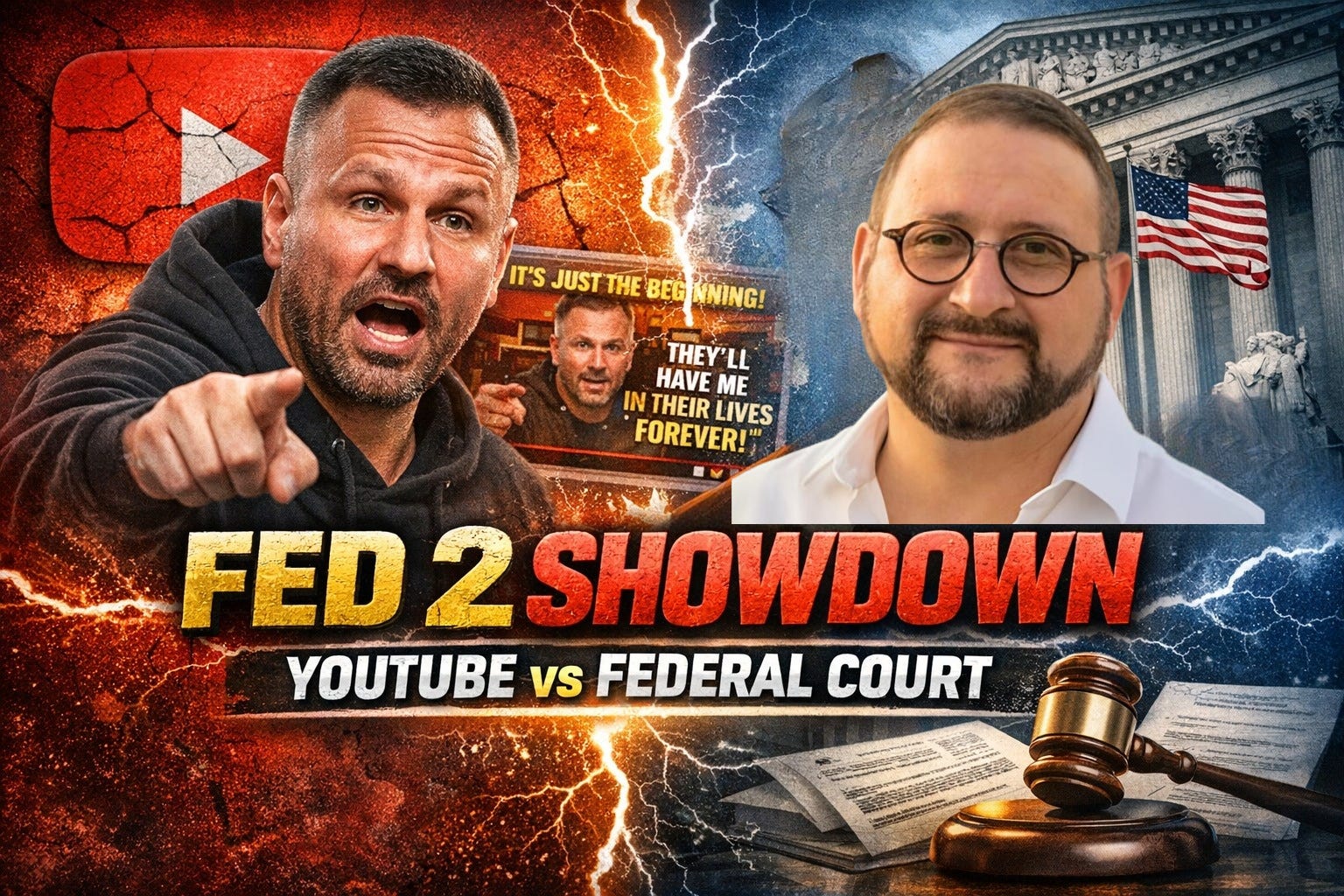
LUTHMANN NOTE: The Jeremy Hales Fed 2 case is a perfect example of what happens when internet drama spills into federal court. The difference between YouTube and the judiciary is simple: judges deal in evidence, not views. When a litigant publicly broadcasts statements like “this is just the beginning” and promises endless lawsuits, those words can become a powerful context in evaluating motive and sanctions. That’s why joining Lisa Lee’s motion for judicial notice mattered. It ensures the court sees the complete picture, not just filings on paper. Whether the judge formally takes notice or not, the statements now sit squarely in the record—where courtroom theatrics end and legal consequences begin. This piece is "Fed 2 Fight Club," first available on FLGulfNews.com.

By Richard Luthmann
Investigative journalist Richard Luthmann joined the livestream podcast “Two Lees in a Pod” with hosts Lisa, Tami, and Robbie Kezsey for a wide-ranging discussion about the escalating federal litigation surrounding YouTuber Jeremy Hales and the controversial lawsuit known as “Fed 2.”
The conversation focused on a recent federal filing in which Luthmann formally joined a motion for judicial notice submitted by co-defendant Lisa Lee. The motion asks the federal court to recognize statements made by Hales in a February 15 livestream titled “Federal Court Update – It’s Just the Beginning.” In that broadcast, Hales reportedly declared that the defendants would have him “in their lives forever,” a statement Luthmann argues demonstrates vexatious litigation intent and abuse of the court process.
Luthmann explained during the show that judicial notice allows courts to acknowledge facts that are not reasonably in dispute, such as the existence of publicly recorded statements or widely available records. In this case, the request asks the court to acknowledge that Hales publicly made the statements—not to treat them as factual claims, but to establish their timing and existence as evidence of motive.
According to Luthmann, the filing includes the archived video and transcript of the livestream so the court can independently verify the statements. He argued that such remarks support claims that the lawsuit is part of an ongoing media-driven campaign intended to generate online content and harassment rather than resolve legitimate legal disputes.
During the discussion, the panel also examined what Luthmann described as a “media orchestration ecosystem” surrounding the litigation, in which multiple channels allegedly amplify filings and commentary to create ongoing controversy and online engagement.
The livestream also touched on broader issues, including online harassment, litigation tactics, and the intersection between YouTube content creation and federal lawsuits. Hosts Lisa and Tami shared their own experiences dealing with online attacks and legal disputes connected to the Hales network.
Despite the heated rhetoric and ongoing conflict, the panel emphasized that the case ultimately hinges on legal questions about abuse of process, judicial sanctions, and the limits of litigation-as-content in the digital era.
As the Fed 2 case continues in federal court, Luthmann suggested the judge now has a clearer picture of the surrounding media activity and the statements made publicly by the plaintiff.
The episode provided viewers with an inside look at the legal strategy unfolding behind the scenes—and the growing clash between online influencer culture and federal litigation rules.
Thank you to everyone who tuned into my live video! Join me for my next live video in the app.