


NOTE: This piece first appeared on FLGulfNews.com. Subscribe to NEWSBREAK.

By Dick LaFontaine with Richard Luthmann
Judge Slams Chiappetta’s “Bad Faith” Scheme, Florida Bar Launches Investigation
Florida attorney Nicholas A. Chiappetta – the lawyer for Antifa-linked TikTok agitator Danesh “ThatDaneshGuy” Noshirvan – is in boiling ethical trouble. A federal judge’s scathing opinion branded Chiappetta’s conduct unprofessional and in bad faith, and now the Florida Bar has escalated a grievance to its Fort Lauderdale branch for formal investigation (Bar File No. 2026-50,256(15C)).
U.S. District Judge John E. Steele’s August 12, 2025, Opinion and Order publicly reprimanded Chiappetta, declaring “Nicholas Chiappetta has failed to meet the professional standards expected from officers of the court in connection with the deposition and its aftermath.”
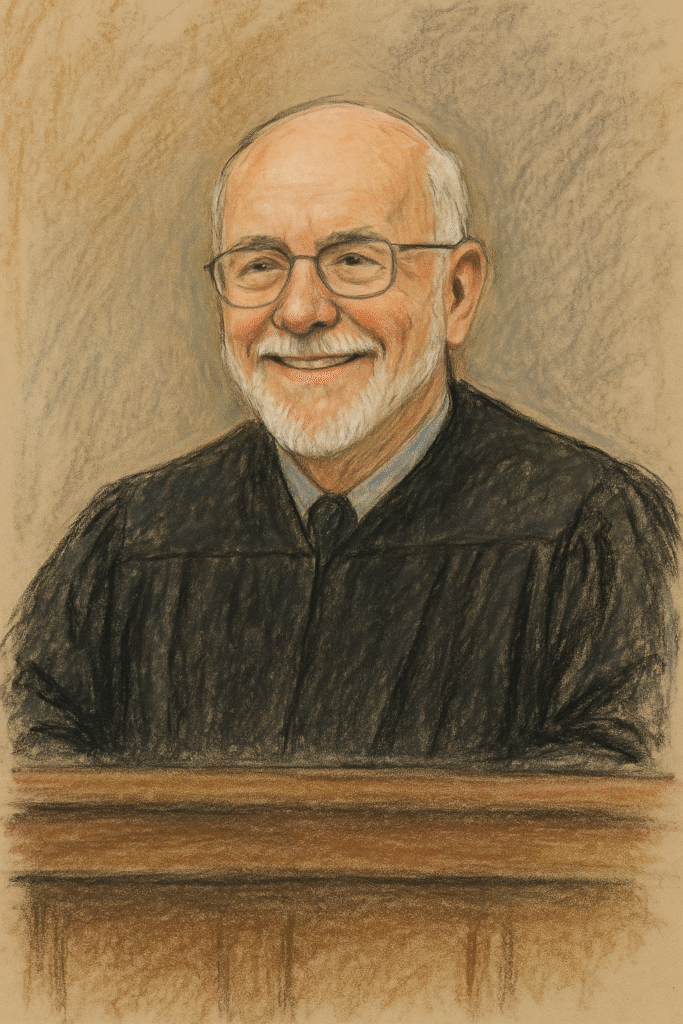
The judge found Chiappetta “acted in bad faith” by letting his client run amok and even enabling online harassment. This rare judicial smackdown – essentially calling Chiappetta a crooked, bad-faith lawyer – is clear and convincing evidence of misconduct that the Bar cannot ignore.
Richard Luthmann, a journalist and frequent Noshirvan critic, formally alerted the Bar to Chiappetta’s behavior and is urging swift action.
“The public trust in the legal profession demands swift and decisive disciplinary action when a federal judge makes such clear and damning findings,” Luthmann wrote.
He warned Florida Bar officials that brushing off Judge Steele’s findings would be a scandal in itself, possibly rising to national news if the Bar fails to hold Chiappetta accountable.
After months of inaction, the Florida Bar has finally assigned the case to a grievance committee in Fort Lauderdale – a move observers say is long overdue, given the judge’s blistering conclusions.
The spotlight is now on the Bar to see if it takes Judge Steele’s clear evidence seriously, or becomes part of the story for sweeping egregious conduct under the rug.
He’s No Saint Nick: Chiappetta Cries Foul in Defiance
Rather than showing remorse, Nick Chiappetta is doubling down, casting himself and his client as victims. In a December 16, 2025, court filing opposing further contempt sanctions, Chiappetta lashed out at the defendants (Jennifer Couture and others), calling their motion “a masterclass in hypocrisy and irony.”
According to Chiappetta, Couture’s side “created the hostile environment about which they now complain” and supposedly “ignited that fire” of public backlash. The brazen tone of his filing is jaw-dropping: Chiappetta essentially argues that the defendants deserved the torrent of abuse they’ve faced.
He claims thousands of outraged citizens rallied to support Danesh because of the defendants’ own behavior, not because Danesh did anything wrong. In Chiappetta’s telling, he, Danesh, and his apparently gay lover, Mr. James McGibney, are champions of “justice” being harassed by wealthy bullies.
He even boasts that “ordinary citizens have stepped up to ensure that Defendants cannot escape accountability due to a mere financial technicality,” referring to the $62,320 sanctions Judge Steele imposed. Chiappetta notes that within weeks, “hundreds upon hundreds of supporters have contributed to an online GoFundMe campaign to help Noshirvan pay the sanction.
Instead of acknowledging that sanction as punishment for misconduct, Chiappetta demeans it as a “technicality” and accuses the defendants of trying to “financially strangle Noshirvan’s case” out of spite.
He flatly insists “there is no basis for a contempt finding because Noshirvan is diligently complying with the sanction order in good faith. According to him, his client has “not violated any clear court order” and is only guilty of upsetting the defendants’ scheme.
In short, Chiappetta’s response flips the script: the sanctioned wrongdoer claims to be the wronged party.
This defiant narrative clashes with Judge Steele’s findings, but it shows that Chiappetta and Noshirvan remain unapologetic and unreformed. They continue the blame-shifting and bombast that got them in trouble in the first place.
Chiappetta’s filing drips with indignation, but nowhere does he address the court’s condemnation of his own conduct. Instead, he portrays the federal judge’s sanctions as merely a hurdle the “good guys” will overcome with public support.
The audacity is staggering: even after a public reprimand, Chiappetta is thumbing his nose at the court, doubling down on a narrative of victimhood.
He’s No Saint Nick: GoFundMe Lies and Website Whoppers
While Chiappetta insists he’s on a righteous “quest for justice,” the facts tell a different story – one of deception and disinformation. Nowhere is this more evident than in the GoFundMe page soliciting donations for Danesh Noshirvan and in Chiappetta’s own law firm bio, both of which blatantly contradict the court record.
On the GoFundMe campaign (titled “My family needs your help!”), Noshirvan spins a heart-tugging tale of persecution – but conveniently omits that a federal judge found his conduct sanctionable.
The fundraising page is “a master class in misdirection,” Luthmann writes.
It even lists Noshirvan’s location as Fort Myers, Florida, implying he’s a local victim fighting local injustice, when in reality, Noshirvan lives in Pennsylvania. Investigators suspect he gave a phony Florida address to lure Sunshine State donors by appearing as “one of their own.”
Worse, the GoFundMe description paints Noshirvan as on the verge of victory and in desperate need, never once mentioning that Judge Steele “found his conduct sanctionable and tossed out some of his allegations.” These glaring omissions amount to “lying by omission and commission” to tug at donors’ heartstrings.
In other words, Noshirvan is hiding the truth – that a federal court rebuked his behavior and credibility – while begging the public for money under false pretenses.
The gambit seems to be working: as Chiappetta bragged, over 1,000 donors (many “anonymous”) poured in more than $43,000 within weeks.
Luthmann has openly questioned whether some “new” anonymous donors are actually Noshirvan himself padding the totals via untraceable funds – a tactic known as “structuring” that GoFundMe forbids.
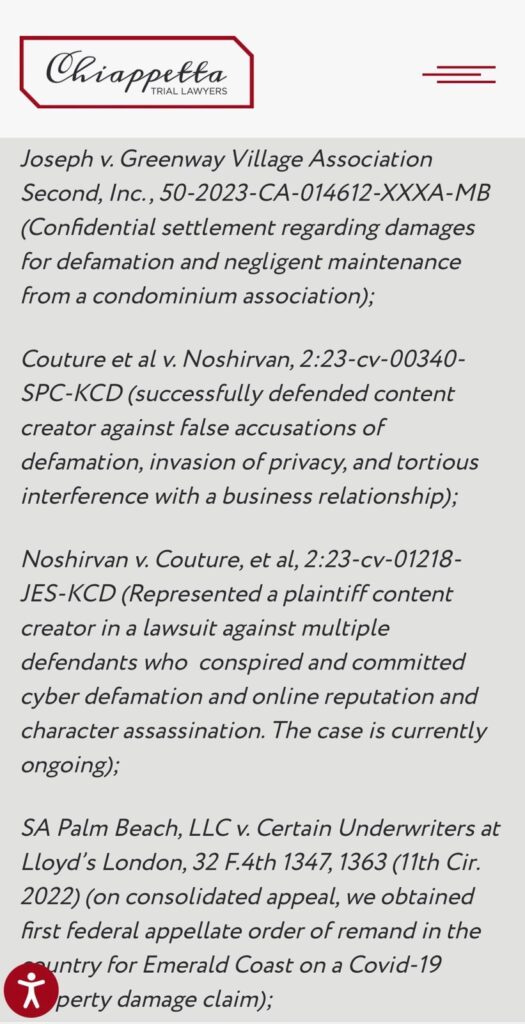
Meanwhile, Nick Chiappetta’s law firm website is no less deceitful. Under “Notable Cases,” Chiappetta brazenly touts bogus victories. He claims he “successfully defended [a] content creator against false accusations” in one case and describes the ongoing Noshirvan v. Couture case as if a vast conspiracy by the defendants is an established fact.
The truth?
No such victories – the first case is still ongoing with no ruling, and Judge Steele explicitly found “no conspiracy” in Noshirvan’s claims.
Chiappetta’s website presents Noshirvan’s unproven accusations as gospel, declaring the defendants “conspired and committed cyber defamation and character assassination.” Judge Steele demolished those allegations in his August order, scolding Chiappetta for pushing “false and inflammatory” narratives.
In Luthmann’s blunt assessment, “He is lying on his website. Chiappetta posted those fake claims to bolster his image and poison the jury pool.” Such deceit isn’t just unethical – it violates Florida Bar advertising rules and basic honesty.
Chiappetta’s public-facing claims are directly at odds with the court’s findings. The GoFundMe narrative and the self-aggrandizing bio both serve one purpose: to spin Danesh Noshirvan as an innocent underdog, contrary to the federal court’s conclusion that Danesh and his lawyer abused the legal system in bad faith.
These misrepresentations could come back to bite – Bar investigators and even law enforcement (in the case of the possibly fraudulent fundraiser) are now scrutinizing these discrepancies.
It’s an ugly picture: a lawyer and client who, even after being exposed in court, continue to double down on disinformation to sway public opinion and raise money.
He’s No Saint Nick: Pattern of Abuse Continues – Will the Bar Finally Act?
Judge Steele’s order didn’t occur in a vacuum – it highlighted a pattern of abusive litigation tactics by Danesh Noshirvan and the enabling behavior of his attorney, Chiappetta. The federal court found the pair’s conduct “reprehensible,” citing how Noshirvan hurled profanities at opposing counsel, unleashed his online followers in a harassment campaign, and showed “subjective bad faith” in the process.
Chiappetta, instead of reining in his client, effectively poured gasoline on the fire, earning himself a public reprimand from the judge. This was a historic smackdown – a veteran federal judge calling out a lawyer by name for egregious misconduct.
Yet, in the aftermath, Chiappetta and Noshirvan’s behavior indicates they’ve learned nothing.
Luthmann, who has been a target of Noshirvan’s defamatory “exposés,” describes Chiappetta as a “bottom-feeder attorney,” a “dog bite lawyer,” and accuses him of continuing to let Noshirvan run amok.
In a December 17 email to the Florida Bar, Luthmann didn’t mince words about the stakes. Citing Judge Steele’s findings as “clear and convincing evidence of bad faith conduct” by Chiappetta, he implored the Bar to take decisive action.
He warned that failure to act on a federal judge’s clear misconduct finding would be a scandal – “national news” – casting doubt on the Bar’s commitment to protecting the public. After all, the Florida Bar’s mission is to police attorney misconduct and uphold the profession’s integrity.
Here, a federal court has effectively done the Bar’s work by documenting Chiappetta’s violations in detail. If such “clear and damning” evidence doesn’t prompt discipline, what will?
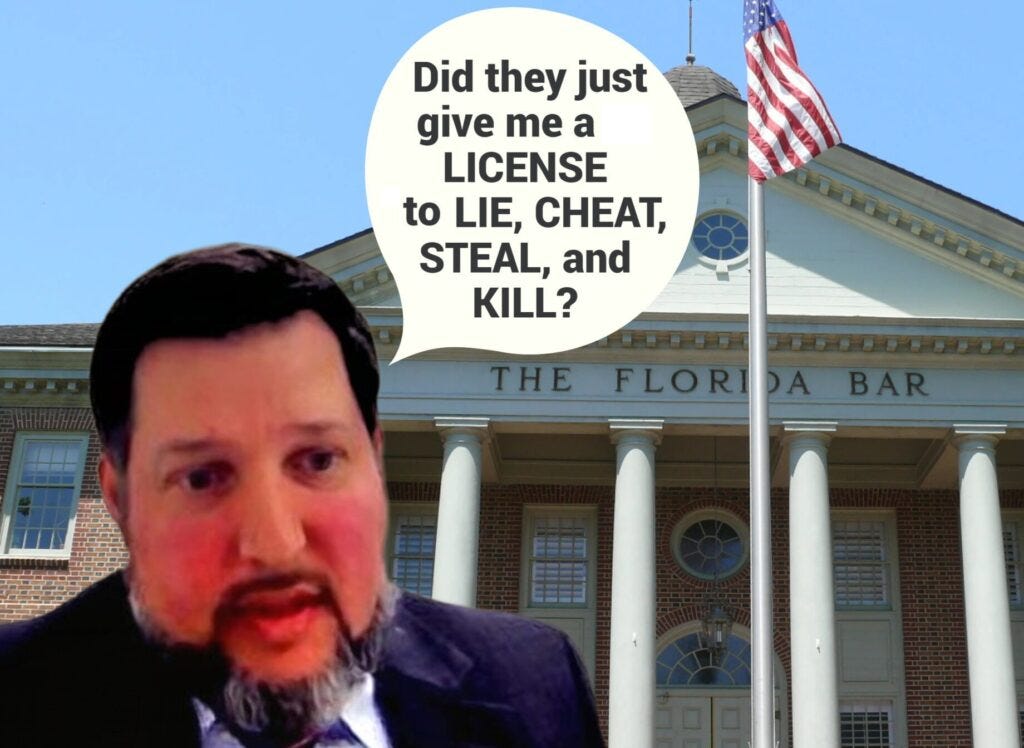
For months, critics blasted the Bar for appearing to “snooze” on this case, even as Chiappetta’s bad behavior was splashed across court orders and media reports. Only now – under public pressure – has the Bar moved the grievance to a committee for investigation.
All eyes are on the Florida Bar: will it finally hold Chiappetta to account for his misconduct, or will it confirm suspicions of a toothless discipline system?
The outcome has implications far beyond this case. As Luthmann noted, allowing a lawyer to flaunt a federal court’s reprimand without consequences would undermine public confidence in attorney regulation. It would send a dangerous message that a lawyer can engage in bad faith, harassing litigation – and, if the Bar shrugs, get away with it.
Judge Steele’s order put Chiappetta on notice, and common sense says the Bar should do the same. Anything less, and the Florida Bar becomes complicit in the very “LawFare” and abuse of its rules that it is meant to prevent.
In the bombastic prose of Richard Luthmann’s own commentary, this saga is a test of the Bar’s backbone. Will Florida’s legal watchdogs answer Judge Steele’s clear call, or will they hit the snooze button and let a “scumbag lawyer” skate?
The reputations of everyone involved – from Chiappetta to the Bar itself – hang in the balance, and justice demands an answer.


