


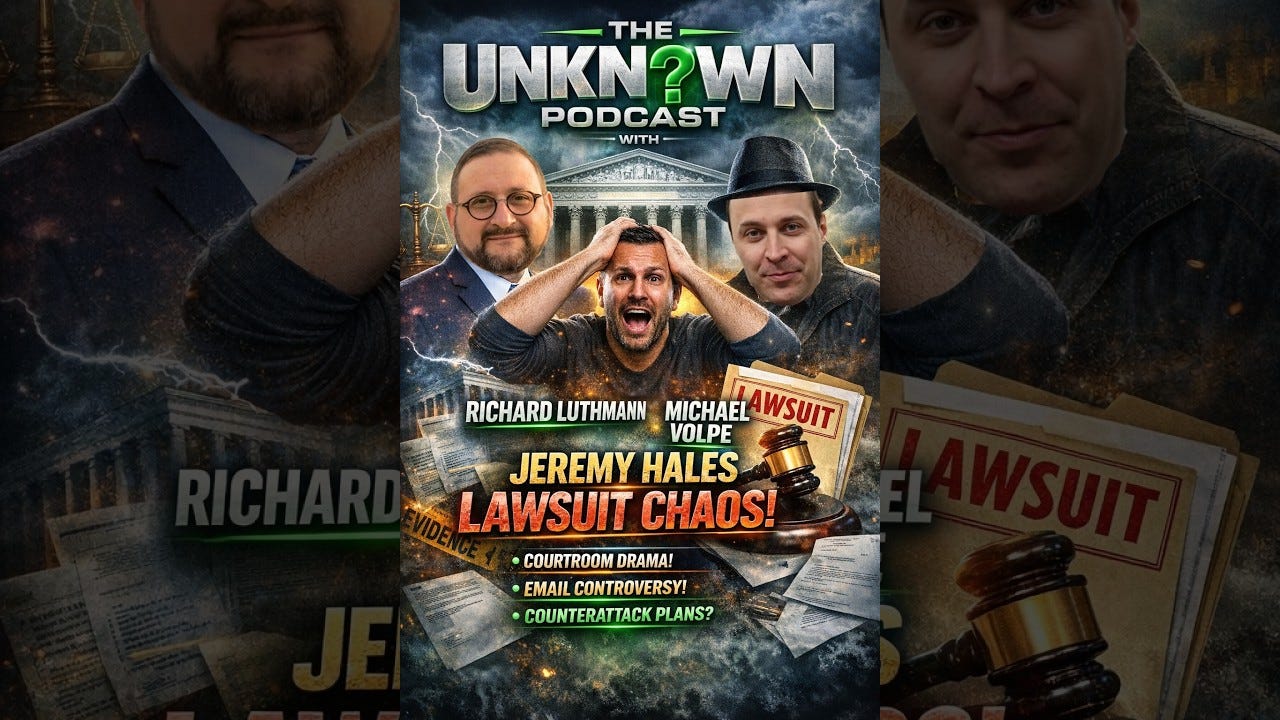
LUTHMANN NOTE: The Jeremy Hales lawsuit saga is a perfect example of how the modern internet has collided with the federal court system. What once would have been a small defamation dispute has morphed into an entire online ecosystem of videos, commentary, and litigation theater. Courts are now being pulled into digital feuds where filings become YouTube episodes and accusations spread faster than legal responses. That dynamic raises serious questions about lawfare, due process, and the misuse of litigation as a publicity tool. As journalists, Michael Volpe and I aim to cut through the noise and explain what’s really happening behind the spectacle. This piece is “Federal Content Creator Courtroom,” first available at FLGulf.News. Watch The Unknown Podcast on YouTube, Rumble, and Spotify.


By Richard Luthmann with Michael Volpe
(GAINESVILLE, FLORIDA) – Independent journalists Richard Luthmann and Michael Volpe return with another explosive episode of The Unknown Podcast, digging deep into the latest courtroom drama surrounding the controversial federal lawsuit filed by YouTuber Jeremy Hales.
Broadcasting from Florida and Chicago, the two veteran reporters unpack a case they say has become a “content creation machine” built around federal litigation. According to the hosts, the lawsuit against Luthmann and other critics has been repeatedly amended and widely mocked in legal circles for failing to properly state claims.

During the episode, Volpe and Luthmann analyze a new order from U.S. District Judge Robert Hinkle, who dismissed large portions of the complaint but allowed Hales another opportunity to amend it. The judge noted that the case appears to be “another chapter… in what is at bottom a war of words,” highlighting the unusual nature of the dispute.
The conversation also dives into a controversy over emails sent during the case. Luthmann explains why he copied the court and clerk on litigation communications, arguing that pro se defendants face structural disadvantages compared to attorneys who can file instantly through electronic court systems. He says the practice was intended to preserve transparency and prevent “litigation by ambush.”
Volpe presses him on whether contacting the court directly was appropriate, sparking a lively debate about federal procedure, due process, and the rights of pro se litigants.
The hosts also discuss the broader ecosystem surrounding the lawsuit, including YouTube coverage, online commentary, and what they describe as a “litigation-driven media cycle” where court filings become viral content.
Finally, Luthmann hints at a possible counterattack in the case, suggesting that if the complaint is filed again, he may respond with counterclaims and discovery requests targeting the broader network involved in the dispute.
The result is a fast-moving conversation blending legal analysis, investigative journalism, and media criticism—exactly the style that has made The Unknown Podcast a growing destination for audiences interested in lawfare, internet drama, and the intersection of courts and digital media.


