


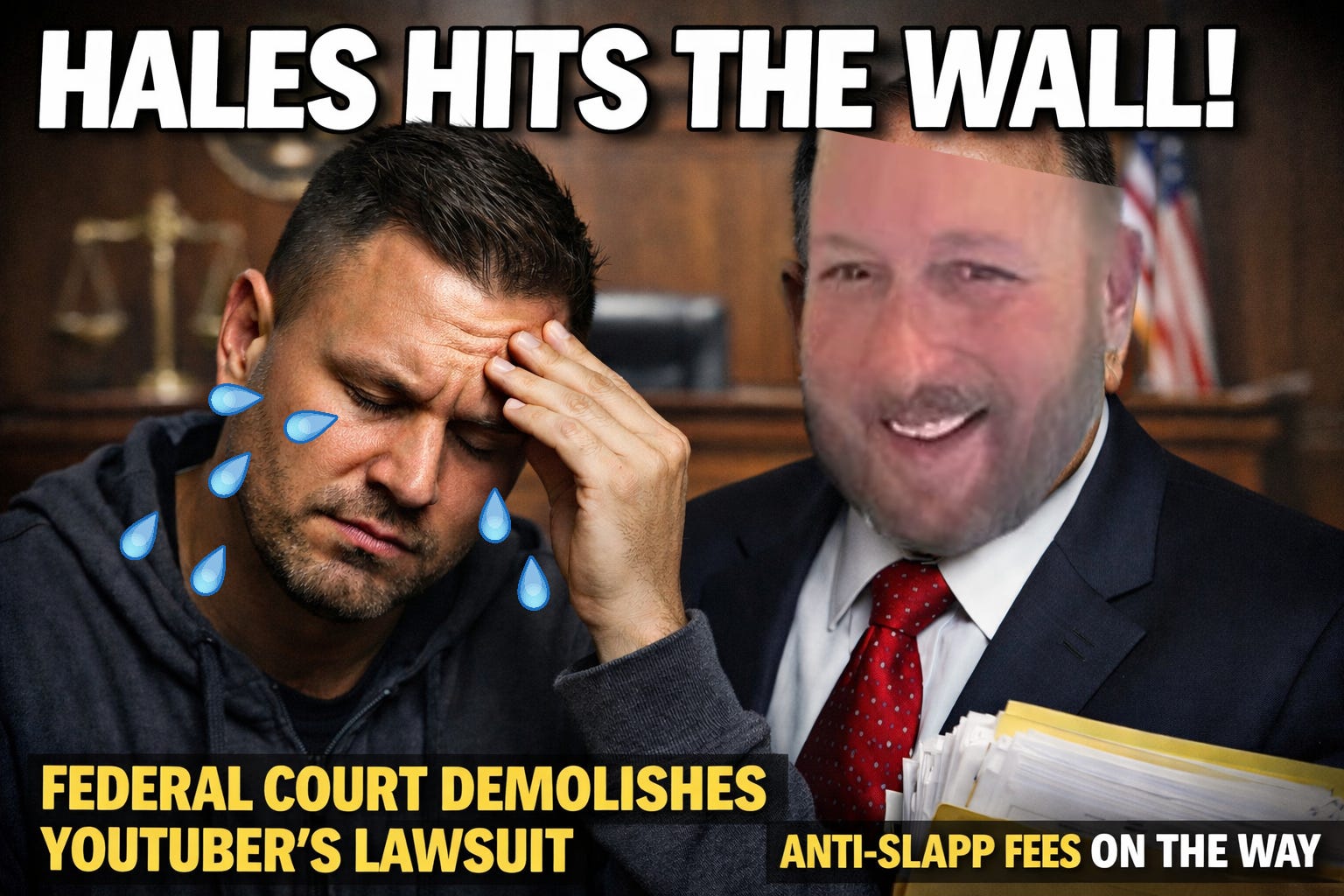
LUTHMANN NOTE: Put Jeremy Hales and his mental limitations to the side. For nearly a year, I said this lawsuit was not built for federal court, and I said it not with mockery but with method, not with heat but with structure. You cannot take online criticism, however sharp or relentless, and force it into the Lanham Act unless you can point to a mark, a marketplace, and a plausible likelihood of consumer confusion. You cannot invoke Florida’s Deceptive and Unfair Trade Practices Act (FDUTPA) unless you can identify a product or service, a consumer injury, and a measurable market-value loss that the statute actually recognizes. And you certainly cannot wave away anti-SLAPP statutes as decorative language, because they are not ornamental; they are designed to punish meritless lawsuits that aim to chill protected speech, and when triggered, they carry mandatory fee consequences.
That was the analysis from the start. Federal courts are not impressed by subscriber counts, livestream narratives, or the emotional gravity of grievances. It is impressed by elements, by causation, by damages that exist outside a comment section. When those elements are missing, no amount of rhetorical framing can substitute for them. The statutes do not bend to storytelling. They either fit the facts, or they do not. And when they do not, the case does not crescendo into vindication. It contracts, it narrows, and if the foundation is unsound, it collapses under the weight of its own theory. This piece is “Hales Hits the Wall,” first available at FLGulf.News.


By Frankie Pressman and Richard Luthmann with Michael Volpe
The Lawsuit That Thought It Was a Show
Jeremy Hales built his federal lawsuit the same way he builds a YouTube episode — loud, sprawling, hyperlink-heavy, and framed as a showdown against a shadowy “ecosystem” of enemies he says stalk his every move. Hales is the face of the “What the Hale$” channel, a storage-unit auction flipper turned full-time content entrepreneur who monetizes discovery, confrontation, and spectacle for an audience that runs into the hundreds of thousands.
The 74-page complaint filed in Gainesville federal court did not read like a tight pleading. It read like a broadcast script, complete with embedded links, narrative asides, and sweeping accusations of coordinated sabotage.
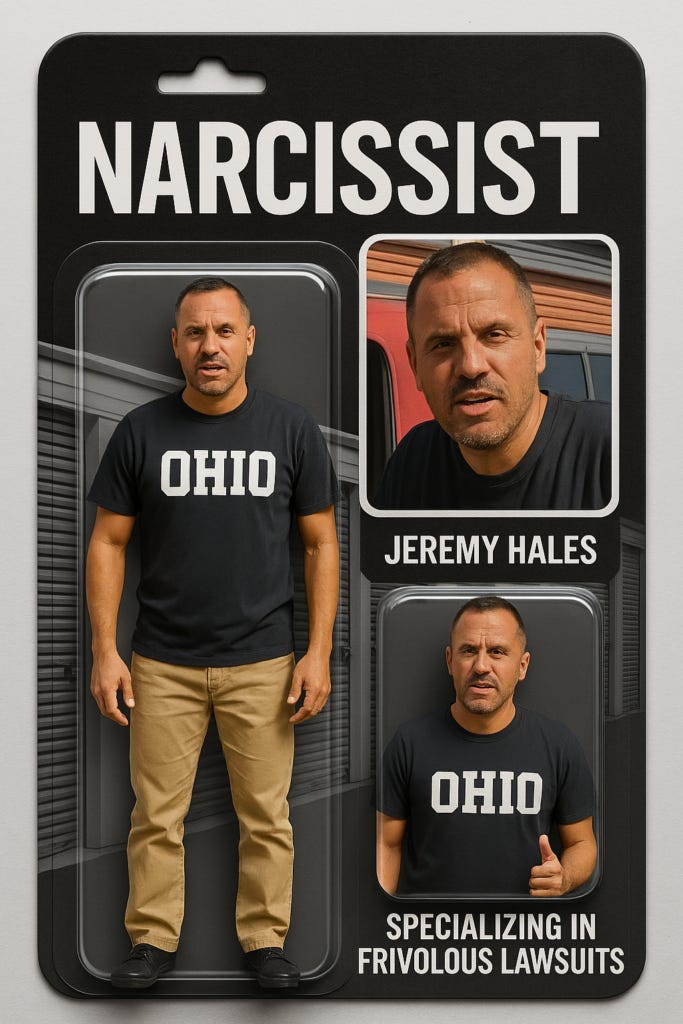
He named ten defendants scattered across the country. Some were YouTubers, and some were commentators. All were critics. Together, he cast them as members of an organized media conspiracy bent on dismantling his brand, tanking his revenue streams, and poisoning his relationships with platforms like YouTube and Whatnot.
The theory was simple and cinematic: they did not just disagree with him — they colluded. They did not just comment — they conspired. They did not just criticize — they interfered. It was a compelling storyline for an audience: ambitious, theatrical, and monetizable. But in federal court, it had to be something else.
What it was not — in the calm, clinical view of Magistrate Judge Zachary C. Bolitho — was legally sufficient.

On February 10, 2026, Judge Bolitho issued a 45-page Report and Recommendation in Elephant Shoe, LLC d/b/a What the Hale$ v. Cook et al., Case No. 1:25-cv-00058-RH-ZCB, and the tone was unmistakable. The document does not read like a narrow procedural tweak or a minor course correction. It reads like a methodical teardown, a page-by-page stripping of a lawsuit that never found solid footing.
The operative pleading reviewed by the Court—a 74-page Second Amended Complaint dense with hyperlinks, embedded YouTube references, and sweeping allegations—“borders on a shotgun pleading,” the court wrote. That phrase carries doctrinal weight in the Eleventh Circuit.
A shotgun pleading is one that fails to separate causes of action, incorporates conclusory allegations wholesale, and forces the court to sift through narrative clutter to determine which facts support which claims. See Weiland v. Palm Beach Cnty. Sheriff’s Off., 792 F.3d 1313, 1321–23 (11th Cir. 2015) (identifying the four categories of shotgun pleadings disfavored in this Circuit). Federal courts repeatedly warned that such pleadings violate the notice function of Rule 8 and warrant dismissal. Magluta v. Samples, 256 F.3d 1282, 1284 (11th Cir. 2001).
Bolitho then moved from characterization to consequence. Eight defendants were recommended for dismissal with prejudice.
In federal practice, dismissal with prejudice is not a procedural timeout. It is a merits disposition that bars repleading of the same claims. See Eiber Radiology, Inc. v. Toshiba Am. Med. Sys., Inc., 673 F. App’x 925, 929–30 (11th Cir. 2016).
This was never a referendum on online speech or a cultural debate about criticism. It was a pleading test under Rule 12(b)(6), which requires a complaint to contain sufficient factual matter to state a claim that is plausible on its face.
And on that test, Jeremy Hales failed.
Hales Hits the Wall: Statutes are Not Content
Bolitho did not referee an internet feud. He applied the pleading law.
Under Federal Rule of Civil Procedure 12(b)(6), a complaint must contain enough factual matter, accepted as true, to “state a claim to relief that is plausible on its face.” Ashcroft v. Iqbal, 556 U.S. 662, 678 (2009); Bell Atl. Corp. v. Twombly, 550 U.S. 544, 570 (2007). Conclusory allegations and formulaic recitations do not suffice. Iqbal, 556 U.S. at 678. Judge Bolitho measured the complaint against that standard and tested each count for structural integrity.
The Lanham Act theory unraveled first. A claim under 15 U.S.C. § 1125(a)(1)(A) requires prior rights in a mark and a likelihood of consumer confusion. Planetary Motion, Inc. v. Techsplosion, Inc., 261 F.3d 1188, 1193 (11th Cir. 2001). The complaint alleged neither a registered mark nor facts plausibly establishing common-law trademark rights or consumer confusion. A Lanham Act claim cannot survive without those elements.
The FDUTPA claim followed. To state a damages claim under Florida’s Deceptive and Unfair Trade Practices Act, a plaintiff must allege “actual damages,” meaning the difference in market value between what was promised and what was delivered. Marrache v. Bacardi U.S.A., Inc., 17 F.4th 1084, 1101 (11th Cir. 2021). FDUTPA protects consumers from unfair or deceptive acts in trade or commerce. The pleading did not describe a product, a service, or a consumer injury. It demanded $959,000 without tying that number to any market-value differential recognized by Florida law.
Tortious interference fared no better. Under Florida law, the elements include an existing business relationship, knowledge of that relationship, intentional and unjustified interference, and resulting damage. Ethan Allen, Inc. v. Georgetown Manor, Inc., 647 So. 2d 812, 814 (Fla. 1994). Alleging relationships with YouTube and Whatnot is not enough. The complaint must plausibly allege that a defendant interfered with a specific relationship and caused its breach. The pleading did not.
Civil conspiracy collapsed as a matter of doctrine. Under Florida law, a conspiracy claim requires an underlying tort; without a viable predicate wrong, the conspiracy count fails. Alhassid v. Bank of Am., N.A., 60 F. Supp. 3d 1302, 1317 (S.D. Fla. 2014). Once the substantive claims fell, conspiracy could not stand alone.
By the end of the analysis, the complaint had not been narrowed. It had been hollowed out. What remained was not a streamlined case moving forward. It was a pleading that could not carry the weight of the statutes it invoked.
Hales Hits the Wall: The Anti-SLAPP Turn
One portion of the ruling carried immediate financial consequences.
Defendant David Helm moved to dismiss under Florida’s anti-SLAPP statute, which bars actions filed “without merit and primarily because such person or entity has exercised the constitutional right of free speech in connection with a public issue.” Fla. Stat. § 768.295(3). The statute defines protected speech broadly to include written or oral statements made in connection with audiovisual works and similar media. Fla. Stat. § 768.295(2)(a). The court concluded that the claim against Helm lacked merit and arose from protected speech on YouTube.
That finding activates the fee provision. The statute states that a court “shall award the prevailing party reasonable attorney fees and costs incurred in connection with a claim that an action was filed in violation of this section.” Fla. Stat. § 768.295(4). In Florida practice, “shall” is mandatory language. See City of Tallahassee v. Fla. Police Benevolent Ass’n, 98 So. 3d 110, 113 (Fla. 2012). The matter now returns to the court for a determination of those fees.
Two issues remain unresolved.
One defendant filed for bankruptcy, which stays the case as to her under federal law. The automatic stay freezes proceedings against that party until the bankruptcy court acts.
Another defendant, the extremely handsome Richard A. Luthmann, Jr., appeared after a clerk’s default was entered and moved to vacate that default and dismiss for lack of service and personal jurisdiction under Federal Rules of Civil Procedure 55(c), 60(b)(4), 12(b)(2), and 12(b)(5). In that motion, he also invokes the Federal Arbitration Act, 9 U.S.C. § 1 et seq., and argues that an alternative dispute resolution agreement governs the dispute.
In a separate filing, Luthmann seeks sanctions and asks the court to exercise its inherent authority, including the possibility of a referral to the Florida Bar. That request does not emerge in a vacuum. It is framed against a documented professional history that Luthmann himself placed into the record.
Attorney Randall Mark Shochet’s name is not new to judicial scrutiny. In Shochet v. Arkansas Board of Law Examiners, 329 Ark. 46, 947 S.W.2d 373 (1998), the Arkansas Supreme Court affirmed the denial of Shochet’s application for admission to the Arkansas Bar after findings related to candor and truthfulness in the licensing process. The court’s opinion discussed issues involving misrepresentation and the failure to provide complete disclosures in connection with his professional background. That decision remains part of the public record.

That means that a state supreme court once evaluated Jeremy Hales’s lawyer’s credibility in a formal proceeding and issued a published decision addressing concerns about honesty and disclosure.
In the present litigation, Luthmann argues that counsel persisted in advancing service and jurisdictional theories after being placed on notice of alleged defects. In his Motion to Vacate and Dismiss, he cites Eleventh Circuit authority holding that an attorney’s Rule 11 obligations are continuing and that persistence in an untenable position after notice can support sanctions. See Trump v. Clinton, 161 F.4th 671, 691 (11th Cir. 2025). He frames the issue not as a mistake, but as continued advocacy after contrary facts were presented.
Those are allegations. They have not yet been adjudicated. Federal courts possess inherent authority to sanction bad-faith conduct and to refer matters for disciplinary review where appropriate. See Chambers v. NASCO, Inc., 501 U.S. 32, 43–46 (1991). Whether that authority will be invoked here remains to be seen.
But they now sit on a federal docket alongside a Report and Recommendation recommending dismissal with prejudice of nearly all substantive claims and awarding anti-SLAPP fees to at least one defendant.
What is clear is this: the litigation has moved beyond a YouTube feud. It now raises questions about pleading discipline, statutory misuse, and professional responsibility. And when those issues converge in a federal courtroom, they are resolved not by subscriber counts or livestream narratives, but by written findings and binding precedent.
The defensive posture has shifted.
For months, critics were framed as defendants scrambling to survive a federal lawsuit. After the Report and Recommendation, the center of gravity has moved. The core claims have been recommended for dismissal with prejudice. Fee exposure now hangs over the plaintiffs. What remains is not an expanding theory of conspiracy, but a tightening inquiry into service, jurisdiction, arbitration, and whether the lawsuit should have been in federal court at all.
Hales Hits the Wall: A Year of Warnings
This did not fall from the sky.
For nearly a year, journalists Richard Luthmann and Michael Volpe had been arguing — consistently, publicly, and in granular detail — that the Hales “Fed Two” lawsuit was structurally flawed from the moment it hit the docket. They made the case on The Unknown Podcast, on Substack, and at FLGulf.News in pieces like “Bozos and Shotguns” and “Shochet’s Shotgun Sham.”
Volpe and Luthmann have continually broken down the pleading statute by statute and warned that the legal architecture did not match the narrative ambition. The forecast was not vague; they said dismissal was likely. Sanctions exposure was possible, and anti-SLAPP could flip the leverage. They even floated the possibility of counterclaims or independent claims if the case unraveled.
At the time, that analysis was treated as partisan commentary. Now it reads like a roadmap.
This was not chest-thumping commentary. It was a statutory analysis. The complaint read like a defamation grievance wearing a Lanham Act costume. Federal trademark law exists to prevent confusion in the marketplace — counterfeit goods, passing off, misuse of marks — not to referee online criticism. FDUTPA requires consumer injury tied to a product or service, not reputational harm from YouTube commentary. Florida’s anti-SLAPP statute was a loaded mechanism, and using it against critics could trigger mandatory attorneys’ fees.
It’s abundantly clear that the pleading was sprawling, blurred the defendants together, and leaned on narrative more than elements.
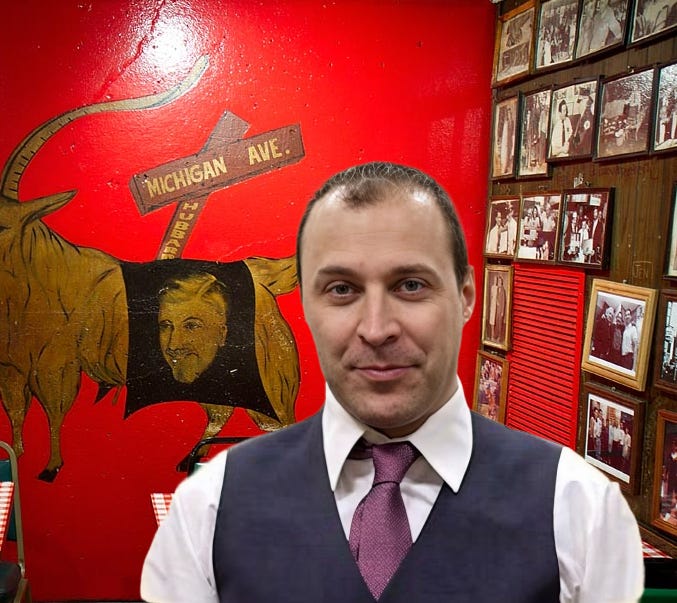
“Federal court judges are not impressed by hyperlinks,” Michael Volpe said.
Hales’ ecosystem framed the case as righteous accountability (and some still do, even in the face of disaster). They portrayed early procedural wins as momentum.
Now, Magistrate Bolitho’s reasoning reads like a doctrinal mirror of those earlier Volpe and Luthmann warnings.
The Report and Recommendation does not adopt the rhetoric. It defers to the structure of the law and applies Rule 12(b)(6) exactly as federal courts are trained to do. The Lanham Act count fails for lack of trademark allegations. The FDUTPA claim fails for lack of consumer harm and measurable damages. And the Court rejected tortious interference for failure to allege actual disruption of identifiable relationships. Finally, it collapses a sprawling civil conspiracy for lack of a viable underlying tort.
U.S District Judge Robert L. Hinkle will review the recommendation, and objections may be filed within fourteen days. That process will proceed in the ordinary course.
But the architecture of the lawsuit has already shifted. Judge Bolitho’s R&R has set the tone that a federal courtroom is not a comment section. It does not reward escalation or narrative framing. Instead, it demands disciplined pleading and factual specificity, asking one narrow question: Do the facts, as alleged, satisfy the elements of the statute?
The statutes invoked in this case are not storytelling devices; they are technical tools. And when those tools are misapplied, the case does not build toward a crescendo. Instead, it narrows, weakens, and often collapses under its own weight, which is what we are seeing in real time with Jeremy Hales’s litigation.
For a year, Luthmann and Volpe said the foundation was unstable. Magistrate Bolitho’s analysis now stands firmly where their prediction once did.
In federal litigation, that is not drama. It is a consequence. And Jeremy Hales should brace for a whole lot more.


